
[The content of this article has been produced by our advertising partner.]
Vitiligo is often noticed before it is understood. White patches on the skin can draw attention, second glances or subtle avoidance, particularly in public settings. In Hong Kong, where awareness of the condition remains uneven, misunderstanding can influence daily life as much as the condition itself.
Vitiligo is a chronic autoimmune disorder in which pigment-producing cells are destroyed by immune activity. As a result, areas of skin lose colour and develop clearly defined white patches. The condition is not infectious and cannot be passed on through touch, shared meals or close contact. Although physical health is generally unaffected, the visible nature of vitiligo can have a lasting effect on confidence and social interaction.
Vitiligo may also be associated with other autoimmune conditions, including thyroid disorders, Type 1 diabetes and rheumatoid arthritis. Studies indicate that around 15 to 25 per cent of patients experience such associations. In most cases, however, general physical health remains stable.
The psychological effect can be considerable. Feelings of anxiety, self-consciousness and social withdrawal are commonly reported, particularly when patches appear on the face or hands. Children may struggle at school, while adults may feel uneasy during interviews or workplace interactions. For families, diagnosis can bring uncertainty as well as emotional strain.

Education and reassurance
The Hong Kong Vitiligo Support Group (HKVSG) was set up to improve understanding of the condition and provide structured support for patients and carers. The non-profit organisation was initiated by the Hong Kong Healthcare Alliance, a social enterprise. Its work focuses on public education, patient guidance and emotional support.
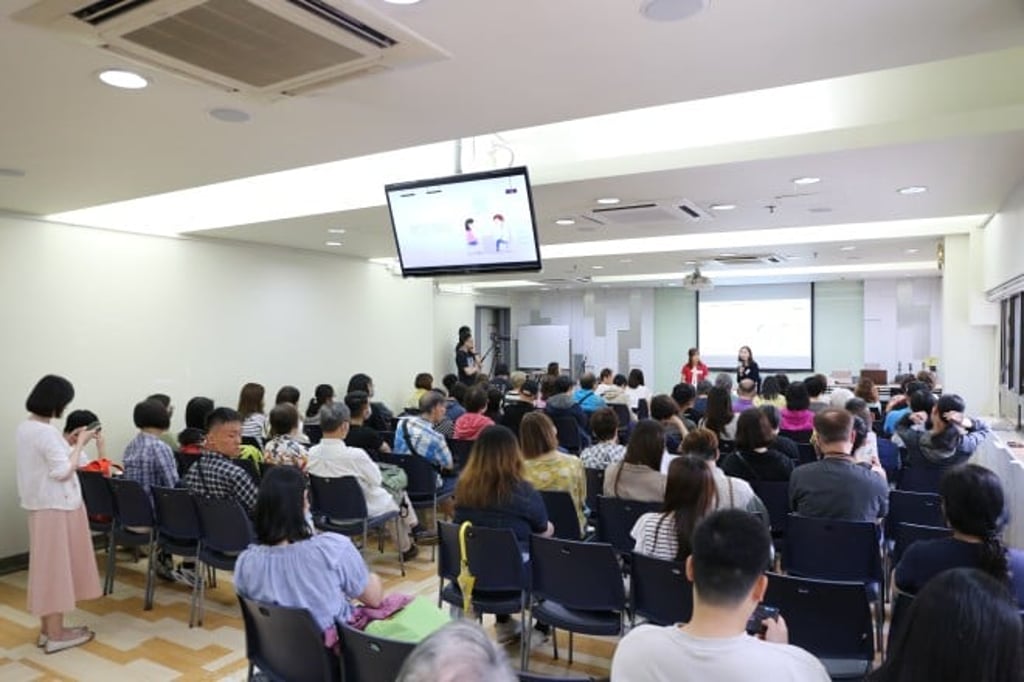
Through seminars, patient programmes and counselling services, HKVSG provides access to clear medical information and advice, while addressing common misconceptions directly.
Vitiligo is not contagious, nor does it result from poor hygiene or diet. Diagnosis is usually made through clinical examination by a dermatologist. Individuals who notice suspicious skin changes are advised to seek professional assessment to confirm the diagnosis. In some cases, ultraviolet light is used to verify complete pigment loss. Not every pale patch is vitiligo. Fungal infections, eczema-related changes and post-inflammatory pigment changes can appear similar. Further investigation is required only when findings are unclear. Patients are advised not to rely solely on images found online.
Vitiligo can present in different patterns. Some patients develop symmetrical patches on both sides of the body, while others experience more localised areas. Understanding these differences can help people come to terms with why their condition may not match that of others.
Living with visibility
Although vitiligo does not affect life expectancy, everyday habits are often adjusted. Clothing choices may change. Swimming pools and beaches may be avoided. Social plans can be arranged around concealment rather than comfort. For many, the condition develops during adolescence, when concerns about appearance are especially strong.
HKVSG has been supporting families dealing with these pressures. One father sought medical advice for years after his daughter developed vitiligo at a young age. He questioned whether genetics were responsible and felt guilty about not finding a suitable course of treatment. Conflicting opinions left him unsure how to proceed.
After attending a seminar organised by the group, he sought a dermatology’s referral and received updated guidance. With regular follow-up, a treatment plan with new drug was put in place. Gradual improvement was observed over time, and the family felt more confident about managing care.
Another patient had lived with vitiligo for decades. Early consultations had led him to believe that little could be done, and he stopped seeking conventional treatment. Instead, he turned to alternative remedies and spent much of his savings in the process. Repeated disappointment led him to give up medical follow-up.
Years later, after taking part in HKVSG sessions, he learned about a new treatment option and support schemes. He decided to consult a dermatologist again. For him, treatment was not pursued as a cure but as a way of regaining everyday freedoms, such as wearing certain clothing without hesitation.
Treatment and informed choice
Clinical management of vitiligo now includes a broader range of options. More recently, topical Janus kinase (JAK) inhibitors have been introduced, in addition to established approaches including topical corticosteroids, calcineurin inhibitors and narrowband UVB phototherapy.
Ruxolitinib cream, a non-steroidal topical Janus kinase (JAK) inhibitor, became available in Hong Kong in 2025. International studies have reported progressive repigmentation in more than half of treated patients within one year, particularly in facial areas. Suitability depends on individual assessment, including disease duration and the areas affected. Repigmentation tends to be more achievable in areas with a higher density of hair follicles. Treatment decisions should be made jointly by patient and dermatologist, with regular follow-up advised.
HKVSG states that its role is to complement, not replace, professional medical advice. Its patient support programme provides guidance on keeping up with follow-up appointments, understanding treatment pathways and preparing for consultations. This support is intended to reduce uncertainty, which can otherwise lead patients to drop out of care.
The psychological dimension is also addressed. The organisation has provided free counselling to more than 10 patients experiencing distress linked to vitiligo. In focus groups organised by the group, anxiety and social stress were frequently discussed. Participants described feeling observed in public or misunderstood in social settings. Through counselling and peer support, many reported improved confidence and a better ability to manage social situations.
Access and continuity of care
Cost and waiting times can affect access to specialist treatment. HKVSG therefore provides information on medication assistance schemes and targeted support designed to help patients consider available options. Such schemes aim to ease financial pressure while ensuring that medical decisions remain under the supervision of qualified dermatologists.
Individuals who notice skin changes suggestive of vitiligo are advised to seek assessment from a registered dermatologist at an early stage. Accurate diagnosis helps rule out other causes of pigment loss and allows appropriate management to be discussed.
Vitiligo remains a long-term condition. For those affected, however, education, peer support and reliable information can make it easier to manage both the medical and emotional aspects.