Published on
July 13, 2026

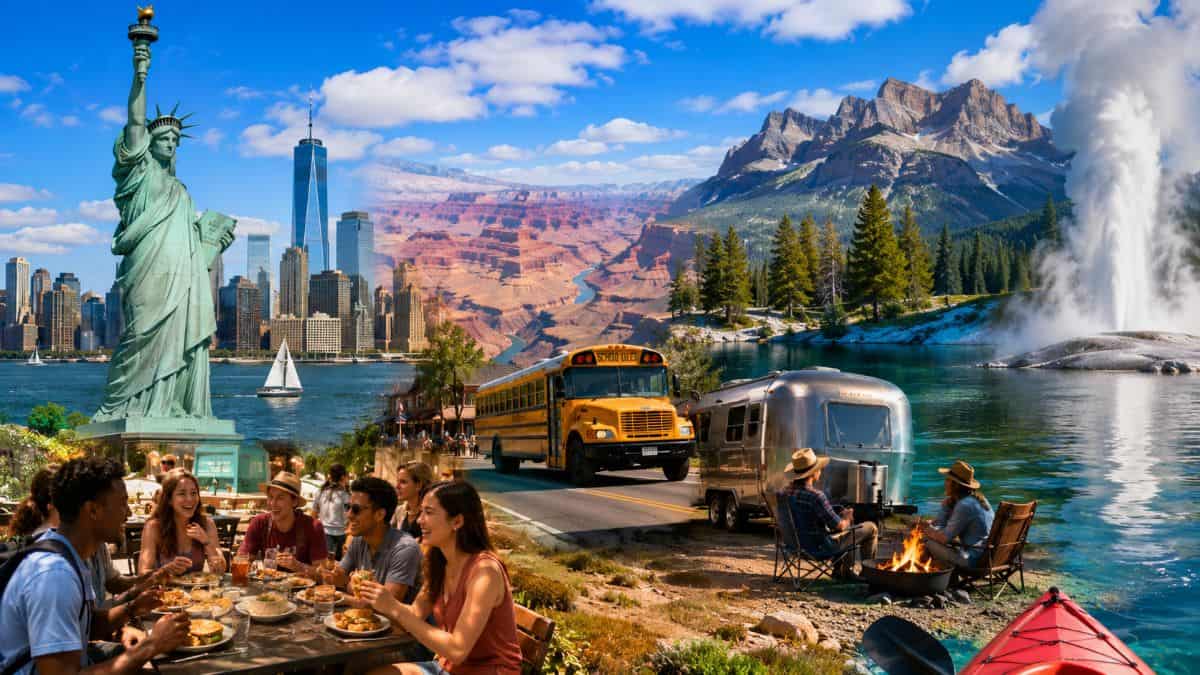
Image generated with Ai
The United States continues to attract millions of international visitors every year, offering a travel experience unlike almost anywhere else in the world. Beyond its famous landmarks, national parks, entertainment hubs, and world-class cities, many travelers discover that everyday American life itself becomes one of the most memorable parts of their journey. Cultural habits, transportation systems, dining customs, infrastructure, and social interactions often create unexpected moments that leave lasting impressions.
Visitors from Canada, the United Kingdom, Germany, Australia, France, and many other countries frequently arrive with expectations shaped by films, television, social media, and travel guides. While iconic attractions such as New York City, the Grand Canyon, Yellowstone National Park, Las Vegas, and Route 66 remain major draws, it is often the ordinary aspects of American life that generate the greatest curiosity. Whether it is seeing a yellow school bus for the first time, experiencing generous restaurant portions, or discovering America’s enormous travel distances, these experiences become stories that travelers eagerly share long after returning home.
Why Everyday America Continues to Surprise Global Travelers
International tourism extends beyond sightseeing. Modern travelers increasingly seek authentic cultural experiences that help them understand local lifestyles rather than simply checking famous attractions off a list.
For visitors to the United States, this means interacting with local residents, dining in neighborhood restaurants, shopping at supermarkets, driving across multiple states, and experiencing American hospitality firsthand. These encounters frequently challenge preconceived ideas and create a deeper appreciation of the country’s cultural diversity.
Advertisement
Advertisement
| Everyday Experience | Why It Surprises International Visitors | Travel Impact |
|---|---|---|
| Friendly greetings | More conversational than many countries | Creates welcoming atmosphere |
| Large travel distances | Cities and attractions are far apart | Encourages road trips |
| Restaurant portions | Meals are significantly larger | Supports value-conscious travel |
| American icons | Familiar from movies and television | Creates memorable experiences |
| Diverse landscapes | Rapid geographic changes | Encourages multi-state itineraries |
American Hospitality Often Exceeds Visitor Expectations
One of the strongest impressions shared by international travelers is the friendliness of Americans.
Visitors frequently note that hotel staff, restaurant servers, shop employees, tour guides, and even complete strangers willingly engage in conversation. Greetings such as “How are you?” may initially surprise travelers from countries where casual conversations with strangers are uncommon, but many eventually appreciate the welcoming nature of these interactions.
Advertisement
Advertisement
For tourism, this cultural openness enhances visitor satisfaction. Friendly encounters contribute significantly to positive travel memories, encouraging repeat visits and positive recommendations through word-of-mouth and social media.
America’s Vast Geography Changes Travel Planning
The geographical scale of the United States remains one of the biggest adjustments for overseas visitors.
Advertisement
Advertisement
Many international travelers underestimate the distances between major destinations. A journey that Americans consider routine may involve several hours of driving, while domestic flights often connect cities separated by thousands of miles.
This scale transforms the travel experience.
Rather than treating multiple cities as day trips, visitors often plan regional itineraries, allowing additional time to explore destinations such as California, Florida, Texas, Arizona, Colorado, Utah, and the Pacific Northwest without rushing.
| Region | Typical Travel Experience |
|---|---|
| Northeast | Historic cities and shorter driving distances |
| South | Scenic highways and cultural heritage |
| Midwest | Long road journeys and rural landscapes |
| Southwest | National parks and desert scenery |
| West Coast | Coastal drives and outdoor adventures |
Road Trips Remain an Iconic American Experience
America’s extensive highway network continues to distinguish it from many international destinations.
Advertisement
Advertisement
Driving scenic routes allows travelers to experience changing landscapes, small towns, roadside attractions, state parks, and regional cuisine within a single journey.
Historic highways, coastal drives, mountain routes, and national park corridors remain among the country’s strongest tourism assets, encouraging longer visitor stays and increased spending across multiple states.
The flexibility of self-drive travel also enables visitors to experience destinations beyond major gateway cities.
Hollywood Icons Become Real-Life Experiences
For many visitors, America feels surprisingly familiar before they even arrive.
Hollywood films and television have introduced generations of international audiences to yellow school buses, suburban neighborhoods, downtown skylines, baseball stadiums, diners, police vehicles, and neighborhood supermarkets.
Seeing these familiar images in real life often creates a sense of excitement that transforms everyday scenes into memorable travel moments.
Advertisement
Advertisement
These seemingly ordinary experiences become valuable parts of the overall tourism journey because they connect entertainment with reality.
Dining Culture Offers Both Variety and Value
American restaurants continue to surprise visitors with generous serving sizes and diverse menu choices.
International travelers often discover that meals can comfortably serve more than one person, making restaurant dining appear more economical than expected despite varying menu prices.
Equally important is the extraordinary culinary diversity available throughout the country.
Visitors can enjoy authentic regional barbecue, Tex-Mex cuisine, Southern comfort food, New England seafood, New York delicatessens, California fusion dishes, Cajun specialties, Hawaiian influences, Native American cuisine, and international flavors representing communities from around the world.
| Food Experience | Visitor Observation |
|---|---|
| Large portions | Often enough for leftovers |
| Regional specialties | Unique culinary identities |
| International cuisine | Extensive multicultural options |
| Free beverage refills | Uncommon in many countries |
| Diverse dining styles | From food trucks to fine dining |
American Infrastructure Reflects Different Urban Priorities
Visitors from Europe and several Asian countries frequently notice differences in urban planning.
Advertisement
Advertisement
Many American communities prioritize automobile travel, resulting in wider roads, expansive parking facilities, suburban developments, and larger commercial centers.
While some historic downtown districts offer excellent walkability, many suburban areas require vehicle transportation.
Understanding these differences helps international visitors plan transportation more effectively, whether through rental vehicles, rideshare services, or public transit available in major metropolitan areas.
Shopping Experiences Reflect Consumer Scale
Shopping in the United States is another area where international travelers frequently express amazement.
Large supermarkets, warehouse retailers, outlet malls, and shopping centers offer extensive product selections rarely found elsewhere.
Many visitors incorporate shopping into their itineraries, purchasing clothing, electronics, outdoor equipment, local products, and souvenirs while taking advantage of seasonal promotions and tax-free shopping opportunities available in selected states.
Advertisement
Advertisement
Retail tourism has become an important contributor to visitor spending across numerous American destinations.
Cultural Differences Create Memorable Travel Stories
Travel often becomes most rewarding when expectations meet unfamiliar experiences.
Simple differences—such as restroom designs, beverage refills, neighborhood layouts, customer service styles, and public transportation systems—encourage visitors to better understand American society rather than simply observe tourist attractions.
These cultural discoveries frequently become the stories travelers remember most vividly after returning home.
Rather than viewing differences as inconveniences, many international visitors recognize them as opportunities to experience another way of life.
Tourism Benefits from Authentic Local Experiences
Modern tourism increasingly values authenticity.
Advertisement
Advertisement
Travelers seek opportunities to interact with local communities, support independent businesses, sample regional cuisine, attend sporting events, visit farmers’ markets, explore neighborhood festivals, and experience everyday American culture.
These authentic encounters complement visits to internationally recognized attractions while distributing tourism benefits more broadly across communities.
For destinations throughout the United States, encouraging visitors to engage with local culture strengthens economic development while promoting meaningful cultural exchange.
Why America Continues to Appeal to International Visitors
The United States remains one of the world’s most diverse travel destinations because it offers more than iconic landmarks.
Its remarkable geographic diversity, multicultural population, regional traditions, entertainment heritage, hospitality, national parks, historic cities, and evolving culinary landscape create experiences that differ dramatically from one state to another.
Whether visitors arrive for family holidays, business travel, educational experiences, sporting events, or extended road trips, they often leave with a deeper understanding of American life that extends well beyond familiar tourist attractions.
Advertisement
Advertisement
The combination of cultural curiosity, memorable interactions, and unique everyday experiences continues to reinforce America’s position as one of the world’s most influential and rewarding international travel destinations.
FAQs
Why are international visitors surprised by everyday life in the United States?
Many visitors arrive with expectations shaped by movies and media, making ordinary American customs feel unique when experienced in person.
Why do travelers find American road trips so different?
The country’s vast geography, scenic highways, and long driving distances create a travel style unlike many smaller nations.
Why are restaurant portions larger in the United States?
Many American restaurants serve generous portions that often allow diners to take leftovers home.
Why do Americans frequently ask strangers, “How are you?”
It is generally considered a friendly greeting rather than a request for a detailed personal conversation.
Are American cities easy to explore on foot?
Walkability varies by destination, with many historic city centers being pedestrian-friendly while suburban areas often require a car.
Advertisement
Advertisement
Why are yellow school buses famous worldwide?
Decades of American television and Hollywood films have made them internationally recognizable symbols of U.S. culture.
What makes shopping in the United States unique?
Large retail stores, outlet malls, and extensive product selections provide a shopping experience that surprises many international visitors.
Why is American hospitality appreciated by travelers?
Friendly customer service, approachable residents, and welcoming interactions often leave positive impressions on visitors.
What types of food should international travelers try in the United States?
Regional barbecue, Tex-Mex, seafood, Southern cuisine, New York specialties, California fusion, and local state dishes offer diverse culinary experiences.
Why does the United States remain a leading global tourism destination?
Its combination of natural wonders, cultural diversity, entertainment, historic attractions, outdoor adventures, and authentic local experiences continues to attract travelers from around the world.
Advertisement
Advertisement