Published on
July 20, 2026

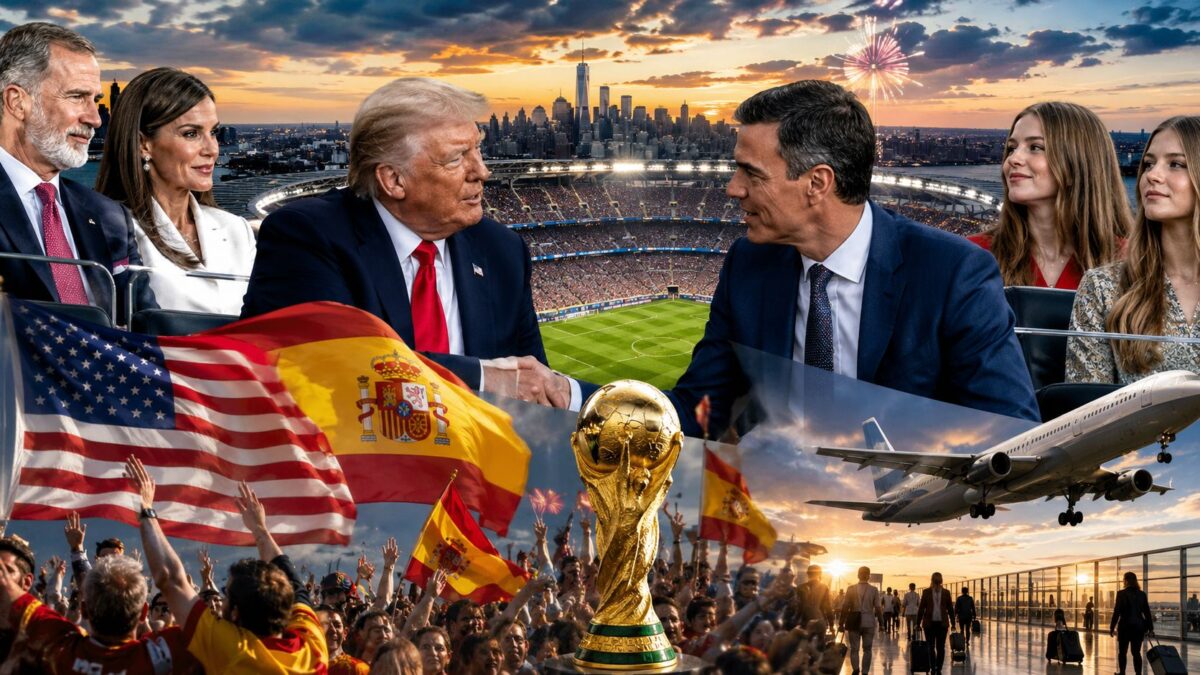
Image generated with Ai
The Donald Trump Pedro Sánchez World Cup Final Meeting became one of the most closely watched moments beyond the football pitch as world leaders gathered at MetLife Stadium in New Jersey for the 2026 FIFA World Cup final. While millions of supporters focused on Spain’s historic clash with Argentina, policymakers, tourism stakeholders and the international travel industry observed an equally significant development unfolding in the VIP section. After nearly two years of diplomatic friction, US President Donald Trump and Spanish Prime Minister Pedro Sánchez appeared together in public, reflecting a noticeably calmer tone in relations between Washington and Madrid following weeks of renewed engagement over defence commitments within NATO. The meeting highlighted how major sporting events increasingly function as platforms for international diplomacy, political dialogue and destination branding.
The timing carries wider implications for transatlantic tourism, business travel, government delegations, aviation partnerships and international event diplomacy. Spain remains among Europe’s largest tourism economies, while the United States continues to be one of its highest-value long-haul visitor markets. Against the backdrop of the FIFA World Cup, attended by political leaders, royal families, business executives and thousands of international travellers, the encounter demonstrated how global sporting events can reshape diplomatic narratives. Although no bilateral policy announcements emerged from the brief interaction, the symbolic optics suggest a gradual stabilisation of relations that could influence government exchanges, investment confidence, conference travel and broader tourism cooperation in the months ahead.
MetLife Stadium Becomes a Stage for Diplomacy Beyond Football
The FIFA World Cup final attracted worldwide attention not only because Spain competed for football’s biggest prize but also because the event assembled an exceptional concentration of political leaders and international dignitaries.
Among those present were US President Donald Trump, Spanish Prime Minister Pedro Sánchez, King Felipe VI, Queen Letizia, Princess Leonor and Infanta Sofía, making the occasion one of the highest-profile diplomatic gatherings linked to a sporting event in recent years.
Although the interaction between Trump and Sánchez remained brief, its political symbolism far outweighed its duration. Relations between both governments had experienced repeated strains over defence expenditure, differing positions on Middle East policy and broader strategic priorities. Consequently, their public appearance together suggested that diplomatic engagement had entered a less confrontational phase.
For the travel sector, such moments matter because international perceptions of political stability often influence tourism confidence, airline planning, corporate travel decisions and foreign investment.
Advertisement
Advertisement
Table: Key Figures Present at the FIFA World Cup Final
| Participant | Country | Significance for International Travel |
|---|---|---|
| Donald Trump | United States | Head of host nation during the World Cup final |
| Pedro Sánchez | Spain | Leader of one of the world’s largest tourism economies |
| King Felipe VI | Spain | Symbolised Spain’s national representation |
| Queen Letizia | Spain | Represented official Spanish royal delegation |
| Princess Leonor | Spain | Future monarch attending global sporting event |
| Princess Sofía | Spain | Member of official Spanish delegation |
Why the Meeting Matters Beyond Politics
International sporting events have evolved into powerful diplomatic platforms.
From Olympic Games to FIFA World Cups, governments increasingly use these occasions to strengthen bilateral relations, promote tourism and showcase national image. The United States has invested heavily in positioning itself as a global destination for mega sporting events, with the FIFA Club World Cup, FIFA World Cup, Ryder Cup, Formula One races and Olympic Games collectively expected to generate billions of dollars in visitor spending over the coming years.
Advertisement
Advertisement
Spain, meanwhile, continues to strengthen its own international tourism profile through sporting events, cultural heritage, gastronomy and business travel.
The public interaction between Trump and Sánchez therefore resonated beyond politics because both countries depend significantly on international mobility.
The United States remains one of Spain’s most valuable long-haul inbound tourism markets. American travellers typically spend considerably more per trip than the average international visitor, making bilateral tourism an important economic relationship.
Similarly, Spain remains among the most popular European destinations for American leisure travellers, conference delegates, cruise passengers and luxury tourists.
Advertisement
Advertisement
Diplomatic Friction Had Shaped Relations for Nearly Two Years
The meeting represented a visible departure from months of public disagreement.
Relations between Washington and Madrid had deteriorated primarily over defence spending commitments within NATO.
The United States had consistently urged European allies to increase military expenditure, with Spain becoming one of the countries facing the strongest criticism for remaining below ambitious long-term spending expectations.
Recent developments, however, suggested a more constructive atmosphere following NATO discussions held in Ankara.
Spain subsequently announced additional commitments towards defence investment while continuing to emphasise that its contributions should remain aligned with domestic priorities and broader European security objectives.
Although differences remain over long-term defence targets, the tone of official exchanges has become noticeably less confrontational.
Advertisement
Advertisement
For the travel industry, diplomatic stability reduces uncertainty surrounding government cooperation, official visits and bilateral engagement.
Table: Major Issues Affecting US-Spain Relations
| Area | Previous Position | Current Situation |
|---|---|---|
| Defence spending | Significant disagreements | Improved dialogue after NATO discussions |
| Political rhetoric | Public criticism from both sides | Noticeably moderated language |
| Bilateral engagement | Limited high-level interactions | Public meeting during FIFA World Cup |
| Tourism cooperation | Continued despite political tensions | Stable with potential for stronger collaboration |
| Business confidence | Some uncertainty | Improved diplomatic atmosphere |
Travel and Tourism Continue to Connect Both Economies
While political disagreements often dominate headlines, tourism has remained one of the strongest links between both nations.
Spain consistently ranks among the world’s most visited countries, welcoming more than 94 million international visitors in 2024, establishing another historic tourism record. International tourism contributed well over €200 billion to the Spanish economy, representing one of the country’s most significant economic sectors.
Meanwhile, the United States continues to rank among Spain’s fastest-growing long-haul visitor markets.
American travellers generally stay longer, spend more on accommodation, gastronomy and cultural experiences, and increasingly explore destinations beyond Madrid and Barcelona, including Andalusia, Galicia, Valencia, the Basque Country and the Balearic Islands.
Conversely, Spain remains a preferred European destination for American incentive travel, educational exchanges and cruise tourism.
Advertisement
Advertisement
The enduring strength of visitor demand demonstrates that tourism frequently remains resilient despite political disagreements.
Major Sporting Events Are Transforming International Travel
The 2026 FIFA World Cup has become one of the largest travel events ever organised.
Hosted across the United States, Canada and Mexico, the tournament has generated unprecedented demand for flights, hotels, rail services, car rentals and event-related tourism.
Industry analysts estimate that millions of international visitors travelled across North America during the competition, creating substantial economic benefits for host cities.
MetLife Stadium emerged as one of the tournament’s flagship venues, welcoming supporters from dozens of countries while simultaneously hosting senior political leaders.
Such occasions increasingly blur the distinction between sports tourism and diplomatic engagement.
Advertisement
Advertisement
Government delegations typically travel with security personnel, media representatives, diplomatic officials and business executives, generating additional demand for premium aviation services, luxury accommodation, ground transport and conference facilities.
For destinations, these events also provide invaluable global marketing exposure that extends well beyond the competition itself.
Table: Travel Industry Segments Influenced by the FIFA World Cup Final
| Sector | Potential Impact |
|---|---|
| Airlines | Increased premium and international passenger demand |
| Hotels | Higher occupancy across host cities |
| Business travel | Additional diplomatic and corporate delegations |
| Tourism marketing | Enhanced global destination visibility |
| Event management | Growth in international sporting event expertise |
| Airport operations | Increased passenger volumes and operational coordination |
World Cup Diplomacy Continues a Long International Tradition
The appearance of political leaders at global sporting events is far from unprecedented.
Olympic Games, FIFA tournaments and international championships have repeatedly provided opportunities for informal diplomatic engagement that would otherwise require months of planning.
Unlike formal state visits, sporting events offer relatively neutral settings where leaders can engage without extensive political protocols.
The 2026 FIFA World Cup has demonstrated this dynamic repeatedly, bringing together presidents, prime ministers, royal families, ministers, international organisations and business leaders across multiple host cities.
Advertisement
Advertisement
For the global travel industry, these occasions reinforce the importance of sports tourism as a catalyst for aviation growth, destination branding, infrastructure investment and international cooperation.
The meeting between Trump and Sánchez therefore reflects not only evolving diplomatic relations but also the growing role of global sporting events as platforms where tourism, politics, international business and public diplomacy increasingly intersect.
How Improved US-Spain Relations Could Influence International Travellers
Although the World Cup final meeting did not produce any immediate bilateral announcements affecting visas or border procedures, the broader diplomatic environment remains highly relevant for international travellers. Stable political relations generally create favourable conditions for expanding aviation partnerships, tourism promotion, educational exchanges and business mobility.
The United States and Spain already maintain extensive people-to-people connections through tourism, academic cooperation, multinational companies and cultural exchanges. A more constructive diplomatic relationship could encourage additional government-led tourism initiatives, stronger trade missions and greater confidence among travel businesses planning long-term investments.
For corporate travellers, diplomatic stability often reduces uncertainty surrounding government engagements, international conferences and commercial delegations. Spain continues to be a preferred destination for American pharmaceutical, technology, renewable energy and financial services firms, while Spanish companies maintain substantial investments across the United States in sectors ranging from infrastructure to banking and hospitality.
Leisure travellers are equally influenced by broader geopolitical sentiment. While holidays are rarely cancelled because of political disagreements between allied nations, positive diplomatic narratives can strengthen destination marketing campaigns and reinforce traveller confidence.
Advertisement
Advertisement
Table: What the Meeting Means for Different Traveller Groups
| Traveller Category | Potential Impact | Outlook |
|---|---|---|
| Leisure travellers | No immediate policy changes | Stable travel environment |
| Business travellers | Improved diplomatic confidence | Positive |
| Conference delegates | Better government cooperation | Positive |
| Students | Academic exchanges remain strong | Stable |
| Tour operators | Continued confidence in both markets | Positive |
| Airlines | Stable demand between both countries | Positive |
Tourism Remains One of Spain’s Strongest Economic Pillars
Spain’s tourism industry continues to demonstrate remarkable resilience despite global economic uncertainty and periodic geopolitical challenges.
According to official government data, tourism contributes around 12% of Spain’s Gross Domestic Product, while supporting millions of direct and indirect jobs across accommodation, aviation, transport, gastronomy, cruise operations and cultural attractions.
The United States has become one of Spain’s highest-value overseas tourism markets. American visitors typically spend significantly more per trip than many European visitors, contributing strongly to premium hotels, luxury retail, cultural attractions and fine dining.
The relationship also works in reverse. Spain consistently ranks among the favourite European destinations for American cruise passengers, independent travellers, educational tours and premium holidaymakers.
Growing connectivity between major American cities and Spanish gateways such as Madrid, Barcelona, Málaga and Palma de Mallorca has strengthened tourism flows over the past decade.
Business Travel Continues to Strengthen Bilateral Connections
Corporate mobility represents another important dimension of the US-Spain relationship.
Advertisement
Advertisement
Spain hosts numerous American multinational companies, while Spanish firms have become major investors throughout the United States. These commercial links generate thousands of annual business trips involving executives, engineers, consultants, legal professionals and government representatives.
International exhibitions, technology conferences, pharmaceutical conventions and renewable energy forums regularly attract delegates travelling between both countries.
A stable diplomatic atmosphere supports these activities by encouraging long-term investment planning and institutional cooperation.
For airlines, business travellers remain among the highest-yield passengers, making diplomatic stability particularly valuable for premium international routes.
Table: Major Areas Supporting US-Spain Business Travel
| Sector | Nature of Travel |
|---|---|
| Technology | Executive meetings and innovation conferences |
| Renewable energy | Investment and infrastructure projects |
| Tourism | Destination promotion and travel trade events |
| Higher education | Academic exchanges and research partnerships |
| Finance | Banking, investment and regulatory meetings |
| Infrastructure | Engineering and construction collaboration |
Sporting Events Are Becoming Strategic Tourism Assets
The 2026 FIFA World Cup has reinforced a broader global trend in which sporting events increasingly serve as catalysts for tourism development, infrastructure investment and international destination marketing.
Host cities invest heavily in airports, hotels, public transport, visitor services and security, leaving long-term benefits that extend well beyond tournament periods.
Advertisement
Advertisement
New Jersey, New York and neighbouring destinations experienced exceptional international visitor demand during the World Cup, with airlines adding capacity and hospitality businesses reporting elevated occupancy levels throughout the tournament.
Spain’s appearance in the final also generated substantial outbound travel from Europe, demonstrating how elite sporting events stimulate international passenger flows.
For tourism boards, such occasions provide unparalleled global media exposure that traditional advertising campaigns cannot easily replicate.
Diplomatic Differences Have Not Completely Disappeared
Despite the more constructive atmosphere witnessed during the World Cup final, important policy differences continue to shape relations between Washington and Madrid.
Defence spending remains the most prominent issue. The United States continues to encourage NATO members to increase military expenditure towards higher alliance targets, while Spain maintains that defence investment should reflect national priorities and broader European strategic requirements.
Differences also remain regarding Middle East policy.
Advertisement
Advertisement
Spain has adopted positions that differ from Washington on several regional issues, illustrating that stronger diplomatic engagement does not necessarily eliminate policy disagreements.
From a travel perspective, however, these differences have not translated into restrictions affecting ordinary visitors. Commercial aviation, tourism exchanges and business travel continue to operate normally between both countries.
Table: Areas of Cooperation and Remaining Differences
| Policy Area | Current Status |
|---|---|
| Tourism | Strong cooperation |
| Aviation | Stable connectivity |
| Business relations | Continued investment |
| Cultural exchanges | Active |
| Defence policy | Differences remain |
| Middle East policy | Different political positions |
Practical Information for Travellers Planning Trips Between the United States and Spain
Travellers planning journeys between Spain and the United States should note that the diplomatic meeting does not introduce any immediate changes to travel requirements.
US and Spanish aviation networks remain among the strongest transatlantic markets, with frequent direct flights linking Madrid, Barcelona and several American metropolitan areas.
Passengers should nevertheless continue checking airline schedules, passport validity requirements, travel insurance provisions and entry regulations before departure, particularly during peak holiday seasons when demand remains exceptionally high.
Business travellers attending conferences or government-related events should also monitor official announcements from organisers, although no operational disruptions have been linked to recent diplomatic developments.
Advertisement
Advertisement
As both countries continue investing in tourism infrastructure and premium travel experiences, travellers can expect continued improvements in airport facilities, digital border management and visitor services over the coming years.
A Symbolic Meeting with Wider Implications for Global Mobility
The Donald Trump Pedro Sánchez World Cup Final Meeting ultimately represented far more than a brief encounter between two political leaders watching football.
Held before a global audience during one of the world’s largest sporting spectacles, the meeting illustrated how international events increasingly function as platforms for diplomacy, tourism promotion and economic engagement. While significant policy differences remain on defence and foreign affairs, the noticeably improved tone between Washington and Madrid sends a reassuring signal to airlines, tourism businesses, investors and international travellers who benefit from stable transatlantic relationships.
For the travel industry, the encounter reinforces an important reality: diplomacy and tourism are closely interconnected. Positive political engagement encourages confidence, supports international mobility and strengthens the partnerships that underpin global aviation, business travel and visitor economies. As Spain and the United States continue welcoming millions of travellers each year, the Donald Trump Pedro Sánchez World Cup Final Meeting may prove to be another example of how sport can quietly help reopen diplomatic channels while supporting the long-term resilience of international travel.
Frequently Asked Questions (FAQs)
1. Why is the meeting between Donald Trump and Pedro Sánchez at the FIFA World Cup final significant?
The meeting marked the first high-profile public interaction between the two leaders after nearly two years of diplomatic tensions. Although brief, it signalled a more constructive tone in US-Spain relations during one of the world’s biggest sporting events.
2. Where did Donald Trump and Pedro Sánchez meet?
The two leaders met in the VIP section of MetLife Stadium in East Rutherford, New Jersey, during the 2026 FIFA World Cup final between Spain and Argentina.
Advertisement
Advertisement
3. Does the meeting affect travel between the United States and Spain?
No immediate changes have been announced to travel policies, visas or entry requirements. However, improved diplomatic relations could strengthen future cooperation in tourism, business travel, aviation and international events.
4. Why are major sporting events important for the travel industry?
Global events such as the FIFA World Cup generate millions of international trips, boost airline bookings, increase hotel occupancy, stimulate local economies and provide worldwide exposure for host destinations, making them powerful drivers of tourism growth.
5. What were the main issues behind recent US-Spain diplomatic tensions?
The primary disagreements centred on NATO defence spending targets and differing positions on international security issues, including the conflict in Gaza and broader Middle East policy.
6. Why is the United States an important tourism market for Spain?
The United States is one of Spain’s highest-value long-haul visitor markets. American travellers typically stay longer, spend more on accommodation, dining and experiences, and contribute significantly to Spain’s tourism economy.
7. How could improved US-Spain relations benefit business travellers?
A more stable diplomatic relationship can encourage greater business confidence, increase government and corporate exchanges, support investment, and strengthen demand for transatlantic conferences, trade events and executive travel.
8. Why was the FIFA World Cup final considered a diplomatic platform?
The tournament attracted presidents, prime ministers, royal families and senior officials from around the world. Such global sporting events often provide opportunities for informal diplomatic engagement alongside their sporting significance.
Advertisement
Advertisement
9. Did the meeting result in any new tourism or aviation agreements?
No new tourism, aviation or bilateral travel agreements were announced during the meeting. Its significance was primarily symbolic, reflecting an easing of diplomatic tensions rather than immediate policy changes.
10. What does this development mean for the global travel industry?
The meeting reinforces the close relationship between diplomacy and international travel. Positive political engagement can strengthen traveller confidence, support aviation growth, encourage tourism investment and enhance cooperation between major travel markets such as the United States and Spain.
Advertisement
Advertisement

