Published on
July 15, 2026
By: Pritam Nath

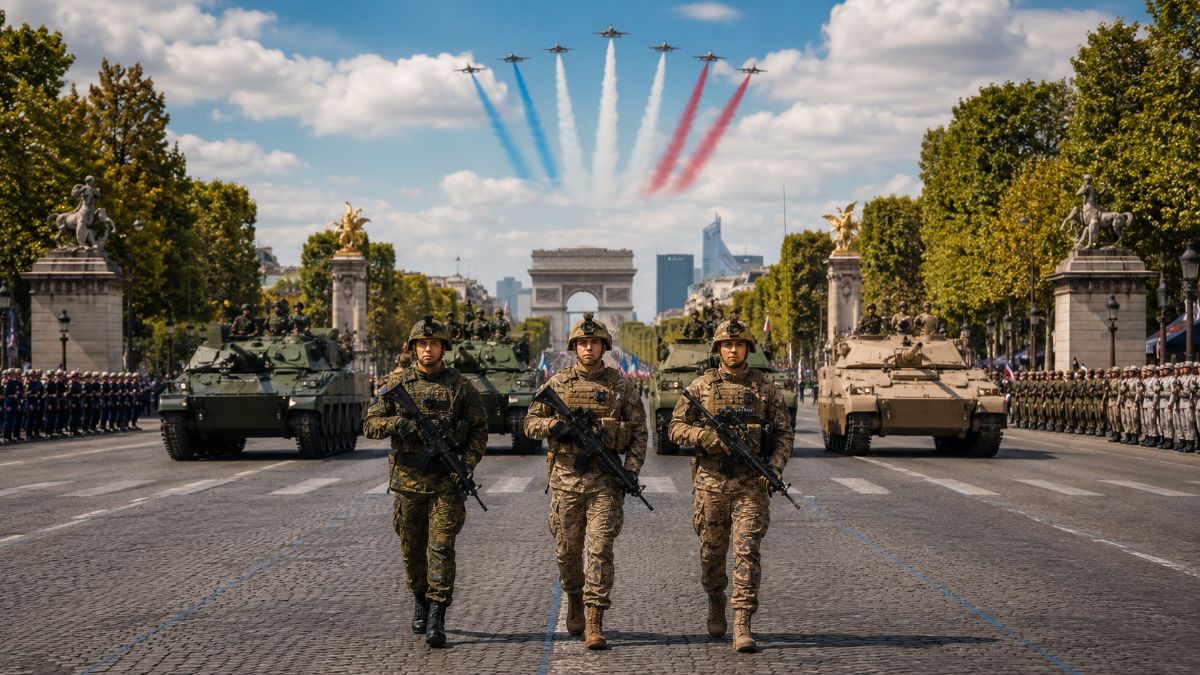
Image generated with Ai
France transformed its annual Bastille Day celebrations into a significant display of European solidarity by welcoming Ukraine, the United Kingdom, and numerous allied nations to Paris for one of the largest military parades in recent years. The event extended beyond a national celebration, reflecting Europe’s commitment to collective security while sending a message of cooperation amid continuing geopolitical tensions. The participation of Ukrainian troops, British soldiers, and military contingents from across Europe underscored a broader strategic partnership that carries implications not only for defense but also for tourism, aviation, international mobility, and traveler confidence across the continent.
For the global travel and tourism industry, political stability and regional security remain essential factors influencing visitor confidence. France’s Bastille Day parade demonstrated that European nations continue to strengthen diplomatic and defense cooperation while maintaining major public events despite ongoing security challenges, heat waves, and wildfire risks. The successful organization of one of Europe’s largest national celebrations highlighted the country’s ability to host international visitors safely while preserving one of its most iconic cultural traditions.
Bastille Day Became a Symbol of European Unity
| Key Highlights | Details |
|---|---|
| Event | Bastille Day Military Parade |
| Location | Paris, France |
| Date | July 14, 2026 |
| Chief International Focus | European unity and support for Ukraine |
| Participating Leaders | Around 30 heads of state and government |
| International Military Participation | Coalition of the Willing nations and Ukraine |
| Travel Importance | Reinforces visitor confidence and destination stability |
France’s National Day traditionally commemorates the storming of the Bastille in 1789, marking the beginning of the French Revolution. This year’s celebrations carried additional diplomatic significance as President Emmanuel Macron welcomed European leaders and military representatives to Paris.
The parade showcased multinational military cooperation while emphasizing Europe’s commitment to maintaining stability across the continent. Such international participation transformed the event into both a cultural celebration and a demonstration of regional partnership.
Ukraine Occupied a Central Position During the Celebration
| Ukrainian Participation | Importance |
|---|---|
| Ukrainian troops marched in parade | Symbol of solidarity |
| President Volodymyr Zelenskyy attended | High-level diplomatic engagement |
| Ukrainian pilots participated with French Air Force | Military cooperation |
| Public reception | Strong public support from spectators |
Ukraine received one of the warmest public receptions during the event. Ukrainian soldiers marched alongside allied forces, while Ukrainian pilots flew aboard French-operated Mirage aircraft during the aerial display.
The appearance reflected ongoing European cooperation and highlighted France’s continued diplomatic and military partnership with Kyiv.
Advertisement
Advertisement
European Nations Expanded Multinational Participation
| Participating Countries | Role |
|---|---|
| France | Host nation |
| Ukraine | Guest participant |
| United Kingdom | Military contingent |
| Germany | Air force participation |
| Poland | Aircraft participation |
| Denmark | Aircraft participation |
| Greece | Aircraft participation |
| Sweden | Aircraft participation |
| Norway | Aircraft participation |
| Spain | Aircraft participation |
| Italy | Aircraft participation |
| Croatia | Aircraft participation |
Unlike previous editions where a single foreign nation traditionally joined the celebrations, this year’s Bastille Day included multiple European partners.
The multinational military presence reflected broader European cooperation while highlighting shared commitments to regional stability.
Record Military Participation Strengthened Security Messaging
| Military Statistics | 2026 |
|---|---|
| Troops Marching | Approximately 7,600 |
| Previous Year | Approximately 5,810 |
| Aircraft | Multiple European Air Forces |
| International Leaders | Around 30 |
The Paris military parade recorded its highest troop participation in recent years.
Thousands of soldiers, military aircraft, armored vehicles, helicopters, cavalry units, and ceremonial formations contributed to one of France’s largest national displays, reinforcing preparedness while celebrating national heritage.
Bastille Day Continues to Drive Tourism
Paris remains one of Europe’s premier tourism destinations, and Bastille Day consistently attracts domestic and international visitors seeking cultural experiences.
Travelers gather along the Champs-Élysées to witness military displays, aviation demonstrations, ceremonial bands, and the evening fireworks surrounding the Eiffel Tower.
Advertisement
Advertisement
Hotels, restaurants, museums, transportation providers, and local businesses generally experience heightened visitor activity during the national holiday, making Bastille Day one of France’s most important tourism periods.
International visitors also combine the celebrations with visits to landmarks including the Louvre Museum, Arc de Triomphe, Seine River attractions, Versailles, and numerous cultural institutions throughout the French capital.
Weather Challenges Tested Event Planning
| Challenge | Impact |
|---|---|
| Heat wave | High temperatures across France |
| Wildfires | Southern France and Fontainebleau Forest |
| Firework restrictions | Implemented in several regions |
| Paris celebrations | Main Eiffel Tower display maintained |
France faced significant environmental challenges during this year’s celebrations.
Authorities introduced restrictions in several regions because of elevated wildfire risks and persistent heat conditions. Traditional community fireworks and firefighter balls were cancelled in some locations.
However, Paris proceeded with its signature Eiffel Tower fireworks and drone performance, preserving one of the city’s largest tourism attractions during Bastille Day.
Travel Industry Watches Security and Stability Closely
International travelers increasingly evaluate safety, transportation reliability, and political stability before selecting destinations.
Advertisement
Advertisement
Large-scale events such as Bastille Day demonstrate France’s capability to organize secure international gatherings despite complex geopolitical circumstances.
The successful coordination of multinational delegations, military participants, transportation systems, and public festivities reinforced confidence among tourism stakeholders including airlines, tour operators, hotels, cruise companies, and travel advisors.
For Europe’s tourism economy, visible cooperation among allied nations also contributes to perceptions of regional resilience that support long-term visitor demand.
Aviation and International Mobility Remained in Focus
The aerial component featured aircraft from several European countries, demonstrating extensive operational cooperation.
Beyond the military display, multinational aviation participation highlighted the interconnected nature of European airspace and cross-border cooperation.
For commercial aviation and tourism, continued collaboration among European partners supports operational confidence, infrastructure planning, and international travel continuity throughout the region.
Advertisement
Advertisement
Cultural Heritage and International Diplomacy Combined
Bastille Day remains one of France’s most internationally recognized national celebrations.
This year’s commemorations blended historical remembrance with contemporary diplomacy by bringing together European leaders, military personnel, and international guests.
The event reinforced France’s role as both a leading tourism destination and an influential diplomatic center capable of hosting major international gatherings while celebrating its national identity.
What This Means for Global Tourism
Although primarily a national celebration, Bastille Day demonstrated how major public events increasingly intersect with international diplomacy, destination branding, traveler confidence, and regional cooperation.
France successfully balanced security, cultural heritage, international participation, and visitor experience despite extreme weather conditions.
For international travelers planning future European itineraries, the event reaffirmed Paris’ ability to host world-class celebrations while maintaining robust security measures and preserving its reputation as one of the world’s leading tourism destinations.
Advertisement
Advertisement
FAQs
FAQ 1: Why was the 2026 Bastille Day parade internationally significant?
It featured extensive participation from Ukraine, the United Kingdom, and several European allies, emphasizing regional unity and collective security.
FAQ 2: Why were Ukrainian troops invited?
Their participation symbolized European solidarity and ongoing support for Ukraine.
FAQ 3: How many international leaders attended?
Approximately 30 heads of state and government attended the celebrations.
FAQ 4: Why is Bastille Day important for tourism?
It attracts large numbers of domestic and international visitors to Paris for military ceremonies, cultural events, and fireworks.
FAQ 5: How did weather affect the celebrations?
Heat waves and wildfire risks led to cancellations of some regional festivities, although Paris maintained its main celebrations.
FAQ 6: Did the Eiffel Tower fireworks take place?
Yes. The Eiffel Tower fireworks and drone show proceeded despite restrictions elsewhere.
Advertisement
Advertisement
FAQ 7: Which European countries participated militarily?
France, Ukraine, the United Kingdom, Germany, Poland, Denmark, Greece, Sweden, Norway, Spain, Italy, and Croatia were among those represented.
FAQ 8: How does such an event influence travel confidence?
Successful management of major international events demonstrates destination preparedness, safety, and organizational capability, which positively influences traveler confidence.
FAQ 9: Why is Paris a popular Bastille Day destination?
Visitors experience historic ceremonies, military flyovers, cultural celebrations, fireworks, museums, and iconic landmarks during one of France’s largest annual events.
FAQ 10: What broader message did the parade convey?
The celebrations highlighted European cooperation, diplomatic solidarity, and continued commitment to regional stability while reinforcing France’s position as a leading global tourism destination.
Advertisement
Advertisement