Like other advanced cities, Hong Kong faces a range of clearly defined challenges that must be directly addressed in the next few years.
Two that stand out are the effects of climate change and the consequences of an ageing population, which, one way or another, will impact every section of society. This means concerted action and practical solutions are required from each branch of industry – and every government department.
The route to real and rapid progress is through constant and meaningful cross-sector exchanges. This enables the ready sharing of ideas, information and success stories, which paves the way to earlier and wider adoption of significant innovations and inspires a can-do approach to solving any problem.
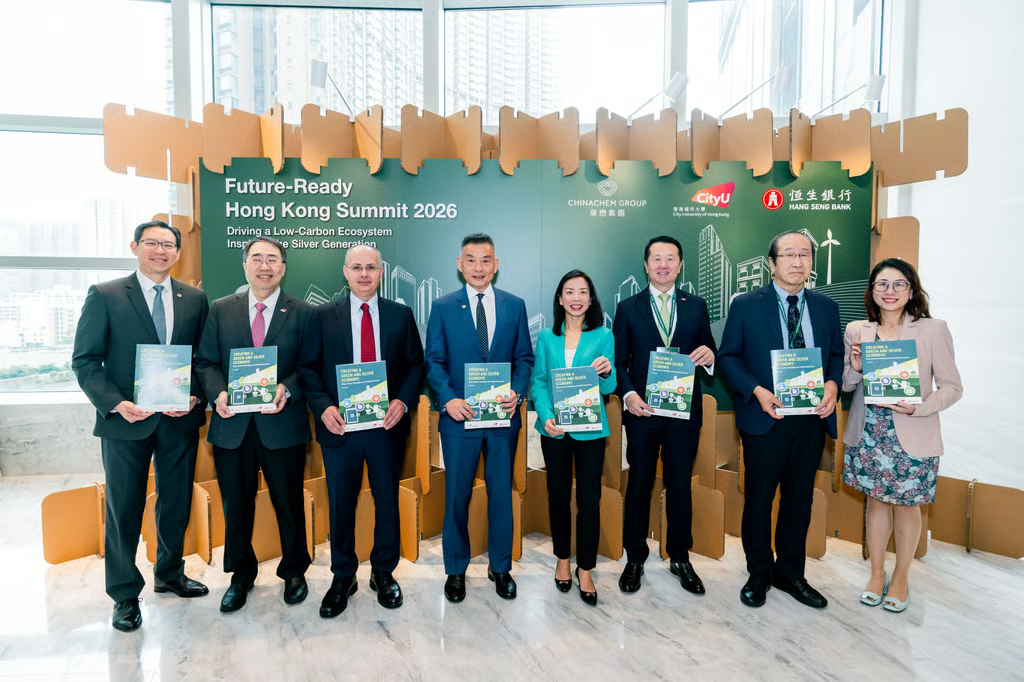
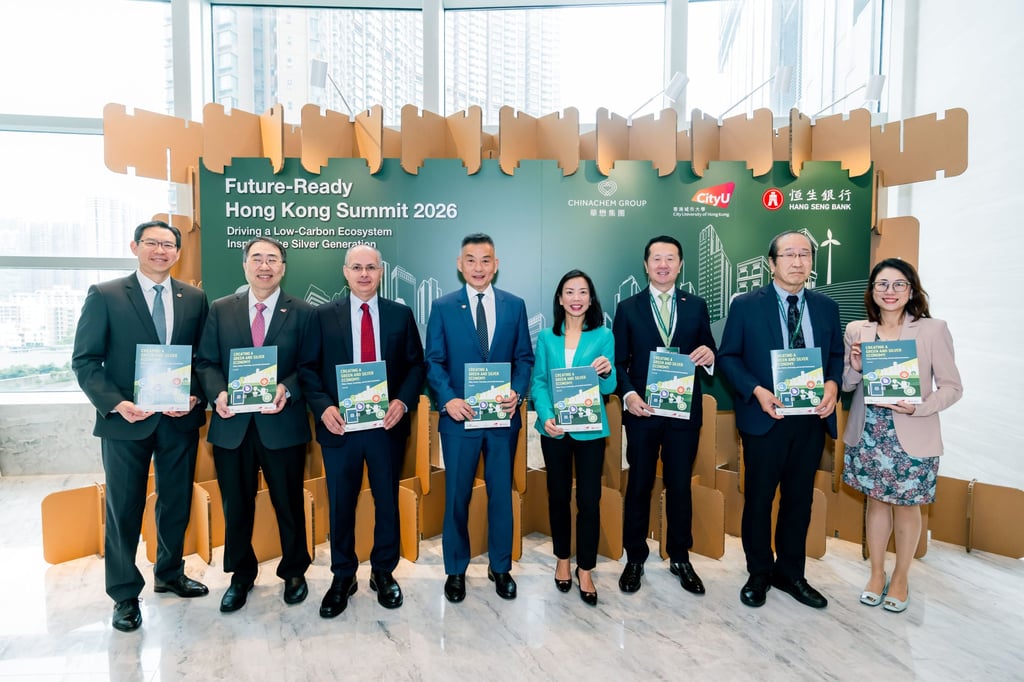
A great example of this type of exchange is the Future-ready Hong Kong Summit 2026, which took place on June 12 as one outcome of the tripartite collaboration between Chinachem Group, City University of Hong Kong and Hang Seng Bank. The event brought together leaders from industry, finance and academia, along with innovators, visionaries and policymakers.
Besides hearing from experts in diverse fields, it was a chance to learn about what is already being achieved through a combination of scientific research, timely investment, strategic planning and a go-ahead attitude to meeting challenges and driving change.
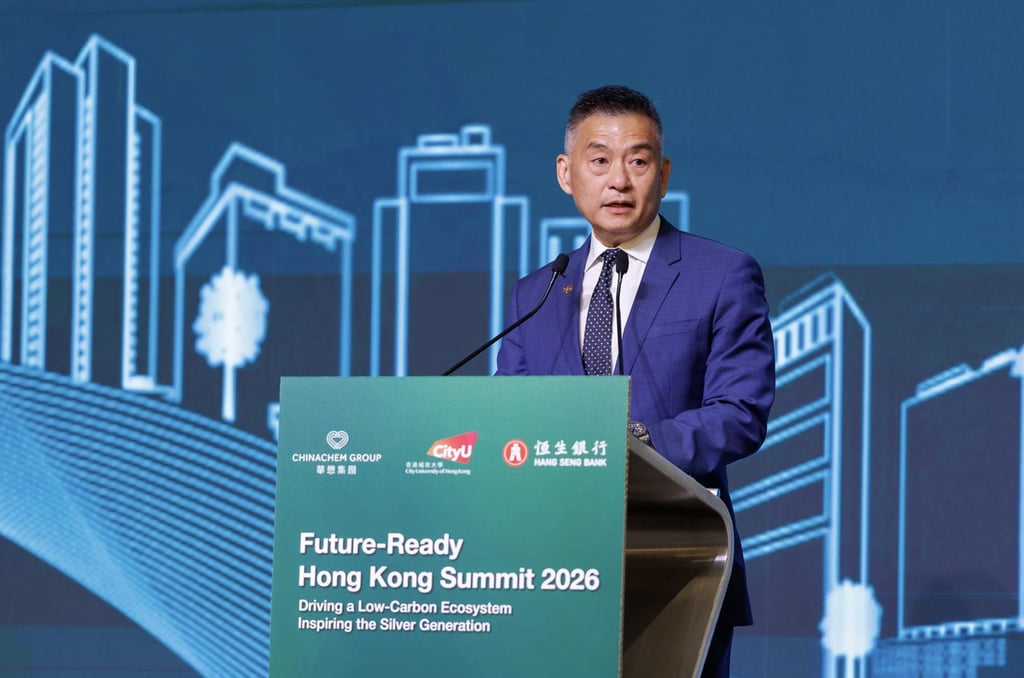
In his speech welcoming attendees, Andy Cheung, executive director and CEO of Chinachem Group, emphasised the importance of a diverse range of parties working together. He noted that Hong Kong is at a defining point, where an ageing population and a warming climate are converging to reshape how the city is designed, how communities function and how people live their daily lives.
He said the issues of an ageing population and a hotter climate should not be viewed separately, but seen within the same broad context and dealt with accordingly.
Projections indicate that by 2046, one in three Hong Kong residents will be 65 or above, while problems and risks associated with extreme weather events are increasing, creating conditions which test people’s resilience and expose systemic inequality.
For the elderly, many of whom live alone or in difficult circumstances, rising temperatures not only impair comfort at home, but also affect health, mood, mobility and perhaps even the desire to leave their homes.
In addition, about 30 per cent of the city’s privately owned buildings will be over 50 years old by 2033. Extensive urban renewal and retrofitting must take place, but the essential thing, the summit noted, is to ensure the whole programme is carried out in a way that aligns age-friendly design with green planning principles, smart technology and digital access, so that everyone benefits long into the future.
“Driving a low-carbon economy while supporting the silver generation requires all of us to work together – thinking differently and acting with purpose,” Cheung said. “It is about how we continue to build better buildings, connect communities at different stages of life, and turn ideas into something practical while recognising that challenges like ageing and climate change do not happen in silos.”
To this end, the forum also saw the launch of a joint white paper, which is being made available to the public and formally submitted to the Hong Kong government.
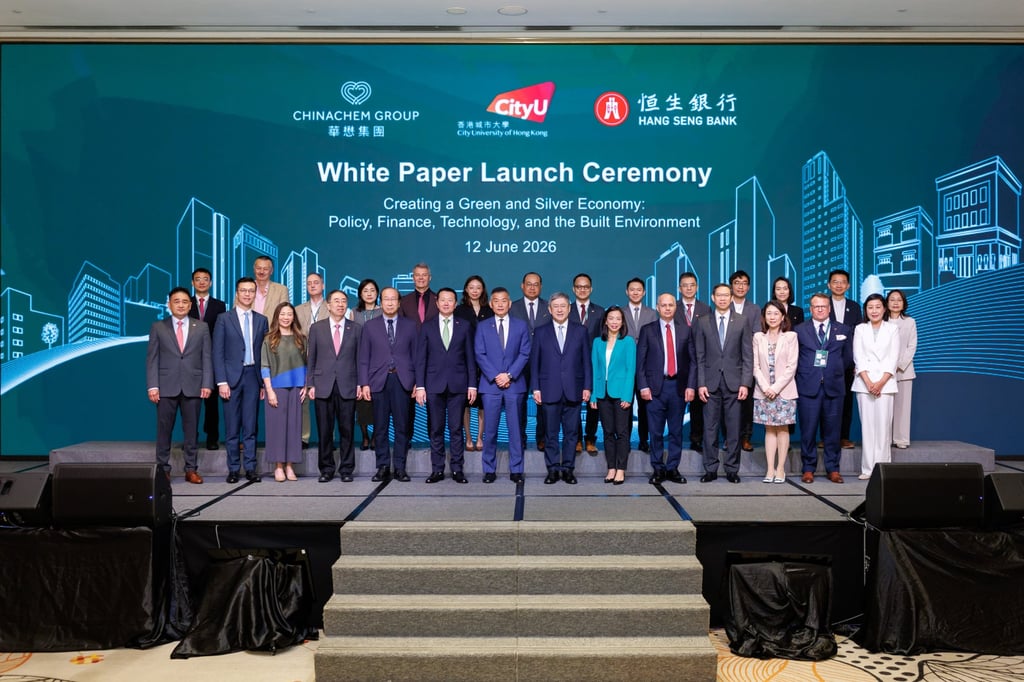
The initiative, also a tripartite collaboration, is to put forward a first-of-its-kind framework that links the pressing issues of an ageing population, climate change and urban development while suggesting pathways for progress and proposing concrete actions to be taken by business leaders and government.
The main theme of the white paper, which was outlined by Lawrence Iu, executive director of Civic Exchange, is how to use cross-sector insights to support both the low-carbon and the silver economy. This can be achieved by a human-centric model aligned with eight main priorities for the community, he said.
The aim is to make the built environment safe and comfortable, thereby ensuring that people feel mobile, included, secure and empowered, as well as connected and able to contribute. Success in these areas can enable Hong Kong to lead the region – and even the world – in sustainability, inclusivity and all-round liveability.
For Chinachem, the white paper reflects a broader shift from building physical assets to shaping long-term, liveable communities. In day-to-day terms, it will also help to promote concepts such as active ageing and purposeful living, which will become more important as the economy evolves and demographic shifts continue.
“For many older residents, climate change is not an abstract environmental issue,” Iu said. “By having one integrated framework to address two major structural transitions, we can support ageing in place, reduce heat exposure and create new demand for green energy. The impact goes far beyond social welfare concerns to include building renewal, green finance, decarbonisation and providing a pathway to scale the latest technologies.”
Cheung noted the priority now is turning ideas into tangible outcomes that people can experience in their daily lives – from homes with improved cooling, for instance, to better-connected neighbourhoods that support people regardless of their age.
Stressing the need for action, Cheuk Wing-hing, Deputy Chief Secretary for Administration, spoke about the various initiatives the Hong Kong government is already taking to improve the built environment, cut emissions and support the older generation.
In broad terms, the best approach, he said, is to see each challenge as an opportunity and to have confidence in people’s ability to find a solution for every problem.
That philosophy has certainly inspired the work of the two Nobel laureates who delivered separate keynote addresses at the forum on transformative discoveries being made at the frontiers of science.
Omar M. Yaghi is the James and Neeltje Tretter chair professor of chemistry and professor of materials science and engineering at the University of California, Berkeley; his research team has opened up exciting new avenues with its studies of molecular properties and subsequent combinations.
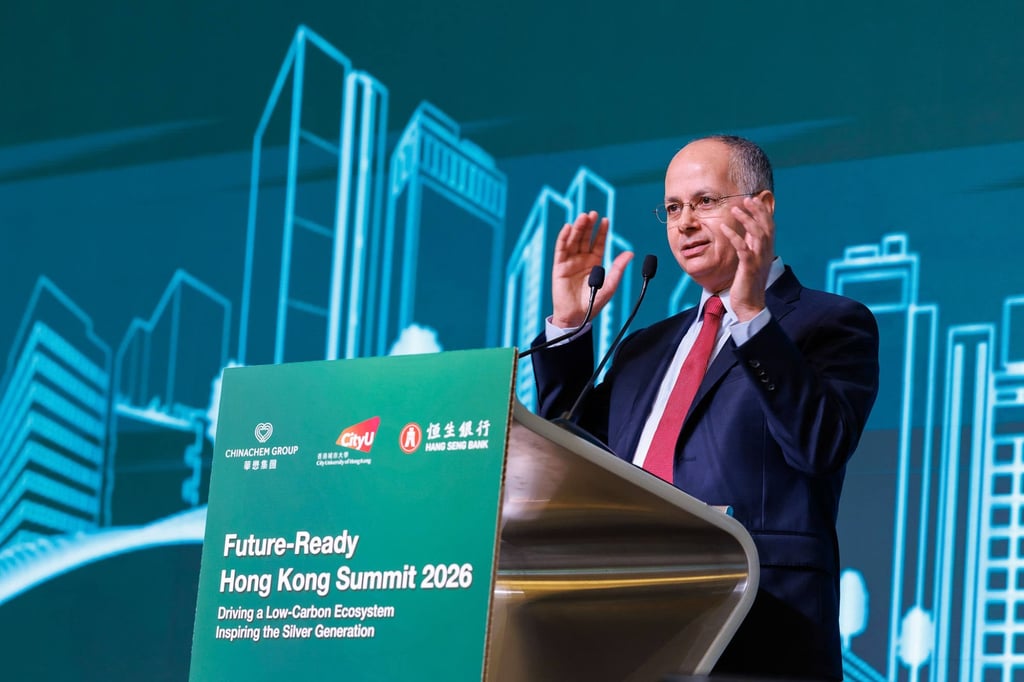
In particular, the team’s work on MOFs (metal-organic frameworks) has led to methods of harvesting clean water from the air, even in the hottest deserts, with the potential to produce thousands of litres a day.
Other breakthrough developments with COFs (covalent organic frameworks) via reticular chemistry – the process of “stitching” molecules together to make new materials – have made it possible to create new compounds which can, for example, facilitate carbon capture.
“Materials are the foundation of society, and science has moved us from scarcity to abundance,” Yaghi said. “Scientific discoveries are turning problems into solutions, and AI is now changing [and accelerating] the way that can be done.”
Fellow Nobel laureate Professor Susumu Kitagawa, executive vice-president and distinguished professor at Kyoto University, explained how advances in designing molecular space are moving the world from being a “digging” civilisation, dependent on fossil fuels, to being one of “separation”.
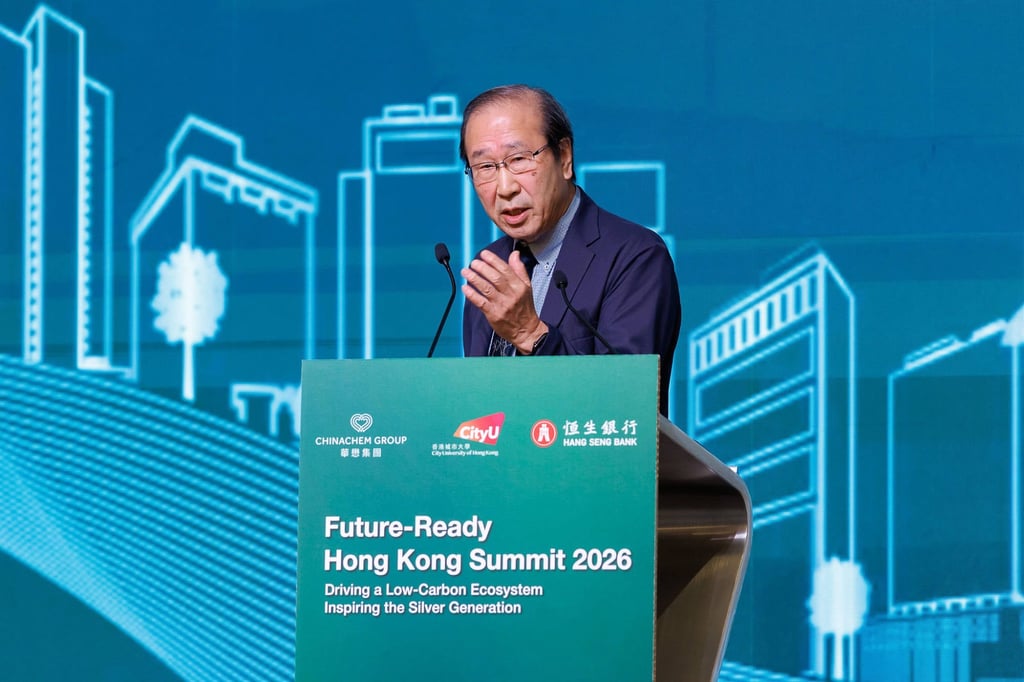
He said the infrastructure of the future will be built upon the separation, capture, conversion, concentration and storage of molecules, especially the ability of MOFs to unlock micro-level functions which can have a macro-level impact.
“It is the grand challenge of the invisible,” Kitagawa said. “The next revolution will be to have a fully circular molecular economy, with social solutions realised through MOFs.”
The forum also included two forward-looking panel discussions focused on the ways different sectors – notably banking, property and construction, non-profit organisations and universities – are collaborating to achieve carbon neutrality and anticipate issues caused by an ageing population.
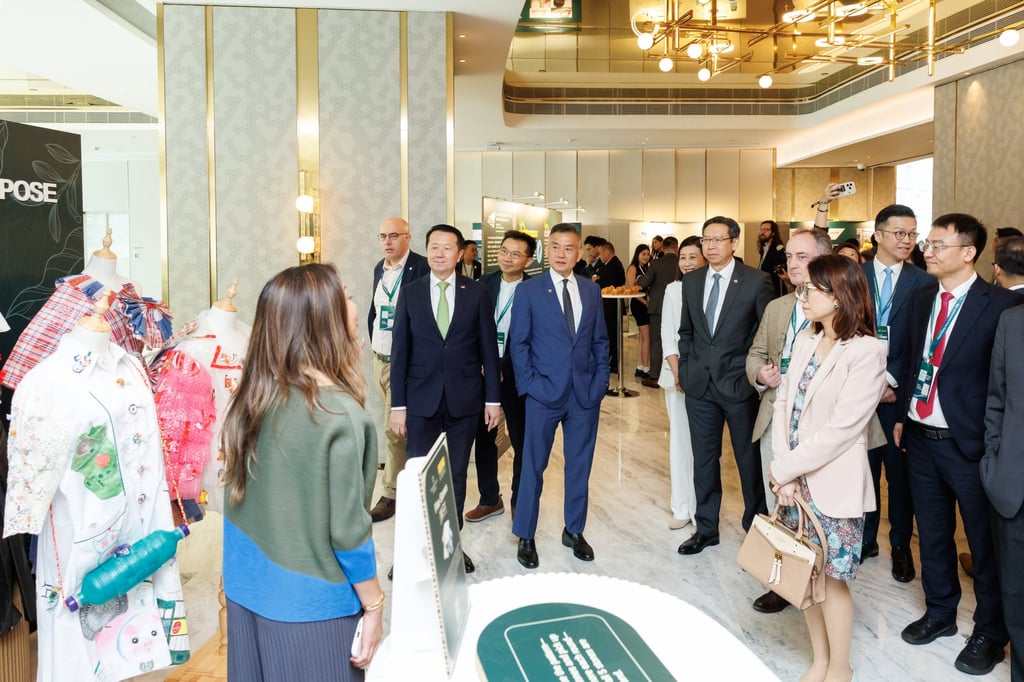
Gingko House, a local social enterprise restaurant group that champions senior employment and purposeful later life, was invited by Chinachem Group to take part in the summit, where elderly artisans handcrafted traditional “five stones” souvenirs for participants, demonstrating the valuable contributions seniors can make to the community.

Another highlight of the summit was the special-guest dialogue between actress and host Do Do Cheng and Professor Wong Kam-sing, former Secretary for the Environment in Hong Kong and now chairman of the Wu Zhi Qiao (Bridge to China) Charitable Foundation. Wong emphasised that, regardless of age or status, there is plenty that individuals can do to make a difference. Even the smallest actions, he said, such as reducing use of air conditioning, are a starting point on the path to green living and a better life for all.
While the summit discussed a wide range of topics and gathered many views, the underlying message was loud and clear: addressing the challenges presented by climate change and an ageing population cannot be resolved by isolated solutions, but by rethinking how a city functions. The goal is to help turn shared ideas into practical outcomes – shaping a Hong Kong where people can continue to live well, stay connected and thrive at every stage of life.