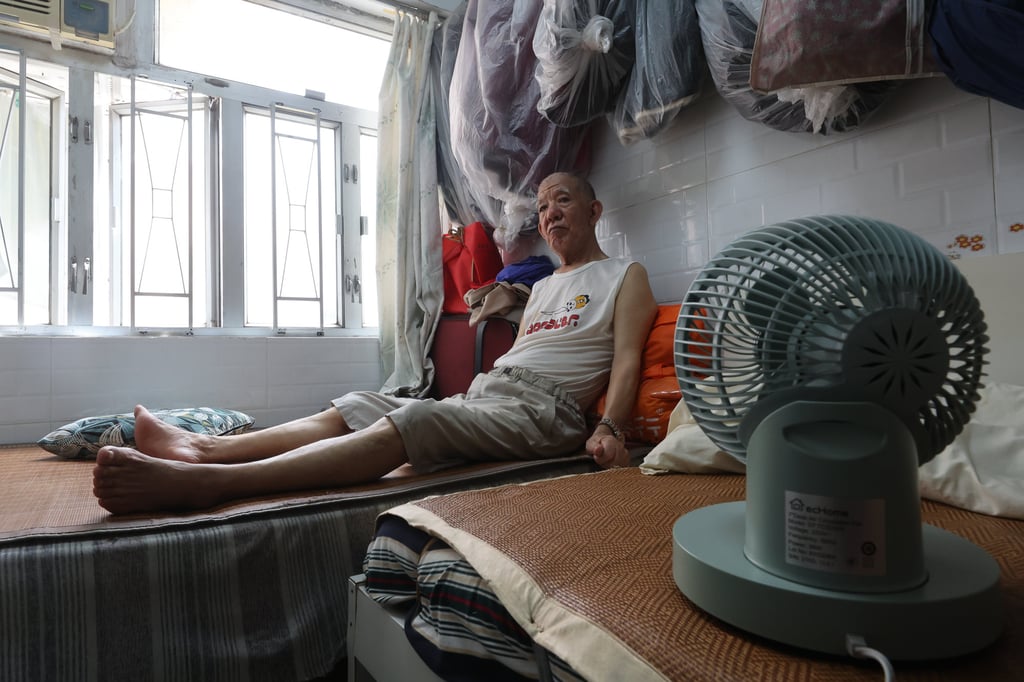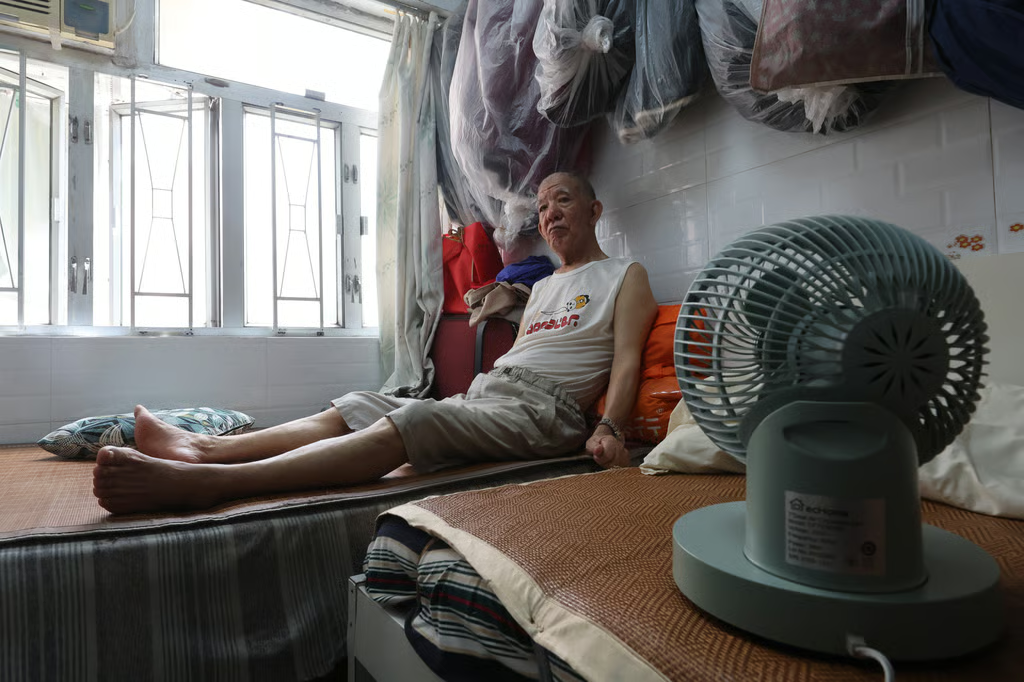
Yung, an elderly Hong Kong resident, has spent hours hanging out at a neighbourhood shopping centre in Kwai Chung all summer.
But he has not been going there to shop, instead taking refuge from the sweltering heat in the mall’s soothing air-conditioned arcade.
The retiree, who lives in a 100 sq ft subdivided flat with his wife, is reluctant to use the air conditioner for long periods to avoid a hefty electricity bill, despite the hot and stuffy weather in recent weeks.
“There have been more instances this year when I have felt dizzy, with a tightness in my chest, inside my flat,” said Yung, who is in his seventies. He turns on the air conditioner at night for about an hour before going to sleep, but often awakes at around 1am, covered in sweat.
Yung is among many underprivileged residents whose health and sleep cycles have been disrupted by extreme heat, as Hong Kong recorded a scorching 36.9 degrees Celsius (98.4 Fahrenheit) at the Observatory’s headquarters in Tsim Sha Tsui on August 9, the highest since records began in 1884.
His experience underlines questions about the city’s climate resilience, as heatwaves are predicted to occur more frequently and to affect larger areas surrounding the Pearl River Delta, including Hong Kong, by 2040, according to a study published in a scientific journal in May.