
The ICT4D community obsesses over mobile coverage maps while completely missing what matters for digital inclusion.
We celebrate when another country hits 90% mobile broadband coverage, congratulate ourselves when operators roll out 4G to rural areas, and fund endless initiatives to get smartphones into more hands. Meanwhile, the data screaming at us from the ground tells a completely different story about meaningful Internet connectivity.
The development sector has been measuring the wrong thing. Coverage doesn’t equal connectivity, and smartphones don’t equal internet access. What matters is how much internet people consume, and on that metric, we’re failing spectacularly.
Sign Up Now for more broadband connectivity critiques
40x Internet Usage Gap
Here’s the crazy reality buried in operator data from African Internet Service Providers (ISPs) targeting lower-income households: customers with uncapped home broadband use 40 times more internet than the typical mobile data user in Sub-Saharan Africa.
Let me repeat that. Forty times.
- Mawingu Networks reports their customers consume 300 GB per month.
- Poa! Internet sees 250 GB monthly usage.
- TooMuchWifi’s customers in South African townships burn through 400 GB each month.
Compare this to the median mobile data usage in Sub-Saharan Africa of just 6.7 GB per month, and you realize we’ve been celebrating the wrong metric entirely.
This isn’t a minor difference.
This is the gap between checking WhatsApp messages and participating in the digital economy. Between watching a single YouTube video per day and streaming Netflix in the evening while your kids do homework research simultaneously. Between accessing information and truly being connected.
Quantity Is the Quality We Should Measure
The development community loves to talk about meaningful connectivity, but we keep measuring it wrong. We count how many people theoretically could access the internet while ignoring how many gigabytes they consume. It’s like measuring food security by counting grocery stores instead of calories consumed.
Jim Forster captured this perfectly: “For all the discussion about coverage and speed, to me the more important measures are quantity and price.”
He’s absolutely right. A person with uncapped home broadband at $15/month is infinitely more connected than someone rationing a 3 GB monthly mobile data plan that costs the same amount.
The usage patterns tell the whole story.
When families have uncapped access, they don’t just use the internet more—they use it differently. They stream educational content. Kids do homework online without parents worrying about data costs. Adults take online courses. Families video call relatives abroad. Small businesses run WhatsApp commerce operations without throttling.
This is what digital inclusion looks like.
The Business Model Revolution
A new generation of ISPs across Africa is proving that uncapped home broadband for lower-income communities is profitable. Companies like Tizeti in Nigeria, Poa! in Kenya, Mawingu Networks across East Africa, TooMuchWifi and fibretime in South Africa, and Ilitha Telecoms are offering unlimited home internet for $10-20 per month and building sustainable businesses.
Their secret? They’ve rejected the mobile-first orthodoxy completely.
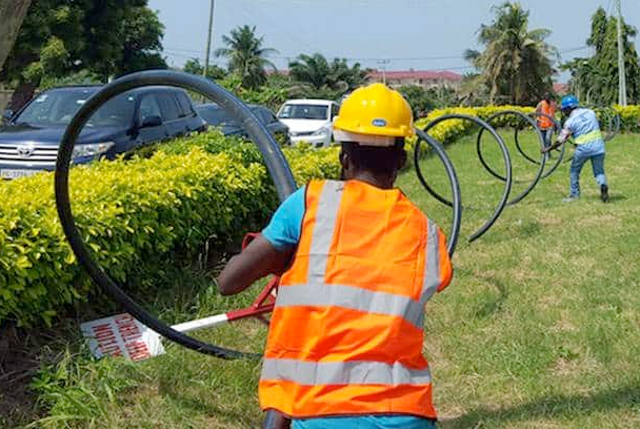
These companies use whatever technology makes economic sense for dense residential areas: free-to-use wireless spectrum, aerial fiber strung on wooden poles, point-to-point wireless backhaul. They operate in countries with competitive backhaul markets where international bandwidth isn’t prohibitively expensive. They target middle and lower-income households in areas with sufficient population density to make the unit economics work.
Alan Knott-Craig of fibretime says: “Herotel was the biggest wireless ISP in South Africa. Fibre came along and wiped it out.”
For densely populated lower-income communities, he argues fiber is the only sustainable answer. Others like Tizeti successfully use wireless in Lagos. The technology choice matters less than the business model: uncapped service at prices households can afford.
TooMuchWifi demonstrates how social impact and profitability can align. They return 30% of revenues to the communities they serve and employ 98% of their staff from those same communities.
CEO Tauriq Brown says: “We want to make a difference in these communities. People in the communities accept this argument. It’s our USP.”
Mobile Broadband Isn’t the Answer
Yes, we know that mobile broadband access reduces poverty. The evidence is clear that expanding mobile networks lifts people out of poverty, increases employment, and grows GDP. Nobody is arguing against mobile connectivity as a development tool.
But mobile broadband solves one problem while creating another.
Mobile networks excel at extending basic connectivity to dispersed populations and providing on-the-go access. They’re brilliant for reaching the last billion. They’re terrible as the primary internet access for households and communities that need to use the internet intensively.
The economics are fundamentally broken.
Mobile networks are built for mobility, not for households streaming 400 GB per month. Operators design pricing around the assumption most users will consume minimal data. When they offer “unlimited” plans, they cost 5-10 times what fixed wireless or fiber costs. The typical mobile operator has no interest in cannibalizing their lucrative metered data revenues by offering genuinely unlimited household plans at affordable prices.
Infrastructure Investment Challenge
These ISPs face a critical inflection point. They’ve proven the model works at small scale. Now they need infrastructure-level capital to scale to millions of households.
- Tizeti is expanding from Nigeria into Ghana and Côte d’Ivoire.
- Poa! is planning international expansion beyond Kenya.
- fibretime aims for 7 million South African household connections by 2032.
- Ilitha Telecoms plans to connect 150,000 South African households by end of 2026.
The financing needs are substantial.
- Fibretime found an innovative solution through an accredited real estate investment trust that treats fiber as property assets and offers investors an 18% yield.
- TooMuchWifi secured investment from British International Investment and impact investors.
- Poa! has raised multiple equity rounds and now needs infrastructure investors for the next phase.
But here’s the problem: most infrastructure investors understand mobile towers and submarine cables. They don’t yet understand the economics of lower-income household broadband. DFIs and development banks remain overly focused on mobile network expansion. The capital is there, but it’s flowing to the wrong technology for household connectivity.
Clarity in Uncapped Access
The evidence is clear: uncapped, always-on home broadband transforms how people engage with the digital world in ways that metered mobile access simply cannot. The business models proving this work are emerging across the continent. The technology exists and keeps getting cheaper.
What’s missing is the recognition from the development community that we’ve been solving the wrong problem.
Mobile broadband got people their first taste of connectivity. That was essential. But pretending that mobile data plans are sufficient for households to participate in the digital economy is like saying food aid is equivalent to food security.
![A drone view shows mud covering properties following the flash flood, in the Nuwakot district, Nepal, August 26, 2026 [Reuters]](https://news.charm-retirement.com/wp-content/uploads/2026/08/2026-08-26T170828Z_1689808418_RC2E6NAJGRDA_RTRMADP_3_NEPAL-FLOODS-1787790524.jpg)
