Alan Shearer is a former England captain, the Premier League’s record goalscorer and a one-time title winner. Nowadays he is equally renowned in a post-retirement career in broadcasting, serving as a lead co-commentator on the BBC’s World Cup coverage.
His most famous moment in the gantry came two years ago, when he was on duty for England’s penalty shootout win at the 2024 European Championship against Switzerland.
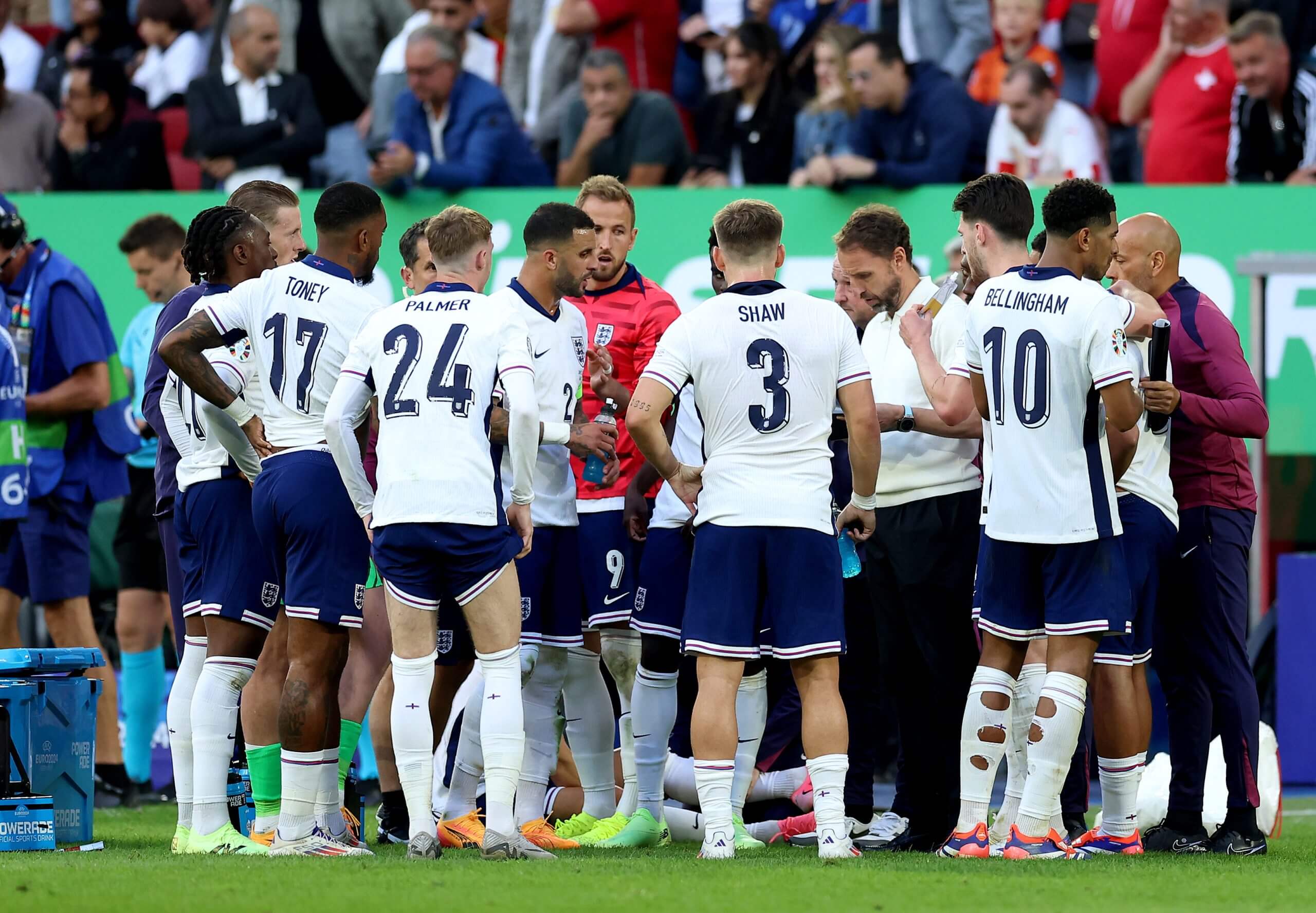
All five of Gareth Southgate’s designated takers dispatched from 12 yards, and after Trent Alexander-Arnold had converted the decisive fifth penalty, Shearer said, “(Cole) Palmer, (Jude) Bellingham, (Bukayo) Saka, (Ivan) Toney, Trent. Pressure? What Pressure? Pressure is for tyres,” a line that went viral and later took on a new life and is still used as background audio for short social media videos on Instagram, TikTok and YouTube.
Few commentators are more qualified to speak about what it takes from the spot. Shearer scored 56 of his 67 attempts over his 14 years in the Premier League. His last goal as a professional was a trademark drilled penalty to put Newcastle United ahead in a 4-1 win at rivals Sunderland in 2006, and he was once described as having taken the “perfect penalty” against Argentina at the 1998 World Cup by scientists at Liverpool John Moores University, getting closest to perfecting each area of their six-point index.
Even under Gareth Southgate, who, in combination with steps taken by the Football Association (FA), changed the way England approached shootouts, Shearer would have been a certainty to step up for a decisive spot-kick. Like Harry Kane and Toney, who was included in Thomas Tuchel’s England squad for the World Cup partly due to his extraordinarily good record from the spot (58 scored from 62 in his career), there was no question that Shearer would take a penalty when he was on the pitch. But how do coaches decide the others?
Julian Nagelsmann experienced the pitfalls of lacking shootout preparation as his Germany side were eliminated by Paraguay in the round of 32. Germany, who once scored 22 consecutive penalties in major tournament shootouts (15 straight in World Cups), missed three of six, with strikers Kai Havertz and Nick Woltemade unsuccessful from the spot. Centre-back Jonathan Tah, who had never before taken a spot-kick as a professional, missed their sixth, while several more experienced and attack-minded players did not step up.
Should we keep penalty shootouts?
According to Harry Redknapp, whose highest-profile penalty shootout defeat as a manager was in 2009, when his Tottenham Hotspur side lost 4-1 in the League Cup final to Manchester United, his method was to prioritise technical talent and enthusiasm.
“I normally prefer forwards or midfield players, sometimes full-backs,” Redknapp tells The Athletic. “People that have a good ability to strike a ball cleanly and have the nerve under pressure to take one. If someone isn’t confident when you ask, ”Do you want to take a penalty?“ or doesn’t give a positive answer, I wouldn’t push them into taking one. You have to be confident and feel you can score.”
There has been significant evolution in shootout strategy since Redknapp lost at Wembley, leading him to describe it as a “lottery” in his post-match press conference. Under Southgate, England had three penalty shootouts at major tournaments, winning their first against Colombia in 2018, losing to Italy in the Euro 2020 final, and then having an outstanding showing against Switzerland in 2024. In the latter case, Southgate had taken off Kane, his primary taker, but could still lean on five talents with the technical quality to “strike a ball cleanly”, as Redknapp mentioned.
Having “specialist” takers in reserve, as Southgate did with Toney and Palmer at Euro 2024, is a strong sign that considerable thought has gone into establishing a penalty-taker selection strategy. But he was criticised for his decision to bring Marcus Rashford and Jadon Sancho on in the final minutes of second-half extra time in the 2020 European Championship shootout defeat by Italy, with both players missing from the spot.
In his book, Dear England: Lessons in Leadership, he accepted it was a “calculated risk” to throw them into a high-pressure situation with the game almost done, but with only two of his top seven candidates in play, it remained the team’s “strongest option” based on “training, evidence and circumstance”.
Gareth Southgate gives final instructions to his players before the Euro 2024 shootout against Switzerland (Richard Pelham/Getty Images)
“Since they changed the substitution rules, so you can now make six, including one extra in extra time, shootouts are now typically decided by substitutes,” Geir Jordet, an industry-leading expert on penalties and author of Pressure: Lessons from the Psychology of the Penalty Shoot Out, a book about the psychology of shootouts, tells The Athletic. “More than 60 per cent of players featured in shootouts started the game on the bench.
“That means coaches should be looking to their bench when planning for a shootout, as they are the ones who will make or break it for your team. This is challenging because they typically start their premium penalty takers. Often the premium penalty takers are offensive players, midfielders, attackers, and they tend to be substituted off towards the end of a game. Now you’re left with your second-tier penalty takers. Coaches may not agree with me on this, but if they have a strong suspicion that a game might go to penalties, I recommend not starting a player who would normally start.”
While holding back a starting-level player for the possibility of penalties seems ludicrous, the Overton window on how coaches approach and speak about them has shifted dramatically in recent years. In Jordet’s book, he reflects on multiple incidents during the 2022 World Cup in which head coaches called on players to volunteer to take penalties in shootouts, with mixed results.
Zlatko Dalic and Walid Regragui, head coaches of Croatia and Morocco respectively, received enthusiastic responses when they asked for volunteers, with players raising their hands, and their coaches assigning them numbers without apparent disorder. In both cases, they won the shootout. However, the volunteer approach proved slightly awkward for Japan coach Hajime Moriyasu, who had just two willing volunteers and was forced to select players who had expressed unwillingness or apprehension about taking one in front of their team-mates.
After the shootout defeat by Croatia, the incident was reviewed on Japanese television, with Moriyasu stating he would take charge of shootouts going forward.
“To me, (the volunteer method) is not the ideal way of doing it,” says Jordet. “In that situation, you want to show your team that we have prepared a plan, and there is leadership around it. When you ask, you’re implicitly telling everyone that you don’t have a strategy. And by asking this open-ended question, you’re introducing a new dynamic in the group, where those who put up their hands aren’t necessarily the ones who should.”
Based on technical attributes, Tah probably would not be the sixth-best penalty taker available to Nagelsmann, but his status as a starter and leader for Bayern Munich, the biggest club in Germany, may have led him to volunteer. Nagelsmann may have had a penalty strategy — Nadiem Amiri was brought on in extra time and converted his penalty — but video of player interactions before the shootout suggests an element of randomness, which is suboptimal for creating the conditions for success.
“It is something you need to deal with beforehand,” says Jordet. “Ideally, you ask them a few weeks in advance how they feel about taking a penalty kick. If someone says, ‘I would love to take a penalty kick’, that doesn’t mean they will, but at least you can factor that into your decision-making as a coach.”
Jordet believes England have developed the most comprehensive shootout framework over recent tournaments, building from a plan led by Chris Markham, now sporting director at Huddersfield Town in England’s third tier, going into the 2018 World Cup. Markham led a team of four analysts at the FA to develop a revolutionary, holistic strategy to improve England’s performance in shootouts, encompassing technical and mental markers among a wide range of elements.
Among the assessments was performance in game-like conditions. England simulated a “proper penalty shootout with referees, a huddle, a walk, a centre circle, messing with distractions”, allowing players to become accustomed to the environment and coaches to evaluate who performed best. It’s impossible to say whether England would have beaten Colombia in 2018 without such detailed preparation, but it ultimately paid off, ending a run of five straight shootout defeats since beating Spain at Euro 96.
“We had been collecting the data from every player’s performance as a penalty taker with their club, and we had logged every penalty they took with us in training,” Southgate wrote in Dear England: Lessons in Leadership. “These numbers gave us a constantly updated ‘batting order’ for the 23–strong squad, with the players knowing exactly where they stood in the line, in complete contrast to the desperate last-ditch casting around for volunteers that used to take place after the full-time whistle.
“And we knew how many of our top penalty takers were on the pitch as extra time drew to a close, which meant that we could make tactical substitutions to strengthen the penalty-taking line-up if we thought it was prudent.”
But that was Southgate’s England, and this is Tuchel’s. Declan Rice recently told reporters that “(he doesn’t think) there’s a better crop of penalty takers that England have probably ever had”, but as the clock ticks towards the shootout, many of those may no longer be on the pitch.
According to Jordet, that is where a team with a clear process will gain a major advantage over less-prepared opposition.