There was a time when importing a European battery-electric vehicle into China made plenty of sense for both the automaker and the consumer, particularly if the badge was German. But as Chinese battery-electric vehicles get increasingly better compared to their Western counterparts, that business is now shrinking toward irrelevance.
China imported merely 125 battery-electric passenger cars in July 2026, as highlighted by the China Passenger Car Association. Cited by Automotive News, the July 2026 figure works out to roughly four vehicles per day, which is nothing when you remember that the People’s Republic of China is the second most-populous country out there.
Worse still for Western automakers, that slide has been extremely consistent. Battery-electric imports fell to 16,768 units in 2024, totaling a meager 3,475 vehicles in the first seven months of 2026. Plug-in hybrids are traveling down a similar road, with only 1,272 units arriving during the first seven months of 2026 versus 24,613 throughout 2022.
Putting said categories together means that China imported 2,977 new-energy passenger vehicles through July 2026, representing 1.2 percent of the 241,532 passenger cars imported during the analyzed period. The comparison with the domestic market is where the numbers stop being ugly and become downright surreal. Believe it or not, Chinese buyers purchased 1.5 million NEVs in July 2026 alone.
Imported new-energy vehicles that crossed the border during the first seven months of 2026 represented a pitiful 0.2 percent of July 2026’s tally, rendering Western brands completely irrelevant. Global automakers have spent years moving production closer to Chinese buyers, yet domestic manufacturers have transformed the NEV market from a collection of promising startups and copycats into a highly competitive industrial machine.

Photo: Denza
BMW offers a clean example of this shift. Represented by the BMW Brilliance Automotive joint venture, the German automaker is taking localization further by making Neue Klasse vehicles locally rather than importing them from Germany or the United States of America. Mercedes and Porsche, meanwhile, still prefer building their electric vehicles in Europe.
Gasgoo reports that Porsche delivered 372 examples of the Taycan during the first quarter, equating to just around four per day. This model and many others, including the Mercedes-Benz EQS, illustrate the narrowing niche left for imported battery-electric vehicles.
They aren’t disappearing because Europeans have suddenly forgotten how to build desirable EVs, but because China has become exceptionally good at this game.
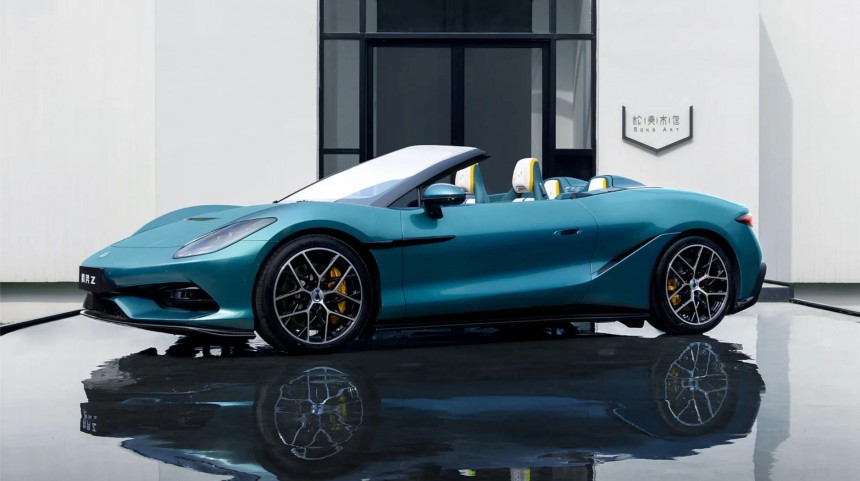
Considering that the last defensive wall for imported EVs used to be the premium and luxury segments, German brands will further slide into irrelevance. Chinese buyers can now find domestic vehicles that can easily hold their own against European rivals, with Automotive News pointing to the likes of Yangwang and the Maextro brands.
Chinese manufacturers continue moving into the same upper reaches of the market that European brands once largely owned, and the result is a peculiar inversion in the old equation. European automakers once needed China to absorb products made in European factories, yet now they need to build in China specifically for China.
All in all, those 125 cars that crossed the border in July 2026 aren’t just a statistic. They’re a tombstone for an era, signaling the continued push upmarket for Chinese automakers to the detriment of Western marques with a lot more pedigree under their belts.