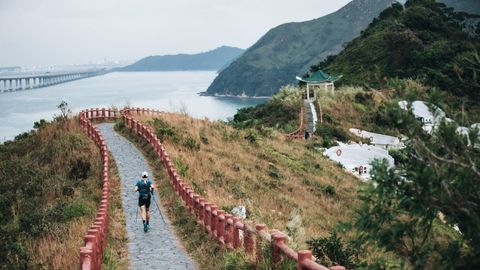

Hong Kong may be famed for its glittering skyline, but its mountains and adjoining trails are just as dramatic: steep, sculptural, and rich with adventure. Having called the city home for several years, I return now to experience it differently: to test my endurance, reassess my fitness, and reconnect with its wild side. This time, the plan is to hike towards the Big Buddha on Lantau Island.
More than 70 per cent of Hong Kong consists of rugged terrain—thick wooded forests, lakes, and coastlines filled with a rich repertoire of natural beauty. A hike here already borders on ambitious. But for thrill-seekers, craving something truly extreme every once in a while, one route rises above the rest: the West Dog’s Teeth, Hong Kong’s toughest day hike and a rite of passage that can be a litmus test for the fittest. I set out to tackle it with two other friends.
From Hong Kong’s Skyscrapers To Its Solitude
We are staying in Central on Hong Kong Island, and simply pop into the MTR to Tung Chung. From there, Bus No. 23, or 11, leads us onward; we choose the former. Another option is to take a ferry to Mui Wo and then Bus No. 1 or 2. Either way, the stop to watch for is Shek Pik Police Station. Despite the name, it is easy to miss and bears little resemblance to an actual police station, so we double-check with the driver before alighting.
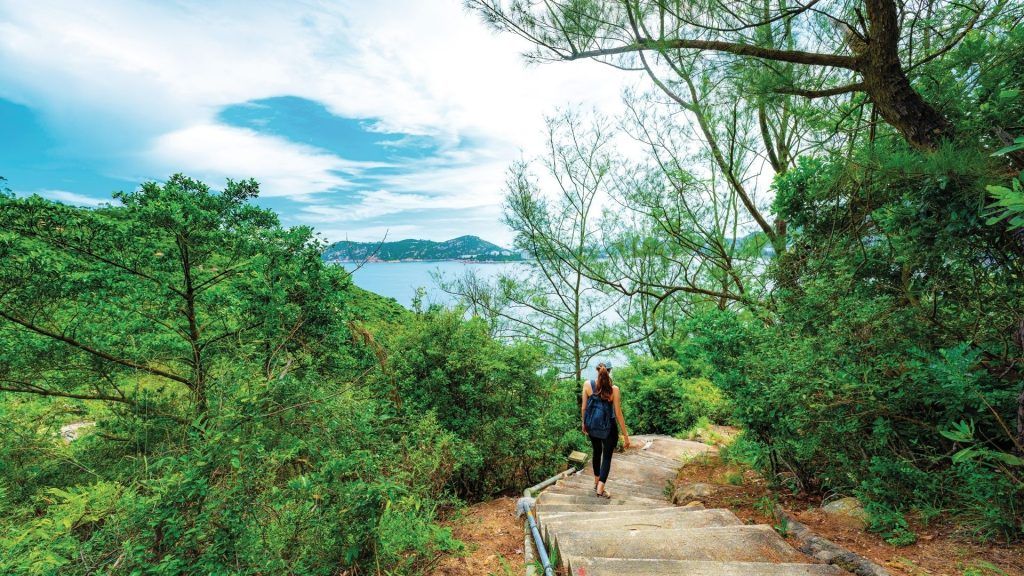
The adventure begins innocuously in Shek Pik Country Park, just a hundred metres behind the catchwater, where a short climb gives way to a deceptively calm, flat path. Then we reach a slab of rock carved with Chinese characters, and the real ascent begins.
The key is to follow the country park trail, which is clearly marked. This is an easy build, but then the stairway soon appears, interspersed with flat parts that feel more like narrow dirt paths.
We keep going until we reach the three-kilometre point after the clamber, by which time the sun overhead has certainly grown much stronger. Since there are no kiosks to refuel, one must always remember to carry reserves of energy bars and drinks, especially water. We have each carried two litres, and this looks like it will suffice. We pause to take in the views as we replenish ourselves—a welcome reprieve. We are perched above the cityscape, and it seems that the tall skyscrapers are all part of a carefully constructed Lego land.
The Untamed Wilderness Of West Dog’s Teeth
After this, the real scramble begins. The incline sharpens, and there are places where we have to use our hands to maintain balance, even haul ourselves up. We stop often—not just to catch our breath, but to absorb the surreal contrast of untamed nature against the relentless rhythm of the city below.
What follows is an eight-kilometre vertical challenge that takes around five and a half hours and demands near-Sisyphus levels of determination. This is not just a hike; it’s a scramble up a jagged line shaped like a row of serrated teeth, each peak sharper and more dramatic than the last. Dirt paths give way to natural staircases. Ridges drop off to my left and right, yet the trail remains just wide enough to feel exposed, but never reckless. Without climbing experience, hikers can tackle it—but only with grit, focus, and a healthy regard for the terrain.
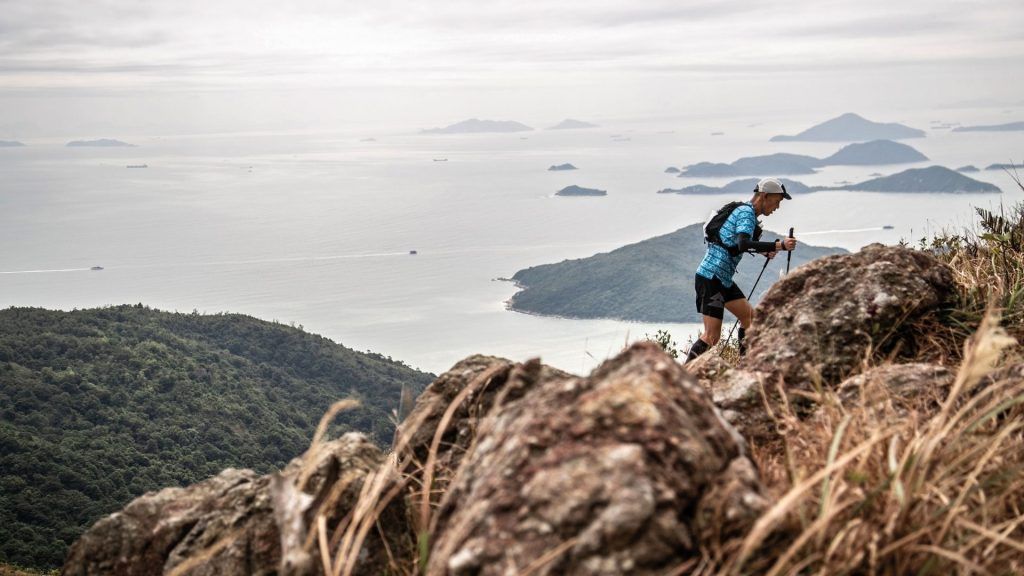
We try to stay the course and not waver. At five kilometres, we encounter a fork in the trail, one leading up to Lantau Peak, which we embark upon. The crescendo converges at Hades Wall—a near-vertical kilometre of concentration and regulated adrenaline. This short stretch feels insanely steep, and we also note that our energy reserves have flagged since we first started. Going easy but steady is the name of the game.
A simple but often overlooked point is that one needs to keep both hands free on this trail, as many of the ridges demand a clamber and a serious haul over precipitous rock formations. A backpack with water and snacks is essential, but both hands must remain free. Skid-free shoes are important, as the land can get treacherous in places. A strong, steadfast grip serves very well indeed, as we discover.
Looking up, the wall feels endless; looking back, the ridge I’ve conquered stretches like a dragon’s spine behind me. On clear days, the panorama is pure Hong Kong magic—Lantau’s undulating mountains, silver reservoirs, and the South China Sea blazing in a sheet of silver beyond. Today, the sun plays up a bit, and clouds keep appearing and vanishing—possibly a good thing, as it softens the glare.
The Big Buddha Emerges Through The Clouds
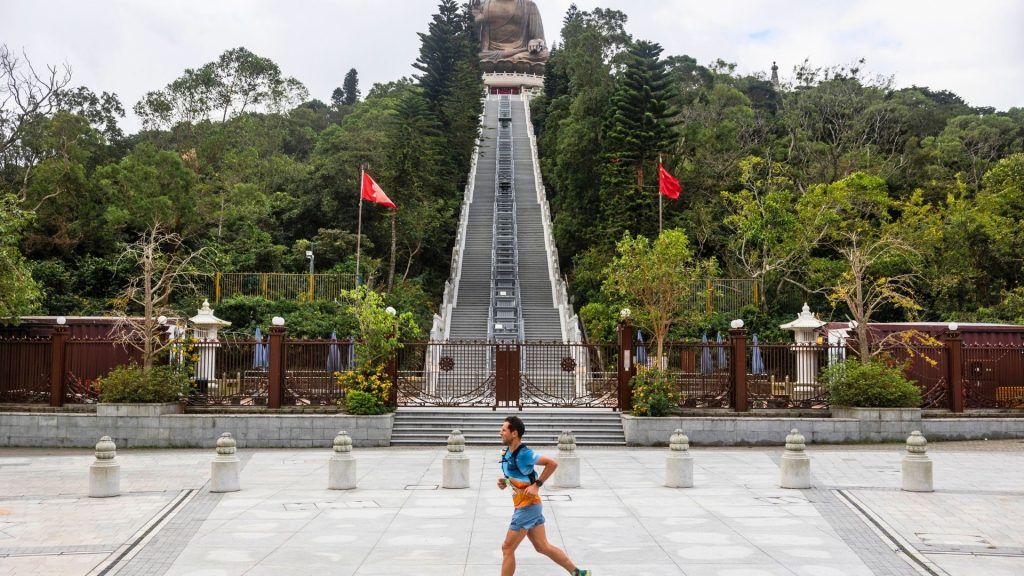
The trail eventually rejoins civilisation at Ngong Ping, spilling out towards the Ngong Ping 360 Cable Car and the Big Buddha, where we often come to visit the Lotus Pond Monastery. Spiritual calm after grinding struggle is a very welcome antidote. As the Big Buddha, seated atop the peaks of Lantau, comes into view, we grow a tad emotional—the same tumult of feeling anyone who has overcome the odds might feel at the finish line. The only way to deal with this is to be fully present and welcome all the mixed emotions that surface.
We pause to take in the views and relax with chilled bottles of Pocari Sweat, the gentle sweetness feeling like a surge of energy coursing through every muscle and sinew.
A Trail Etched In Memory
We arrive at the Lantau Big Buddha via the cable car, the last stop of our arduous hike. The place, as always, evokes holiday vibes. We take a sharp left, walk around 500 metres, and arrive at the gates of the Lotus Pond Monastery. Here, the atmosphere feels shaped by Thích Nhat Hanh’s gentle teachings; nothing asks for urgency.
A huge bell hangs from a tree in front of the Dharma Hall. As we slowly walk towards it, one of the monks glides forward and sounds it. The space reverberates with its resonance. As is Plum Village tradition, when the bell rings, practitioners are invited to stop whatever they’re doing and gently connect with their breathing.
We stop mid-track. The hike, the trail, and the clamour of the city are now behind us. This is a reminder to return fully to the present moment. And we do.
Related: Your Ultimate Guide To The Best Street Food In Hong Kong
Note:
The information in this article is accurate as of the date of publication.
FAQs (Frequently Asked Questions)
Vistara and Air India offer direct flights to Hong Kong from Delhi and Mumbai. International airlines such as Cathay Pacific, Korean Air, Singapore Airlines, and Thai Airways all offer one-stop flights to Hong Kong from major Indian cities.
Ovolo Hong Kong, Central is a trendy boutique hotel with modern design, located in Central and close to the MTR. Doubles from INR 24,000 per night. Sheraton Hong Kong Tung Chung Hotel is a good full-service option near the shopping mall and close to the MTR in Tung Chung. Doubles from INR 26,000 per night.

Written By