Streamlining procedures and enhancing Northbound Travel for Hong Kong Vehicles to make better use of Hong Kong-Zhuhai-Macao Bridge’s carrying capacity
The Transport Department (TD) today (October 3) said that the Hong Kong Special Administrative Region Government and the Guangdong Provincial Government have been continuously enhancing the implementation arrangements of the Northbound Travel for Hong Kong Vehicles (NBT) scheme based on the principles of streamlining procedures and improving the experience. This aims to facilitate efficient cross-boundary travel and make better use of the carrying capacity of the Hong Kong-Zhuhai-Macao Bridge (HZMB) further, thereby promoting the integrated development of the Guangdong-Hong Kong-Macao Greater Bay Area.
A spokesman for the TD said that the Government published in the Gazette today that, starting from October 13, applicants approved to participate in NBT need not apply for Closed Road Permits (CRPs) and pay permit fees. Upon receipt of the “electronic approval letters” issued by the TD, they can proceed to book their trips online or travel directly on days with no bookings required. This new arrangement will provide more convenience and attract more people to apply for NBT, enhancing their travel experience.
Since its implementation in July 2023, NBT has become popular among Hong Kong citizens. Both passenger and vehicle flows between Guangdong and Hong Kong via the HZMB have been on the rise, and over 100 000 Hong Kong private cars have participated in NBT to date. The governments of the two places have been enhancing NBT from applications, vehicle inspection and booking arrangements to provide additional convenience for Hong Kong residents to drive to Guangdong Province for work, business, sight-seeing and visiting families. Such measures include:
(1) Increasing the number of applications accepted: The number of applications for NBT accepted on each working day has been gradually increased from 200 at the beginning to 500 from January 2025. Unused quotas from applications not submitted within the assigned period are allocated to the next round, making full use of resources;
(2) Adjustments to booking arrangements: Since October 2023, the travel booking time slots have been adjusted from six sessions to four sessions to allow greater flexibility for travel; and since February 2024, the deadlines for making and cancelling travel booking were adjusted from two days and three days before the travelling date, respectively, to 12 noon on the day before travelling;
(3) Enhancing vehicle inspection arrangements: Following the establishment of a dedicated NBT vehicle inspection centre in Hong Kong, applicants need not undergo vehicle inspection on the Mainland. From March 2024, vehicle inspection was exempted if the applicant re-submits NBT applications within two years upon passing the vehicle inspection within the validity of the Mainland Electronic Vehicle Licence and with the applicant and vehicle remaining unchanged;
(4) Renewal convenience: From May 2024, if the applicant, vehicle (including vehicle registration mark, colour and chassis/vehicle identification number) and the designated drivers remain unchanged, computer balloting was not required and applicants can submit their renewal applications online within the assigned period. Besides, if the renewal applicants do not conform to the above renewal qualifications, they should re-register for the ballot and submit their applications afresh within the designated period. In addition, the ballot registration period has been relaxed from 30 to 60 days prior to the expiry of their CRPs for better convenience;
(5) Extending application period: Since April 2025, the designated application period for new and renewal applicants has been extended from three and six calendar days, respectively, to 13 days for both, providing sufficient time for applicants to prepare the necessary documents;
(6) Waiving booking prior to travel: From September 1, 2025, bookings are not required for vehicles travelling via the HZMB under NBT on Tuesdays and Wednesdays, except specified dates. Among the Tuesdays and Wednesdays in the first three weeks of September, the number of vehicle trips to Guangdong Province under NBT has significantly increased compared to that in August before the implementation of the new arrangement, providing convenience for more flexible travel; and
(7) No need to apply for CRP: From October 13, 2025, approved applicants under NBT are not required to make an application for CRP and pay permit fees. They may make travel booking immediately after receiving the “electronic approval letter” issued by the TD with a better travelling experience.
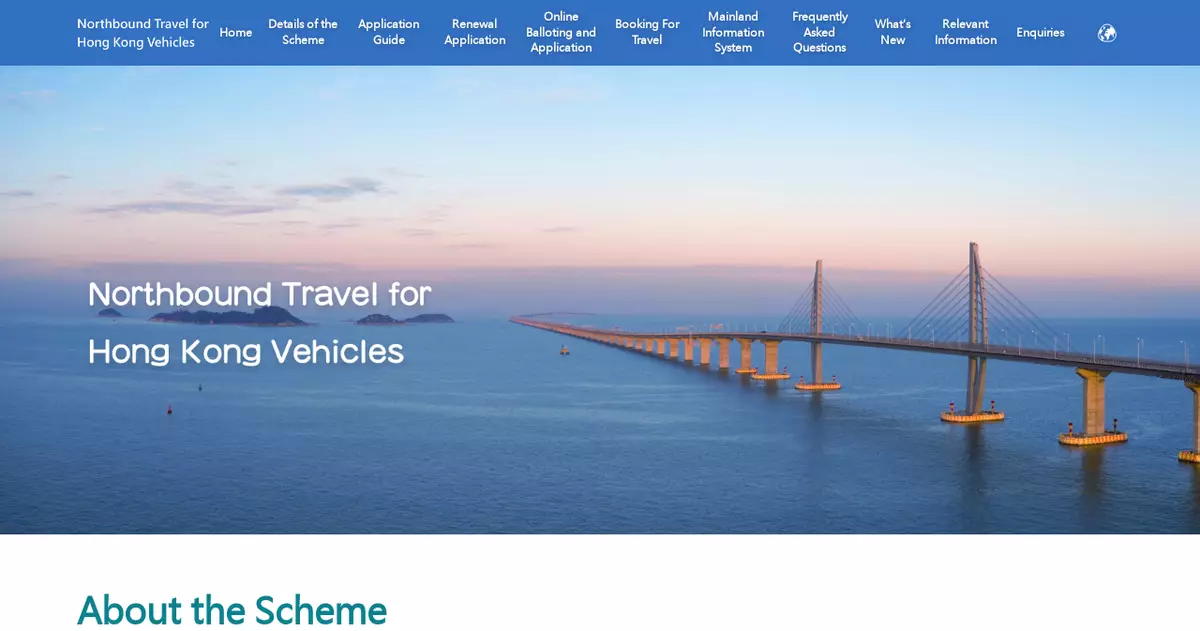
The governments of the two places will continue to review the effectiveness of enhancement measures. Applicants may refer to NBT’s thematic website (www.hzmbqfs.gov.hk) for details.
Source: AI-found images
DH reminds public to take precautions against heat-related illnesses during very hot weather
The Centre for Health Protection (CHP) of the Department of Health (DH) today (October 4) reminded members of the public to take appropriate precautions against heat-related illnesses, such as heat cramps, heat exhaustion and heat stroke during very hot weather.
In a high-temperature environment, excessive sweating and difficulty in heat dissipation can cause stress to the body. Members of the public should take the following precautions:
In addition, infants and children, the elderly, pregnant women, individuals with chronic illnesses such as heart disease or high blood pressure, outdoor/manual workers, and overweight people are more susceptible to heat stroke. These groups should pay special attention to the following:
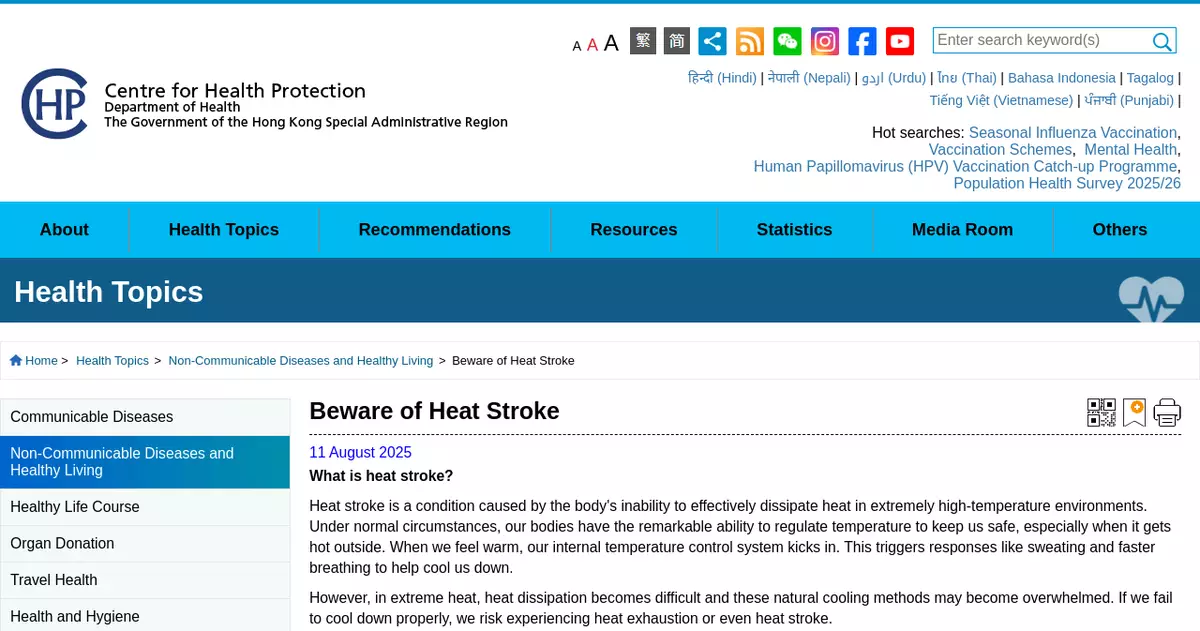
”Heat stroke is one of the most common health risks in hot weather. Over the past five years, there have been over 200 hospital admissions due to heat stroke each year in Hong Kong, with two to five fatal cases occurring mainly during the summer months from May to September. Vulnerable groups are more susceptible to heat stroke. Symptoms include dizziness, headache, nausea, shortness of breath or confusion. In severe cases, patients may suffer from convulsions or become unconscious, which can be life-threatening if they are not cooled down and resuscitated in a timely manner,” a spokesman for the CHP said.
Members of the public are also advised to pay attention to the latest weather, as well as the real-time and forecasted ultraviolet (UV) index released by the Hong Kong Observatory (HKO). When the UV index is high (6 or above):
If symptoms develop, such as dizziness, headache, nausea, shortness of breath or confusion, rest and seek help immediately, and seek medical advice as soon as possible.
The public may obtain more information from the DH’s Health Education Infoline (2833 0111), heat strokepage andUV radiation page; the HKO’s Dial-a-Weather (1878 200),latestweather report and forecast, UV Indexand weather information for hiking and mountaineering; and press releases of the Labour Departmenton precautions against heat stroke for outdoor workers and their employers when the Heat Stress at Work Warning is in force.
Source: AI-found images