With a growing number of Chinese mainland food-and-beverage enterprises opening outlets in Hong Kong, the city continues to serve as a launchpad for such firms that are going global.
A case in point is Yeah Gelato, a Chinese-mainland gelato brand founded in Beijing, which opened its first Hong Kong store on Friday.
“Hong Kong is a key international food market for us,” company Senior Vice-President Alice Wang Lizhi said. “We will leverage Hong Kong’s diverse consumer environment to refine our products and local operations, and build real-world experience for our international growth.”
With a mature gelato market, Hong Kong sits in the premium-dessert price range while long-established international players and local brands offer rich product choices. Yeah Gelato differentiates itself by creating new flavors using distinctive local ingredients.
Wang said that without fixed aggressive expansion targets, the company is taking “a careful, step-by-step approach for overseas growth”, and the main goal is to win recognition from Hong Kong consumers.
READ MORE: Mainland bar-restaurant chain opens flagship store in HK as it goes global
With a growing number of Chinese-mainland catering enterprises opening outlets in Hong Kong, Jonathan Leung Chun, a Legislative Council member for the Catering Functional Constituency, believes that the momentum will not stop.
“Chinese mainland companies have distinctive advantages in logistics management and technology when they come to Hong Kong, bringing both challenges and opportunities to the local catering industry,” he said.
Hong Kong is a suitable platform for Chinese mainland companies to further expand to other regions as the city relies on well-established food quality control standards that are aligned with international markets and rich industrial experience liaising with overseas enterprises, Leung said.
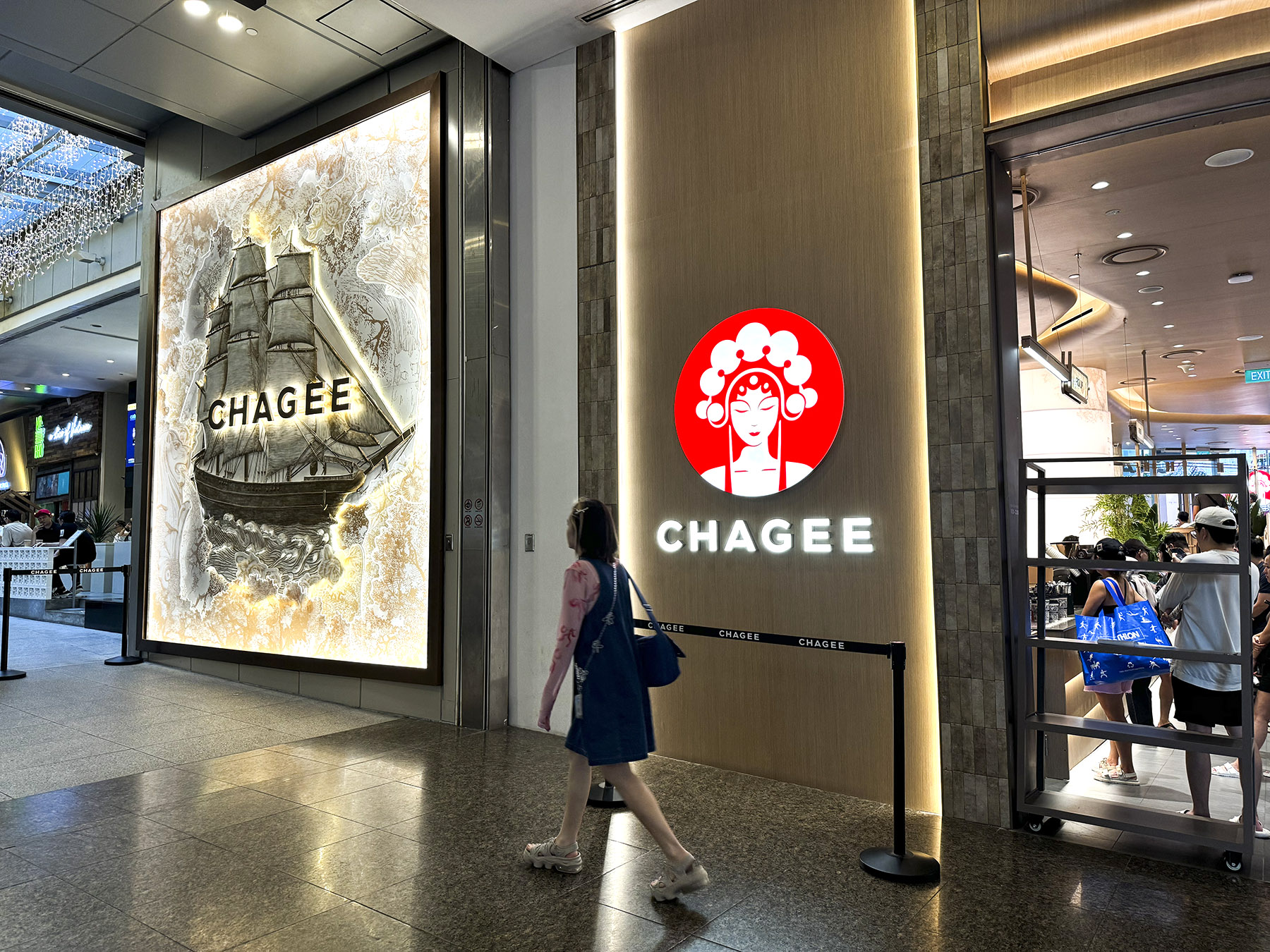
Chinese mainland tea chain Chagee is also delighted with the Hong Kong market’s performance, praising the diversity and vitality of the city’s consumption market.
Having debuted in Hong Kong back in 2024, Chagee currently operates 23 stores in Hong Kong and Macao, including the world’s largest “Chagee Modern TeaHouse” in Hong Kong’s Wan Chai district.
ALSO READ: Chagee to open Hello Kitty crossover pop-up, launch new outlet
“With its unique blend of Eastern and Western cultures, Hong Kong is a crucial market that Chagee cannot overlook in its international expansion,” said Eason Chen, general manager of Chagee Hong Kong and Macao. “Hong Kong is a window to showcase the brand’s culture and products to global consumers.”
With over 7,000 stores globally across China, Southeast Asia, and the United States, Chagee aims “to serve customers from 100 countries, to create jobs for 300,000 global partners, and to provide 15 billion cups of tea annually” in the future.
“By expanding its operations in Hong Kong, Chagee aims to better serve consumers across the Asia-Pacific region and increase its market share and influence in the international market,” Chen added.
However, navigating a different market environment presents distinct challenges for newcomers. For instance, Chinese mainland beverage giant Mixue, widely known for its affordable-pricing strategy, recently shuttered its store in Hong Kong’s Mong Kok district, the brand’s second shutdown in the city in two months, following the closure of its Tsim Sha Tsui outlet.
READ MORE: HK’s dining scene shows resilience to change
Leung said that elevated labor and rental costs present significant operational hurdles for Chinese mainland enterprises expanding into the city. Beyond higher rental expenses compared to Chinese mainland, companies face a tight labor market, making it challenging to recruit and retain qualified employees.
“Firms must proactively adapt when expanding overseas rather than attempting to simply copy and paste their traditional domestic business models,” Leung said.
To support mainland enterprises in going global through Hong Kong, the special administrative region government established the GoGlobal Task Force in 2025, aiming to set up a one-stop platform that leverages Hong Kong’s advantages in internationalization to facilitate Chinese mainland companies’ overseas expansions.
The investment promotion agency Invest Hong Kong (InvestHK), which is also one of the members of the GoGlobal Task Force, had assisted over 600 Chinese mainland companies in setting up or expanding their business in Hong Kong from January 2023 through the first six months of 2025.
Looking ahead, InvestHK aims to attract at least 1,200 enterprises from the Chinese mainland or overseas come to Hong Kong between 2026 and 2027, including Chinese mainland enterprises planning to go global through the city, according to the city’s 2025 Policy Address.
Contact the writer at rayjia@chinadailyhk.com