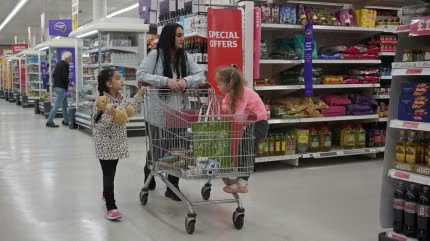

The UK’s poorest households are finding it more difficult to eat healthily, according to a study commissioned by charity The Food Foundation.
The charity has calculated UK households in the poorest 20% of the population with children would have to spend more than four-fifths of their disposable income to afford the government’s recommended healthy diet.

Discover B2B Marketing That Performs
Combine business intelligence and editorial excellence to reach engaged professionals across 36 leading media platforms.
According to the report, those households would need to spend 85% of their disposable income, up from 70% in 2024.
For the poorest 20% overall, the figure was 49%, compared with 11% for the highest income fifth.
The annual report, funded by the Nuffield Foundation, said the affordability gap between healthy and less healthy food is “now the widest it has been in over a decade”.
The data was collected in 2025, before the start of the war in the Middle East sparked fresh concerns about the cost of food.
The report found healthier food is nearly twice as expensive per calorie as less healthy alternatives.
From 2024 to 2025, foods high in fat, salt and sugar or HFSS were the only category to fall in price, the report said. The price of fruit and vegetables increased 1.7%.
Anna Taylor, the executive director of The Food Foundation, said the report “reveals that it is becoming increasingly difficult for struggling families to afford and access a healthy diet”.
She added: “This isn’t good enough. The Government must press ahead with its commitments made in the NHS 10-Year Plan, including the mandatory reporting of healthy sales by food businesses.”
Last June, The UK government unveiled a ten-year plan to improve health in England. As part of the plans, the Government said it would restrict junk food advertising targeted at children and introduce “mandatory healthy food sales reporting for all large companies in the food sector”.
According to The Food Foundation’s report, 40% of food and non-alcoholic drink promotions are for products high in fat, salt and sugar. Fruit and vegetables receive 3% of “traditional food advertising spend”, it said.
A Government spokesperson said: “This government is determined to support people with the cost of living while raising the healthiest generation of children ever.
“To build a healthier Britain, we are restricting junk food advertising on television before 9pm and at all times online, while giving local authorities stronger powers to stop fast food shops opening near schools.”
The report also linked poor diets to worsening health outcomes. One in ten children aged 11 to 18 eat five portions of fruit and vegetables a day, while 95% consume more free sugar than recommended.
In an average school reception class of 30 in England, three children are living with obesity, rising to seven by year six.
A spokesperson for UK trade body The Food and Drink Federation said: “The UK is one of the most competitive grocery markets in the world, and food manufacturers are committed to working alongside policy makers to ensure that consumers have a wide range of nutritious food and drink products available, whatever their budget.”