- Rumours of a breakdown in negotiations have reignited investor interest in the US dollar.
- The risk of further currency interventions is mounting along with USDJPY.
The US dollar rose by 0.4% on Monday following reports that Iran intended to walk away from negotiations with the US. Tehran’s threat sent oil prices soaring and reignited investor interest in safe-haven assets. Strong macroeconomic data also favoured the bulls on the USD index. However, in the absence of further escalation, the DXY gave back some of its gains, stabilising at 99, roughly in the middle of the range seen over the past two weeks.
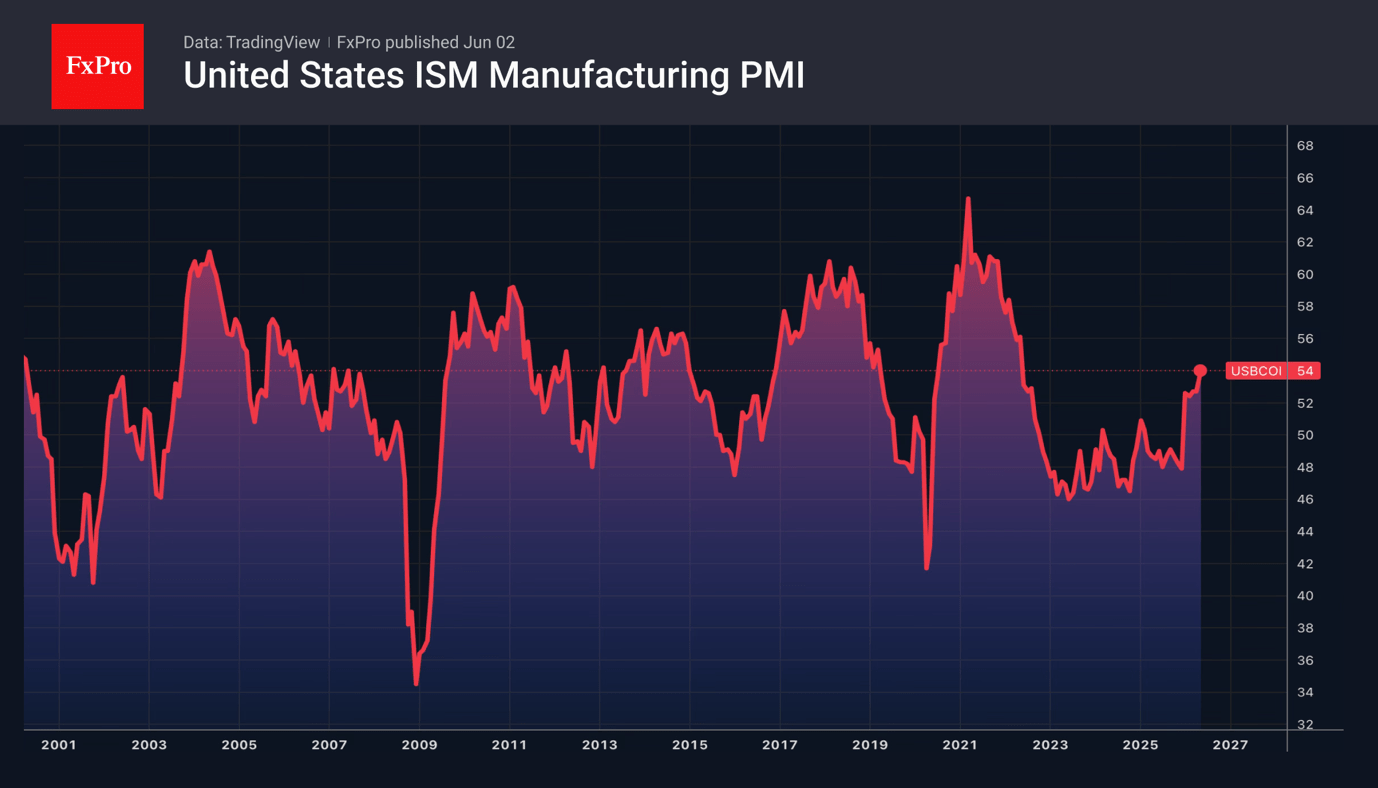
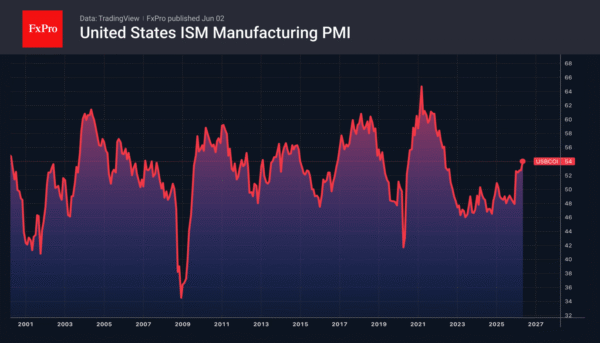
The ISM manufacturing business activity index exceeded forecasts, rising to 54, its highest level since May 2022. The Purchasing Managers’ Index has remained in expansionary territory above 50 for the fifth consecutive month, indicating the sector’s strength. The price component of the PMI fell in May compared with April.
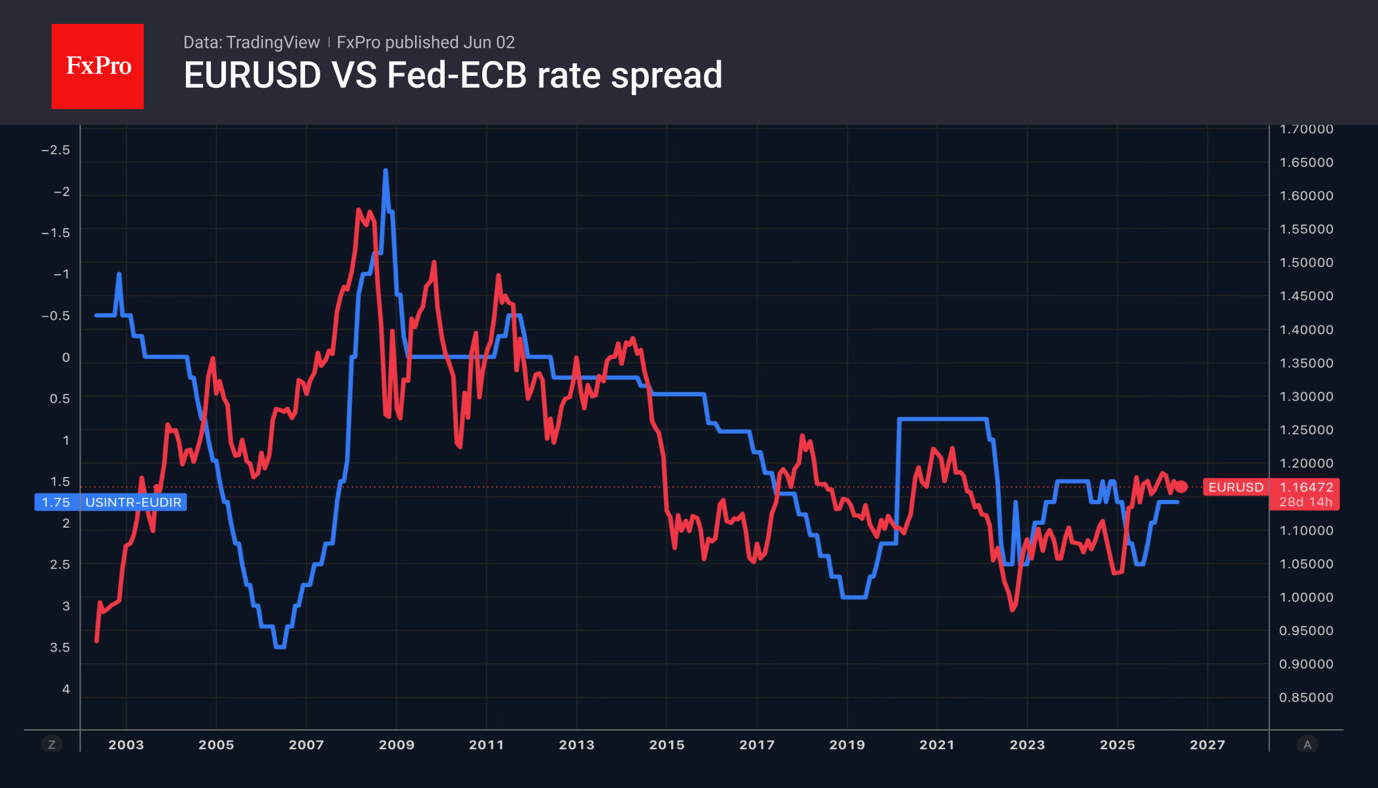
The strength of the US economy allows the Fed to adopt a wait-and-see approach. The futures market puts the odds of the federal funds rate remaining unchanged in 2026 at 51%, with a 49% probability of a hike. According to Rabobank, such assessments suggest limited upside potential for the EURUSD. Two ECB hikes are already priced into the euro exchange rate. However, the longer the Strait of Hormuz remains closed, the more pain the eurozone economy will suffer.
Until now, the markets have been optimistic about the US-Iran deal. However, a partial escalation of the conflict, along with rumours that Tehran is withdrawing from the negotiations, is making investors nervous. What if the current dialogue with the Islamic Republic ends the same way as all the previous ones, i.e., in failure?
As the USDJPY moves higher, the intensity of the government’s verbal interventions is increasing. Finance Minister Satsuki Katayama is using the same rhetoric she used ahead of the previous currency market intervention. She asserts that the authorities are ready to take appropriate measures at any time, as necessary. Tokyo is in close contact with Washington regarding the situation in the Forex market.
Japan holds colossal foreign exchange reserves of $1.17 trillion, which, according to Goldman Sachs, would allow it to intervene in the market at least 30 times. However, a significant portion of these reserves consists of US Treasury bonds, the sale of which would raise their yields and is therefore not welcomed by the US Treasury.