Nation deepening partnerships through major energy projects in Latin America
As the world’s transition toward more sustainable development accelerates, China and Latin America are embracing broader and deeper energy cooperation, leveraging cutting-edge technological innovations to power a green future for the Global South.
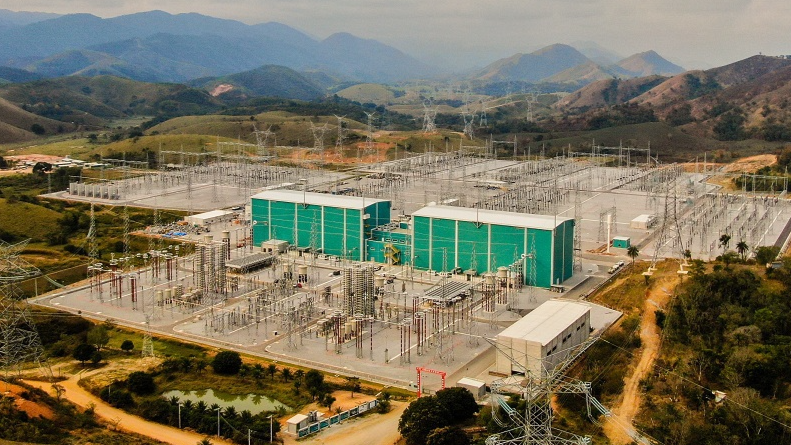
From State Grid Corp of China’s Belo Monte Ultra High Voltage Direct Current Phase II transmission line in Brazil, to China Three Gorges Corp’s comprehensive digital modernization of Brazil’s legacy Jupia and Ilha Solteira hydropower stations, and the Cauchari solar project in Argentina, jointly undertaken by Power Construction Corp of China and Shanghai Electric Power Construction Co, China and Latin America are jointly setting new benchmarks for cross-border clean energy integration.
These flagship projects go beyond traditional capital investment, representing a deeper leverage of China’s technological standards and management expertise. By upgrading legacy infrastructure, Chinese enterprises are powering Latin America’s green transition for more secure regional grid stability.
READ MORE: China, LAC states launch new cooperation drive
This strategic momentum is guided by top-level diplomacy and shared visions.
While addressing the opening ceremony of the fourth ministerial meeting of the China-CELAC (Community of Latin American and Caribbean States) Forum last year, President Xi Jinping noted that by adapting to the overriding trend of economic globalization, China and Latin America have continuously deepened pragmatic cooperation in fields including trade, investment and infrastructure construction.
Xi emphasized that both sides should strengthen the alignment of development strategies and advance high-quality Belt and Road cooperation, calling for efforts to deepen cooperation in traditional areas such as energy and minerals, while expanding cooperation in emerging sectors including clean energy.
Such top-level commitment builds on a long-standing strategic alignment. As President Xi pointed out at the China-Latin American and Caribbean Countries Leaders’ Meeting in 2014, “China and Latin America are highly complementary in economy and closely aligned in development strategies, granting us natural advantages in strengthening cooperation”.
With such a strategic blueprint in sight, top Chinese energy regulators have emphasized the pivotal role of this cross-border synergy.
Ren Jingdong, deputy director of the National Energy Administration, said that energy collaboration is a crucial component of pragmatic cooperation between China and Latin America, achieving remarkable results.
“As China and Latin American countries have actively promoted energy transition and the development of renewables in recent years, new energy cooperation has emerged as a new highlight and a fresh driver for China-Latin America energy synergy,” Ren said.
Guided by these high-level consensuses, Chinese enterprises have delivered monumental infrastructure breakthroughs on the ground.
Brazil has grappled for decades with a severe structural challenge. While its northern Amazon basin boasts abundant hydroelectric resources, the vast majority of its industrial and residential power demand is concentrated in the southeast. The 2,534-kilometer Belo Monte Phase II project, independently invested, constructed and operated by State Grid Corp of China under a 30-year concession agreement, bridges this divide. As a vital “green artery”, it transmits massive volumes of hydropower directly to metropolitan load centers like Rio de Janeiro.
“The megaproject ensures a highly stable and reliable power supply for Brazil’s core economic regions, successfully resolving the nation’s developmental bottleneck of spatial energy mismatch,” said Ye Xiaoning, a senior engineer at the State Grid Energy Research Institute.
Ye emphasized that the project establishes a global paradigm for cross-regional clean energy transmission, proving the safety, maturity and global applicability of China’s ultra-high-voltage grid technologies.
Beyond Brazil, China’s clean energy footprint is having a transformative impact across other extreme terrains in South America. In Argentina, the Cauchari solar project stands as one of South America’s largest single photovoltaic power stations, and is the world’s highest-altitude solar park.
Situated over 4,000 meters above sea level in the Andes Mountains, the 315-megawatt complex features more than 1.2 million solar panels. The landmark installation has ended Jujuy province’s long-standing reliance on power transmitted from other provinces, achieving local energy self-sufficiency.
Furthermore, China’s unparalleled expertise in hydropower operation has breathed new life into Brazil’s legacy energy assets. Through a landmark $3.7 billion transaction establishing a 30-year concession, CTG Brasil officially took over the operation of the Jupia and Ilha Solteira hydropower stations, which feature a combined capacity of nearly 5 million kilowatts and meet the electricity needs of over 6 million people annually.
Rather than merely managing the aging infrastructure, CTG initiated a monumental technical overhaul. By upgrading mechanical equipment that had operated for nearly half a century into fully digital and intelligent monitoring systems across 12 generating units, CTG successfully performed a “heart transplant” on the legacy power hubs.
ALSO READ: Green, high-tech sectors focus of increasing ODI
Industry observers said these milestone projects are just the beginning. As more Latin American nations accelerate their ecological transition, Chinese enterprises are poised to deepen their engagement through localized manufacturing, joint research and green financing under the framework of high-quality Belt and Road cooperation.
As this Sino-Latin American energy synergy continues to unfold, it proves that China’s mature grid and generation solutions are essential enablers for emerging economies seeking to decarbonize at affordable costs while maintaining power stability and self-sufficiency, said Ye.
“Together, China and Latin America are actively charting a shared, sustainable course for the global energy revolution and setting a powerful example for Global South cooperation,” he said.
zhengxin@chinadaily.com.cn