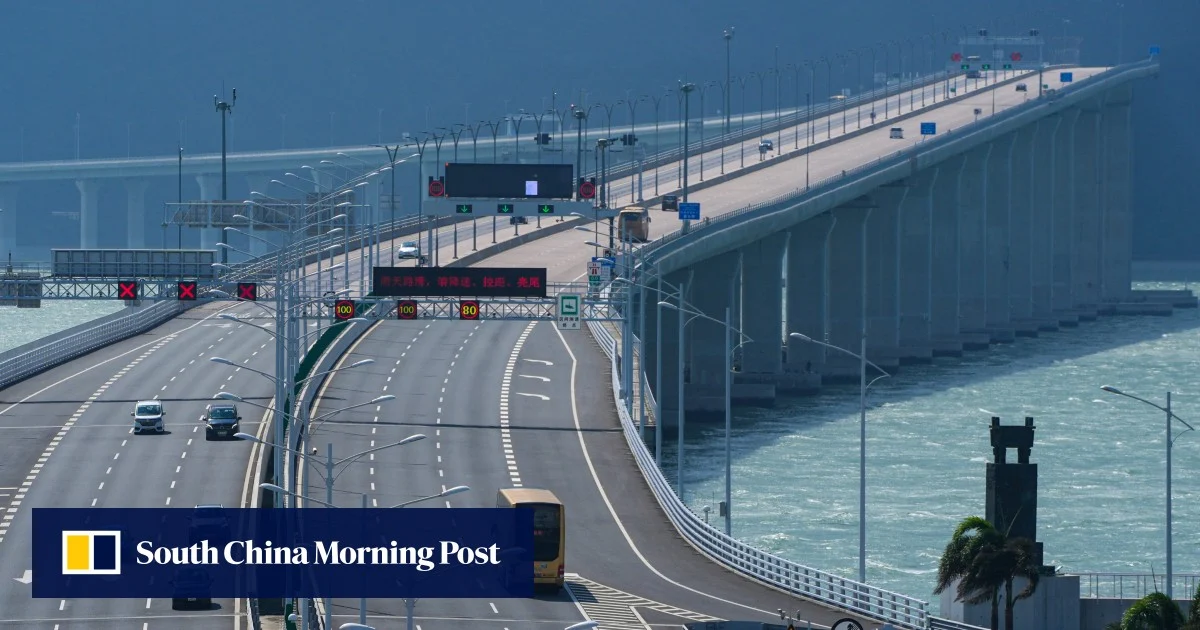
China’s transit systems are handling a nationwide return travel rush on the last day of the three-day Mid-Autumn Festival holiday, which runs from Friday to Sunday.
China’s railway system is expected to handle 16.86 million passenger trips on Sunday. Many railway stations have opened all ticket-check and security-check channels, with each verification and security-check area featuring a “caring/urgent passenger” channel that provides priority entry for passengers whose trains depart within 15 minutes.
During the holiday, many travelers have also taken sightseeing trips by car, resulting in traffic flows briefly concentrating in popular tourism cities, scenic spots, and surrounding areas. Return traffic to large and medium-sized cities is expected to peak from around 16:00.
The civil aviation sector is expected to handle 2.1 million passengers on Sunday, while waterways across the country are projected to carry over 813,000 passenger trips.
Transportation authorities across the country increased capacity deployment and coordinated effective connections between road passenger transport, urban public transport, and rail and civil aviation.
The Mid-Autumn Festival, a traditional Chinese holiday celebrated on the 15th day of the eighth month in the Chinese lunar calendar, falls on Friday this year. Across China, people celebrate the day by gathering for moon-gazing, eating mooncakes, and lighting colorful lanterns.
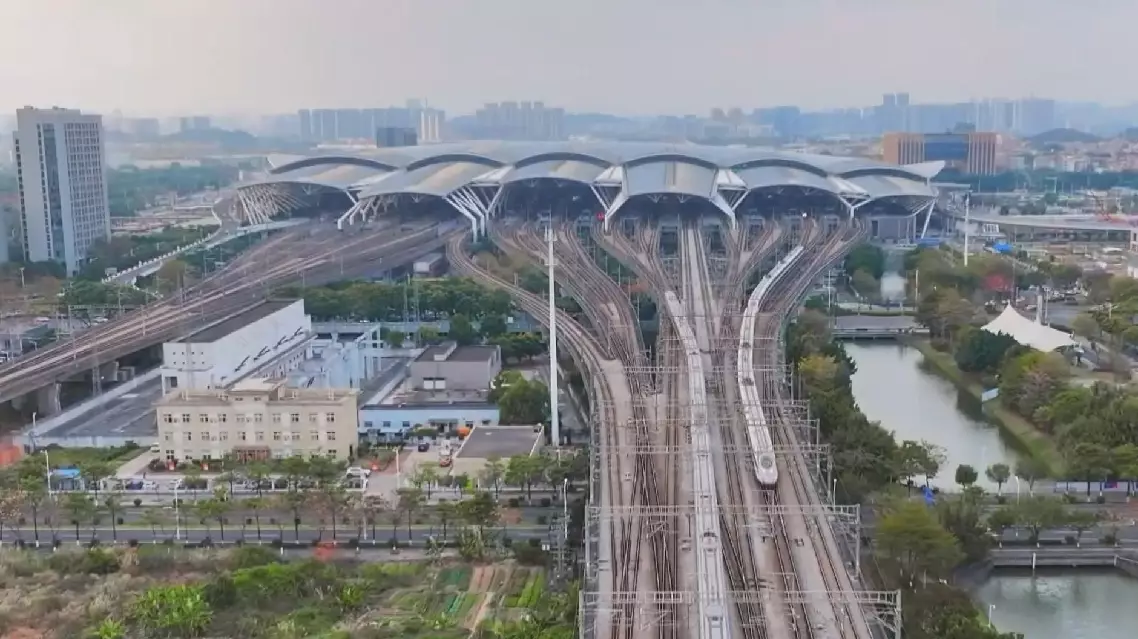
China sees return travel rush as Mid-Autumn festival holiday comes to end
Naval and air units of the Chinese People’s Liberation Army (PLA) Southern Theater Command conducted a joint training exercise in the waters and airspace around China’s Huangyan Dao in the South China Sea on Sunday, focusing on a series of actual-combat subjects, including reconnaissance and early warning, rapid maneuver, and joint search and rescue.
The exercise effectively tested the participating troops’ capabilities for sea-air coordination and for giving rapid support.
A statement from the command said the exercise is a necessary operation taken in response to the acts taken by certain countries that have undermined regional peace and stability.
Theater Command troops remain on high alert at all times and will resolutely safeguard China’s territorial sovereignty and maritime rights and interests, the statement said.
The exercise drew participation of various types of aircraft, including early warning aircraft, reconnaissance aircraft, and unmanned aerial vehicles (UAVs).
Vessels like guided-missile frigate Yulin and comprehensive supply ship Qinghaihu also took part in the exercise, with Yulin conducting a humanitarian search and rescue operation for people falling overboard.
Ship-borne small boats were dispatched during the drill to bring the “rescued personnel” onboard and medical services were also given immediately.
“Next, we will base our training on more complex contingencies and hazardous scenarios, adhere to actual-combat standards, and focus on training for capacity building, coordination of battle station and force employment, to maintain constant combat readiness for immediate mission fulfillment and effectively respond to various emergencies as well as risks and challenges,” said Navy Major Liang Lu aboard frigate Yulin.
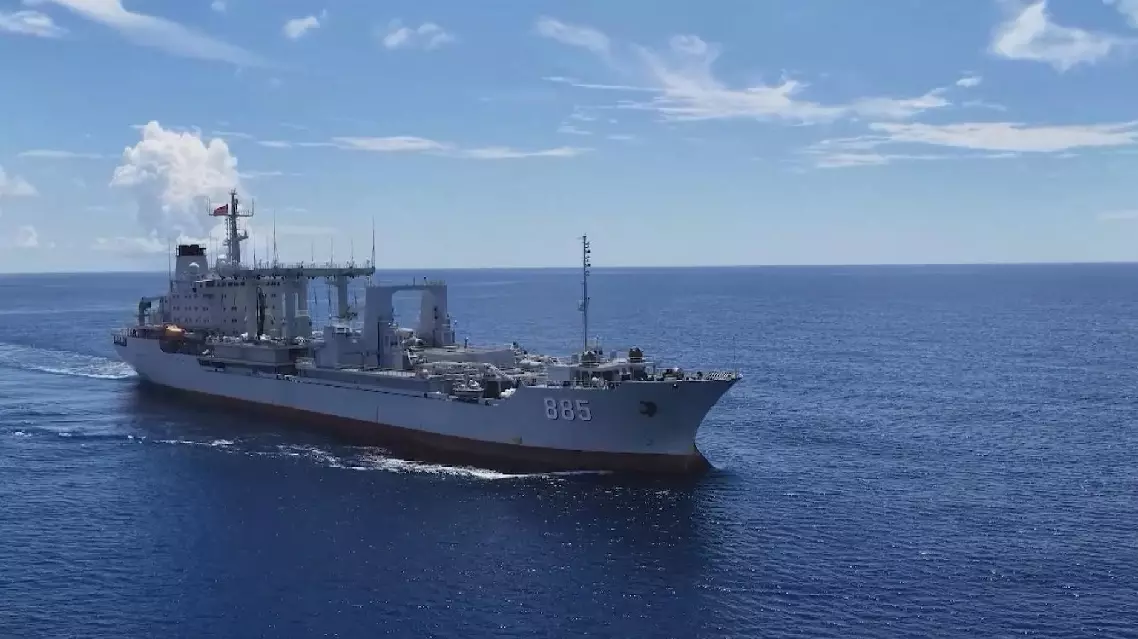
Chinese military holds training exercise around Huangyan Dao in South China Sea