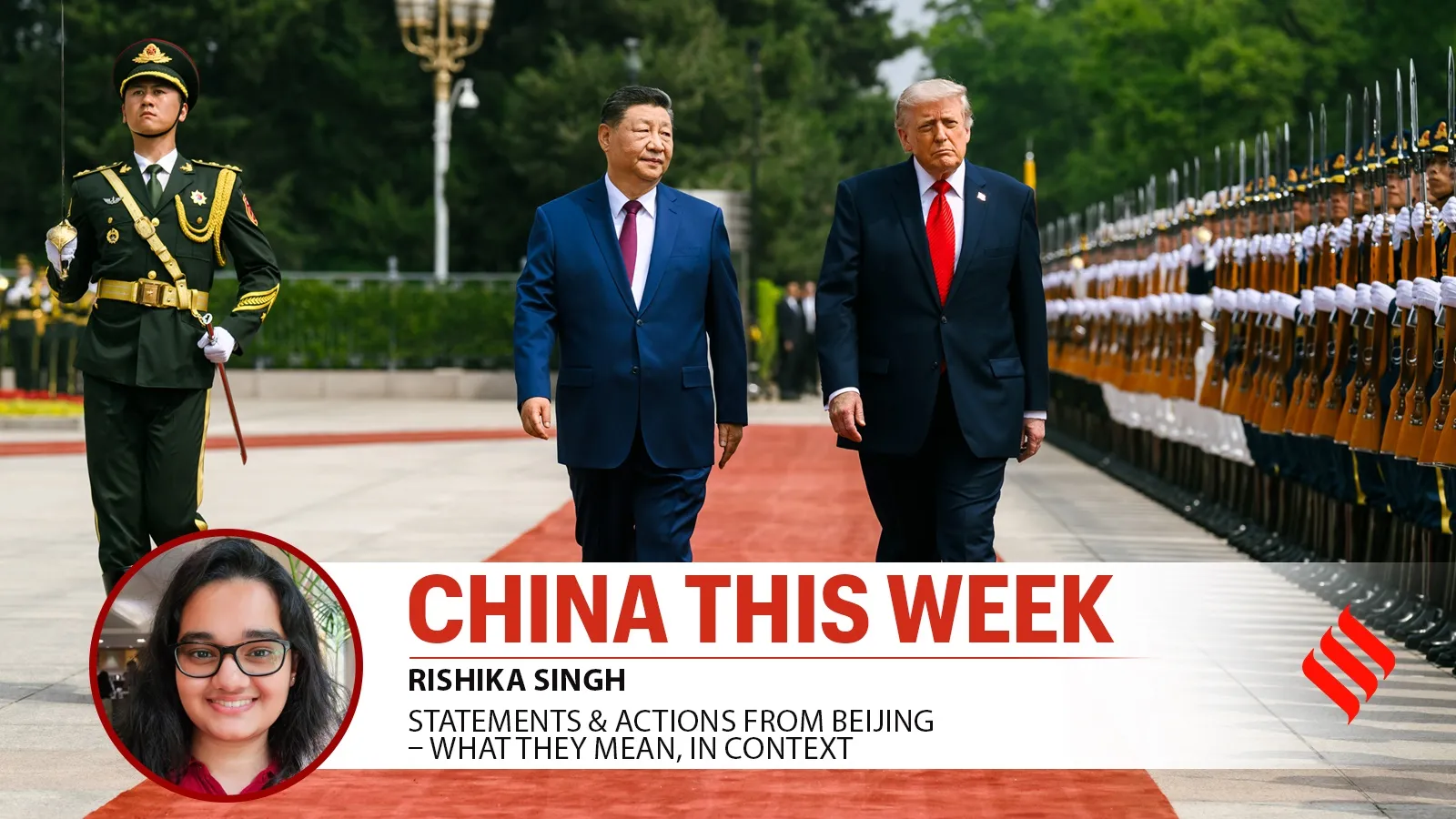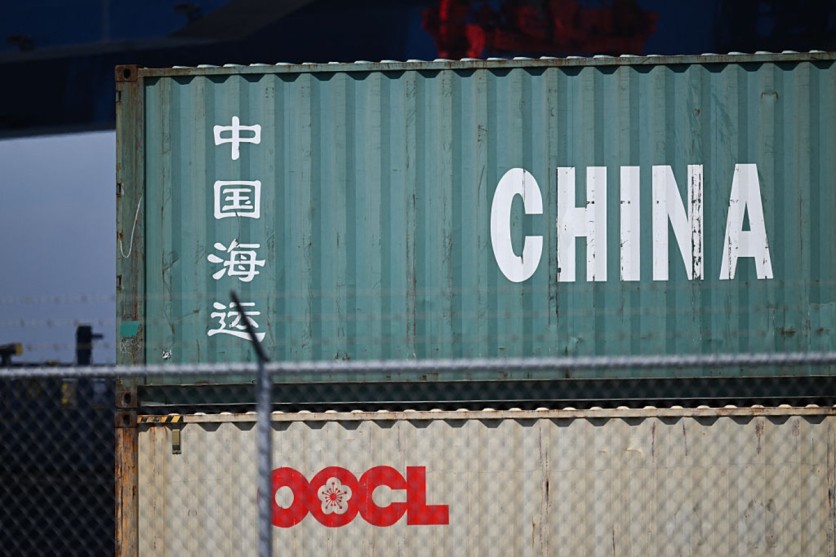
President Donald Trump has renewed the national emergency underpinning the United States’ restrictions on American investment in Chinese artificial intelligence, semiconductor, quantum computing, and hypersonic technology companies, extending the program’s legal foundation through at least August 9, 2027 — and preserving a compliance framework that investors in China’s technology sector are now racing to apply before new, broader rules replace it early next year. The renewal comes as China has simultaneously announced its broadest package of trade countermeasures since last October, including export controls on drones and sanctions on American entities, amplifying the competitive backdrop against which the investment restrictions operate.
The presidential notice, signed at the White House on August 3 and published in the Federal Register on August 5 as Document 2026-16015 (91 FR 50659), was required by law: under Section 202(d) of the National Emergencies Act (50 U.S.C. § 1622(d)), a declared national emergency lapses automatically after one year unless the President actively renews it. Failure to act would have terminated the emergency on August 9, 2026, potentially collapsing the statutory and regulatory architecture built atop Executive Order 14105 at the precise moment Treasury’s rulemaking to replace that architecture is still pending. The notice runs two pages and states that Trump is “continuing for 1 year the national emergency declared in Executive Order 14105 with respect to the threat posed by the advancement by countries of concern in sensitive technologies.”
The renewal is not merely bureaucratic housekeeping. By choosing continuation over modification or revocation — options the administration examined under its January 2025 America First Investment Policy memorandum — the White House has confirmed that the Outbound Investment Security Program (OISP) survives intact into a new phase: one where investors must apply current rules to existing transactions while preparing for significantly different rules governing a wider set of technologies and countries.
What the OISP Requires Right Now
The legal architecture the renewal extends traces to August 9, 2023, when then-President Biden signed Executive Order 14105 under authority of the International Emergency Economic Powers Act. EO 14105 directed Treasury to create the first U.S. government program in history to control outbound investment — a regime novel enough that legal scholars have described it as “reverse CFIUS,” inverting the traditional inbound foreign-investment screening model.
Treasury’s implementing regulations, codified at 31 C.F.R. Part 850, took effect on January 2, 2025, after an extended notice-and-comment rulemaking process. Those rules divide covered transactions into two tiers. Prohibited transactions — outright barred because of their proximity to sensitive dual-use military applications — include investments in Chinese companies developing advanced integrated circuits below certain node thresholds, quantum computing capabilities above certain coherence benchmarks, and AI systems trained above compute thresholds defined in the Part 850 rules. Notifiable transactions, which require advance disclosure to Treasury but are not categorically forbidden, cover a broader set of investments in the same three sectors where the U.S. person holds a smaller or less operationally significant stake.
The program applies to any “U.S. person” — defined broadly to include entities organized under U.S. law and their foreign branches, as well as U.S. citizens and permanent residents — who invests in a “covered foreign person” in China, Hong Kong, or Macau engaged in covered technology activities. A critical compliance trap confirmed by practitioners: joint ventures formed in third countries (outside China) may still be subject to covered transaction rules if the underlying venture involves covered technologies and a Chinese entity holds meaningful ownership. Violations carry civil penalties of up to twice the value of the transaction, and willful violations can result in up to 20 years of imprisonment.
Treasury began actively pursuing enforcement actions against potential violators shortly after the January 2025 effective date, with enforcement officials — former CFIUS staff housed under Treasury’s Office of Investment Security — reaching out to transaction parties in a manner practitioners have described as mirroring the CFIUS post-closing inquiry process.
What the COINS Act Changes — and When
The renewal’s most significant compliance implication lies not in what it preserves but in what it defers. On December 18, 2025, President Trump signed the Fiscal Year 2026 National Defense Authorization Act, which incorporated the Comprehensive Outbound Investment National Security Act of 2025 (COINS Act, via CRS) as Title LXXXV. The legislation passed with broad bipartisan support — Congress’s signal that outbound investment restrictions should rest on permanent statutory authority rather than executive emergency powers alone.
The COINS Act does not take effect immediately. Treasury must issue implementing regulations no later than 450 days after enactment, a deadline that falls on March 13, 2027. Until those regulations are final, the existing 31 C.F.R. Part 850 rules remain fully operative, and Treasury has issued compliance guidance to investors stating that investors should “continue to act in full compliance” with the current OISP.
When the COINS Act rules do arrive, they will alter the investment landscape in three material ways. First, the law expands covered technology categories to add hypersonic systems and high-performance computing and supercomputing — joining the existing trio of semiconductors and microelectronics, AI systems, and quantum information technologies. Second, it expands the “countries of concern” definition beyond China, Hong Kong, and Macau to also include Cuba, Iran, North Korea, Russia, and Venezuela under the Nicolás Maduro regime — though practitioners note that existing U.S. sanctions already prohibit most investment in those additional jurisdictions, limiting the incremental practical effect. Third, the COINS Act authorizes — though does not require — the President to use IEEPA to impose targeted sanctions on Chinese entities “knowingly engaged in significant operations” in the defense or surveillance technology sectors.
What Investors Must Plan For Before March 2027
The period between today and the COINS Act’s March 2027 rulemaking deadline represents a specific compliance uncertainty that the renewal has not resolved: investors in Chinese AI, semiconductor, quantum, and (prospectively) hypersonic and HPC companies must now plan against a moving regulatory target. The specific performance thresholds that will trigger prohibited or notifiable status under the COINS Act — what AI compute level, what semiconductor node, what HPC benchmark, what hypersonic design specification — are not yet defined, because they will be set through the Treasury rulemaking process. A deal structured carefully to comply with current Part 850 thresholds may face materially different obligations once COINS Act regulations take effect.
This dual-compliance window creates concrete planning obligations for several categories of investors.
Venture capital and private equity funds with China exposure must model how COINS Act expansion to hypersonics and HPC may sweep in portfolio companies not currently subject to notification or prohibition requirements. The COINS Act also signals potential changes to how “covered foreign person” is defined — moving from a 50%-ownership threshold toward a “subject to direction or control” standard that could capture more investment targets under CRS analysis of the legislation.
Institutional investors with limited partner stakes in China-focused funds should be aware that the COINS Act, like the current OISP, may affect non-U.S. funds that source U.S. capital — requiring binding contractual assurances from fund managers about the use of U.S. person capital contributions. ILPA compliance guidance from the Institutional Limited Partners Association outlines key compliance points for affected investors.
All affected investors should plan to participate in the COINS Act notice-and-comment rulemaking process, which must precede Treasury’s final rule. The COINS Act specifically directs Treasury to create a confidential feedback mechanism allowing investors to request non-public guidance on whether a proposed transaction would be prohibited — a new tool that did not exist under the original OISP.
The COINS Act also provides new statutory durability: the program’s provisions are designed to be in effect for seven years, reducing the risk that a future administration could let the program lapse by simply declining to renew the underlying national emergency.
Technology Decoupling’s Legal Architecture
The renewal notice preserves the OISP’s interlocking position within a broader U.S. technology competition toolkit. Treasury’s outbound investment program operates alongside — and is designed to complement — export controls administered by the Commerce Department’s Bureau of Industry and Security (BIS), inbound investment screening by the Committee on Foreign Investment in the United States (CFIUS), and the economic sanctions regime managed by Treasury’s Office of Foreign Assets Control (OFAC).
The theoretical rationale underlying the program, articulated in the Federal Register notice itself, is that U.S. capital brings more than money: it transfers “intangible benefits” — expertise, business relationships, talent networks, market validation signals — that help Chinese technology companies succeed in ways that dollar value alone cannot capture. It is this “intangible benefits” rationale that distinguishes the OISP from export controls: blocking an AI chip export prevents a specific technology transfer, but blocking an investment prevents the full bundle of advantages that come with being a U.S.-backed company.
The COINS Act’s bipartisan passage represents Congress’s endorsement of this rationale at statutory level, insulating the program from constitutional challenges that could arise from relying solely on IEEPA executive emergency authority. Following the Supreme Court’s February 2026 ruling in Learning Resources, Inc. v. Trump, which struck down IEEPA’s authority to impose tariffs, having a statutory foundation for the OISP has become more — not less — significant.
What Does This Mean for Chinese Technology Companies?
For Chinese technology companies, the renewal reinforces a structural pressure that has been building since 2023: reduce dependence on U.S. capital, U.S. limited partners in investment funds, and the informal transfer of expertise and networks that typically accompany Western investment. The Federal Register renewal notice explicitly cites this informal benefit transfer as part of the threat calculus that makes the emergency ongoing.
China has responded in parallel ways. On August 5 and 6, 2026, Beijing announced its broadest trade countermeasures package since last October’s truce, including export controls on drones, sanctions on American entities connected to human rights enforcement, a ban barring Chinese procurement of products from 46 U.S. companies, and a formal cybersecurity review of Palo Alto Networks products — moves analysts at Eurasia Group described as designed to raise enforcement costs for American firms while keeping the measures reversible ahead of bilateral talks. Meanwhile, China has separately moved to restrict U.S. investment in Chinese AI companies at its own border: the National Development and Reform Commission required government sign-off for foreign investment in ByteDance and Moonshot AI, and blocked Meta’s acquisition of Manus — the first confirmed use of China’s Foreign Investment Security Review to unwind a completed AI transaction, as reported by TechTimes in May 2026.
The Trump administration’s decision to renew, rather than modify or revoke, signals that the United States views this escalating investment decoupling — not just chip export controls — as a permanent feature of technology competition with China, now codified in statute and insulated from any single administration’s decision to let an emergency lapse.
Frequently Asked Questions
What is the Outbound Investment Security Program, and who does it apply to?
The Outbound Investment Security Program (OISP) is a U.S. government regime, operating under 31 C.F.R. Part 850, that prohibits or requires advance notification for certain investments by “U.S. persons” — including U.S. companies, their foreign branches, U.S. citizens, and permanent residents — in Chinese technology companies working on artificial intelligence, semiconductors and microelectronics, and quantum information technologies. The program has been in effect since January 2, 2025, and violations can result in civil penalties of up to twice the transaction value, or criminal penalties of up to 20 years for willful violations. Investors in Chinese-owned joint ventures based outside China may also be subject to OISP if the underlying technology is covered.
Can U.S. companies still invest in Chinese AI companies?
Some investments remain permitted; others are outright prohibited; still others require advance notification to Treasury before the transaction closes. The specific line depends on the nature of the AI capability involved — the Part 850 rules define prohibited AI investments by reference to compute thresholds and intended end-use, with investments closer to training frontier models or enabling military applications barred outright and broader investments in the AI sector subject to notification. The COINS Act, scheduled to take effect no earlier than March 2027 under Torys analysis, will reset these thresholds through a new rulemaking — which means the specific parameters defining what is prohibited versus notifiable may shift materially within 18 months.
What new technologies does the COINS Act add to U.S. outbound investment restrictions?
The COINS Act expands covered technology categories to five beyond the existing three (AI, semiconductors and microelectronics, and quantum information technologies) to add hypersonic systems and high-performance computing and supercomputing. The precise technical parameters that will define which hypersonic or HPC activities trigger prohibited or notifiable status have not yet been determined — they will be defined in Treasury’s implementing regulations, due by March 13, 2027. Until then, existing Part 850 rules govern all transactions, and hypersonics and HPC investments in China are not yet subject to OISP requirements.
What should investors do now to prepare for the COINS Act rulemaking?
Investors with existing or planned exposure to Chinese AI, semiconductor, quantum, hypersonic, or HPC companies should begin gap analysis now — modeling how the COINS Act’s expanded technology categories and modified “covered foreign person” definitions could affect their current portfolios under plausible COINS Act threshold scenarios. They should plan to monitor and participate in Treasury’s forthcoming notice-and-comment rulemaking, which must precede the March 2027 final rule and will provide the only opportunity to influence the specific technical parameters before they become binding. The National Venture Capital Association has already published model contractual representations to help investors surface OISP exposure in deal documentation; similar adaptations will likely be needed once COINS Act parameters are defined.