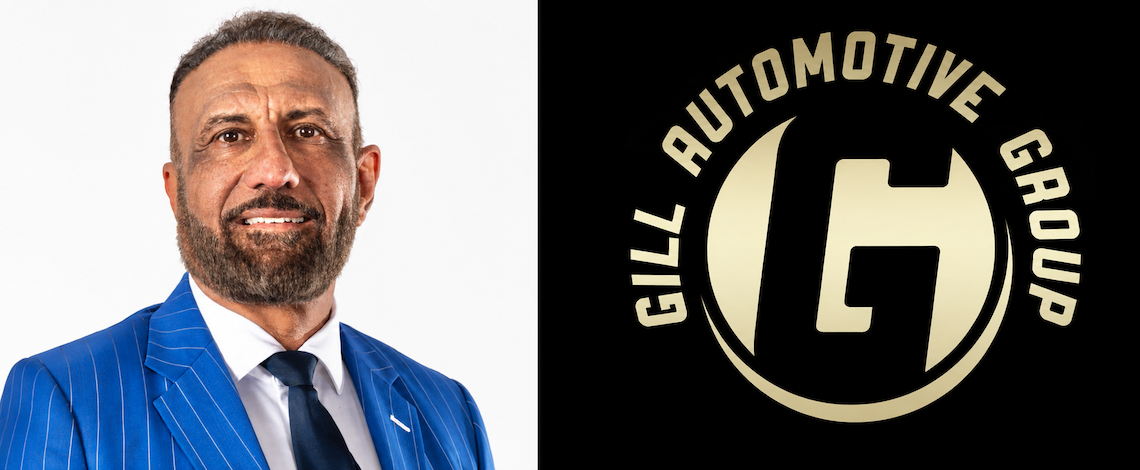
Jay Gill, president and CEO of Gill Automotive Group, says higher vehicle prices, elevated interest rates and shifting consumer preferences continue to reshape the automotive market. Courtesy of Gill Automotive Group.
Written by Ben Hensley
Higher vehicle prices, elevated interest rates and changing consumer preferences continue to reshape the automotive industry. The Business Journal spoke with Gill Automotive Group President and CEO Jay Gill about what he’s seeing on the front lines of the market.
1. What’s defining the auto market in 2026?
The automotive industry is navigating another year of economic uncertainty.
“The automotive industry is always constantly facing headwinds. Whether it be sensitivity of interest rates, worldwide events, political events — this year is no different.”
Rather than experiencing significant growth, dealerships are adapting to changing consumer behavior as buyers become more cautious about large purchases.
2. Why are consumers waiting longer to buy new vehicles?
Affordability has become the biggest hurdle.
“The average price of a new vehicle has climbed from roughly $50,000 just a year ago to $52,500.”
Higher vehicle prices, elevated interest rates and increased fuel costs have pushed monthly payments higher, prompting more shoppers to compare financing offers, negotiate harder and consider certified pre-owned vehicles instead of buying new.
3. Have automakers misjudged demand for electric vehicles?
In many cases, yes.
“I think they missed the mark. They were overly optimistic on people buying electric vehicles.”
Consumer demand has remained stronger for traditional gasoline-powered vehicles and hybrids than many manufacturers anticipated. Hybrids, in particular, continue to appeal to buyers looking for better fuel economy without concerns about charging infrastructure.
4. Which automakers are best positioned right now?
Not every manufacturer is facing the same challenges.
Toyota and Honda continue to perform well, while Stellantis and Nissan have struggled for different reasons.
“I think they priced themselves out of the market after COVID. They didn’t react fast enough.”
Although Stellantis has adjusted its pricing strategy, rebuilding market share will take time.
5. What’s next for dealerships?
Consolidation is expected to continue as economic pressures favor larger dealer groups with stronger financial resources.
“It’s the guys that are strong, that are well-capitalized, that have been around for a long time, that are not overly leveraged, that’s going to survive. I think you’ll see a lot more consolidation going on.”
Despite the industry’s challenges, dealerships have historically adapted to changing economic conditions and consumer preferences, and this market cycle is expected to be no different.