
As more dining menu items climb above 10,000 won, consumers seeking both health and value are turning to care food. While care food was once strongly perceived as meals for the elderly or those with illnesses, demand has recently expanded to include people in their 20s and 30s who are interested in blood sugar management, weight control, and protein intake. The food industry is also targeting the market with offerings ranging from low-sugar, high-protein meals to artificial intelligence (AI)-based customized diets.
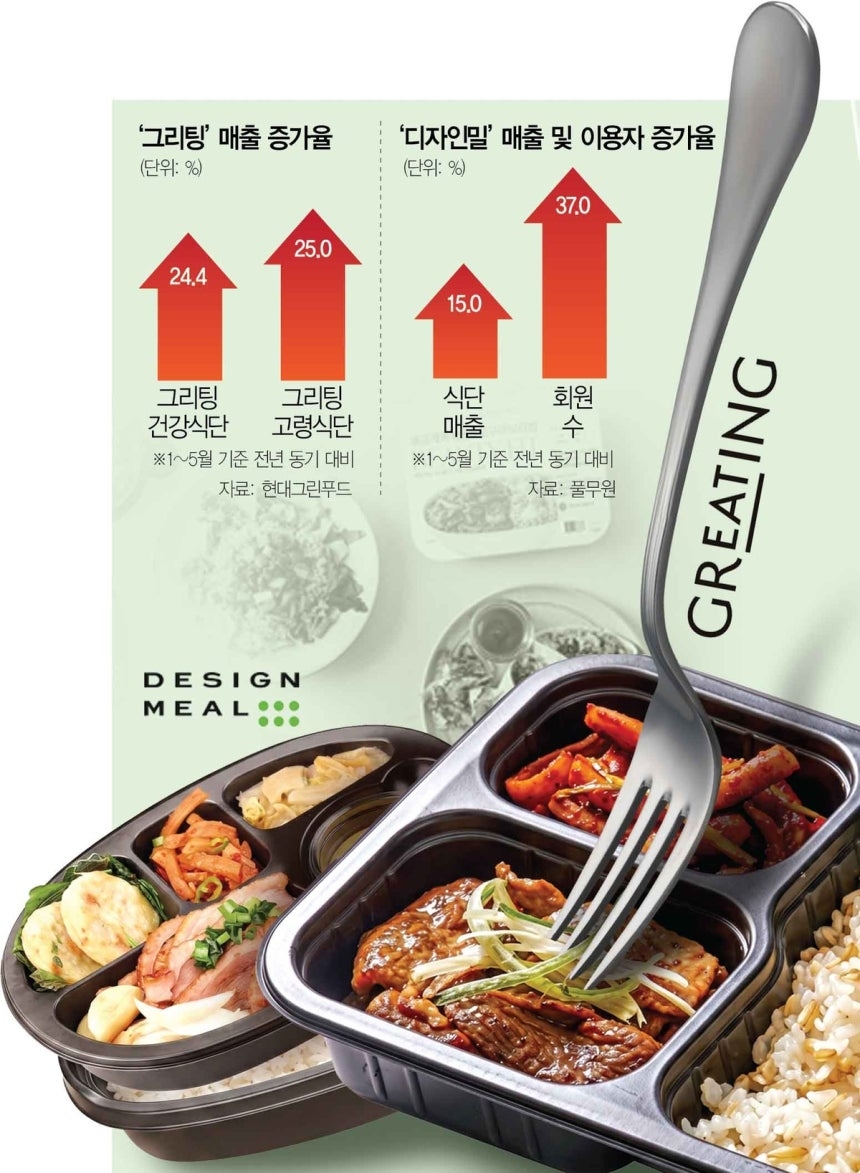
According to Hyundai Greenfood on Wednesday, healthy meal sales from January to May this year at its care food specialty brand “Greeting” rose 24.4% from the same period a year earlier. Sales of meals for the elderly also increased 25.0% over the same period. Healthy meals are composed mainly of low-sugar, low-calorie, and high-protein options, and Greeting also operates condition-specific diets for patients with diabetes, high blood pressure, kidney disease, and cancer.
Hyundai Greenfood attributes the sharp rise in demand among younger consumers to growing interest in health management and disease prevention. “The appeal lies in being able to enjoy a healthy meal conveniently and at a reasonable price,” a Hyundai Greenfood official said. “Recently, more consumers without any illnesses are also seeking condition-specific diets as a preventive measure.”
Based on its Smart Food Center, Hyundai Greenfood has built a small-batch, multi-product production system, offering healthy meals at prices ranging from 9,500 to 10,500 won per meal. The company operates about 700 menu items, expanding the range of choices so consumers do not tire of them even with long-term use.
Pulmuone operates “Design Meal,” a service that recommends diets tailored to individual health conditions based on AI nutritional diagnosis. Design Meal offers not only general healthy meals but also customized diets for specific purposes such as managing blood sugar, protein, calories, sodium, and fat, and even recommends nutritional drinks and healthy snacks. As of the end of last month, the monthly active users (MAU) of the Design Meal application increased 130% from a year earlier, and cumulative membership rose 37%. Meal sales also grew more than 15% over the same period.
Rising dining-out prices are also fueling the expansion of the care food market. According to the Korea Consumer Agency’s price information portal Chamgagyeok, as of April this year, the price of naengmyeon in the Seoul area was 12,615 won, kalguksu was 10,038 won, and samgyetang was 18,154 won. With many representative dining-out menu items exceeding 10,000 won, the analysis is that care food, which allows consumers to look after their health within a similar price range, is drawing attention as an alternative.
The industry expects the growth of the care food market to accelerate further. According to the Korea Agro-Fisheries & Food Trade Corporation (aT), the domestic protein market grew from 120.6 billion won in 2019 to 450 billion won last year and is projected to reach 800 billion won this year. “As the use of continuous glucose monitors (CGM) and blood sugar management apps spreads, more consumers are carefully examining food ingredients and nutritional information,” a food industry official said. “Care food is moving beyond being meals for a specific group and is establishing itself as an everyday health management food.”