[The content of this article has been produced by our advertising partner.]
When Canton Tower lit up on 1 July to celebrate Lingnan University’s achievement as the world’s top university for SDG 4: Quality Education in the Times Higher Education (THE) Sustainability Impact Ratings 2026, the display marked more than a single accolade. Coinciding with the 29th anniversary of the establishment of the Hong Kong SAR, it also reflected a broader story about the changing landscape of higher education in Hong Kong and the role universities will play in an increasingly knowledge-driven economy.
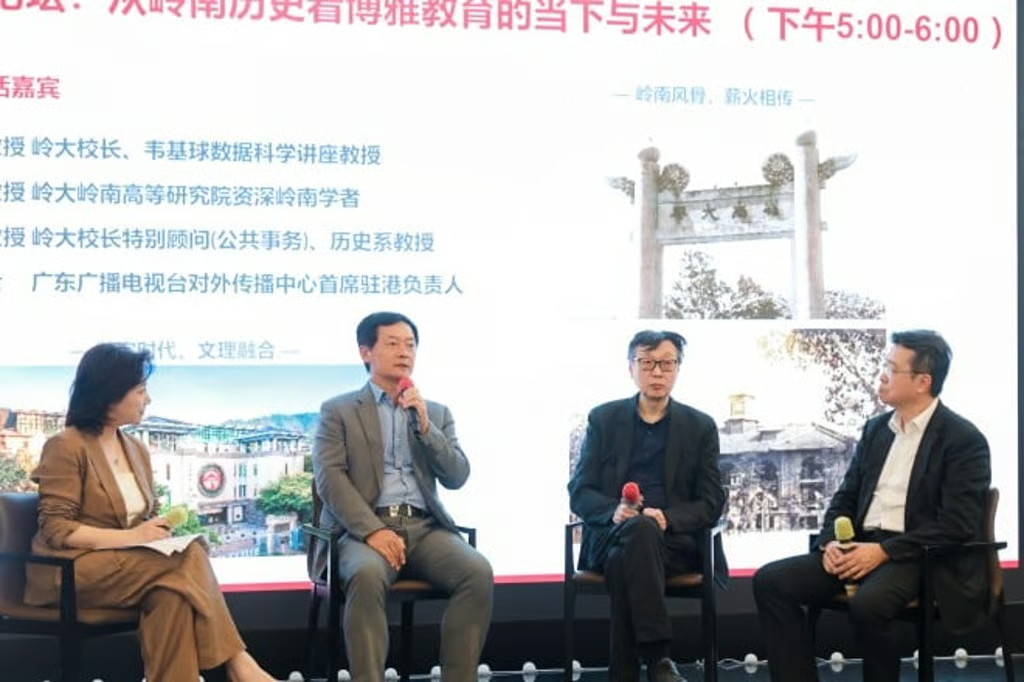
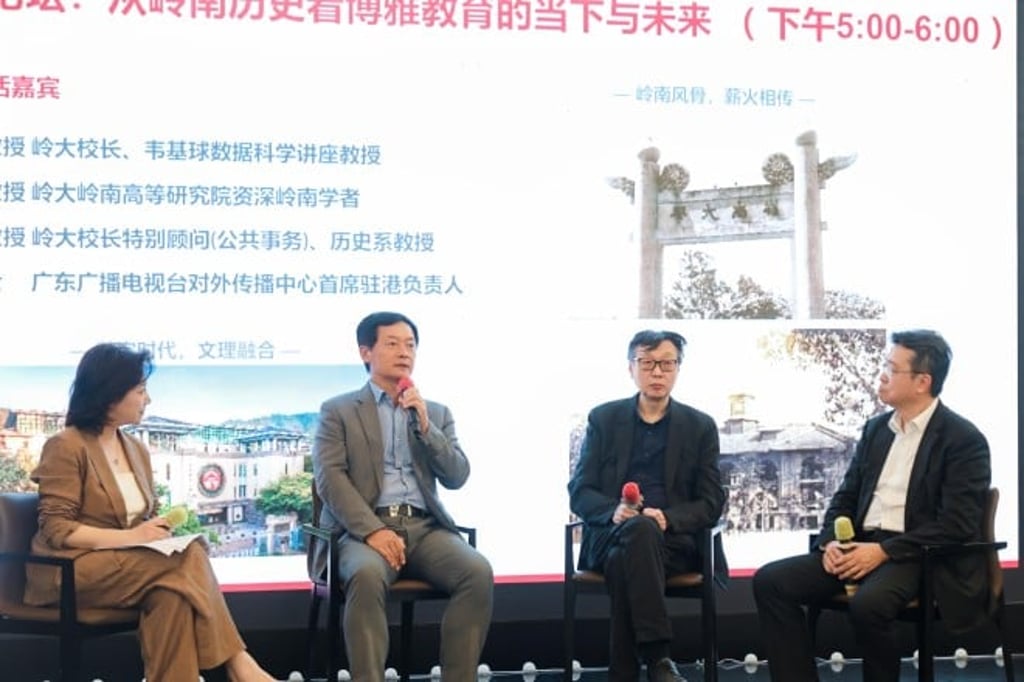
Earlier that day, Lingnan hosted a seminar in Guangzhou entitled The Present and Future of Liberal Arts Education through the Lens of Lingnan History. The choice of venue was fitting. Founded in Guangzhou before re-establishing itself in Hong Kong, the University has long been shaped by the educational and cultural links between the two cities. At a time when artificial intelligence (AI) is transforming industries and societies, the seminar offered an opportunity to consider how liberal arts education can continue to cultivate critical thinking, ethical judgement and intellectual curiosity alongside technological competence.
Addressing the seminar, Prof S. Joe Qin, President and Wai Kee Kau Chair Professor of Data Science at Lingnan University, noted that as Hong Kong prepares its first five-year development blueprint, universities are expected not only to nurture graduates with professional expertise but also individuals capable of navigating rapid technological and social change with cultural understanding and independent judgement.
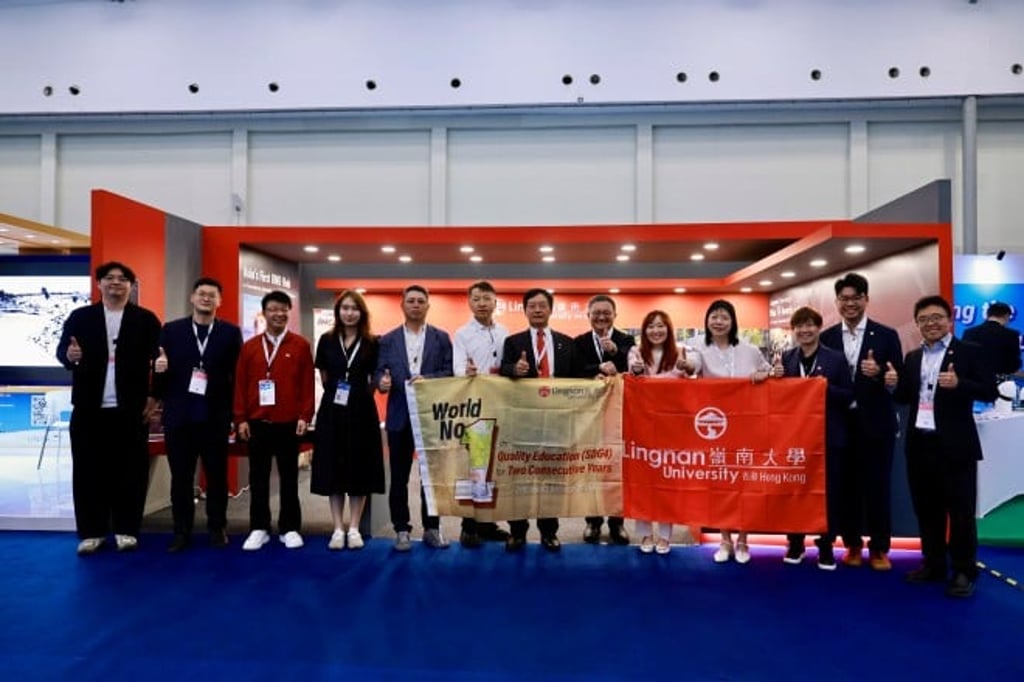
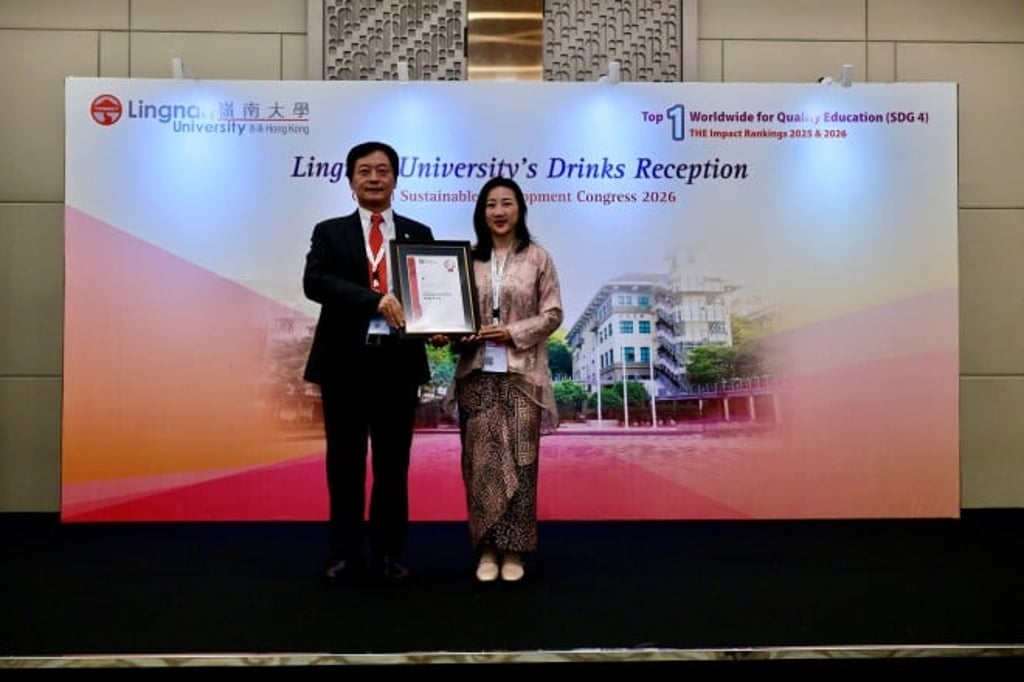
The significance of Lingnan’s recent progress in international rankings lies in the consistency of its performance across different global assessments. In the latest THE Sustainability Impact Ratings, the University climbed from the 101–200 band to 63rd in the world, entering the global top 100 for the first time and ranking third among Hong Kong’s higher education institutions. It retained the world’s No. 1 position in Sustainable Development Goal (SDG) 4: Quality Education, while seven SDGs were placed among the global top 100. Six indicators ranked first among Hong Kong universities.
The momentum has also been reflected in other major international rankings. Lingnan entered the THE Asia University Rankings top 100 on its debut, placing 84th. In the newly released QS World University Rankings 2027, it recorded its largest rise in recent years, climbing 120 places to 581st globally. The University also achieved the biggest improvement among Hong Kong institutions in the U.S. News & World Report 2026–27 Best Global Universities Rankings, moving up 226 places to 783rd worldwide.
While rankings provide only one measure of institutional performance, sustained improvement across different international systems often points to deeper structural changes rather than isolated success. At Lingnan, those changes have centred on strengthening interdisciplinary education through its “Liberal Arts + Technology” and “AI+” initiatives, expanding research collaboration, and building stronger links between academia, industry and society.
The University’s growing international profile is also reflected in the recognition received by its faculty. Earlier this year, Prof S. Joe Qin became the only scholar from Hong Kong to be inducted into Control Global’s 2026 Process Automation Hall of Fame for his contributions to industrial data analytics and automation. Prof Leng Mingming, Dean of the Faculty of Business, received the Beta Gamma Sigma 2026 Dean of the Year Award, becoming the sole recipient selected from more than 640 universities across 39 countries and regions. Meanwhile, Prof Richard M. Walker, Head of the Department of Government and International Affairs, became the first scholar in Hong Kong to receive the Routledge Lifetime Achievement Award from the International Research Society for Public Management.
Looking ahead, Lingnan is positioning itself to contribute to Hong Kong’s next phase of development. As the UGC-funded university located closest to both the Northern Metropolis and Shenzhen Bay Port, it is expanding its teaching and research facilities, increasing the proportion of international students, and deepening collaboration with enterprises on the Chinese mainland to accelerate the translation of research into practical applications. These efforts align closely with Hong Kong’s aspiration to strengthen its position as an international education hub while supporting innovation, sustainability and cross-boundary collaboration within the Greater Bay Area.