Cuba was at the center of a nuclear confrontation between the U.S. and the Soviet Union. Its bearded guerrilla fighters inspired 1960s student movements from Paris to Mexico City. And its intelligence services infiltrated America’s government agencies.

Now, the island that challenged the U.S. for decades could be making its last stand, suffocated by economic mismanagement and increased pressure from the Trump administration.
Cuba’s Fidel Castro and his brother Raúl developed an outsize military that projected unprecedented geopolitical power by a Third World country at the height of the Cold War. Its security force is now a shell of its former self. But the memory of Cuba’s global military adventures helps inform the Trump administration’s view that it remains a threat to the U.S.
The Bay of Pigs
In 1961, about 1,400 Cuban exiles trained by the Central Intelligence Agency landed at the Bay of Pigs on Cuba’s southern coast. The Castros were prepared. After three days of fighting, Cuban forces captured most of the invaders who had run out of ammunition. A lack of promised air support from President John F. Kennedy doomed the mission. It was a resounding victory that cemented the Castros’ hold on power.
Combat in Africa
Tens of thousands of Cuban soldiers fought South African troops in the 1970s and 1980s to prevent the apartheid government from overthrowing Angola’s Marxist leadership. Cuban forces supported rebels in the Democratic Republic of the Congo, while troops helped Ethiopia repel a Somali invasion. Hundreds of Cuban troops also supported Algeria in its conflict with Morocco. More than 400,000 Cuban military and support staff served in Africa, one of the largest deployments ever of a developing nation in the Cold War.
Tanks in Syria
Cuba sent an armored combat brigade equipped with Soviet T-62 tanks to reinforce Syria during the 1973 Yom Kippur war and its aftermath, with an estimated troop deployment between 800 and 3,000. Cuban-manned tanks fought Israeli forces in armored duels. Cuban troops suffered some 180 fatalities with another 250 wounded before withdrawing.
Exporting revolution
Cuba exported revolution across Latin America, which became a Cold War front. While the U.S. supported repressive military dictatorships, Cuba provided training, funds and intelligence to student movements and guerrilla groups from Central America to Argentina. One large Cuba-inspired group is still fighting: Colombia’s National Liberation Army.
Havana’s most notable success
Cuba helped topple Nicaragua’s dictator Anastasio Somoza in 1979, providing training, intelligence and military aid to Sandinista guerrillas. Somoza was assassinated the following year in Paraguay as he drove in a Mercedes-Benz close to his home, an attack for which the Sandinista government and Cuba provided training, intelligence and logistics.
One of Havana’s biggest defeats
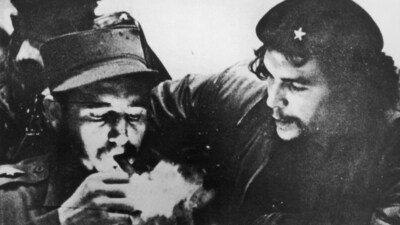
The capture and execution of Ernesto “Che” Guevara, the iconic Argentine guerrilla leader who helped the Castros take power in Cuba, was a huge defeat for the island’s efforts to spread revolution. Believing he would replicate the triumph in Cuba, he went to Bolivia with a small group of would-be guerrillas. CIA-backed Bolivian forces captured Guevara.
A direct confrontation with U.S. forces
Cuban and U.S. forces engaged in direct combat on the tiny island of Grenada in 1983. Worried about Cuban and Soviet expansion, the U.S. invaded with some 8,000 troops. They fought Grenadian forces and nearly 800 Cubans, most of them armed construction workers who were on the island building an airport the U.S. said could have posed a strategic threat if open to Soviet aircraft. Twenty five Cubans were killed, 59 wounded, and 638 were captured.
Continental influence
Cuba provided ideological inspiration for Nicolás Maduro, the strongman who led Venezuela until his capture by U.S. special forces early this year. Havana was key in the development of Venezuela’s notorious security and intelligence apparatus under Maduro’s predecessor, the late Hugo Chávez.
Havana spooks
Cuban spies have been adept at recruiting American officials, turning some into moles who handed over secrets for decades. The American spies didn’t do it for money, which Cuba had little of, but because they were sympathetic to the revolution.
They included Ana Belén Montes, who for 16 years was an analyst at the Defense Intelligence Agency, including eight years as the agency’s senior Cuba analyst. She earned the nickname “Queen of Cuba” by her colleagues for her deep knowledge of the island’s military and political affairs. Another longtime mole, Manuel Rocha, spied for Cuba during his 20 years in the State Department, where he capped his career as the U.S. ambassador to Bolivia.
The U.S. raid that deposed Maduro
Perhaps the most damaging event for Cuba’s regime was January’s U.S. military raid that captured Maduro at his military headquarters in Caracas. Thirty-two Cuban soldiers and intelligence officers who were part of his security detail were killed in the attack. The end of the Maduro regime also ended vital Venezuelan oil shipments to the island.