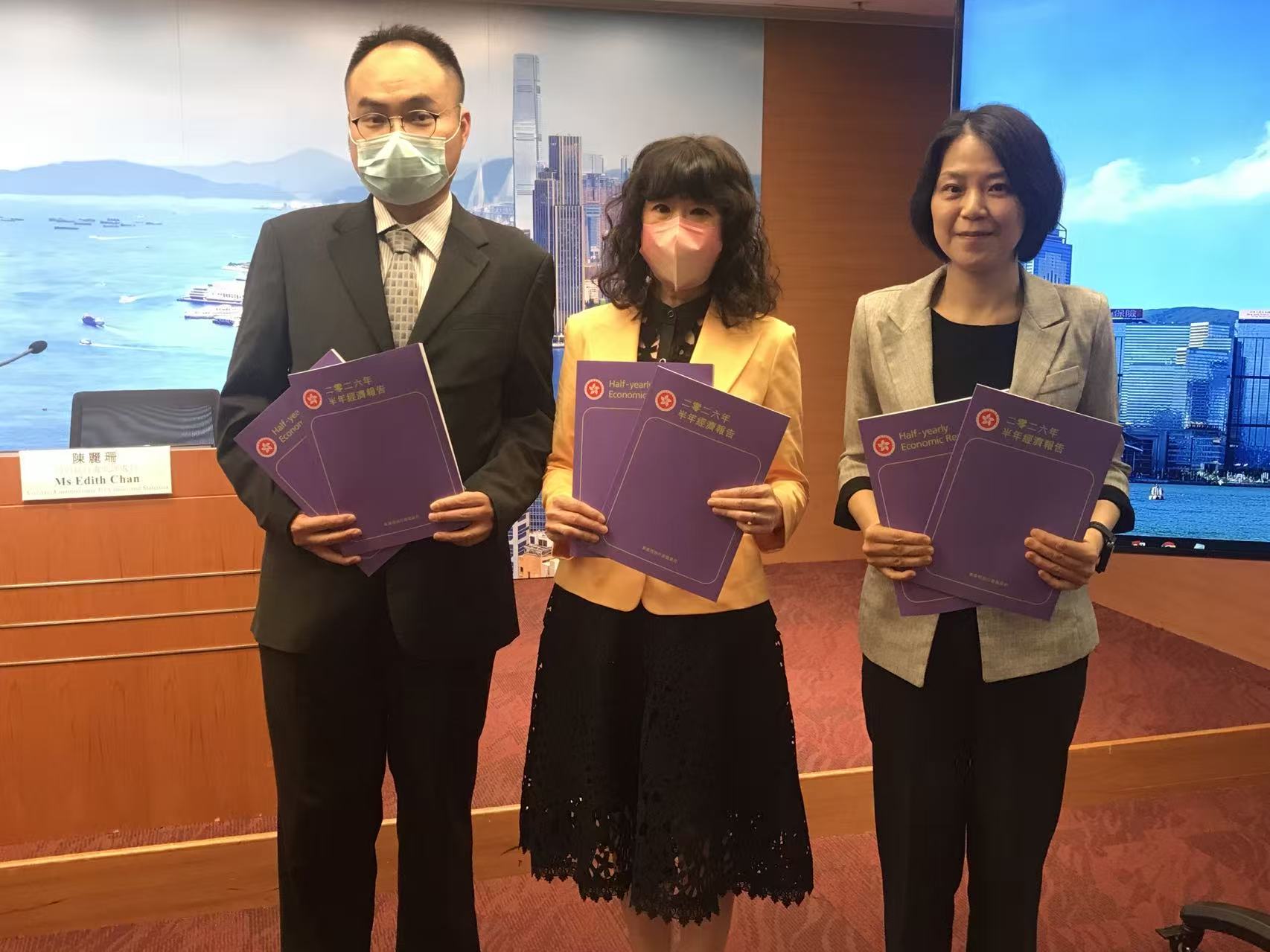
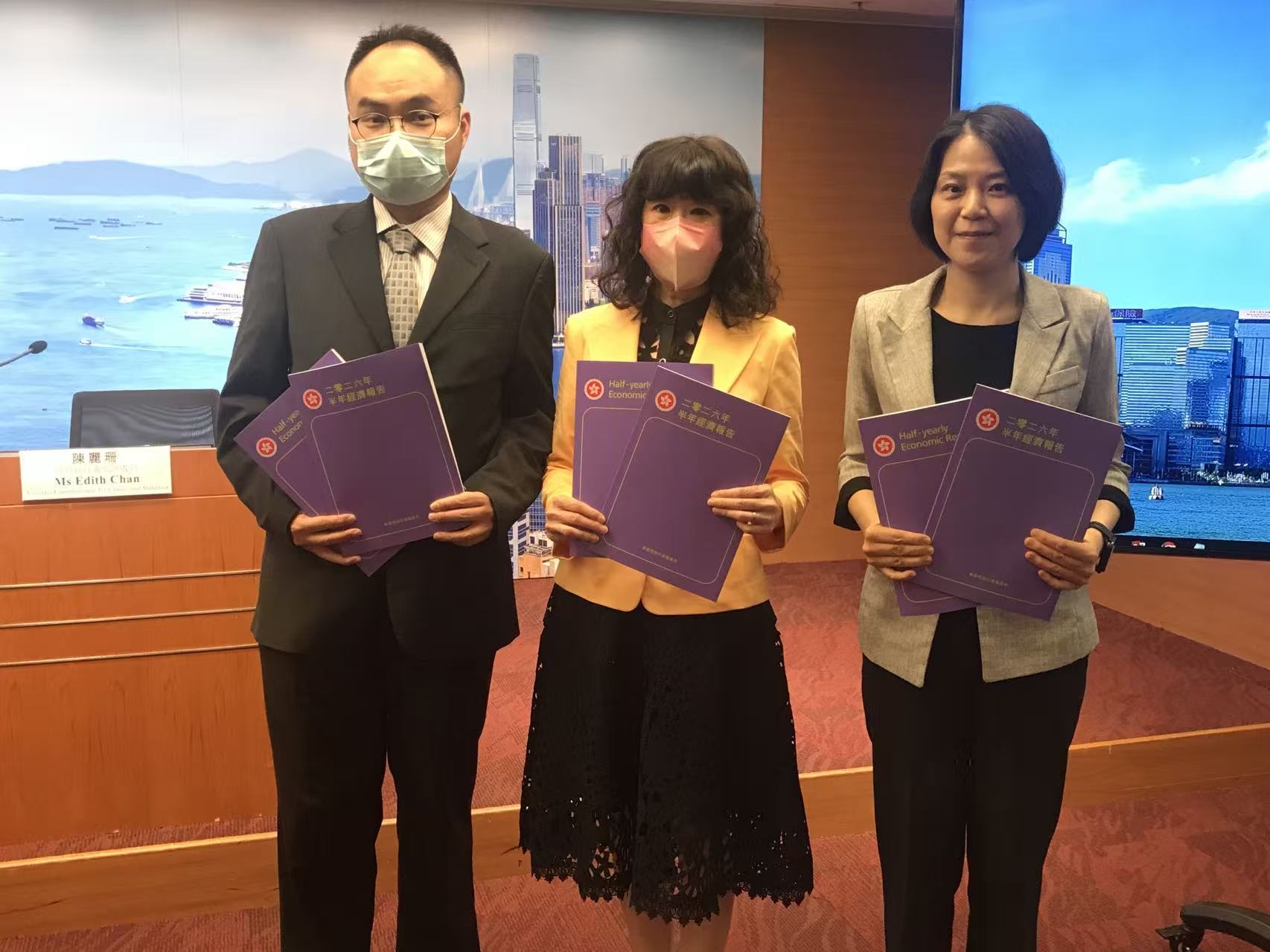
The Hong Kong Special Administrative Region government raised the real economic growth forecast for 2026 to 3.5 to 4.5 percent, citing a strong external trade sector boosted by vibrant artificial-intelligence-related demand, while domestic demand remains resilient.
The Hong Kong economy posted the strongest half-yearly performance in nearly five years, as GDP grew 5.1 percent year-on-year in the first half, contributed by the 5.9 percent growth in the first quarter and the 4.3 percent expansion in the second quarter.
A stellar export performance contributed to the GDP performance in the second quarter. Goods exports recorded double-digit growth for five consecutive quarters, underpinned by robust trade flows and strong global demand for AI-related electronic products. This GDP component’s annual growth rate accelerated 28.9 percent in the second quarter, up 5.1 percentage points from the first quarter.
ALSO READ: HK sees robust external trade in H1, driven by high-value-added goods
The growth rate of private consumption expenditures decreased 2.1 percentage points to 2.8 percent, but this GDP component has maintained a moderate growth rate for five consecutive quarters. Local households remained willing to make larger discretionary purchases, while spending abroad declined, suggesting a partial reallocation of consumption toward the domestic economy.
The growth rate of overall investment expenditures in terms of gross domestic fixed capital formation dipped 13.9 percentage points to 4.4 percent, mainly because of a slowdown in public sector expenditures on building and construction.
Taking account of the expected global AI demand boom, robust services demand, and resilient domestic demand, the SAR government said it is raising upward the real GDP forecast for Hong Kong this year to 3.5 to 4.5 percent from the original estimate of 2.5 to 3.5 percent, announced in May.
READ MORE: Hong Kong to wrap up public consultation on first local five-year plan
Government economist Irina Fan Yuen-yee said Hong Kong, as a key trading hub for technology-related products, has benefited from the global AI investment boom.
“As a key supplier and consumer of advanced electronics, the Chinese mainland routed around one-third of its integrated circuit exports through Hong Kong,” Fan said. “AI-related products now account for about 70 percent of Hong Kong’s total merchandise exports, with the value rose 63.7 percent in the second quarter, following a 41.5 percent growth rate in the previous quarter.”
She added that the AI theme has driven a significant increase in private sector investment on acquisitions of machinery, equipment and intellectual property products, partly driven by the surge in enterprise and consumer adoption of AI-empowered products and services.
READ MORE: Hong Kong’s infrastructure bond market gaining pace
Erin Xin, Greater China senior economist at HSBC Global Investment Research, said the AI-demand cycle has kept Hong Kong’s external trade resilient, and consumption should remain steady, supported by improving wealth effects and stable monetary conditions. Investment is set to strengthen on the back of accelerated infrastructure development, notably in the Northern Metropolis. The bank it has revised its Hong Kong GDP forecast in 2026 from 3.8 percent to 4.5 percent.
“Construction for the Northern Metropolis megaproject should continue to support investment. A lower supply of housing units and continuing inflow of new residents should both support the residential real estate sector, while a strong IPO (initial public offering) pipeline should keep financial market activity elevated,’” Switzerland-based private bank J Safra Sarasin said.
Hong Kong’s GDP growth rate in the second quarter was 1.6 percentage points lower than the first quarter, primarily due to the lackluster momentum of domestic demand and a slowdown in fixed capital investment compared to previous quarters.
“Looking ahead to the second half of the year, while overall external trade performance is expected to remain robust, the pace of domestic-demand growth may slow slightly, resulting in a significantly lower economic growth rate in the second half compared to the 5.1 percent recorded in the first half,” said Gary Wan, chief economist and strategist at Dah Sing Financial Group.
The government said that in addition to the GDP forecast, it is maintaining the underlying inflation target rate at 2.5 percent this year, given elevated international oil prices, but price pressures in other areas remain contained.