The best coffee machine for most UK homes is the Sage Barista Touch Impress. It combines guided puck preparation, automated milk texturing, and a serviceable 58mm portafilter at around £999 – making it the machine that closes the gap between home barista and cafe quality faster than anything else at the price. If your budget starts lower, or your routine does not involve espresso at all, there is a better answer for you below.
I have spent 15 years in specialty coffee – two years calibrating bean-to-cup machines in corporate London, then five and a half years inside Sanremo UK, one of the world’s leading espresso machine manufacturers, where I was trained directly by their engineers on PID control systems, multi-boiler architecture, and extraction science. Since founding Balance Coffee in 2020, I have continued testing machines in real home environments. Every machine on this list has lived in a kitchen for at least 30 days as the only machine in the house.
The best coffee beans for espresso UK matter as much as the machine you put them through – but you need to start with the right equipment. This guide covers every machine type, every budget band, and routes you to our deeper sub-pillars for each category.
The Best Coffee Machines in the UK at a Glance
How We Tested 50+ Coffee Machines
Across 15 years in specialty coffee, I have tested more than 50 home coffee machines – not in a studio with a 48-hour review window, but in real London flats, in hard-water areas (testing conditions at 267 ppm CaCO3), on single-counter-footprint constraints, and in daily use as the only machine in the building.
The test protocol for every machine here covers: 9-bar OPV pressure verification, temperature stability tested with a Scace device across 20 consecutive shots, milk steaming power and microfoam quality, pull-time consistency and shot weight variance, descaling cycle frequency under UK water hardness conditions, and a 30-day minimum daily-driver period before any machine makes this list.
At UCC Coffee, I spent two years calibrating Jura, Thermoplan, and Eversys bean-to-cup machines across London’s corporate accounts – law firms, McDonald’s, Greggs sites – giving me a professional’s understanding of bean-to-cup architecture that consumer reviews rarely have access to. At Sanremo, I was trained by authorised engineers on machine internals: how a heat exchanger differs from a dual boiler, what a PID controller actually does to shot temperature, why pump pressure matters and how to verify it. I have rebuilt three Gaggia Classic machines and replaced steam wands on Sage Barista Express units. That is the level of familiarity behind every recommendation below.
The machines on this list were also evaluated against competitors at the same price point. We looked at Jura E6 and S8, Philips 5400 LatteGo, De’Longhi Dinamica, and Rocket Appartamento at each tier. Where a non-listed machine beats the pick on a specific axis, I say so.
Which Coffee Machine Type Is Right for You
The right machine depends on three questions: what do you actually drink, how involved do you want to be, and what is your honest counter footprint?
If you want one-button coffee with no faff: a bean-to-cup machine is your answer. Machines like the De’Longhi Magnifica Evo grind, tamp, extract, and in some configurations steam milk automatically. You press a button. Coffee appears. The tradeoff is ceiling quality – the best bean-to-cup machines make very good coffee, but they do not match what a skilled home barista extracts from a traditional espresso machine. For a full ranked list, see our guide to the best bean-to-cup coffee machine.
If you drink flat whites and lattes daily: a semi-automatic machine with a steam wand, like the Sage Bambino Plus or Barista Touch Impress, gives you better milk texture control than any bean-to-cup at the same price. You can learn milk steaming in a week with either of these.
If you primarily drink black espresso and want to learn the craft: the Gaggia Classic Evo Pro or Sage Barista Express Impress are the right starting points. Both have proper commercial-style portafilters, real boiler systems, and enough headroom to grow into. Our full guide to the best espresso machine ranks 12 machines in this category.
If speed and consistency matter more than craft: a pod machine like the Nespresso Vertuo Plus gives you a reliable cup in under a minute with zero dialling-in. The quality ceiling is lower than ground coffee, but the floor is higher than most people’s unassisted espresso attempts. See our best Nespresso machine guide for a full comparison.
If you brew filter coffee for a household: the Moccamaster KBG Select is the only filter machine on this list worth defending at its price point. SCA-certified, glass carafe, built in the Netherlands. For everything else in this category, see our best filter coffee machine UK guide.
If you are a prosumer enthusiast: the Lelit Mara X is where this guide routes you. Heat exchanger, commercial group head, E61 system. Our dedicated guide to the best prosumer espresso machine covers everything from the Mara X up to the La Marzocco Linea Mini.
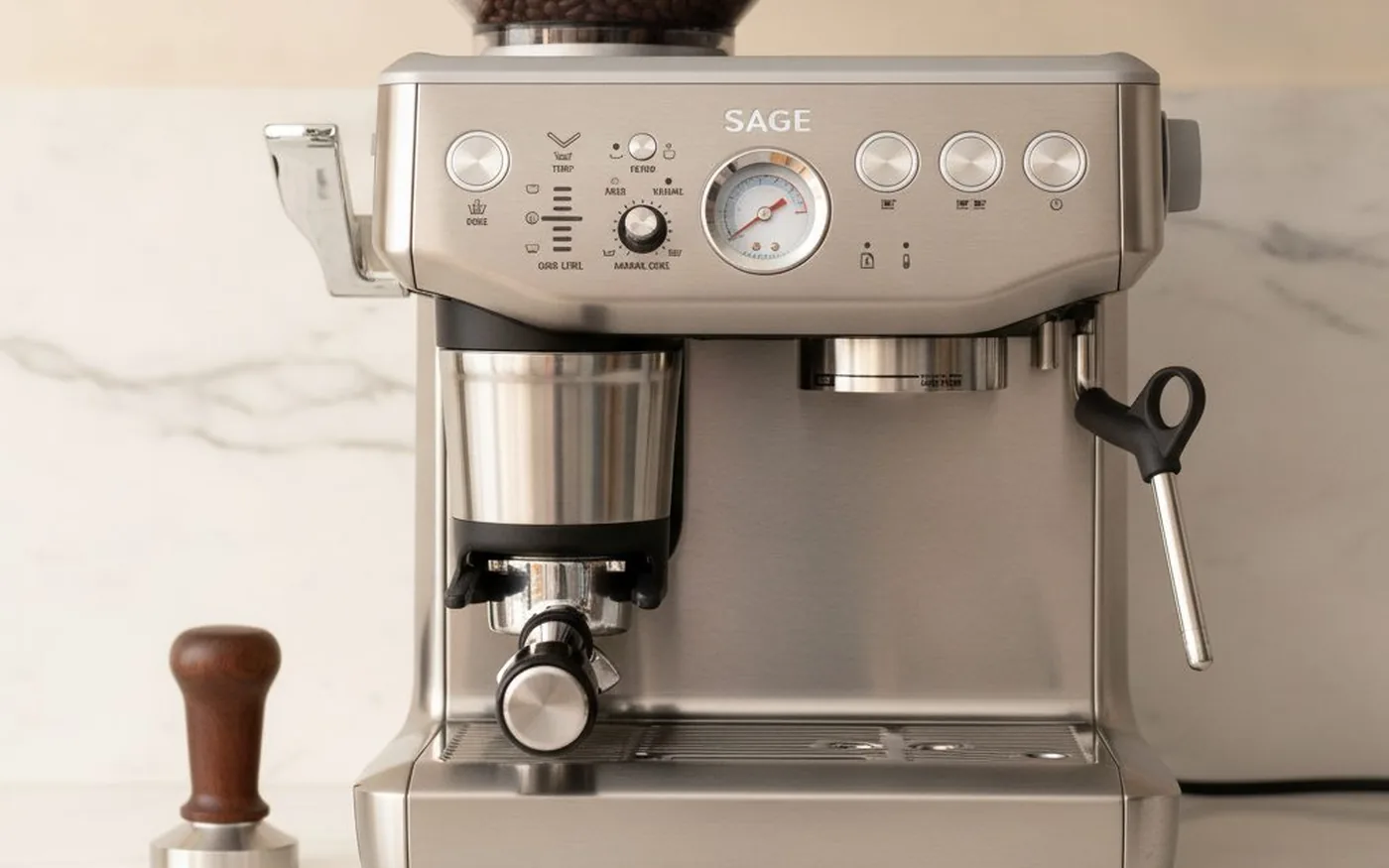
Best Overall Coffee Machine – Sage Barista Touch Impress
The Sage Barista Touch Impress is the best coffee machine for most UK homes. It earns that position by solving the two things that cause most home espresso failures: inconsistent puck preparation and inconsistent milk texture.
The Impress system auto-distributes and tamps your grounds to a calibrated level. You grind into the portafilter, press the Impress lever, and the dose goes in level and at the correct pressure every time. For someone coming from a non-pressurised basket without a standalone tamper, this removes the single biggest variable in espresso quality. Sage released a firmware update in Q1 2026 that added grind-size memory – the machine now remembers your last setting per bean profile, which means you are not re-dialling after switching between a milk drink and an espresso.
The steam wand auto-textures milk to your set temperature with a single dial. Having worked on commercial machines most home baristas will never touch, there is a real and noticeable difference at that level. The Bambino is not trying to compete with them – and for someone learning to steam milk at home, it does not need to. The Touch Impress sits between those two worlds more comfortably than anything else at the price.
Counter footprint runs to approximately 417mm wide by 358mm deep – manageable in a typical UK kitchen, though not compact. If your counter is under 350mm deep, look at the Bambino Plus instead.
“The Barista Touch Impress is the closest thing to a guided barista class that a machine can offer. The Impress system removes the tamping variable; the guided interface removes the intimidation. It is the machine I would buy for someone who wants to get good, fast.”
James Bellis, founder, Balance Coffee
Best Bean-to-Cup Coffee Machine – De’Longhi Magnifica Evo
Under £500, there is no better one-touch bean-to-cup machine for UK kitchens than the De’Longhi Magnifica Evo. It has replaced the Magnifica S across UK retail throughout 2026, and the upgrade is meaningful: the Evo adds a LatteCrema Easy milk system for automatic milk drinks, and the interface is cleaner without adding unnecessary complexity.
At UCC Coffee, I calibrated commercial Jura and Thermoplan bean-to-cup machines across hundreds of UK sites. The Magnifica Evo is not at that tier of engineering – no domestic bean-to-cup machine is – but it uses the same logical architecture: an integrated grinder, a pressurised brew unit, and a cleaning cycle that runs without you thinking about it. The bean-to-cup category at this price point often disappoints on milk drinks. The Magnifica Evo’s LatteCrema system is the exception. It produces a workable foam for cappuccinos and flat whites without a separate wand, which is the only thing that matters for a one-touch household.
For depth on how the Magnifica Evo compares to the Jura E6, the Philips 5400 LatteGo, and the De’Longhi Rivelia above it, see our full guide to the best bean-to-cup coffee machine.
“A well-configured Magnifica Evo can match a mid-tier traditional espresso machine on blind espresso taste tests. The ceiling is real, but for most households drinking flat whites before work, it does not matter.”
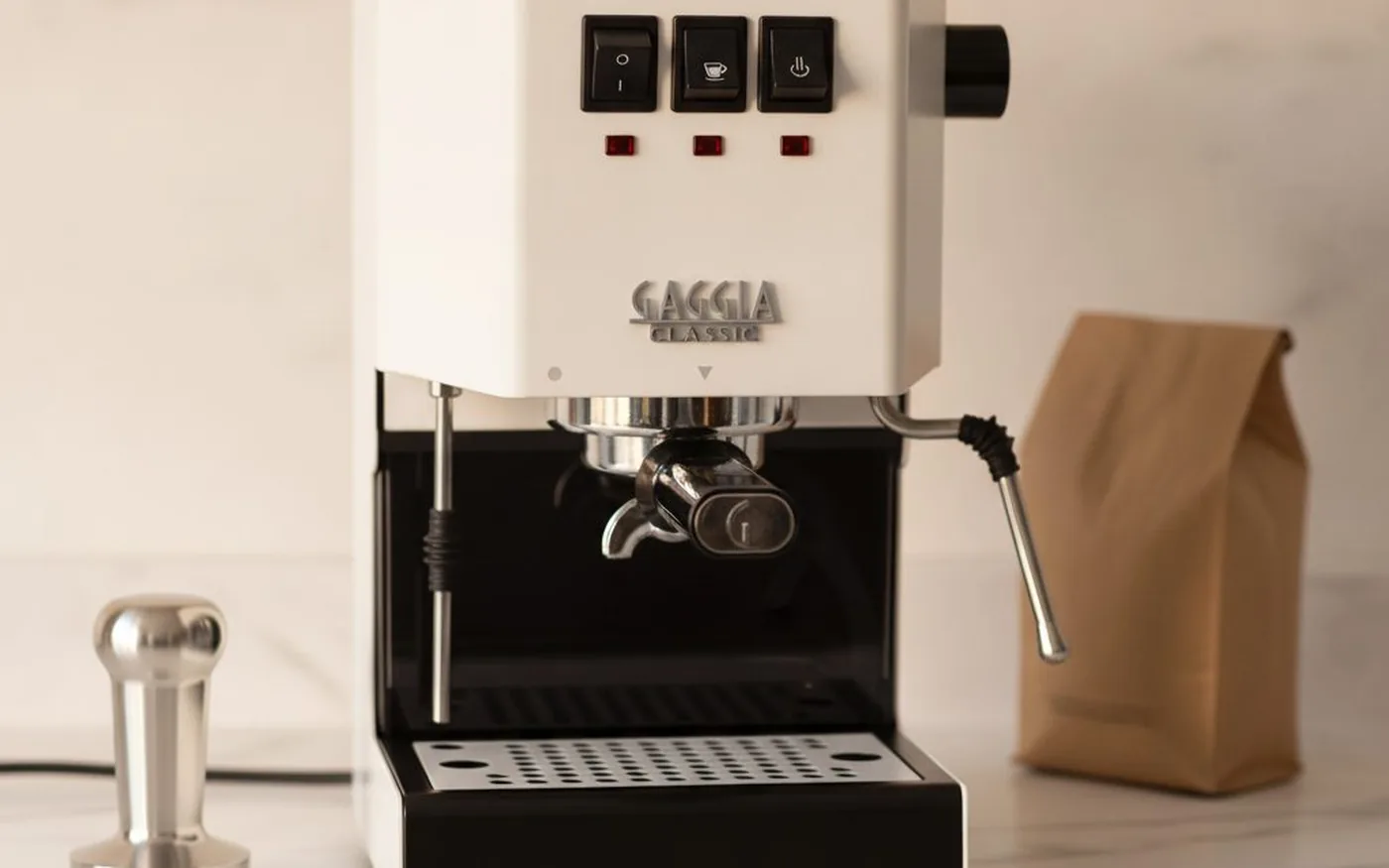
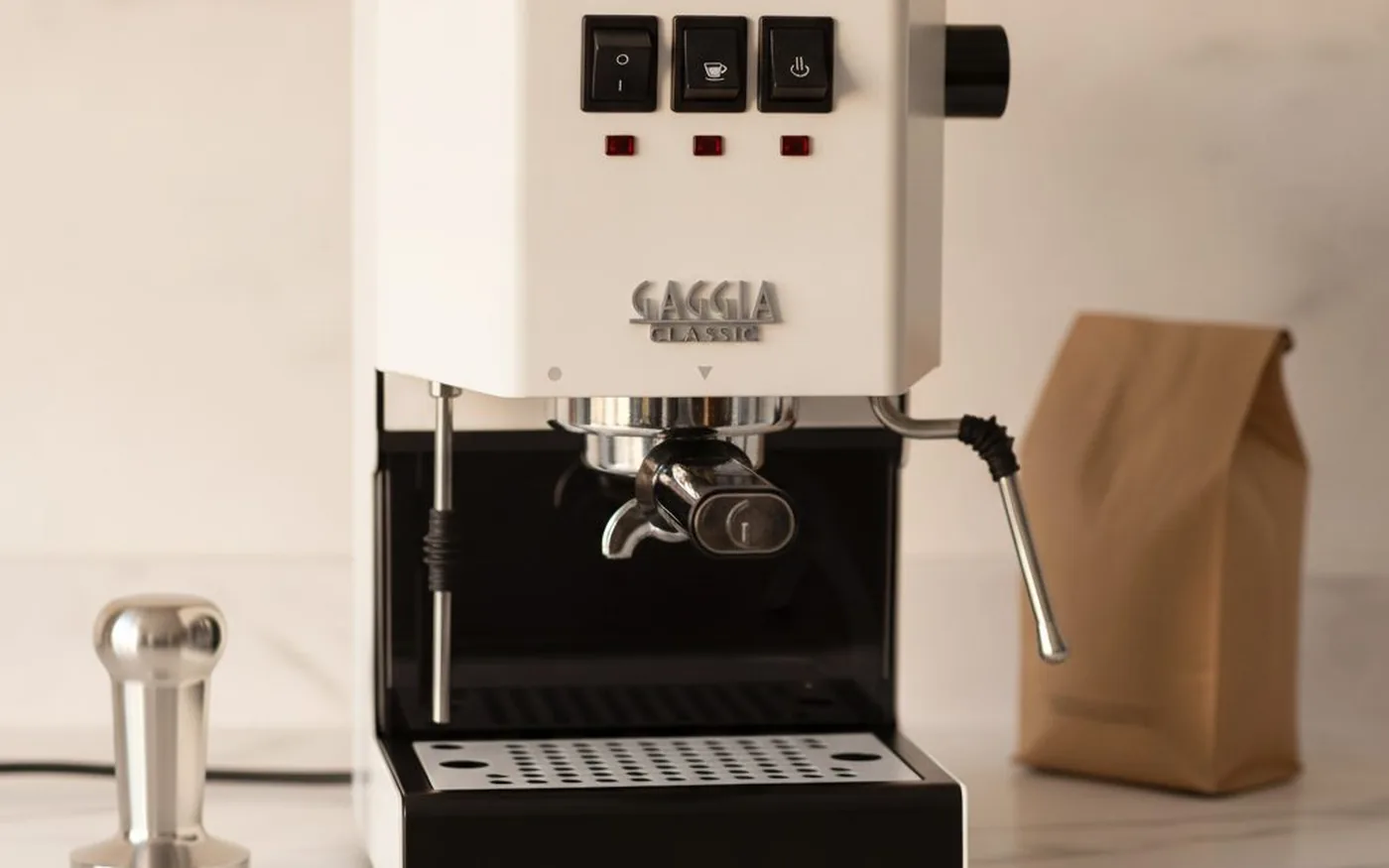
Best Manual Espresso Machine – Gaggia Classic Evo Pro
Built in Milan on an architecture that has not fundamentally changed since its 1991 launch, the Gaggia Classic Evo Pro is the most teachable manual espresso machine at this price point. The 2024 Evo Pro update brought a three-way solenoid valve, a commercial-grade 58mm portafilter, and an improved steam wand – the three things that separated the previous Classic from being a genuinely teachable machine.
I have rebuilt three Gaggia Classic units. The steel boiler, the group head design, the basic hydraulic architecture – the original design does not need revision. What you are buying is a platform: a machine with enough real hardware to respond correctly to dialling-in, to grind changes, to tamp pressure changes. Most budget espresso machines use pressurised baskets that hide your mistakes. The Gaggia’s unpressurised basket shows them to you – which is how you learn.
The limitation is single-boiler operation: you steam milk from the same boiler you brew espresso with, which means waiting for a temperature change between extraction and steaming. For black espresso drinkers, this is a non-issue. For milk-drink households, see the Sage Bambino Plus instead.
For more options at this price point, including the Rancilio Silvia and Breville Barista Express, see our best espresso machine guide. The best Gaggia coffee machine guide covers the full Gaggia range.
“The Gaggia Classic Evo Pro is the machine that teaches you espresso. Everything you learn on it transfers to a better machine when you are ready.”
Best Pod Coffee Machine – Nespresso Vertuo Plus
Compatible pods: Nespresso Vertuo
Centrifugation at up to 7,000 rpm is what separates the Nespresso Vertuo Plus from every other pod machine in the UK. Spinning the capsule at that speed extracts coffee without a traditional pressure pump – which is why it produces a fuller, thicker cup than Original-Line machines using equivalent pods. For households that drink lungo and americano formats and want volume and convenience above everything else, this is the right machine.
The honest caveat: Vertuo machines extract coffee at a higher pressure variance than Original-Line, which is why they make a larger, fuller cup but cannot pull true espresso in the technical sense. If you want an espresso shot that behaves like one from a traditional machine, the Nespresso Original-Line (CitiZ, Pixie, Essenza Mini) is more accurate to that experience.
Uses Nespresso Vertuo pods – no ground coffee or tamping required. Pod prices run from 45p to 90p per capsule, and variety across third-party Vertuo-compatible producers is much narrower than Original-Line. That is the pod lock-in tradeoff that every Vertuo buyer should understand upfront.
For a full comparison of Vertuo vs Original-Line, the Vertuo Pop and Next range, and the best third-party pod options, see our best Nespresso machine guide and our best coffee pod machine roundup.
“The Vertuo Plus is the right pod machine for households that drink large coffees quickly. It is not trying to be an espresso machine, and it does not pretend to be.”
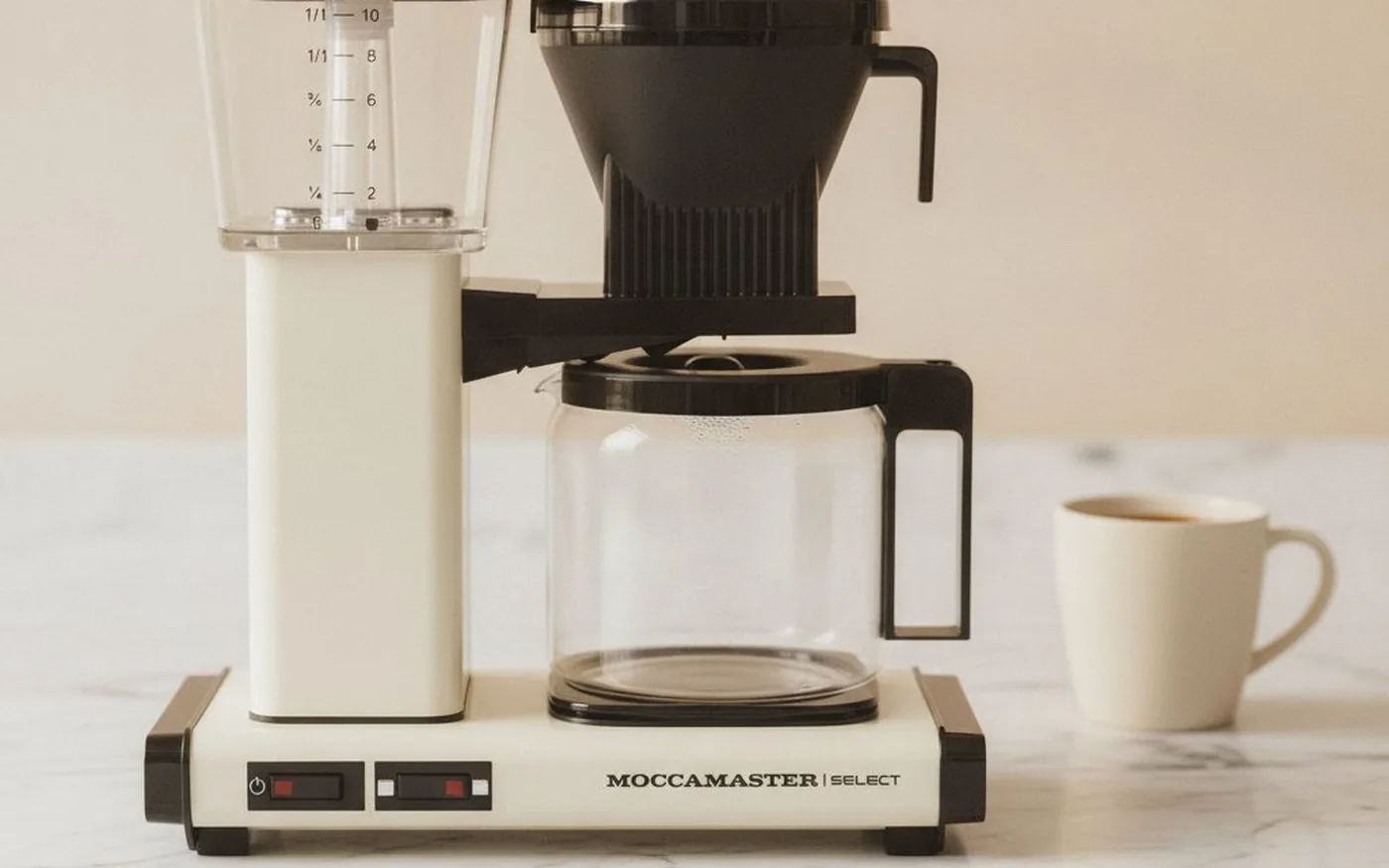
Best Filter Coffee Machine – Moccamaster KBG Select
SCA Gold Cup certification is not a marketing claim – it means the Specialty Coffee Association has independently verified this machine brews within the correct temperature window (92-96°C) and extracts within the target TDS range (1.15-1.35%). Most domestic filter machines, including several at twice the price, do not meet this standard. The Moccamaster KBG Select does, and that fact is the only explanation required for why it leads this category.
The KBG Select brews 1.25 litres in around six minutes. The copper heating element heats water to the correct temperature without overshoot or undershoot – something that most cheaper plastic-element filter machines fail at consistently. The glass carafe keeps coffee warm without a hot plate, which is what turns a good filter into a scorched, bitter one if you leave it.
It is made in the Netherlands, comes with a 5-year warranty, and the spare parts are available. That repairability matters when you are spending £299 on a filter machine. For other options in the filter category, including the Fellow Stagg EKG pairing for pour-over households, see our best filter coffee machine UK guide.
“The Moccamaster is the filter machine that coffee professionals actually own. There is a reason for that. It does not try to be clever – it just brews at the right temperature, every time.”
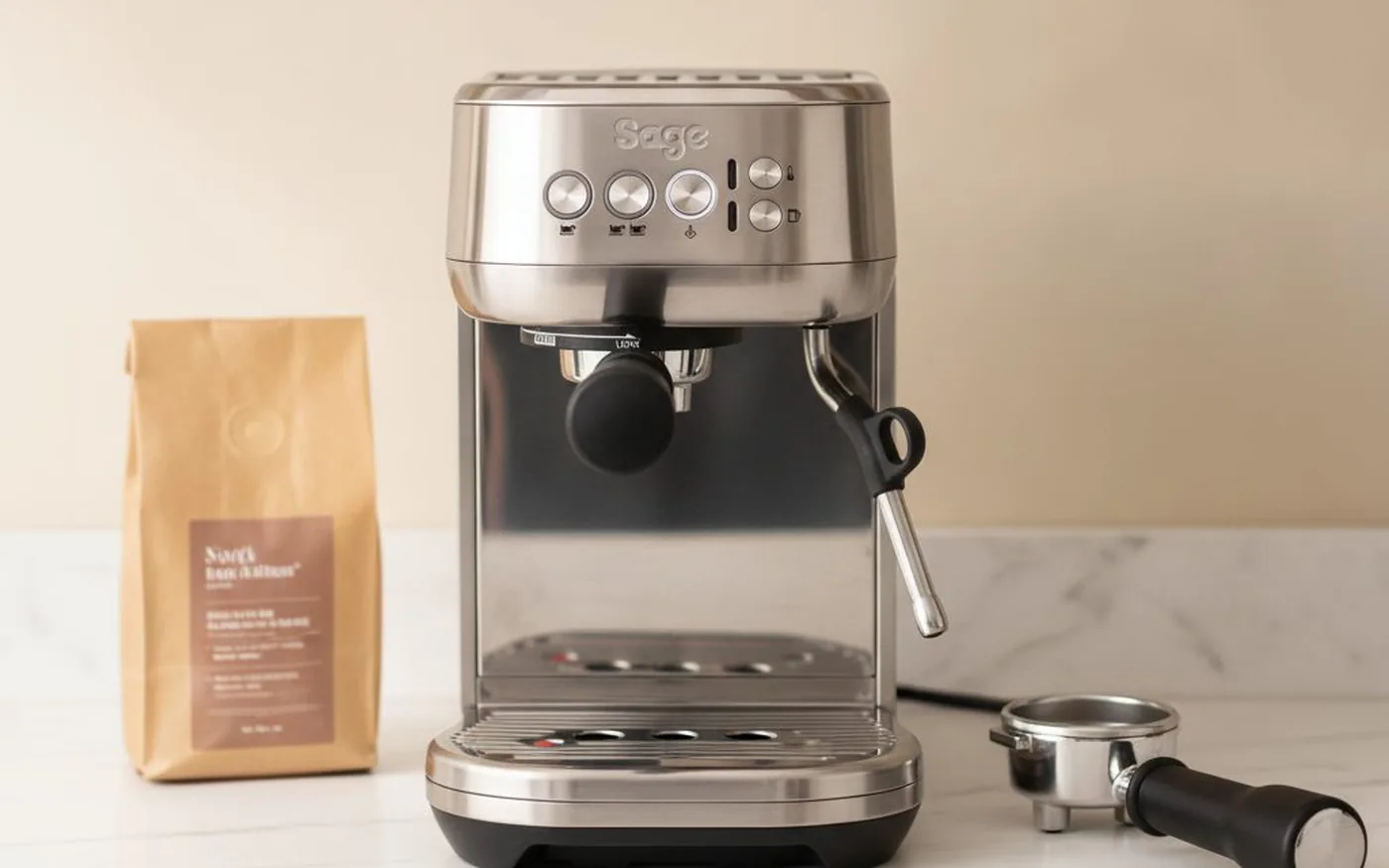
Best Coffee Machine Under £500 – Sage Bambino Plus
A heated group head and a four-hole steam tip in a 19cm-wide footprint at under £350 – that combination does not have a genuine rival in the UK market. The Sage Bambino Plus earns its position in this category through hardware density, not marketing claims.
The Bambino Plus comes with both a pressurised (single-wall) and an unpressurised (dual-wall) basket. The unpressurised basket requires freshly ground coffee to work correctly – it is designed for buyers who already have or plan to buy a grinder. If you are using pre-ground espresso from a bag, use the pressurised basket and the results will be more consistent.
The biggest limitation is that the Bambino Plus has no built-in grinder. You will need to buy one separately (a decent entry-level option adds £50-£150 to the purchase) or use pre-ground coffee. If you are already budgeting for both and the combined spend approaches £500-£600, it is worth reconsidering the Barista Express Impress, which solves the counter space problem with an integrated grinder.
For a direct comparison between the Bambino and Bambino Plus models, see our Sage Bambino vs Bambino Plus guide. For more options in this price band, see our best espresso machine under £500 guide. The best Sage coffee machine guide covers the full Sage range.
“The Bambino Plus is the machine I recommend to anyone who wants to start making proper flat whites at home without committing to a full espresso setup. The heated group head makes a real difference at this price.”
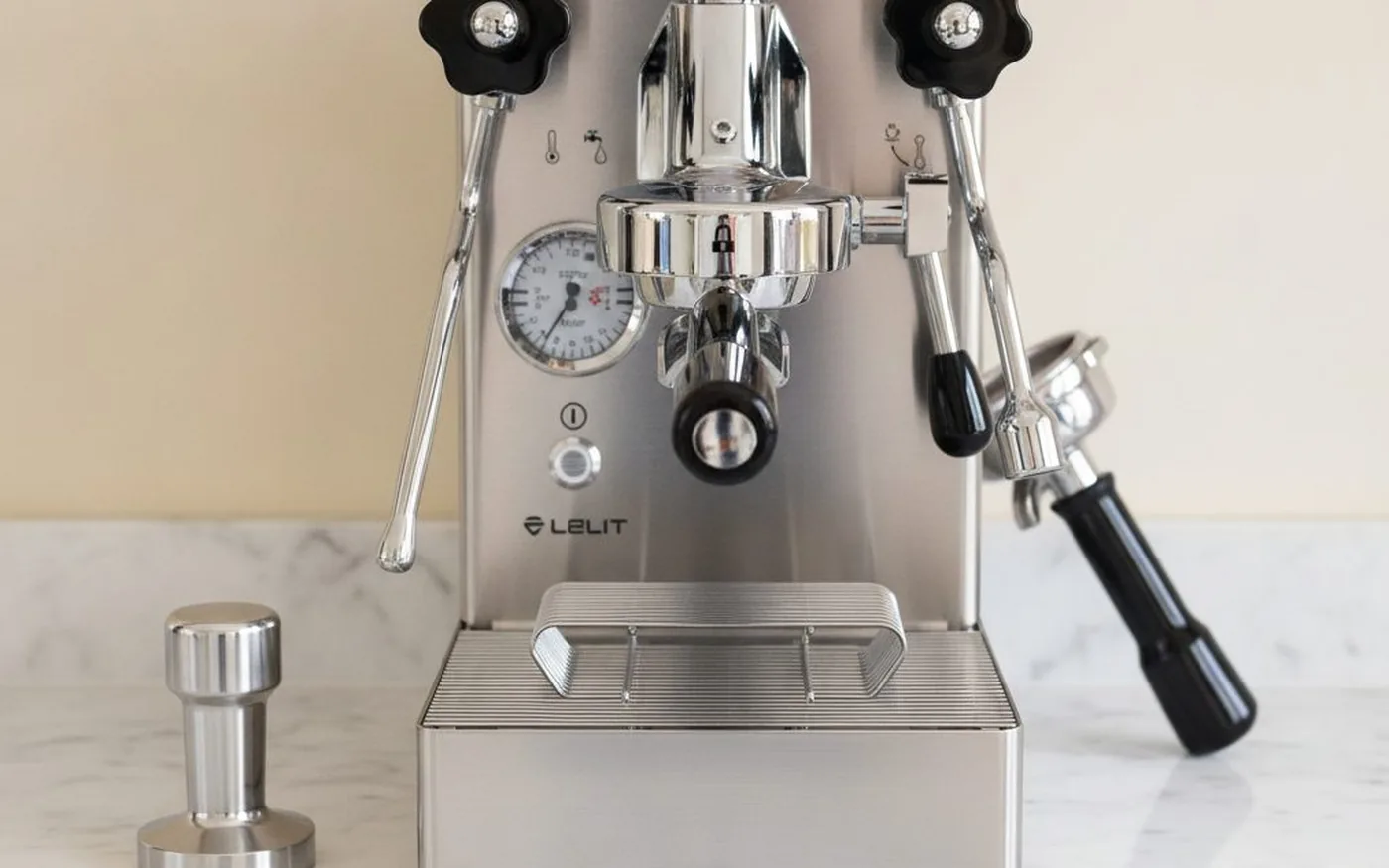
Best Prosumer Coffee Machine – Lelit Mara X
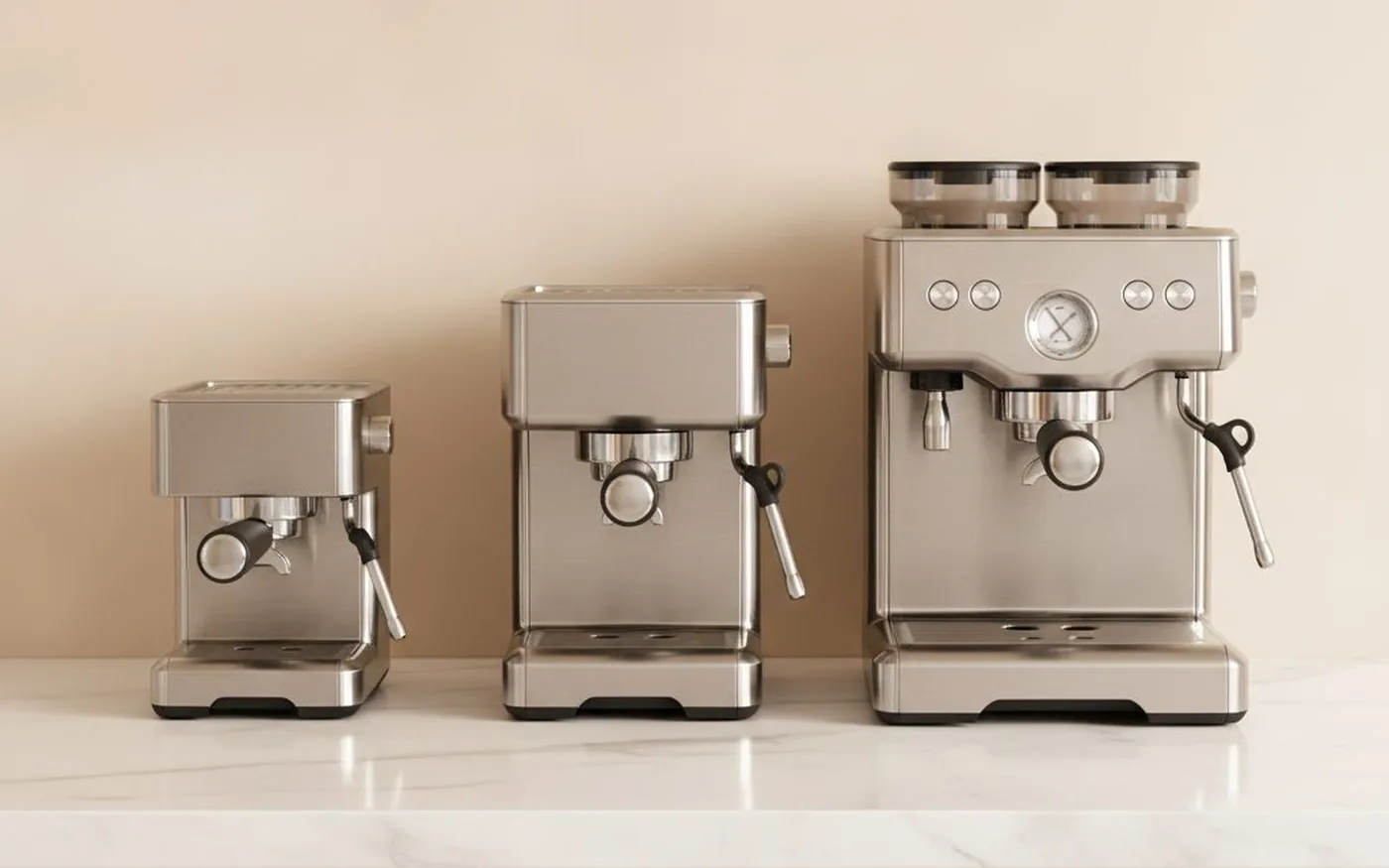
Heat exchanger performance at a price point that undercuts dual-boiler alternatives by a significant margin – that is the case for the Lelit Mara X in one sentence. The v3, released in late 2025, refines the temperature management system that made the original Mara X the most-discussed prosumer machine in UK specialty circles, and the UK retail price reflects its upgraded specification at around £1,499.
A heat exchanger machine uses a single boiler with a loop that passes brew water through steam temperature water – giving you simultaneous steam and brew capability without the cost of two separate boilers. The Mara X adds a valve system that gives you much tighter brew temperature stability than a standard HX machine, which was the criticism that used to separate HX from dual-boiler in serious circles.
I have worked alongside world barista champions on the Sanremo SWAT team who competed on machines in the Lelit-to-La-Marzocco tier. The Mara X earns its place at that level not because it is glamorous, but because the shot quality under a skilled home barista approaches what you get from machines costing twice as much. The Rocket Appartamento at a similar price offers Italian design and a dedicated following; the Mara X offers more temperature control precision. If the espresso quality is the priority, the Mara X wins. If the machine on the counter matters as much, Rocket has the edge.
For a full ranking of prosumer machines including the Profitec Pro 600 and La Marzocco Linea Mini, see our best prosumer espresso machine guide.
“The Mara X is what the prosumer segment looks like when engineering takes priority over aesthetics. The v3 closed the temperature stability gap that was the last serious argument against it.”
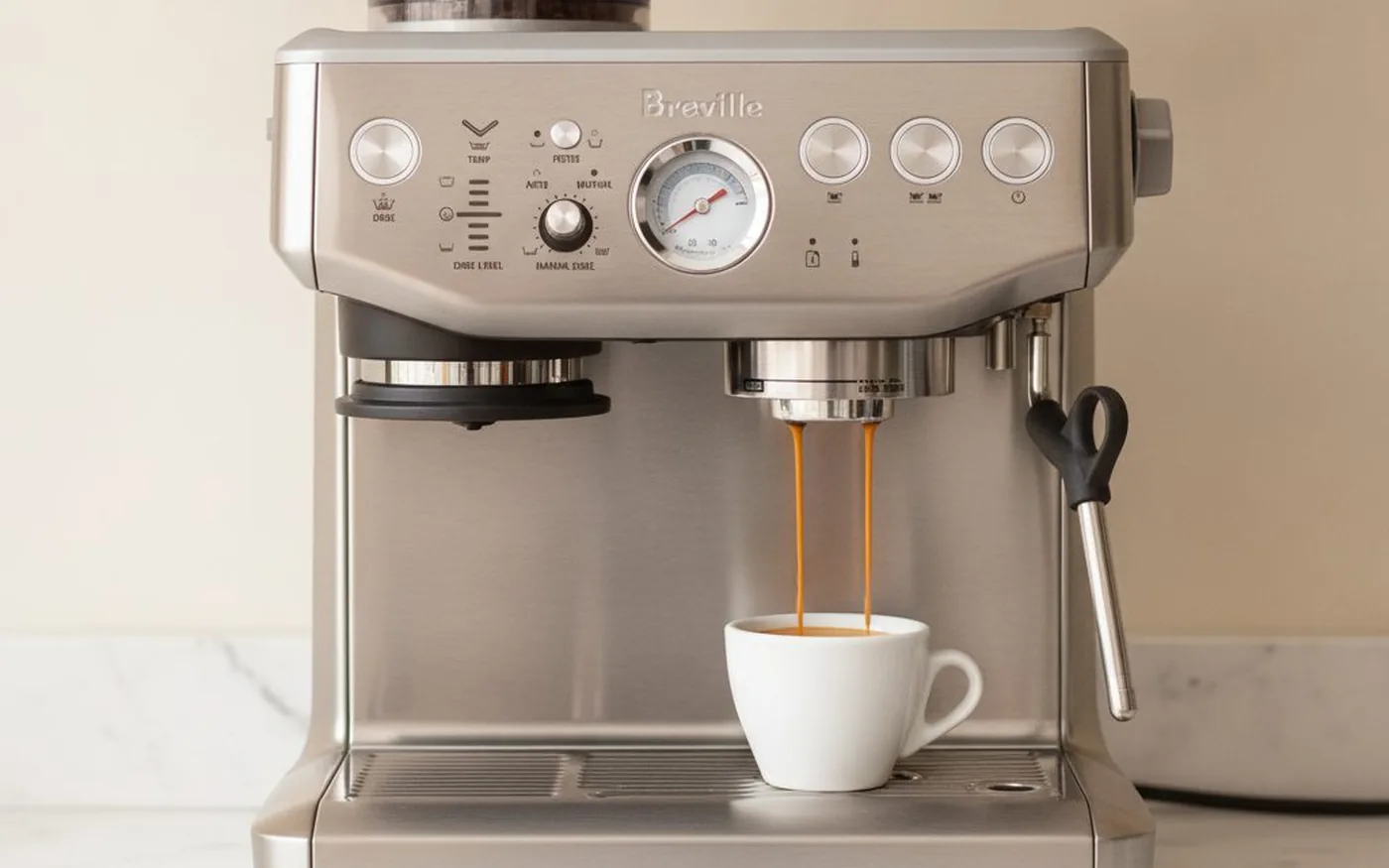
Best Coffee Machine for Beginners – Sage Barista Express Impress
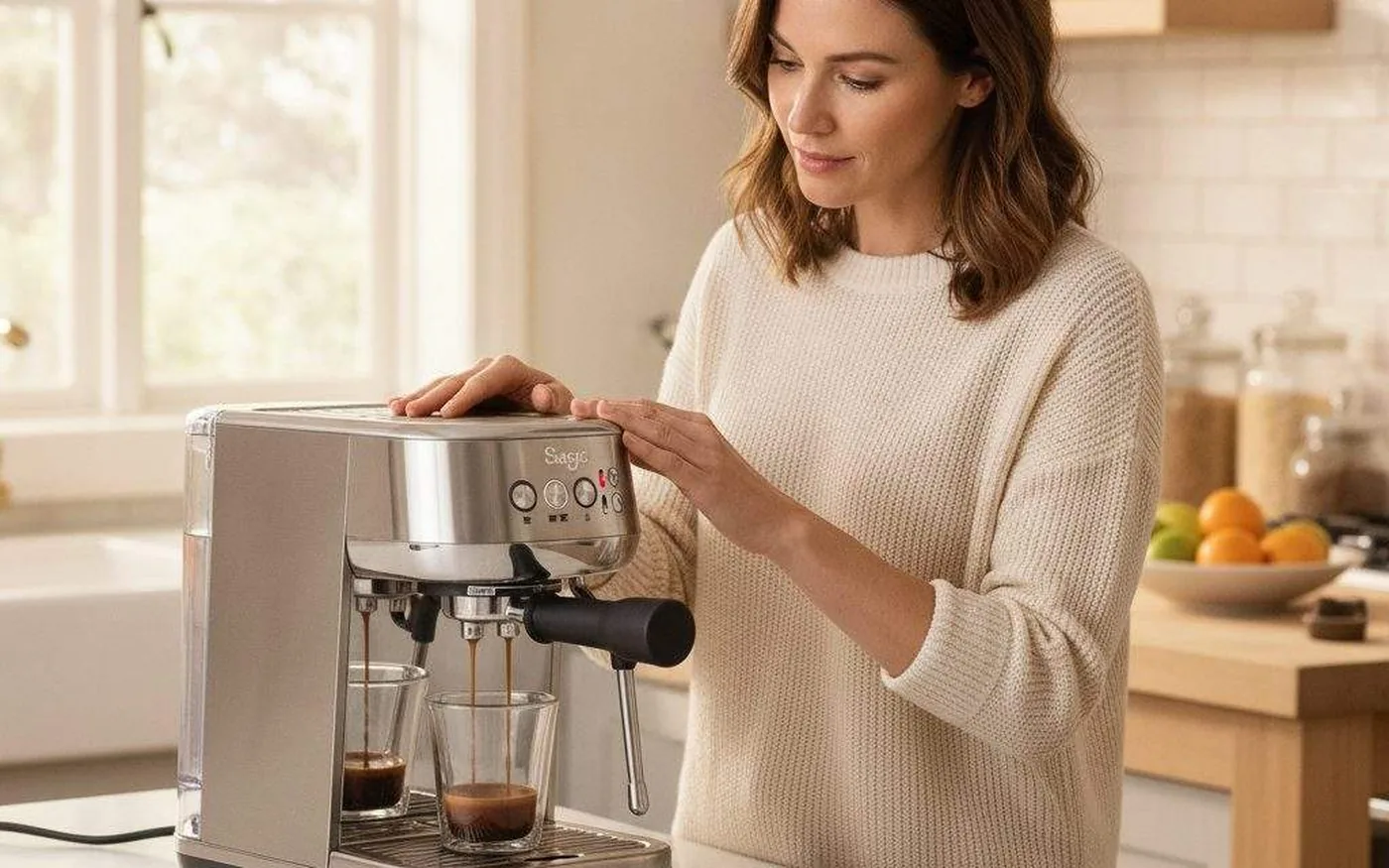
Two variables account for the majority of espresso failures in the first year of home brewing: grind consistency and tamp pressure. The Sage Barista Express Impress eliminates both – the Impress puck preparation system distributes and tamps your dose automatically, and the built-in conical burr grinder means one machine on the counter instead of two.
The learning curve on any traditional espresso machine is real. What the Barista Express Impress does is eliminate the two variables that have the widest impact on shot failure for beginners. The grinder is adequate for learning and for daily espresso use. It is not at the level of a standalone grinder in the £200-400 range, which is the honest ceiling of any integrated grinder – but for someone in their first 12 months of home espresso, it does the job.
When your technique improves and you want to explore different extraction profiles, a separate grinder becomes the next meaningful upgrade. At that point you are in prosumer territory. The Barista Express Impress buys you time to find out whether you care enough to make that investment. For our full beginner guide, see best espresso machine for beginners UK.
“The Barista Express Impress is where I send first-time espresso buyers. It does not hide the craft from you – it reduces the barrier to entry.”
Best Pod-Free Easy Machine – Sage Oracle Jet
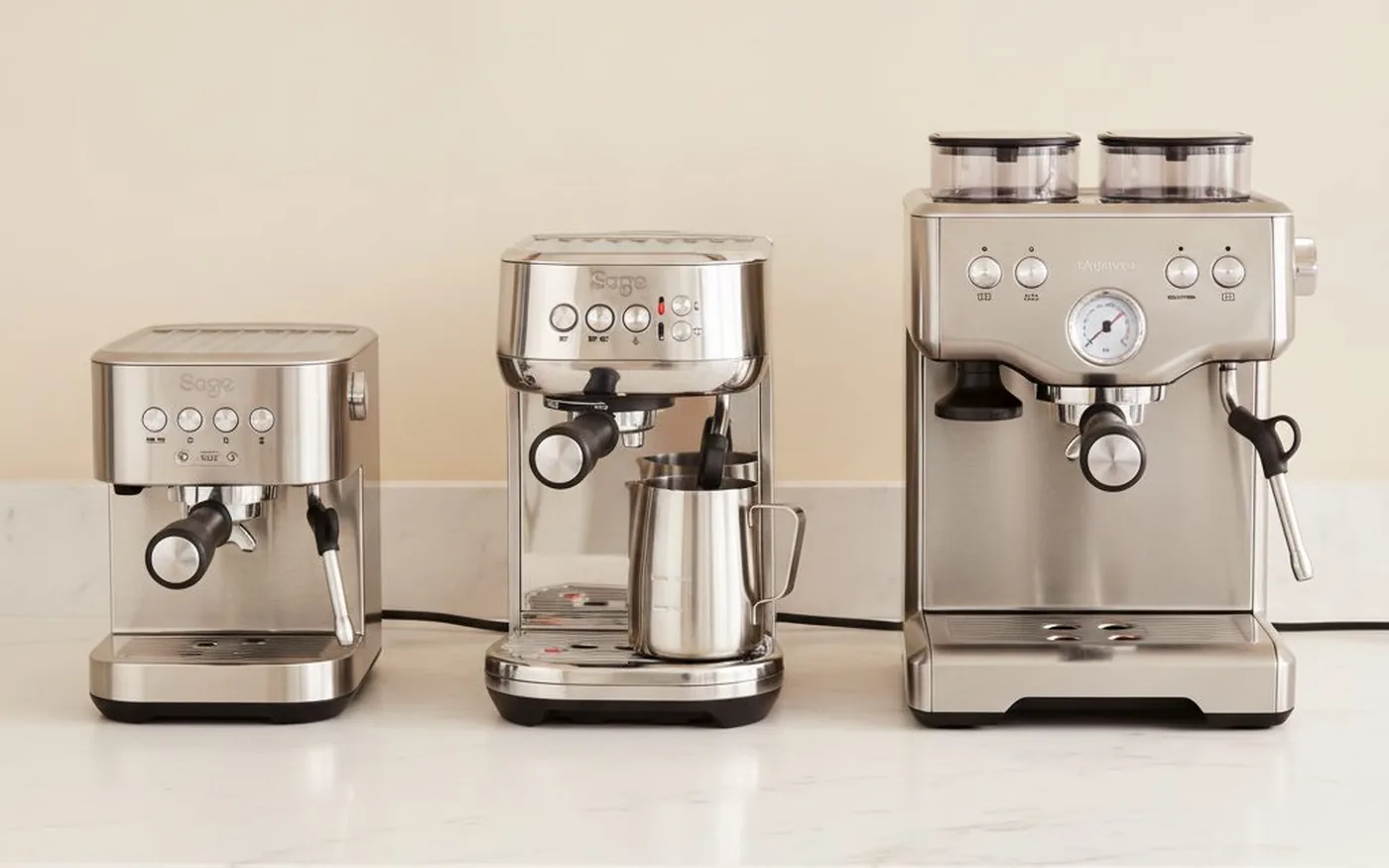
At £1,999, the Sage Oracle Jet is the answer to a specific question: what do you buy when you want genuine espresso quality at home and you have no interest in learning the technique? It grinds, doses, tamps, extracts, and steams milk automatically – but unlike bean-to-cup machines, it uses a commercial-grade 58mm portafilter and a proper dual-boiler system. The result is espresso that bean-to-cup machines at equivalent prices cannot match.
The Oracle Jet is not a bean-to-cup machine. It uses fresh ground coffee, a proper basket, and a real pump. The automation handles the mechanical steps, not the extraction physics. That distinction matters: a Magnifica Evo at £499 makes a consistent automated coffee. The Oracle Jet at £1,999 makes automated coffee that competes with a skilled barista’s output. For buyers with the budget and no interest in learning technique, it is the most compelling machine on this list.
For a full comparison of the Oracle Jet against the Oracle Touch, see our Sage Oracle Jet review.
“The Oracle Jet is what you buy when you want the best possible espresso at home and you do not want to spend two years learning how to make it. The dual boiler makes it honest – it is not pretending to be something it is not.”
Best Coffee Machine With Grinder Built In
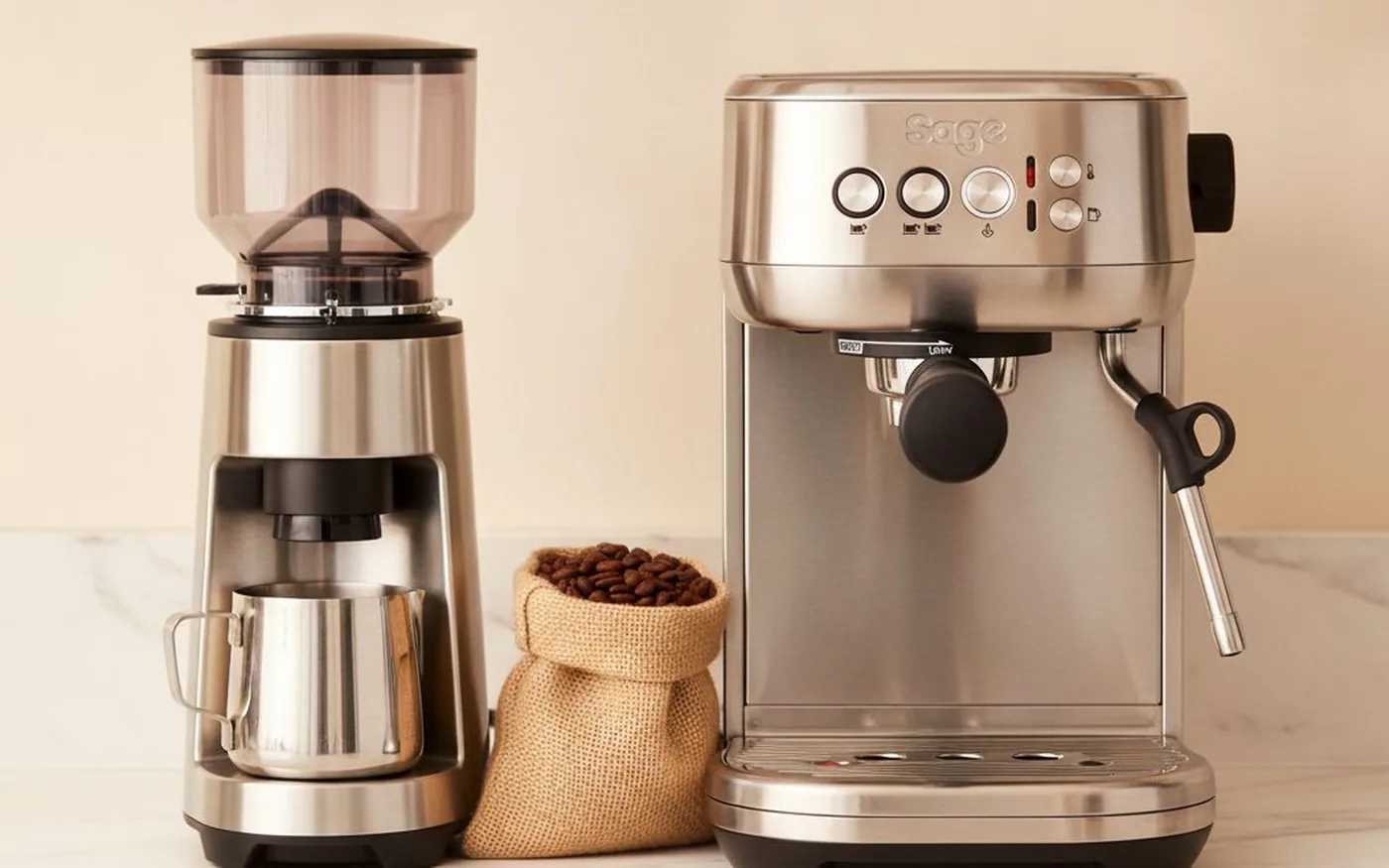
If your kitchen counter has room for one machine, not two, an integrated grinder is a practical solution. The tradeoff is that you cannot upgrade the grinder independently – when you want better grinding performance, you replace the whole machine.
Sage Barista Express Impress (around £699): The best entry-level integrated option. Conical burr grinder, Impress puck preparation, 54mm portafilter. The grinder is the limiting component at this tier – adequate for daily espresso, but you will notice the ceiling when you start exploring light roasts and precision extraction.
Sage Barista Touch Impress (around £999): Everything the Express has, plus the Touch screen interface, auto-milk texturing, and grind-size memory from the Q1 2026 firmware update. Worth the upgrade if you make milk drinks daily.
Sage Oracle Jet (around £1,999): The only integrated-grinder machine where the grinder quality does not limit the espresso. Dual-boiler, auto-everything, commercial portafilter. If you are spending at this level and want the cleanest counter setup available, the Oracle Jet is the answer.
When a separate grinder makes more sense: if you want to use a Gaggia Classic Evo Pro or Lelit Mara X as your espresso machine, buy a standalone grinder. The jump in shot quality from a dedicated grinder over an integrated one is most pronounced on those machines, precisely because they are capable enough to reveal what the grinder is doing wrong. Our best coffee grinder guide covers the field from entry to prosumer.
Coffee Machine Brands Compared
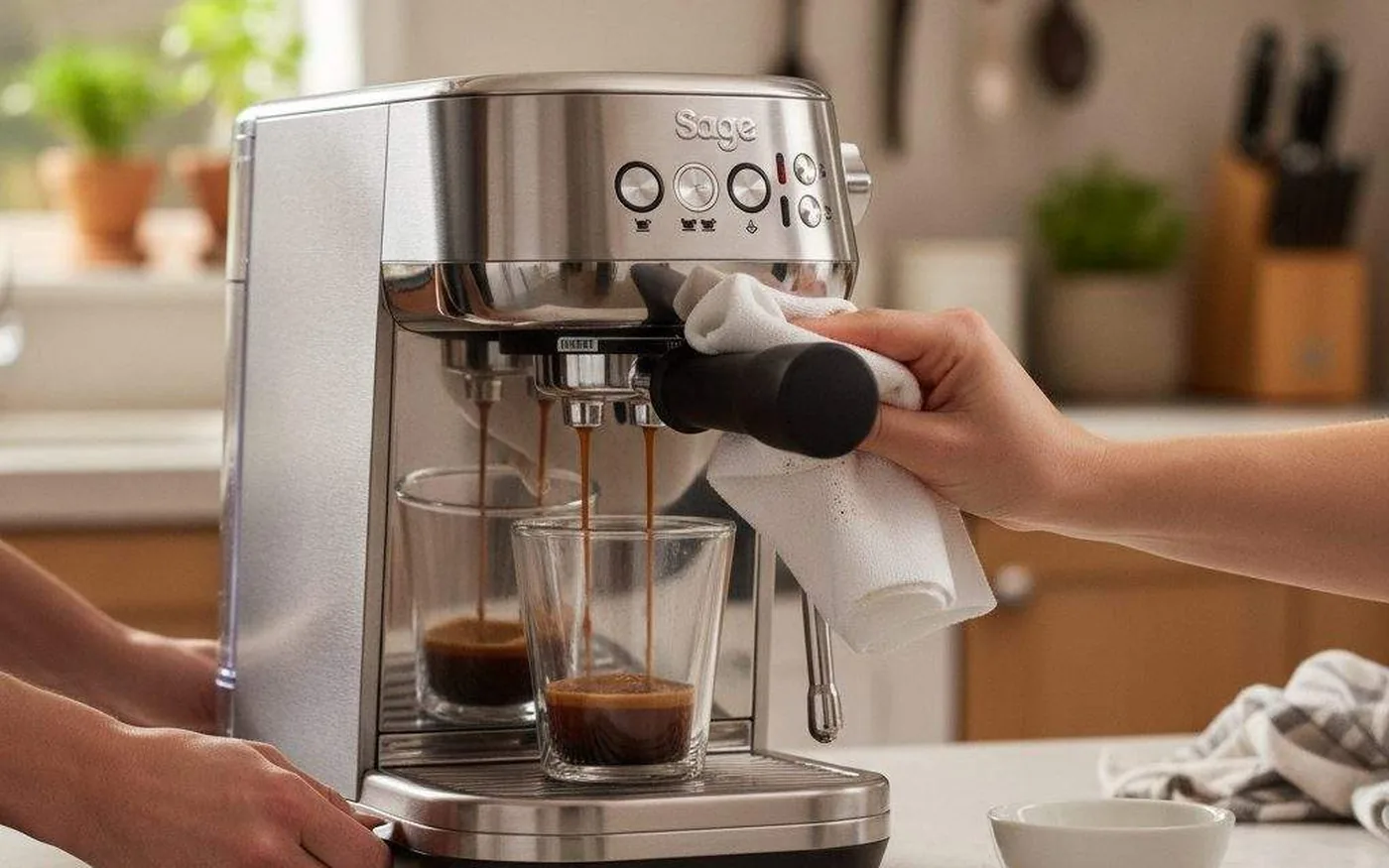
Sage – the strongest editorial brand in UK home espresso. Every price point from £200 (Bambino) to £2,000 (Oracle Jet) has a defensible option. The thermal coil heating system (used in Bambino and Barista Express range) is faster than most rivals’ boilers. The weakness is plastics-heavy build at the entry end; the strength is firmware support and the Impress system. See our best Sage coffee machine guide for the full range breakdown.
De’Longhi – owns the bean-to-cup category in the UK at the affordable end. The Magnifica Evo is hard to beat under £500 for one-touch milk drinks. Above £700, the Dinamica Plus competes well; the Rivelia is the premium bean-to-cup pick if you want a more refined interface. The Dedica Maestro Plus is the best budget manual espresso machine De’Longhi makes, though the pressurised basket limits your ceiling. See our best De’Longhi coffee machine guide for ranked comparisons.
Gaggia – the manual espresso reference point. The Gaggia Classic Evo Pro is built in Milan, has commercial group-head architecture, and comes with a 58mm portafilter. No other machine at the price has that combination. See our best Gaggia coffee machine guide. Note: the debate between Gaggia vs De’Longhi largely comes down to whether you want to learn technique or avoid it.
Jura – premium bean-to-cup specialist. The E6 and S8 produce excellent automated espresso and milk drinks with minimal intervention. Swiss engineering, intuitive interface, and a genuine step up in build quality over De’Longhi in this range. The weakness is price: the E6 at around £850 is significantly more than a Magnifica Evo for comparable one-touch output.
Philips – the LatteGo 5400 is the bean-to-cup machine with the fastest milk-system cleaning cycle we tested. If cleaning is your primary objection to bean-to-cup machines, the LatteGo system removes that barrier more effectively than De’Longhi or Jura. Mid-tier build quality.
Lelit and Rocket – the UK’s two most credible prosumer brands below La Marzocco pricing. Lelit (Mara X, Bianca) leads on temperature precision; Rocket (Appartamento, Mozzafiato) leads on build quality and visual design. Both are available through specialist retailers including Bella Barista.
Nespresso – the dominant pod brand. Original-Line machines produce proper espresso; Vertuo machines produce a different style of coffee (larger, higher-crema, not technically espresso in the traditional sense). Both have extensive pod ranges. The pod cost-per-cup (45p-90p for Nespresso) is the primary long-term cost to budget for. See our full best Nespresso machine guide.
Moccamaster – the only filter machine brand worth naming at this price point. SCA-certified, made in the Netherlands, comes with a 5-year warranty. Does one thing correctly.
La Marzocco – aspirational reference point. The Linea Mini is what a commercial machine scaled to a domestic countertop looks like. The prices start around £4,500. It is the machine that appears in specialty cafes globally for a reason, and the home version maintains that standard. For most buyers reading this guide, it is an aspiration rather than a recommendation.
What to Avoid When Buying a Coffee Machine
Pressurised portafilters above £300. A pressurised (dual-wall) basket hides your grind inconsistencies by adding resistance in the basket itself, not the coffee puck. At the entry level, this is useful for beginners using pre-ground coffee. At and above £300, you should be buying a machine with an unpressurised basket and a grinder to match it. Any machine in the £300-600 range that only ships with a pressurised basket is limiting your ceiling before you start.
Bean-to-cup machines without an integrated milk system, if you drink flat whites. Some bean-to-cup machines at the lower end grind and brew automatically but leave steaming to a manual wand. If milk drinks are your primary reason for buying a machine, pay the extra for integrated milk – the Magnifica Evo’s LatteCrema or the Philips LatteGo system is what you are looking for.
Vertuo-only households who also want espresso shots. The Vertuo system produces a longer, thicker cup. It cannot pull a 25ml espresso shot that behaves like one from a traditional machine. If you want both, buy an Original-Line Nespresso machine. The Nespresso vs Dolce Gusto comparison explains the format differences clearly.
Single-pump dual-boiler claims. Some machines market themselves as having dual-boiler capability with a single pump. A genuine dual-boiler runs two independent boilers at separate temperatures. A single-pump system switching between temperatures is a thermoblock – faster to heat, less stable under load. Know the difference before paying a dual-boiler premium.
Lifestyle-brand machines with non-standard portafilters. Several design-led brands sell espresso-style machines with 51mm or proprietary portafilters. The 58mm commercial standard exists because it is the optimal basket diameter for even extraction. Non-standard portafilters limit your accessory options and signal that the machine was designed around aesthetics, not extraction.
On editorial independence: Balance Coffee, the roastery I founded in 2020, does not sell coffee machines. That is the structural reason why machine rankings here are honest. Where we link to coffee beans, those are Balance Coffee links with a reader discount. Where we link to machines, they are affiliate links to the best-stocking UK retailer, and affiliate status does not affect ranking position.
How Much Should You Spend on a Coffee Machine
Under £200: Pod machines and basic filter machines. The Nespresso Essenza Mini and CitiZ sit here. You get consistency and speed but no craft involvement. Pod cost becomes the dominant long-term spend.
£200-500: The most competitive band. The Sage Bambino Plus, De’Longhi Magnifica Evo, Gaggia Classic Evo Pro, and Nespresso Vertuo Plus all land here. This is where most UK buyers should start, and where the decision between machine types is most important to get right.
£500-1,000: Serious entry-level to mid-range espresso. The Sage Barista Express Impress (£699) and Barista Touch Impress (£999) dominate here. You are paying for features – the integrated grinder, the Impress system, the auto-milk – rather than for fundamentally better extraction hardware.
£1,000-2,000: Prosumer espresso entry. The Lelit Mara X v3 sits at around £1,499, the Rocket Appartamento around £1,200. You are now buying dual or HX boiler systems, commercial-grade group heads, and machines built for 10+ year service lives. See our best prosumer espresso machine guide.
£2,000+: The Oracle Jet sits here as a super-automatic outlier. La Marzocco Linea Mini, Profitec Pro 600, and Lelit Bianca round out the top of the domestic market. These are lifetime machines if you maintain them.
Do You Need a Separate Grinder
For espresso: yes, eventually. The degree to which an integrated grinder limits you depends on which machine you have. The Oracle Jet’s integrated grinder is genuinely good. The Barista Express Impress grinder is adequate for learning. Any machine with a blade grinder or a very basic burr set (common in some De’Longhi budget models) will limit shot quality regardless of how good the machine is.
For filter coffee: a decent blade or budget burr grinder is enough for most filter brewing. The precision requirements for espresso (grind size consistency within microns) do not apply to filter, where a 30-second window of extraction time gives you much more margin for grind variance.
When to buy separate: if you are buying a Gaggia Classic Evo Pro, Lelit Mara X, or any machine without an integrated grinder, buy a proper standalone grinder at the same time. A good rule of thumb: budget at least 30-40% of your machine spend on the grinder. Our best coffee grinder guide covers the right grinder for each machine type.
How to Look After Your Coffee Machine
Descaling cadence: In a hard-water area (anything above 200 ppm, which includes most of London, the South East, and the Midlands), descale every 8-12 weeks. The UK’s Drinking Water Inspectorate maps regional water hardness – if you are in a designated hard-water area, do not wait for the machine’s descale indicator. Limescale builds faster than the sensor threshold and shortens boiler life materially. For the full protocol, see our guide on how to clean a coffee machine.
Backflushing (espresso machines only): A three-way solenoid valve machine (Gaggia Classic Evo Pro, Sage machines, Lelit Mara X) should be backflushed weekly with a blind basket and machine-specific cleaning tablets. This clears coffee oils from the group head and prevents rancid coffee flavour building up over time.
Water filtration: If your tap water is above 200 ppm, a water filter jug or inline filter will extend your machine’s service life meaningfully. The SCA water standards recommend 75-250 ppm total dissolved solids for coffee extraction – UK hard-water areas exceed this.
Daily habits: After every session, purge the steam wand before and after steaming milk. Empty the drip tray and portafilter after every use. A machine that is not cleaned between sessions accumulates milk residue and coffee oils that degrade flavour within days.
Best Coffee Beans to Use in Your New Machine
The machine matters. The coffee inside it matters just as much.
For espresso machines (Sage Barista Touch Impress, Bambino Plus, Gaggia Classic, Lelit Mara X), you want a medium to medium-dark roast espresso blend with consistent particle behaviour across a range of grind settings. Light roasts are more forgiving on higher-end grinders but punishing on entry-level burr sets – if you are new to espresso, start with a medium espresso roast and move to lighter as your dialling-in improves.
For bean-to-cup machines (Magnifica Evo, Oracle Jet), the machine’s built-in grinder and pressurised brew unit work best with medium-roast beans. Very light roasts and very dark roasts both stress the brew system differently – light roasts extract slower, dark roasts clog grinders faster. A medium espresso blend runs cleanest through an automated system.
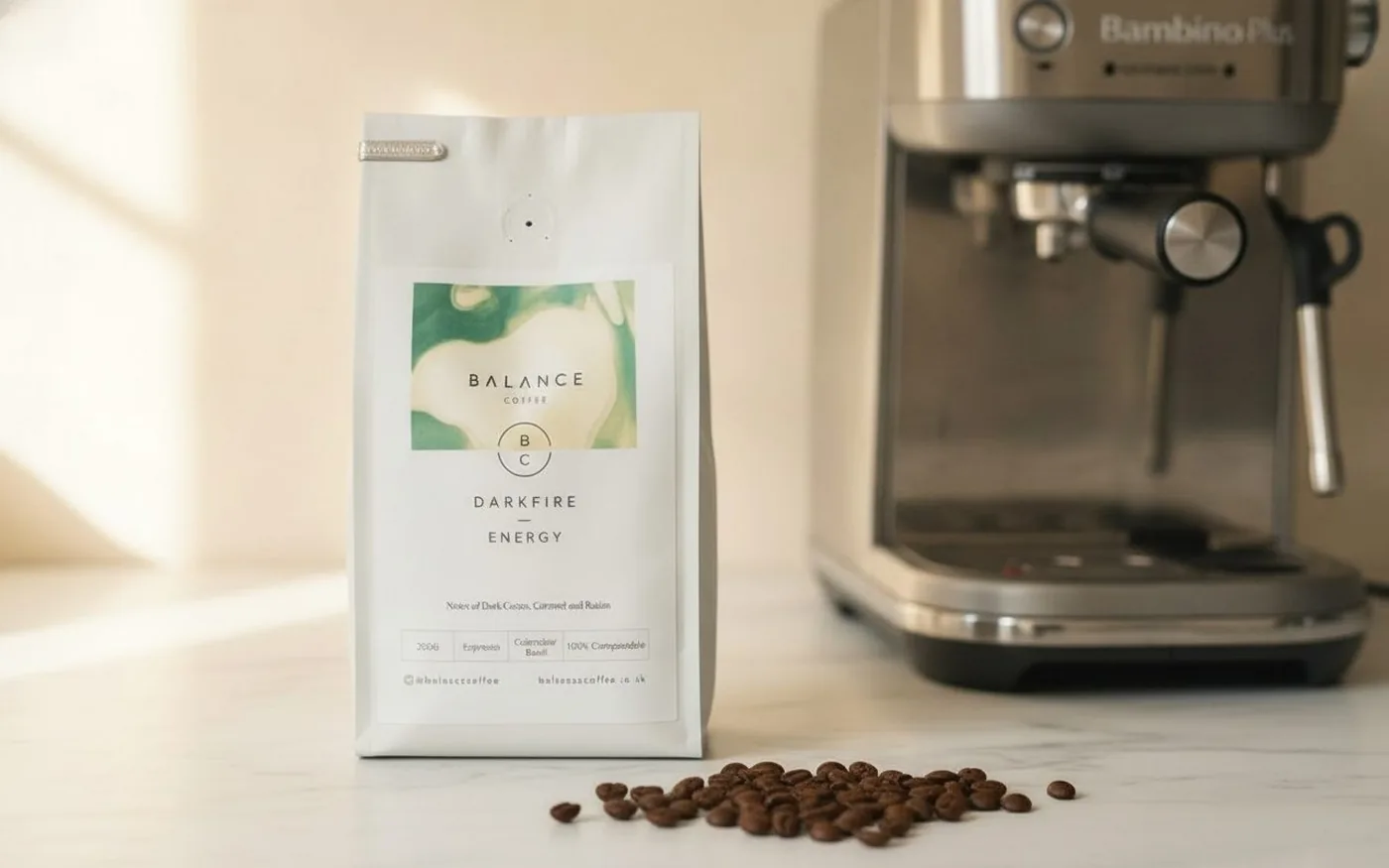
Balance Coffee is the roastery I founded in 2020, and Balance Journal receives support from that business. Balance Coffee does not sell coffee machines – which is why machine rankings in this guide are editorially independent. For your espresso machine, the Aurora Reserve single origin is the Balance Coffee bean I would put in a Sage Barista Touch Impress or Gaggia Classic: a light-to-medium Brazil natural with a chocolatey base and enough structure to hold through milk. Use code JOURNAL for a reader-only discount.
For a wider recommendation across roasters, origins, and machine pairings, see our guide to the best coffee beans for espresso UK.
Frequently Asked Questions
What is the best coffee machine for home use in the UK?
The best coffee machine for home use in the UK in 2026 is the Sage Barista Touch Impress at around £999. It combines guided puck preparation via the Impress system, automated milk texturing, a proper 58mm commercial portafilter, and a Q1 2026 firmware update that added grind-size memory. For most UK households that drink espresso and milk drinks, it closes the gap between home barista and cafe quality faster than any other machine at the price. If your budget is lower, the Sage Bambino Plus at around £349 is the best under-£500 option.
What is the best bean-to-cup coffee machine?
The best bean-to-cup coffee machine in the UK is the De’Longhi Magnifica Evo at around £499. It replaced the Magnifica S across UK retail in 2026 and added the LatteCrema Easy milk system for automatic milk drinks. For buyers who want genuine one-touch operation – grind, extract, steam, serve – without learning technique, the Magnifica Evo is the most complete machine at this price. Above £500, the Jura E6 and De’Longhi Rivelia are the next defensible step up.
Is a coffee machine worth it?
A coffee machine is worth it if you drink two or more coffees a day from a coffee shop. At £3.50-£5 per cafe flat white, a daily habit costs £1,277-£1,825 per year. A Sage Bambino Plus at £349 with a decent grinder and fresh beans delivers a comparable result for under 60p per cup – the machine pays for itself within three to four months for a daily drinker. The breakeven calculation changes based on machine cost, coffee format, and household size.
What is the difference between a pod machine and a bean-to-cup machine?
A pod machine uses pre-portioned sealed capsules containing ground coffee. You insert the capsule, press a button, and the machine punctures and pressurises it to extract coffee. No grinding, no dosing, no cleaning beyond rinsing. A bean-to-cup machine grinds fresh beans inside the unit, doses them into an internal brewing system, extracts espresso automatically, and then ejects the used puck into a waste drawer. Bean-to-cup produces fresher coffee because the beans are ground to order; pods produce consistent coffee because the extraction variables are fixed by the capsule manufacturer.
How long do coffee machines last?
A well-maintained espresso machine from a reputable brand – Sage, Gaggia, Lelit, La Marzocco – lasts 8-15 years with regular descaling, backflushing, and gasket replacement. Pod machines (Nespresso) last 5-8 years on average. Bean-to-cup machines have more moving parts and typically last 5-10 years depending on descaling cadence and water hardness. Machines in hard-water areas (London, South East, Midlands) with no water filtration fail significantly earlier because limescale accumulates in the boiler and pump.
How often should you descale a coffee machine?
In a soft-water area (below 100 ppm), descale every 3-4 months. In a medium-hardness area (100-200 ppm), every 6-8 weeks. In a hard-water area (above 200 ppm, which includes most of London and the South East), every 4-6 weeks. Do not rely solely on the machine’s descale indicator – it often fires later than the optimal window. Use a descaler formulated for your machine brand: Sage’s own, De’Longhi EcoDecalk, or Gaggia’s official descaler.
What is the easiest coffee machine to use?
The easiest coffee machine to use is a pod machine – specifically the Nespresso Vertuo Plus or Essenza Mini on the Original-Line. Insert capsule, press button, coffee appears. No grinding, no dosing, no technique. For buyers who want ease of use with fresher coffee, the De’Longhi Magnifica Evo bean-to-cup machine automates grinding and extraction behind a one-button interface. The Sage Barista Touch Impress is the easiest machine to use among traditional espresso machines, with the Impress puck system removing the tamping variable.
Are Sage and Breville the same brand?
Yes. Sage is Breville’s international brand name. Breville is the Australian company that manufactures the machines. In the UK, Australia, and most of Europe, the brand is sold as Sage. In North America, the same machines are sold under the Breville name. The Sage Barista Touch Impress and the Breville Barista Touch Impress are the same machine with different labelling. When reading international reviews, any Breville espresso machine recommendation maps directly to a Sage equivalent in the UK.
Should I buy a coffee machine with a built-in grinder?
Buy a coffee machine with a built-in grinder if: you want a single machine on the counter, you are new to espresso and do not want to manage a second piece of equipment, or your budget does not stretch to both machine and grinder separately. Avoid integrated grinders if: you already own a quality standalone grinder, you want to upgrade the grinder independently as your technique improves, or you are buying a prosumer machine where the integrated grinder quality will limit what the machine can produce. The rule of thumb: at Sage Barista Express Impress level (£699), integrated is fine. At Gaggia Classic or Lelit Mara X level, buy a separate grinder.
What is the cheapest coffee machine that makes proper espresso?
The cheapest coffee machine that makes proper espresso – meaning unpressurised extraction through a non-pressurised basket using freshly ground beans – is the Gaggia Classic Evo Pro at around £449. It has a 58mm commercial portafilter, a genuine three-way solenoid valve, and a boiler system that responds correctly to dialling-in. Below this price point, machines either use pressurised baskets (which hide grind inconsistencies rather than resolve them) or compromise on the boiler architecture. The Sage Bambino Plus at £349 comes close with its unpressurised basket option, but you need a separate grinder to use it correctly.
The Verdict
The best coffee machine for most UK homes is the Sage Barista Touch Impress. It handles the mechanical variables that cause most home espresso failures, produces genuine cafe-standard milk drinks, and has enough headroom to stay relevant as your technique improves. If your budget does not reach £999, the Sage Bambino Plus at £349 is the most capable machine under £500.
For one-touch households that do not want to engage with technique, the De’Longhi Magnifica Evo is the right machine. For serious home baristas who want to grow into their equipment, the Lelit Mara X is where the ceiling opens up.
Every pick on this list routes to a dedicated guide for deeper coverage:
Back to all drink guides: Food and Drink