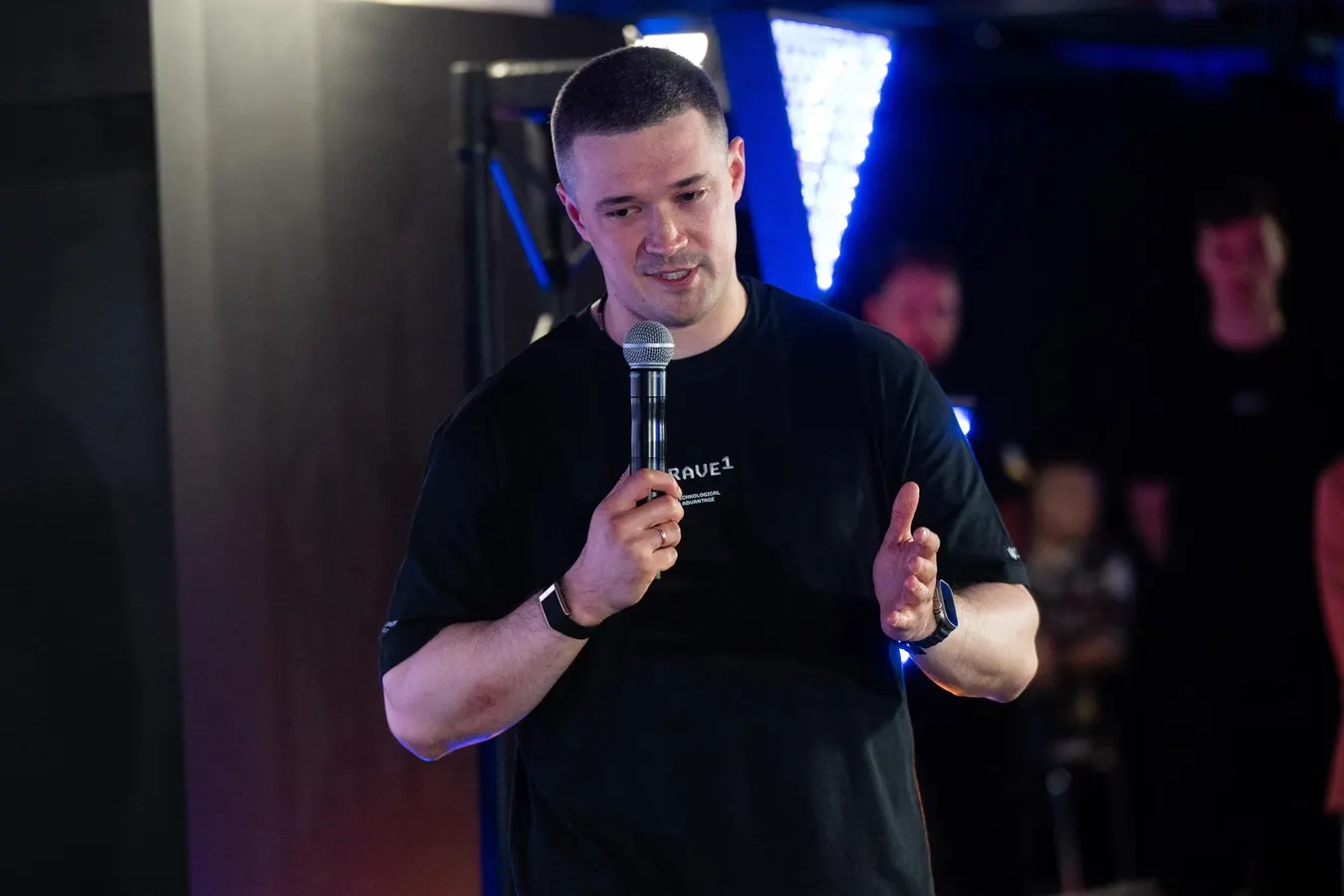

KYIV, UKRAINE – JULY 16: Defense minister of Ukraine Mykhailo Fedorov gives a briefing after his dismissal from his position by President of Ukraine Volodymyr Zelenskyy in Kyiv, Ukraine, on July 16, 2026. (Photo by Stringer/Anadolu via Getty Images)
Anadolu via Getty Images
The last column – which got massive circulation – predicted that Vladimir Putin is heading for a fall…if things progress on the same trajectory. The trajectory hasn’t changed altogether. But almost. And all because Ukraine’s President Zelensky decided to fire the ultra-popular young defense minister, Mikhailo Fedorov (35) after just six months on the job, six very successful months. As the world is aware by now, demonstrations erupted in response all over Ukraine’s cities, especially Kyiv, social media and podcast commentary burst out in widespread criticism, even from soldiers in the field. They were then threatened with repercussions by the military. The tumult is ongoing.
To recap briefly, Fedorov is largely credited with turning the war around in favor of Ukraine. He has presided over the mass distribution of drones and all the benefits therefrom – stopping and reversing the Russian summer offensive, devastating Russian supply lines and refineries, isolating Crimea, bombing Moscow and much else. The popular view conflates his war fighting successes with his relentless anti-corruption drive inside the army targeting the old guard. Not surprising therefore that popular feeling, protest placards and online commentary, have cast Ukraine’s Commander In Chief Aleksandr Syrsky (60) as the villain who quietly demanded Fedorov’s ouster. So loud has been the resulting outcry that the Financial Times reports Zelensky is now also considering ousting Syrsky in turn.
Ukraine’s military has had its disasters and dark side. The costly failed offensive of 2023, the loss of cities and provinces to the Russians, procurement graft and embezzlement, reports of sadism and torture of troops, some 200,000 desertions and the like. Syrsky is associated with the old guard and old Sovietic habits inherited by the armed forces that people blame for such negatives. Because such vices notoriously bedevil the Russian army a fortiori, Ukrainians have adopted the pessimistic slogan, ‘a small Sovietic army will never beat the big Sovietic army’. Furthermore, stories are now emerging of Syrky’s alleged lethal vengefulness towards combat soldiers and officers who defy him. Here is a prominent Ukrainian YouTuber, Denys Davidov, on these topics
Syrsky got his initial military training in Russia. He’s ethnically Russian and all his relatives live there. In one position or another, he’s been atop Ukraine’s army since 2019. It’s no surprise that people blame him for the accretion of immovable negatives and spin all manner of conspiracy theories – that he doesn’t want a victory but a grinding stalemate, that Zelensky backs him to extend the conflict as a way of keeping power and avoiding elections, that the two of them are in cahoots to protect themselves and cover-up past graft – and ultimately to preserve their last piece of the oligarchic system Ukraine has wrestled with since independence.
It’s not an exaggeration to say that the Fedorov affair has dealt a huge blow to Ukrainian morale, besieged as it is by nightly ballistic missile attacks on civilian areas, on buses and markets and families in apartment blocks – on any semblance of normal life. It became a race between the collapse of Ukrainian society and the collapse of Putin’s hold on power. Increasingly, there was hope that the latter would collapse first what with Russia’s loss of Crimea, drone attacks on Moscow, fuel lines and the like. Hence my previous column. Ukrainians could hang on until they won. They could endure suffering with hope. But with the Fedorov debacle, with Russians attacking from one side and their own authorities subverting from the other, suddenly hope seems lost.
Both for civil society and for the troops, there’s a resurgence of futureless, pointless, endurance. The return of endless war and incessant adversity. See Denys Davidov’s YouTube above for this mood too. He cites from 18th minute the post of a frontline soldier, a veteran of this and previous wars against Russia, who talks of utter disappointment at the Fedorov firing. The soldier speaks of Fedorov’s reforms and the scaling up of drone numbers, but above all of being betrayed by Soviet-era generals.
Let us pause and briefly outline what is meant by this repeatedly cited notion of Sovietic attributes. Loyalty over competence is the primary vice. Even Fedorov in his public message after his dismissal implicitly criticized Syrsky for the ramifications of this. Many vices flow from it. Entrenched resistance to reform. Breeding ground for opacity and corruption. Top-down iron rule with no heed to voices from below, to complaints, suggestions or innovations. Fedorov’s techno revolution, replacing men with machines, saving lives and allowing initiative for drone operators, clearly challenged that ethos. Also his drive to digitalize war fighting comprehensively (thereby ushering in warfare of the future) meant a new transparency that measured and rewarded achievement on the front lines. In short meritocracy over blind loyalty.
That, at least, is the narrative of the widespread criticism. You can see that it challenges the entire history of war fighting – bonding, unit cohesion, vertical obedience and much else. And, after all, Syrsky is a military man to his bones which Fedorov isn’t. He is, as it were, a technocrat. It’s too early to tell if the new warfare threatens the old prerequisites of fighting and bonding but it has certainly prevailed over the rotten habits of the Russian military.
Currently Zelensky has offered Fedorov a role as a Presidential adviser and a job as a kind of high-tech czar of the armed forces – both in vain. So significant has been Fedorov’s impact that Ukraine, Russia, Europe and indeed the world will be affected by his fate. At the time of writing thought, it appears as if Ukraine’s leadership has snatched defeat from the jaws of victory and Zelensky has hit pause on the inevitable demise of Putin.