Apple’s first foldable costs ₹2,99,900 in India and $1,999 in the United States. At the 12 September exchange rate of roughly ₹95.5 to the dollar, that American price works out to about ₹1,91,000. Indian buyers are being asked for nearly ₹1.09 lakh more for the same phone.
Headlines have run with that gap, some putting it as high as 78%. The real figure is 57%. The 78% version appears to come from an outdated conversion rate — you only reach it at around ₹84 to the dollar, which the rupee last saw well before this launch. Even the correct 57% is a large number, and it deserves a proper explanation rather than the one most people are reaching for.
What the iPhone Duo actually is
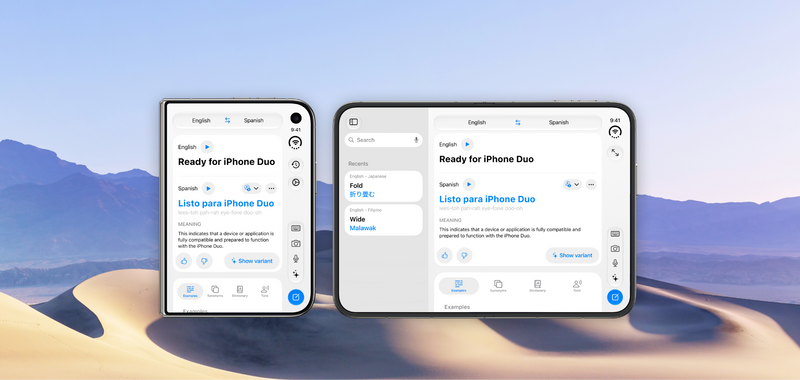
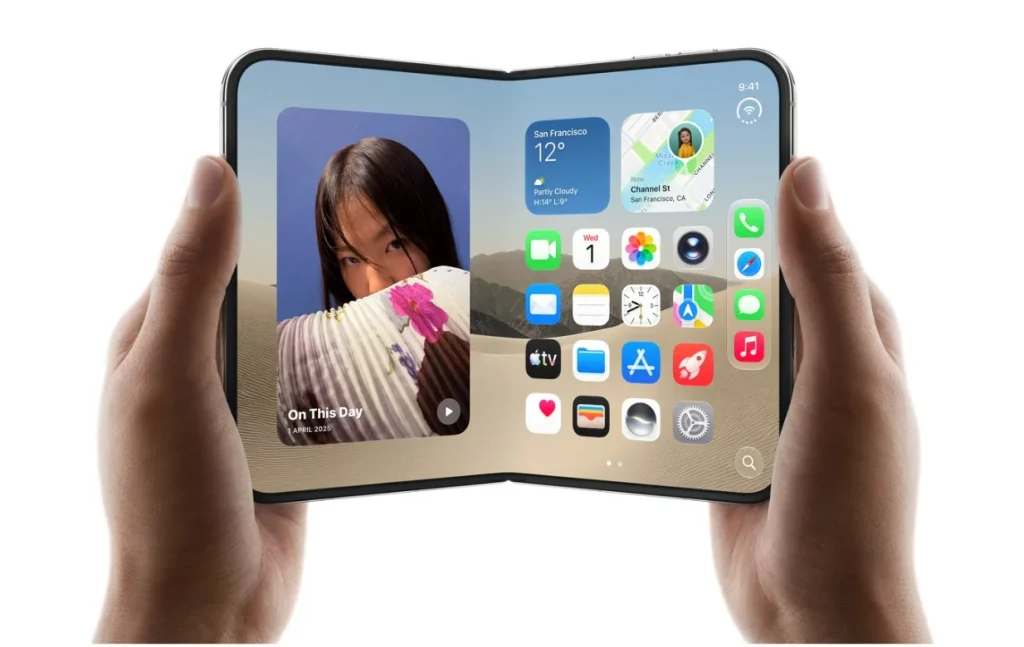
Apple announced it on 9 September, its first entry into a foldable market Samsung has had to itself for seven years. It opens to a 7.6-inch OLED panel at 1878 x 2670 and 430ppi, runs the 2nm A20 Pro chip, and carries a dual 48MP camera system with a main and ultrawide sensor. Apple has paired it with a dual-battery arrangement and the updated Siri built on Apple Intelligence.
It is also the most expensive iPhone Apple has ever sold in India.
What Apple is charging, and where
The iPhone Duo starts at ₹2,99,900 for 256GB, rising to ₹3,24,900 for 512GB, ₹3,74,900 for 1TB and ₹4,49,900 for 2TB. It comes in Star White and Night Sky. Pre-orders open at 5:30 PM IST on 16 October, with sales starting on 23 October.

Here’s how the base model lands across markets, converted at current rates:
| Market | Local price | Approximate INR |
|---|---|---|
| India | ₹2,99,900 | ₹2,99,900 |
| United States | $1,999 | ~₹1,91,000 |
| UAE | AED 8,499 | ~₹2,20,000 |
| Japan | ¥3,64,800 | ~₹2,27,000 |
| Germany | €2,299 | ~₹2,55,000 |
| United Kingdom | £1,999 | ~₹2,57,000 |
| Australia | A$3,499 | ~₹2,20,000 |
| Canada | C$2,999 | ~₹2,05,000 |
India is the most expensive of these markets, sitting roughly ₹43,000 above the next highest. Apple has published Duo prices for ten storefronts, and India tops them all. That is a genuinely unusual position, and it is worth understanding why before deciding whether Apple is taking advantage of Indian buyers.
The storage ladder deserves its own warning
Before the tax argument, there is a separate decision buried in Apple’s India pricing that nobody is talking about.
Moving from 256GB to 512GB costs ₹25,000. Moving from 512GB to 1TB costs ₹50,000. Moving from 1TB to 2TB costs ₹75,000.
That last step means Apple is charging ₹75,000 for one additional terabyte of flash storage. You can buy a competent laptop for that. The doubling pattern is deliberate and it is not unique to India, but the rupee amounts make it stark: the 2TB Duo costs ₹1.5 lakh more than the 256GB model, which is itself more than the entire price of a Pixel 11 Pro Fold.
The practical advice is the same as it has been for years on iPhones. Unless you shoot ProRes video professionally, 512GB covers almost everyone, and the ₹25,000 step up from base is the only one on this ladder that resembles fair value. Cloud storage is dramatically cheaper than Apple’s per-gigabyte pricing, and on a phone this expensive the difference funds several years of it.
The comparison everyone is making is broken
Start with the part that trips up almost every version of this story.
The ₹2,99,900 you see on Apple’s India page already includes 18% GST. The $1,999 you see on Apple’s US page does not include sales tax, which runs between roughly 6% and 10% depending on the state. An American buyer actually pays somewhere between $2,100 and $2,200 at checkout, which is about ₹2,00,000 to ₹2,10,000.
So the honest starting gap is not ₹1.09 lakh. It is closer to ₹90,000. Still large, but the first ₹19,000 of the difference is an artefact of how the two countries display prices, not a decision Apple made.
The duty stack
Here is where the rest of it comes from.
The iPhone Duo is not assembled in India. It arrives as a Completely Built Unit, which means it faces the full import duty on finished handsets rather than the much lighter duty structure that applies to imported components.
The basic customs duty on imported mobile phones is 15%. It was cut from 20% in the Union Budget 2024, when the finance minister named mobile phones, PCBAs and chargers specifically; PTI reported at the time that imported handsets would get cheaper by up to 6%, with industry body ICEA estimating a 5 to 5.5% reduction on imported models.
On top of that sits a social welfare surcharge calculated as 10% of the duty, which adds another 1.5% of the assessable value. That brings the effective customs charge to 16.5%. IGST at 18% is then applied to the duty-inclusive figure rather than the original value, so the two taxes compound rather than simply add.
Put together, a phone imported as a CBU carries roughly 37% in combined duty and tax over its assessable value.
One caution worth stating plainly. Several outlets covering the Duo have used higher duty figures — Eastern Herald cites 22%, ETV Bharat around 28%. Neither matches the statutory rate for mobile phones, and Apple publishes no breakdown of its own. The calculations below use the statutory structure, and readers should treat any single published percentage with care.
Working the number backwards
The useful exercise is to strip the taxes out of ₹2,99,900 and see what Apple’s underlying Indian price looks like.
Remove the 18% GST first: ₹2,99,900 divided by 1.18 gives ₹2,54,153. Then remove the 16.5% effective customs charge: ₹2,54,153 divided by 1.165 gives roughly ₹2,18,157.
The American pre-tax price, at ₹95.55 to the dollar, is about ₹1,90,954.
So Apple’s underlying Indian price sits around 14% above its underlying American one.
That number does a lot of work, so it is worth being clear about what it is and is not. It is an estimate built on statutory rates, and it assumes the assessable value Apple declares tracks its US price, which is not something anyone outside the company can confirm. Freight, insurance and Apple’s internal transfer pricing all sit inside that gap, and none of them are public. Treat 14% as an order of magnitude rather than a precise figure.
Some analysts have reached much lower numbers — a figure of about ₹1,98,557, implying a gap of roughly 4%, has circulated widely. Reverse-engineer it, and that calculation requires assuming a 28% duty, nearly double the statutory rate for mobile phones. If the duty is 16.5%, the gap is not 4%.
Either way, the bulk of the ₹1.09 lakh difference is tax and duty rather than Apple margin. But the residue is not trivial, and the honest answer is that Apple does price India above the US even after the government takes its share.
A second angle on the same question
There is another way to look at this, using the phone sitting next to the Duo on Apple’s India page.
The iPhone 18 Pro launched at the same event, costs $1,199 in the US and ₹1,64,900 in India. Divide those and you get ₹137.5 of Indian list price per dollar of American list price.
Do the same for the Duo: ₹2,99,900 divided by $1,999 gives ₹150.
The Duo carries about 9% more India markup than the iPhone 18 Pro does, measured against its own American price. Same company, same week, same currency, same GST rate.
What that 9% represents is harder to pin down than it first appears, and this is where several write-ups will overreach. It is tempting to call it the import penalty, isolated. It is not. Apple assembles Pro-series iPhones in India, which is the obvious explanation, but launch-window units are not always locally built, and Apple’s price bands, category positioning and margin targets differ between a mature Pro line and a first-generation foldable.
The 9% is a real and checkable difference in how Apple prices two phones. Attributing all of it to customs would be a guess dressed up as arithmetic.
The complication: the Duo did not arrive alone
There is a fact that sits awkwardly against everything above, and leaving it out would be dishonest.
On the same day it announced the Duo, Apple raised the price of every existing iPhone in its lineup. In the US, the iPhone 16 went from $699 to $799, the iPhone 17e from $599 to $699, the iPhone 17 from $799 to $899, and the iPhone Air from $999 to $1,099. A flat $100 off each. Apple has historically discounted the previous year’s base model at this point rather than raising it, so this broke a long-standing pattern. Tim Cook had signalled it in June, telling the Wall Street Journal that Apple could no longer absorb rising memory and storage chip costs as AI data centre demand squeezed supply.
So the increases are global, not aimed at India. That much is clear.
What is less comfortable is the size of India’s share. The iPhone 17 went up from ₹17,000 to ₹99,900, a 20.5% increase. The iPhone 16 rose ₹20,000 to ₹89,900, up 28.6%. The iPhone Air climbed ₹30,000 to ₹1,49,900, and its 1TB variant jumped ₹65,000, a 40.6% rise.
Convert the American increase, and it comes to about ₹9,600, or roughly ₹11,300 once GST is applied. India’s ₹17,000 on the iPhone 17 is meaningfully above that. The Air’s ₹30,000 is close to triple it.
These are phones Apple assembles in India, so the import duty argument does not apply to them. Whatever is driving those numbers is a pricing decision, not a customs one.
Both things are therefore true at once. The Duo’s ₹3 lakh price is mostly structural, produced by duty on an imported device. And Apple is simultaneously repricing its Indian lineup more aggressively than the dollar increases alone would explain. The first fact does not cancel the second.
So why isn’t Apple making it in India?
This is the part that will determine whether the price ever comes down.
Apple has spent close to a decade building iPhone assembly in India, starting with Wistron on older models in 2017, expanding to current-generation phones, and reaching Pro models with the iPhone 16 Pro in 2024. Foxconn, Tata Electronics and Pegatron all now build iPhones here.
None of that helps with a foldable. A folding phone needs a flexible OLED panel, a precision hinge assembly, and a set of internal components that India’s supplier base does not currently produce. Industry analysts note it will take time for Apple’s partners to develop the capability, and until they do, importing a finished unit is the only option.

This is not Apple being difficult. It is the first product in a new category, built on a supply chain that exists almost entirely in East Asia.
Will it get cheaper?
Possibly, and there is precedent for how this goes.
When Apple moved iPhone assembly to India, prices did not collapse overnight. A 2021 analysis noted that even locally assembled phones still carry 10% to 12% effective duty on imported components, so local assembly reduces the burden rather than eliminating it. What it did do, over successive generations, was narrow the gap between Indian and American pricing to something closer to normal.
If Apple brings foldable assembly to India, expect a similar pattern: a meaningful correction, not a dramatic one, arriving with a later generation rather than through a price cut on this one.
Anyone hoping for a mid-cycle discount on the Duo should probably not hold their breath. In India, Apple’s list prices have historically moved in response to duty and currency changes rather than demand, and those moves have more often gone up than down. A first-generation foldable in a supply-constrained category is the least likely candidate for a cut.
What this means if you are actually buying
Three practical points.
Buying abroad genuinely is cheaper, and one widely repeated claim needs correcting. It is often said that personal imports attract the same duty Apple pays, cancelling the saving. That is not how the baggage rules work.
Anything carried into India in accompanied baggage is classified under Customs Tariff heading 9803, whatever it would be classified as commercially. Notification No. 26/2016-Customs exempts baggage from duty above 35% ad valorem, and Notification No. 183/86-Customs sets integrated tax on baggage at nil, so there is no 18% GST layer on top. The Social Welfare Surcharge that used to add 3.5%, making the familiar 38.5% figure, was set to nil for general baggage by Notification No. 07/2025-Customs dated 1 February 2025. The working rate today is 35%. If you go looking, you will still find 38.5% quoted in travellers’ guides, tax explainers and even some official customs FAQ pages that have not been revised since the notification.
One point of confusion worth heading off. The Union Budget 2026 halved the tariff rate on dutiable goods imported for personal use from 20% to 10%. That applies to heading 9804, which covers personal imports by post, courier and air, and those goods began attracting SWS from 1 April 2026. It does not apply to something you carry through the airport yourself.
Under the Baggage Rules 2026, notified as Notification No. 14/2026-Customs (N.T.) and effective 2 February, the general free allowance for residents and tourists of Indian origin is ₹75,000, raised from ₹50,000. Foreign tourists get ₹25,000. Rule 5 states explicitly that the allowance cannot be pooled with another passenger’s, and duty applies only to value above the threshold.
Run it on a Duo bought in the US at about ₹2,05,000 including sales tax. The amount above the allowance is roughly ₹1,30,000, and 35% on that comes to about ₹45,500. Total lands near ₹2,50,500 against ₹2,99,900 here, a saving of roughly ₹49,000.
Treat that as an estimate rather than a quote. Valuation is the assessing officer’s call, and if the phone is assessed at its pre-sales-tax price, the duty falls, and the saving grows, plausibly, toward ₹68,000. The ₹75,000 allowance also has to cover everything dutiable you are carrying, not just the phone. And while the rules allow one new laptop duty-free for passengers over 18, there is no equivalent concession for a phone.
The catch is service. Apple’s limited warranty terms restrict where some repairs can be carried out, and service for a device bought abroad is not guaranteed to be straightforward in India. A first-generation folding device with a hinge and a flexible display is a poor candidate for that uncertainty. Check Apple’s warranty terms for your specific purchase country before deciding. Valuation at the airport is also the assessing officer’s call, not yours, so treat the figures above as an estimate rather than a quote.
The competition is priced very differently. Samsung’s Galaxy Z Fold 8 Ultra starts at ₹1,99,999 and the Google Pixel 11 Pro Fold at ₹1,86,999. That is a ₹1 lakh gap against the Duo, and part of it comes down to the same manufacturing question rather than pure hardware value. Samsung has assembled phones in India for years.
Installment plans are doing heavy lifting here. Apple’s India partners are offering the Duo from around ₹48,817 a month with no-cost EMI and cashback. That reframes a ₹3 lakh purchase as a monthly commitment, which is exactly the point, and exactly why it deserves a second thought.
The verdict
Most of the ₹1.09 lakh gap is tax and duty. Strip the 18% GST and the 16.5% effective customs charge out of ₹2,99,900 and Apple’s underlying Indian price lands around 14% above its American one. That is a real premium, not the 4% some analyses have suggested, and not the 57% the headline figure implies.
The reason the Duo attracts that duty at all is that Apple imports it. Apple has not established foldable production in India, because the flexible display, hinge and related components are not made by its Indian supplier base yet. That is a statement about Apple’s supply chain, not about India — Samsung has manufactured phones in Noida for years.
But the week’s other numbers deserve to sit alongside it. Apple raised prices across its entire existing lineup globally, and India absorbed increases roughly double what the dollar hikes translate to, on phones made here. If you want evidence that Apple is testing what the Indian market will bear, the iPhone Air’s 40.6% jump on its 1TB model is a better place to look than the Duo’s price tag — and the corrected Duo maths, showing a 14% premium rather than 4%, points the same way.
FAQ
Because India’s listed price includes 18% GST while the US price excludes sales tax, and because the Duo is imported as a finished unit, attracting 15% basic customs duty plus a social welfare surcharge. Strip both out, and Apple’s underlying Indian price is roughly 14% above its American one.
No. Apple assembles several iPhone models in India, including Pro-series devices, but not the Duo. Foldable components such as the flexible display and hinge assembly are not yet produced by Apple’s Indian supplier base. Other manufacturers, including Samsung, do build phones in India.
Not in the short term. Apple rarely reduces iPhone prices during the first year. If foldable assembly shifts to India in a later generation, expect a meaningful but partial correction, since locally assembled phones still carry duty on imported components.
Yes, by roughly ₹49,000 if you declare it properly. India’s Baggage Rules 2026 give residents a ₹75,000 general free allowance, and goods above it carried in accompanied baggage attract 35% duty with no GST on top. The deterrent is service rather than duty — Apple’s warranty terms limit where some repairs can be done, which matters on a first-generation foldable.
Apple raised prices across its whole existing lineup worldwide, adding $100 to each US model, after Tim Cook said in June that the company could no longer absorb rising memory and storage chip costs. India’s increases were larger in percentage terms — the iPhone 17 rose 20.5% and the iPhone Air’s 1TB model 40.6%.
512GB for most people. The ₹25,000 step from 256GB is the only reasonable jump on the ladder — 1TB costs ₹50,000 more and 2TB another ₹75,000 on top of that. At those rates, cloud storage is far cheaper than Apple’s per-gigabyte pricing.