– Advertisement –
Profile
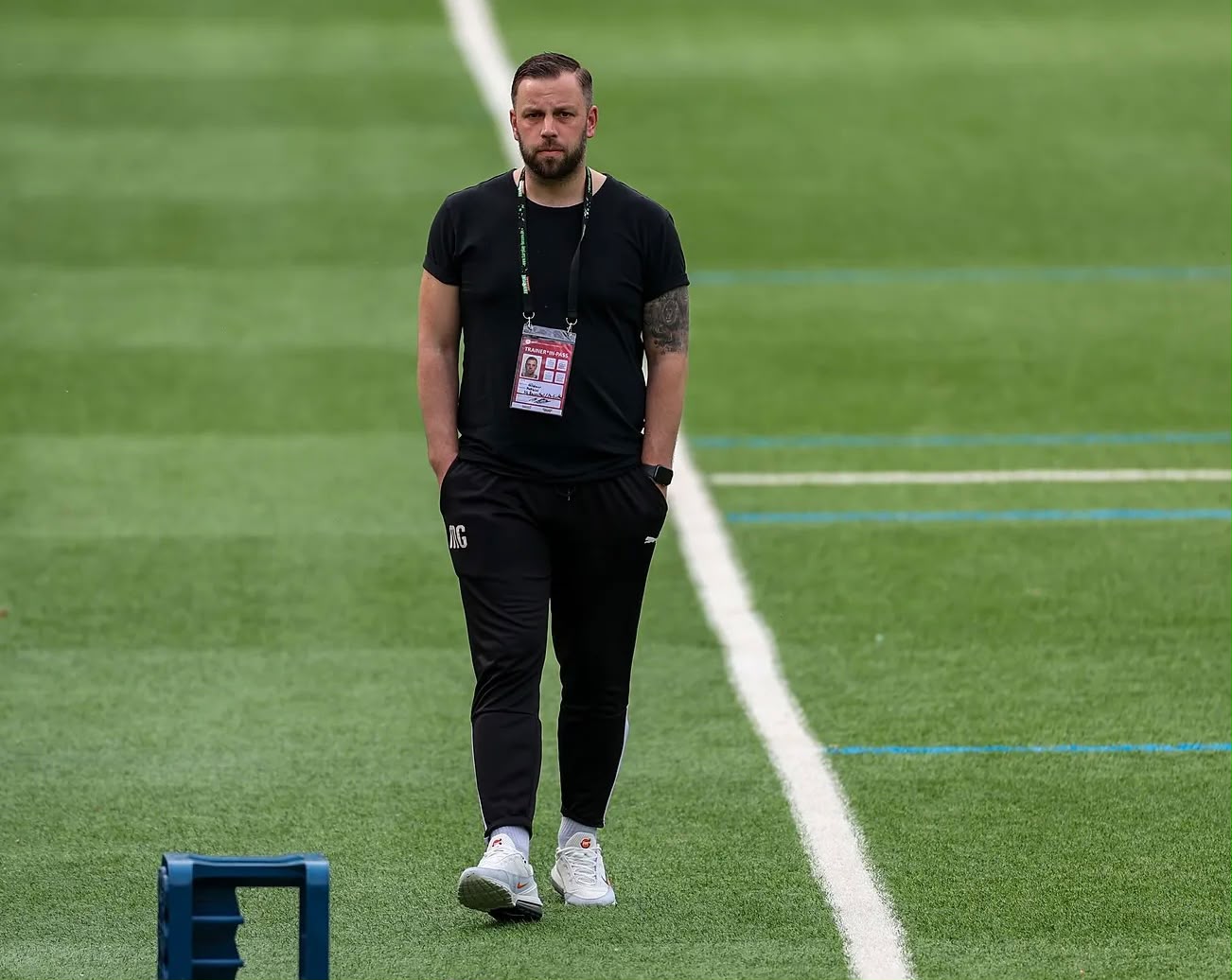
Role: Head coach of SG Nassau Diedenbergen
Specialisation: Building successful teams from the ground up, developing players, establishing winning cultures, and leading clubs to sustained success
Experience: More than twelve years as a head coach, more than sixteen years of leadership experience in German law enforcement, FC Basara Mainz, VfB Ginsheim, SpVgg Ingelheim, SG Rauenthal/Martinsthal, and SG Nassau Diedenbergen
Focus Areas: Structure, tempo, organization, courage, team culture, tactical preparation, training methodology, squad management, and individual player development
Matthias Güldener is a UEFA B licensed football coach whose career has been defined by building successful teams from the ground up. Over more than twelve years as a head coach, he has consistently demonstrated his ability to develop players, establish winning cultures, and lead clubs to sustained success across different levels of German football.
Born on September 23, 1987, in Mainz, Germany, Güldener combines his coaching career with more than sixteen years of leadership experience in German law enforcement. That background has shaped the qualities that define him as a coach today: discipline, composure under pressure, organizational excellence, and the ability to lead people in demanding environments.
His coaching journey began at FC Basara Mainz shortly after the club’s foundation in 2014. Over four consecutive seasons, he guided the club from the lowest amateur division to the Bezirksliga, winning four league championships and earning four straight promotions. Across 111 league matches, his teams recorded 90 wins, 9 draws and only 12 defeats, with an impressive goal difference of +322.
The Allgemeine Zeitung described his departure as “Bringing the Diamonds to Shine,” recognizing him as one of the key architects behind the club’s remarkable rise. One of FC Basara Mainz’s co-founders is former Japanese international Shinji Okazaki, who enjoyed a distinguished professional career with VfB Stuttgart, Mainz 05 and Leicester City, where he won the Premier League title. Today, Okazaki serves as the club’s head coach.
His success at Basara earned him a move to Hessenliga side VfB Ginsheim in 2018, initially as an assistant coach. In that role, he worked closely with the head coach on training design, session planning, daily coaching operations, and player development while also contributing to match analysis and opponent scouting. During his time at the club, Ginsheim won the regional cup competition.
After eighteen months, Güldener was promoted to head coach. The Allgemeine Zeitung reported that the club selected him after an extensive search because of his football philosophy, leadership qualities, and strong alignment with the club’s identity. From early 2020 until the end of 2021, he led VfB Ginsheim’s first team in the Hessenliga. He was responsible for the club’s overall playing philosophy, tactical preparation, training methodology, squad management, and individual player development. Among the players he coached and helped develop was one who was later selected by Inter Miami CF in the MLS SuperDraft.
Following a brief spell at SpVgg Ingelheim, Güldener became head coach of SG Rauenthal/Martinsthal in 2023. In his first season, he guided the club to a league championship and promotion. His second season presented a completely different challenge, with numerous long-term injuries affecting the squad throughout the year. Despite those circumstances, he secured survival well before the end of the season. Statistically, the team also recorded the most successful season in the club’s more than 100-year history.
For his achievements, Güldener received a formal sports award from the City of Eltville am Rhein and Mayor Patrick Kunkel in recognition of his contribution to local sport.
Since July 1, 2026, Güldener has served as head coach of SG Nassau Diedenbergen. The project perfectly matches the profile he has built throughout his career: taking over a team, establishing a clear identity, and implementing a high-performance culture built around his own football philosophy.
His coaching philosophy is built on five core principles: structure, tempo, organization, courage, and team culture.
His teams play proactive football with quick ball circulation, limited touches, intelligent positional rotations, and the constant objective of creating numerical superiority in key areas of the pitch. Training sessions are periodized, designed around realistic match situations, and focused on decision-making under pressure. Equally important to him is building a strong team culture based on trust, accountability, discipline, and a shared commitment to excellence.
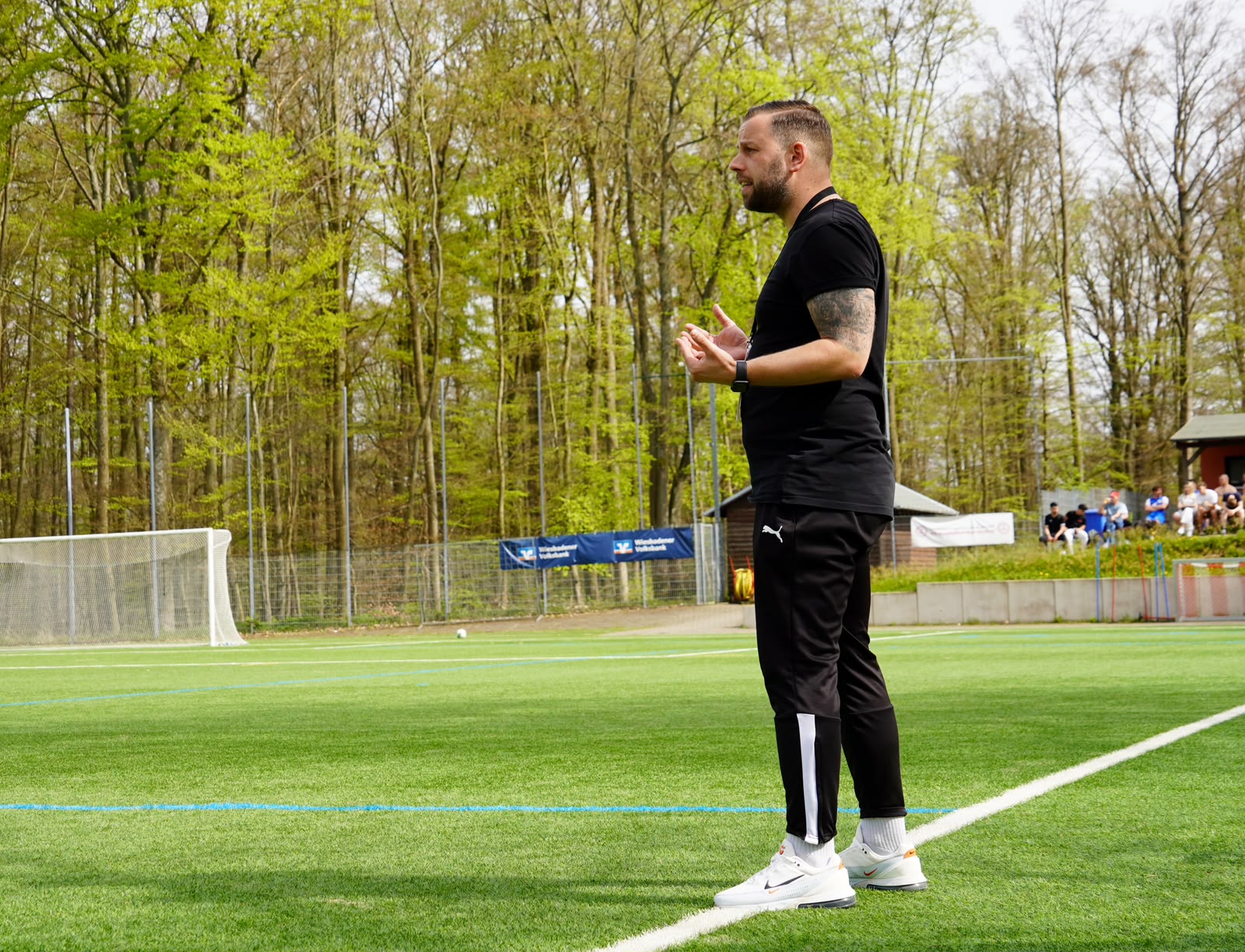
His leadership style combines high standards with genuine trust in his players. He attributes this approach to the discipline, composure, and understanding of people that he developed during more than sixteen years in German law enforcement.
Güldener holds a UEFA B License, is eligible for the US Soccer B License, and is currently a candidate for the UEFA A License.
Key Insights
- Matthias Güldener has built a coaching career around structure, tempo, organization, courage, and team culture.
- His background in German law enforcement has shaped his leadership style, discipline, composure, and ability to manage pressure.
- He is open to relocating to the United States from 2027 onwards and believes German coaching principles can translate successfully to the American soccer market.
Our Exclusive Interview with Matthias Güldener
You spent sixteen years in German law enforcement while simultaneously building a coaching career that now spans more than 300 competitive matches. How did those two worlds coexist, and what specific qualities from law enforcement have made you a better football coach?
Managing both careers simultaneously was only possible through absolute discipline. Every day was planned down to the smallest detail, from my work schedule and travel times to training sessions, match preparation, and weekend games. Without structure, organization, and the willingness to stay fully committed every single day, it simply would not have been possible.
My time in law enforcement shaped many of the qualities that define me as a coach today. Discipline, punctuality, reliability, and the ability to perform under extreme pressure while remaining calm and focused are all essential in both professions. In police work, you depend on your colleagues completely, and I expect the same commitment within my teams. Successful football teams are built on trust, accountability, and a clear organizational structure.
Successful football teams are built on trust, accountability, and a clear organizational structure.
At FC Basara Mainz, you led a newly founded club to four consecutive league titles and promotions with a remarkable winning percentage. Looking back, what was the single most important decision you made that laid the foundation for that success?
I don’t believe great decisions are made alone. As a coach, it is important to listen to the people around you, value different perspectives, and then make clear and confident decisions.
If I had to identify one decision that changed everything, it would simply be the decision to become a football coach. At one point, I had to ask myself whether this was truly the path I wanted to follow. Saying yes to that challenge became the foundation for everything that came afterward. Without making that decision, none of the successes that followed would have been possible.
You have experienced both championship-winning seasons and relegation battles. How does your approach in the dressing room and on the training ground change depending on the type of pressure your team is facing?
To be honest, my daily work changes very little. My expectations remain the same regardless of where we are in the table. I expect maximum intensity, complete commitment to the team, and the willingness to fight for one another every single day.
I want my players to support each other, solve problems together, and take responsibility for one another. That shoulder-to-shoulder mentality is not just physical, it is mental. In difficult moments, mentality often becomes even more important than footballing ability. Strong team culture is what allows teams to overcome pressure.
Strong team culture is what allows teams to overcome pressure.
Your football philosophy emphasizes quick ball circulation, positional rotations, and creating numerical superiority, principles often associated with elite clubs. How do you implement that style at clubs with limited training time and resources?
Technical quality is obviously important, but I believe the greatest potential for improvement is always found in the mind. Mentality, attitude, and the willingness to improve together are often the biggest factors that determine how far a team can develop.
That is why I focus on making every training session as efficient and purposeful as possible. Whether I have two, three, or four sessions per week is less important than maximizing every minute we have together. With clear planning, structured coaching, and consistent training methodology, significant progress can be achieved regardless of the available resources.
The City of Eltville formally recognized your work with a sports award, and several regional newspapers have covered your coaching career. What does that recognition mean to you, and what does it say about the relationship between a football club and the community it represents?
Receiving that award was certainly a great honor, and I am very proud of it. At the same time, I have always believed that individual recognition is only possible because of the people around you.
At the end of the day, it is the players who step onto the field, execute the game plan, and earn the results. Without their commitment and dedication, no coach receives an award like that. I see it as recognition for the entire team rather than just myself.
I also believe it is incredibly important when a football club identifies with its community, and when the community identifies with its club. That connection creates pride, motivation, and a sense of belonging. Knowing that people appreciate your work and genuinely support the team gives everyone involved an extra source of motivation.
You are eligible for the US Soccer B License and are open to relocating to the United States from 2027 onwards. What attracts you to the American soccer market, and why do you believe your coaching philosophy would translate successfully to that environment?
What fascinates me most about the American soccer market is its enormous potential for growth. Soccer has developed tremendously over the past years, and I believe the 2026 FIFA World Cup has given the sport another significant boost. More and more people are discovering the game, and I truly believe the next ten to fifteen years will be an exciting period for soccer in the United States.
Being part of that journey is something that genuinely excites me. The opportunity to contribute to the continued growth of the game in a country that is investing heavily in player development and infrastructure is extremely motivating.
I also believe that German coaching is recognized around the world for its structure, organization, discipline, and professionalism. Those values are the foundation of my own coaching philosophy. My approach combines tactical organization, high intensity, strong team culture, accountability, and continuous player development. I believe those principles are universal and can help teams succeed regardless of the country or league.
Looking ahead, what type of project would allow you to continue growing as a coach, and what would a club notice first about the way you approach your work?
I am very open-minded when it comes to future opportunities. For me, it is less about the name of the club and more about finding the right fit. The project has to match my values, my football philosophy, and my ambitions, but at the same time, I also have to be the right fit for the club. When both sides share the same vision, that is when long-term success becomes possible.
When both sides share the same vision, that is when long-term success becomes possible.
I think the first thing people would notice is my organization and attention to detail. I believe in clear structures, high standards, discipline, and accountability. At the same time, I place great importance on building genuine relationships with players and staff.
Some people may see traditional values such as discipline and responsibility as old-fashioned, but I believe they remain essential for building successful teams. My players always know where they stand with me because I value honesty, authenticity, and consistency. I never try to be someone I am not, and I believe trust is built through integrity, respect, and everyday actions rather than words alone.
FAQ
Who is Matthias Güldener?
Matthias Güldener is a UEFA B licensed football coach whose career has been defined by building successful teams from the ground up.
What is Matthias Güldener’s coaching philosophy?
His coaching philosophy is built on five core principles: structure, tempo, organization, courage, and team culture.
Which club does Matthias Güldener currently coach?
Since July 1, 2026, Güldener has served as head coach of SG Nassau Diedenbergen.
– Advertisement –