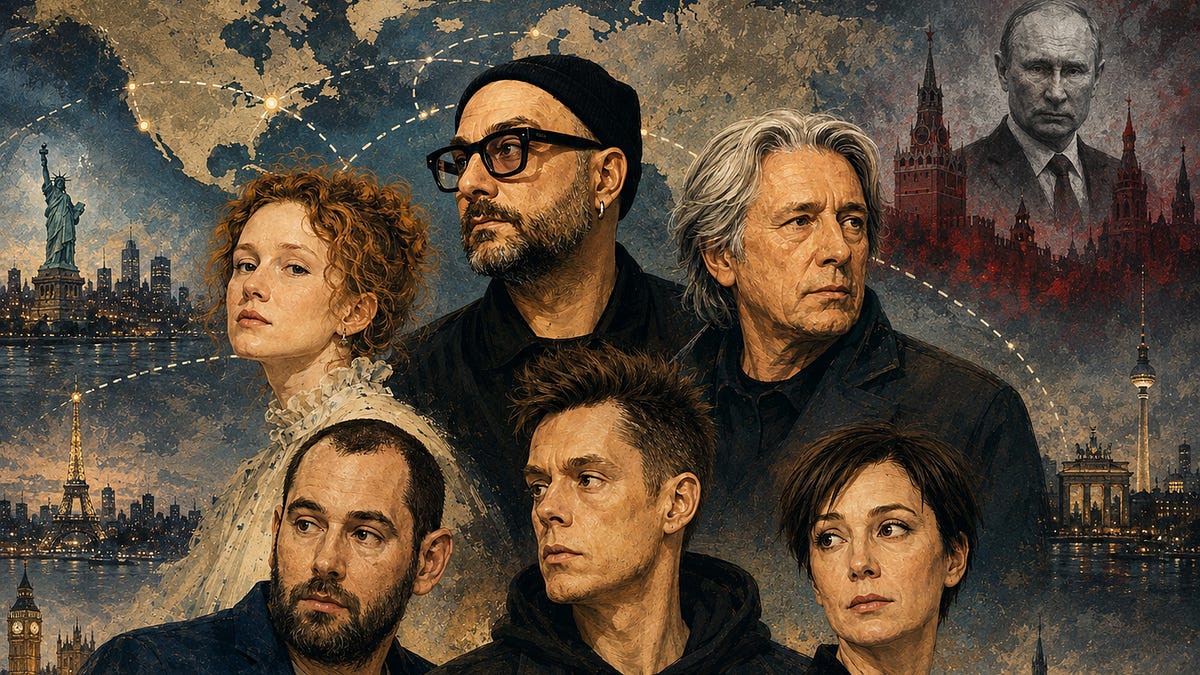
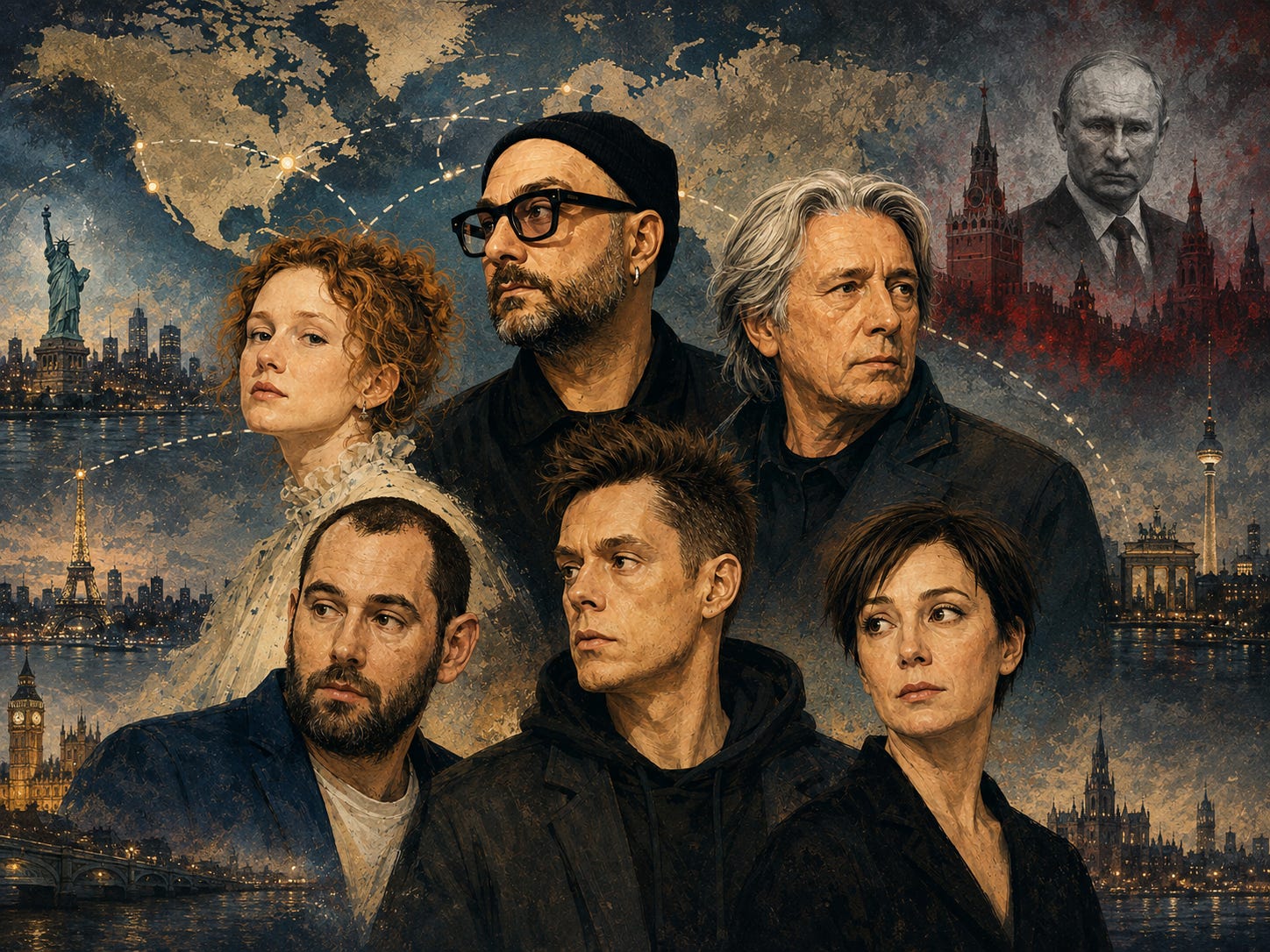
If you want to understand what has happened to Russian culture since February 2022, don’t start in Moscow. Start in Berlin, Riga, Amsterdam, London, Paris, New York, Tel Aviv, Tbilisi—or almost anywhere else in the world.
That is where a remarkable transformation has taken place.
Over the past four years, Vladimir Putin has managed to do something that no Russian ruler had accomplished for centuries: he has pushed the center of Russian culture outside Russia.
Look at almost any field.
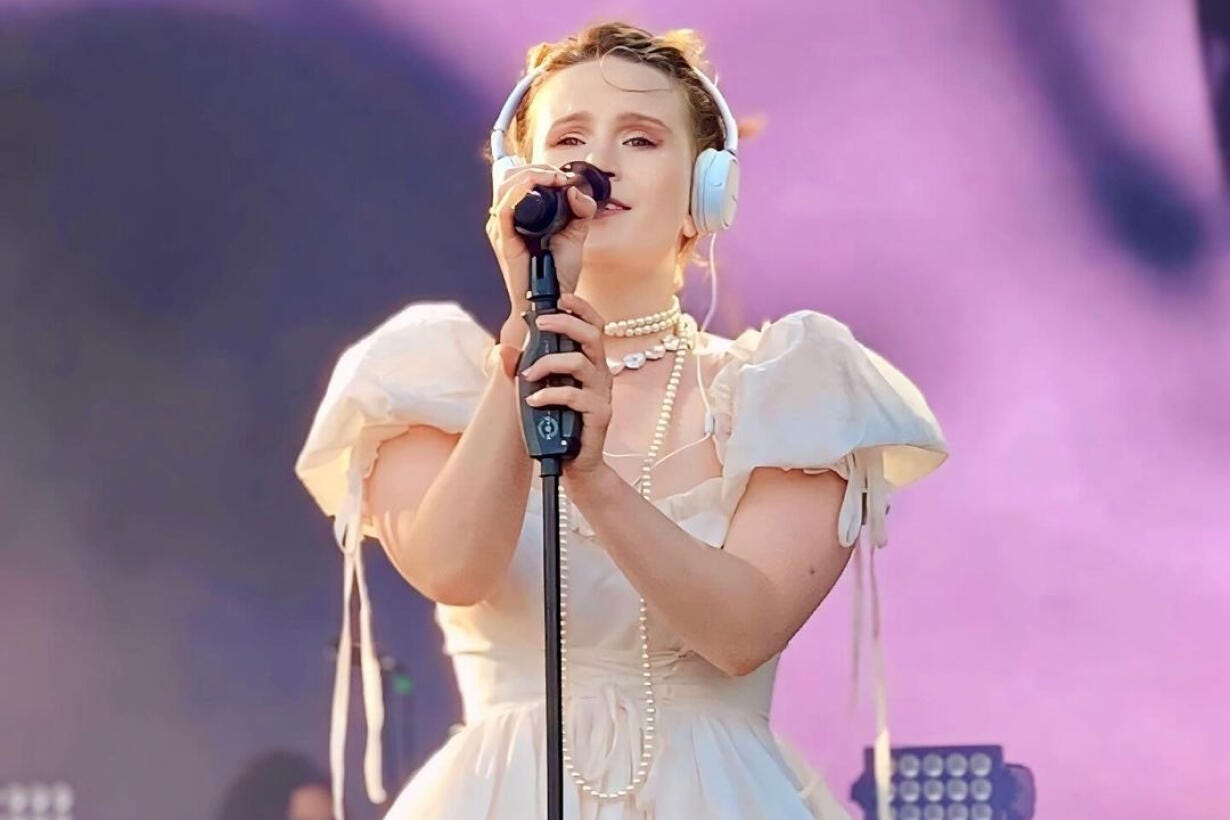
Monetochka, one of the defining voices of Russia’s new musical generation, has gone from being banned at home to having her song “Monopoly” featured in the soundtrack of Spider-Man: Brand New Day.
The most important independent Russian media now operate from abroad. Many of the country’s leading filmmakers left and continue making films in Europe and the United States. Some of the most prominent Russian directors are premiering new work at Cannes rather than Moscow. Virtually all of the most influential contemporary writers who opposed the war now live outside Russia, while their books are banned or disappearing from Russian bookstores. Many of the biggest musicians tour Europe, America, Israel, and Central Asia. Russian stand-up comedy—one of the most dynamic parts of popular culture before the war—has largely become an émigré art form.
The same thing has happened to actors, theater directors, journalists, publishers, academics, YouTubers, and intellectuals.
Putin did not simply censor Russian culture. He exported it.
And here is the paradox: the culture itself did not disappear. It moved.
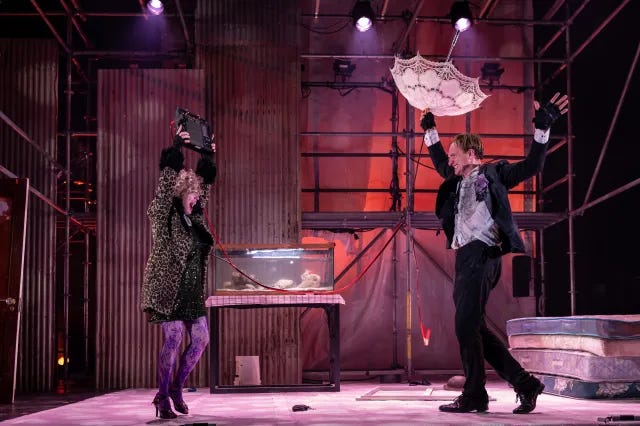
Chulpan Khamatova and Andrey Burkovskiy, both major stars of Russian theater and screen before the war, are now performing together in New York in Delirium—a striking example of how some of Russia’s most recognizable actors have rebuilt their careers abroad.
There are Russian-language bookstores opening abroad. New publishing houses print books that cannot be published in Moscow. Russian theaters tour from city to city, knowing that there is an audience waiting for them in Berlin, London, New York, Riga, Helsinki, or Yerevan. Musicians and comedians can spend the entire year performing for Russian-speaking audiences without setting foot in Russia. Independent journalists broadcast from Amsterdam, Riga, Berlin, Vilnius, and other cities—and millions of people still watch them inside Russia.
Meanwhile, the cultural landscape inside Russia has become increasingly strange.
This does not mean that everyone who stayed supports Putin. Quite the opposite. Many major artists who remain have avoided supporting the war. But open disagreement is dangerous. So people retreat into silence, allegory, safe genres, private conversations. They try not to attract attention. They wait.
The result is an extraordinary split.
The Russian state still controls the territory called Russia. But much of the living, contemporary Russian cultural conversation is now happening somewhere else.
And that “somewhere else” is not one place.
It is everywhere.
Millions of Russian-speaking people scattered across dozens of countries watch the same journalists, read the same writers, listen to the same musicians, attend the same touring shows, argue about the same events, and share the same memes. They may live thousands of miles apart, but culturally they inhabit the same space.
I call it Outer Russia.
It is a strange kind of country: a country without borders, without a capital, without a government, and without a single territory.
But it has media. It has literature. It has theaters and concert halls. It has celebrities, intellectuals, comedians, universities, publishers, political arguments, scandals, and an increasingly stable audience. In some respects, its institutions are becoming more coherent than those of the physical country its inhabitants left behind.
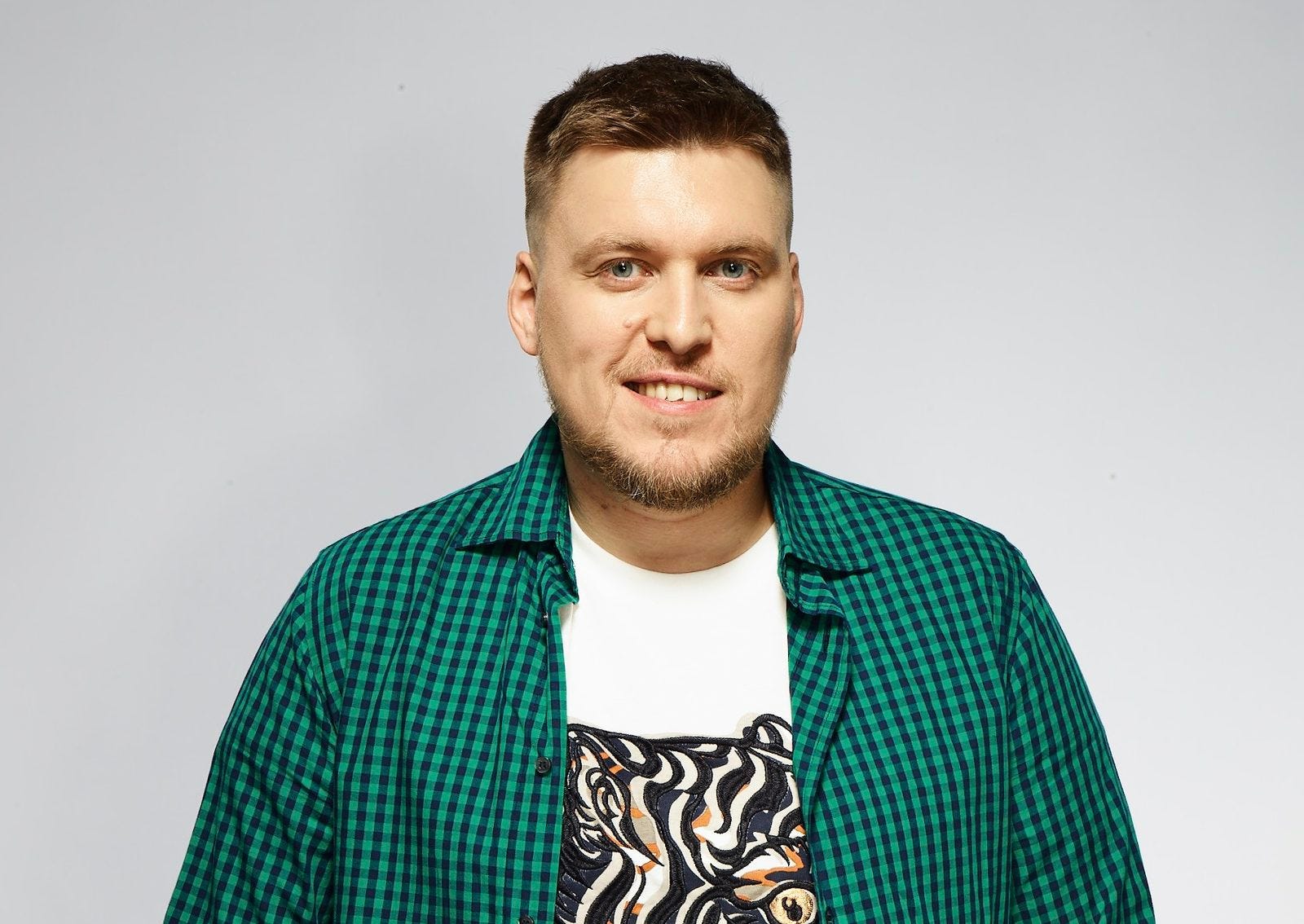
LA-based Alexander Nezlobin, once one of Russia’s biggest mainstream comedians, is now making a new career in English and has become one of the standout Russian acts at the 2026 Edinburgh Fringe with his show I’m Fine.
This is historically unusual. Earlier Russian emigrations produced extraordinary writers, artists, and thinkers, but the cultural center remained in Russia itself. Today, for perhaps the first time in centuries, that relationship has been reversed.
Russian culture no longer necessarily needs Russia as a territory.
That is the subject of my new report for the Atlantic Council, “Outer Russia: How the War Has Sent Culture into Exile.”
I wanted to understand what actually happened to Russian culture after the invasion of Ukraine—not only who left, but what they built after leaving. I looked separately at journalism, theater, cinema, literature, education, music, comedy, and politics, and spoke to people working both outside Russia and, anonymously, inside it.
What emerges is not simply another story of emigration.
It is the story of a new, extraterritorial cultural space coming into existence in real time.
Putin’s propaganda has long repeated the formula: “No Putin, no Russia.”
Four years into the war, the opposite may be closer to the truth.
There is now a Russia without Putin.
It just happens to be everywhere except the Kremlin.
Here is the full text of the report: Outer Russia: How the war has sent culture into exile