- Oil remains in the driver’s seat as geopolitical uncertainty persists.
- US dollar gains as focus shifts to key US data and Fedspeak.
- Euro may suffer if eurozone inflation challenges ECB hike expectations.
- Yen remains under pressure; RBA decision and Chinese PMIs to drive the aussie.
Oil and Dollar Gain, Risk Assets Edge Higher Despite Ballooning Bond Yields
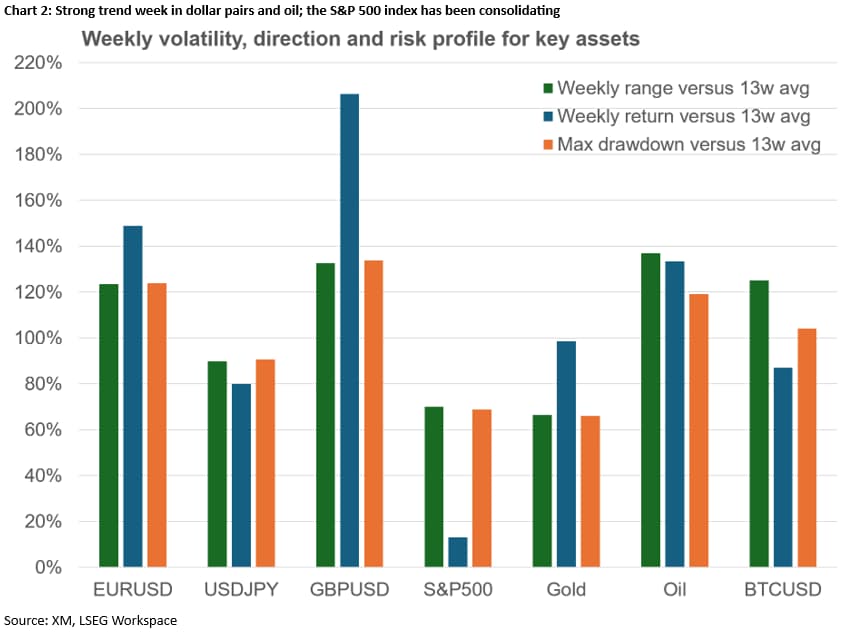
Despite the solid drop from the mid-September high, oil prices remained in the driver’s seat for another week, setting the tone in financial markets. Six months have passed since the late-February start of the US-Iran conflict, and there is still no breakthrough in the stalled talks, despite pressure from regional leaders and the rest of the world. With winter upon us, the lack of restored oil and gas flows could prove damaging to the global economy.
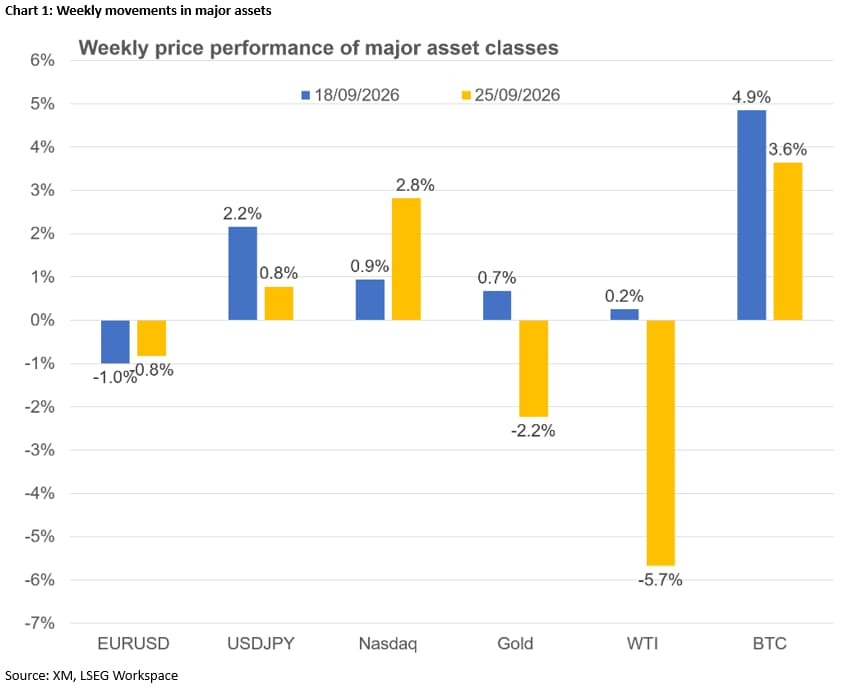
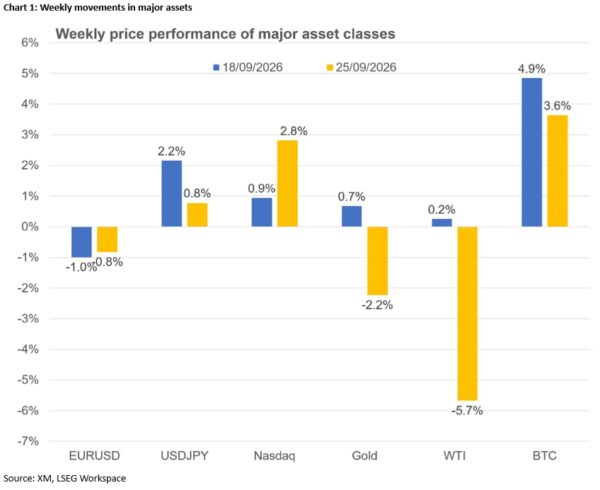
The US dollar has emerged as the main gainer from this week’s price action. Despite de-dollarization concerns, the ballooning US debt and the lingering angst about President Trump imposing another wave of trade restrictions, the greenback has been posting decent gains across the board. The repricing of Fed rate hike expectations, higher bond yields and some safe-haven flows have boosted the dollar, with euro/dollar dropping to a fresh two-month low and dollar/yen climbing to 158, just two weeks after reaching a seven-month low.
Interestingly, amidst the muted risk appetite, the Nasdaq 100 index and cryptocurrencies have been on the front foot, posting solid gains. While most equity indices are in the red so far in September, confirming the challenging nature of this month, the Nasdaq 100 is reaping the AI benefits, mostly ignoring the rising bond yields. Similarly, bitcoin has quickly forgotten the failed Clarity Act vote in the Senate, rising to a fresh eight-month high, around 50% above the June trough.
Could US Data and Fedspeak Validate Fed Hike Bets?
With investors closely monitoring bond yields and the developments in the US-Iran talks, the focus next week will be on the rich data calendar and the busy Fedspeak. Tuesday’s Conference Board Consumer Confidence index, Wednesday’s ADP and final Q2 GDP reports, and the critical August PCE prints could set the tone for the rest of the week. Crucially, Thursday’s ISM Manufacturing PMI survey, and Friday’s nonfarm payrolls figure could prove the most market-moving events. Given that the Fed is currently very comfortable with the US labour market, only a persistently negative set of prints could push out Fed rate hike expectations.
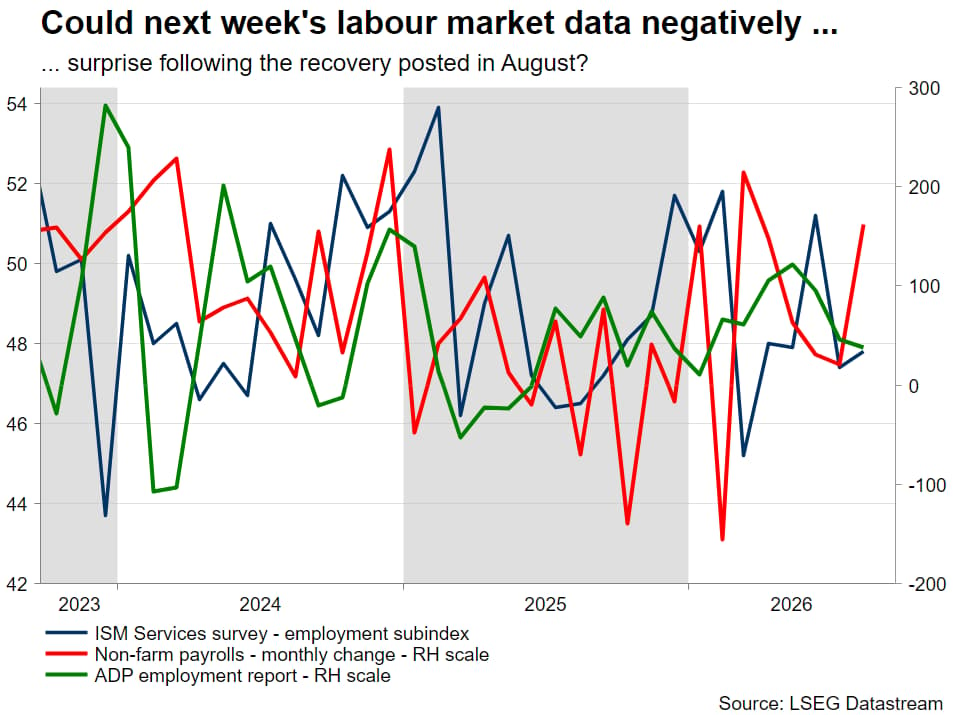
Additionally, following the hawkish Fed meeting and the dot plot showing one additional 25bps rate hike by year-end, there has been a barrage of Fedspeak. Since most Fed speakers are in the hawkish camp and thus openly support another rate move soon, comments from New York Fed President Williams and Board member Barr, acknowledging the need for tighter policy, proved market-moving. Generally, most doves have been staying on the sidelines. However, this might change if next week’s data prints, particularly Friday’s labour market data, surprise on the downside, putting the dollar and equities under pressure.
Meanwhile, investors will also be preparing for another 10- to 20-year US Treasury buyback operation on Thursday – the first one two weeks ago proved a non-event for markets – while Tuesday’s and Wednesday’s trading sessions could be severely affected by the quarter-end rebalancing flows.
The Euro Is Torn Between ECB Expectations and Rising Oil Prices
Unsurprisingly, the greenback has been taking advantage of the eurozone’s troubles, especially as political developments are proving a significant headwind for the euro. Investors are anxiously awaiting news of the German Chancellor Merz’s future, with the current CDU/CSU–SPD coalition potentially at risk if Merz is replaced and the next Chancellor pursues a change in strategy. Both parties, though, wish to avoid snap elections as, based on current polls, they are likely to sustain heavy losses.
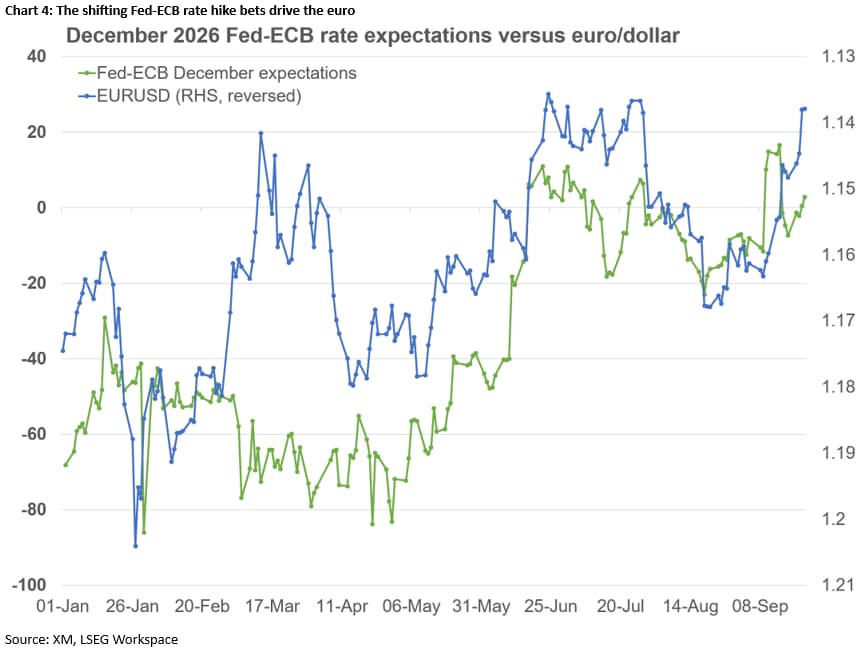
Meanwhile, the support for the euro from the high ECB rate hike expectations appears to have vanished, despite the persistently hawkish comments, even from ECB doves. Elevated energy prices, the discussed US diesel ban and the perceived escalation in the Ukraine-Russia war may dent the eurozone’s growth momentum, especially in a period when ECB President Lagarde is rumoured to be considering departing early. She is seen as a potential candidate to challenge Marine Le Pen in the mid-2027 elections.
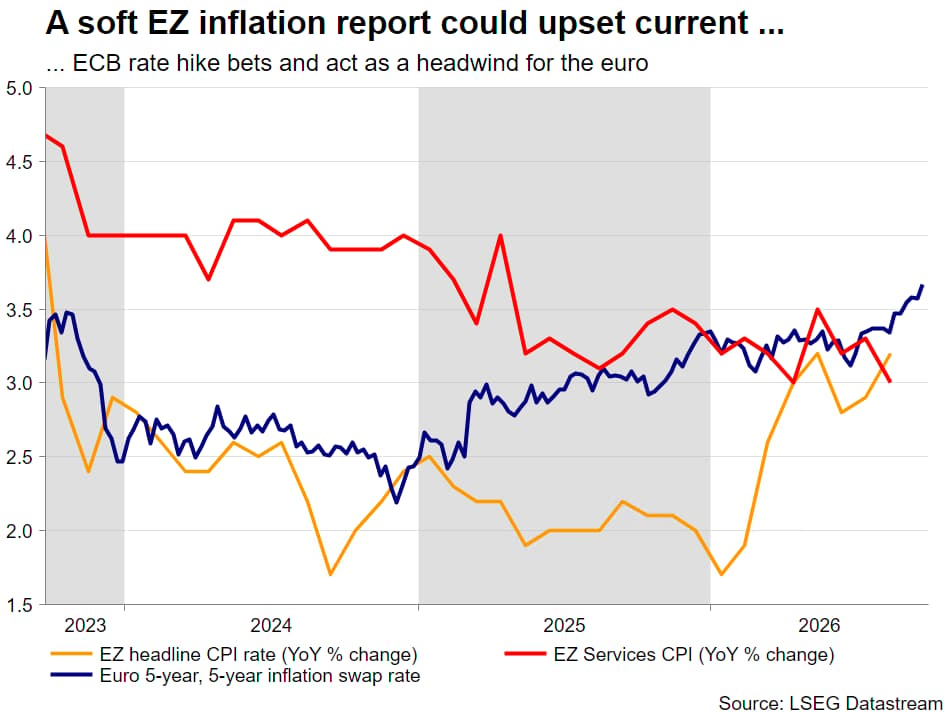
Amidst this environment, the preliminary CPI report for September will be released on Friday, following Wednesday’s national flash estimates. A strong print, which is the most likely outcome considering the 12% rally in oil prices so far in September, will probably go unnoticed. However, a significant downside surprise could prove market-moving, with the likely pricing out of expected ECB hikes proving damaging for the euro.
The Yen Feels the Pressure Again
Despite pompous rhetoric from US Treasury Secretary Bessent and the recent BoJ hike – with the two dovish dissidents overshadowing the move – the yen has been under widespread pressure. Dollar/yen has climbed to the 158 area, with other yen pairs posting similar rallies, as doubts about the BoJ’s determination to continue tightening its monetary policy stance amidst ballooning energy costs and softer data prints have dented the yen’s appeal.
With the chances of another rate hike by year-end dropping to 80%, stronger data releases and hawkish commentary from BoJ officials hold the key for the yen. In particular, the Summary of Opinions from the recent BoJ meeting, the quarterly Tankan survey, and Friday’s Tokyo CPI report for September could turn around sentiment for the yen, with some build-up of intervention expectations potentially contributing to a yen recovery.
RBA Meets, China Prepares for Extended Holiday and Bitcoin-Gold Divergence
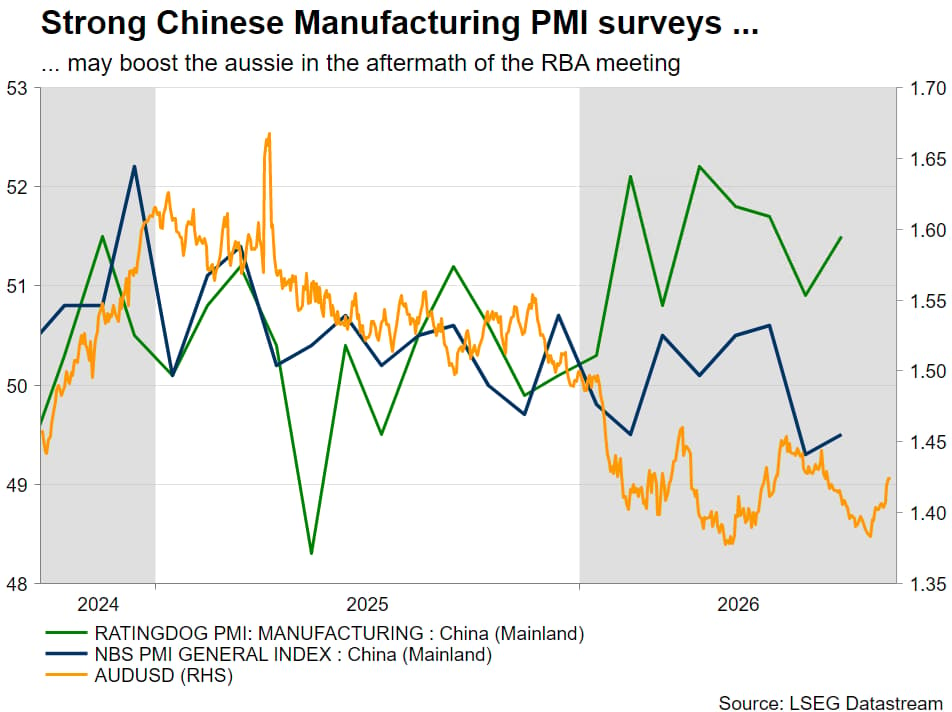
In a well-telegraphed move, the RBA is expected to hike rates on Tuesday, maintaining the highest interest rate among major economies. Governor Bullock has been highlighting the upside inflation risk, with the main question being whether the RBA could surprise with a 50bps hike or maintain the ultra-hawkish rhetoric, and thus point to another move by year-end. These choices might be necessary to stop the aussie from underperforming against the US dollar. Alternatively, aussie bulls could pin their hopes on a solid set of Chinese PMI prints, ahead of the seven-day-long national holiday.
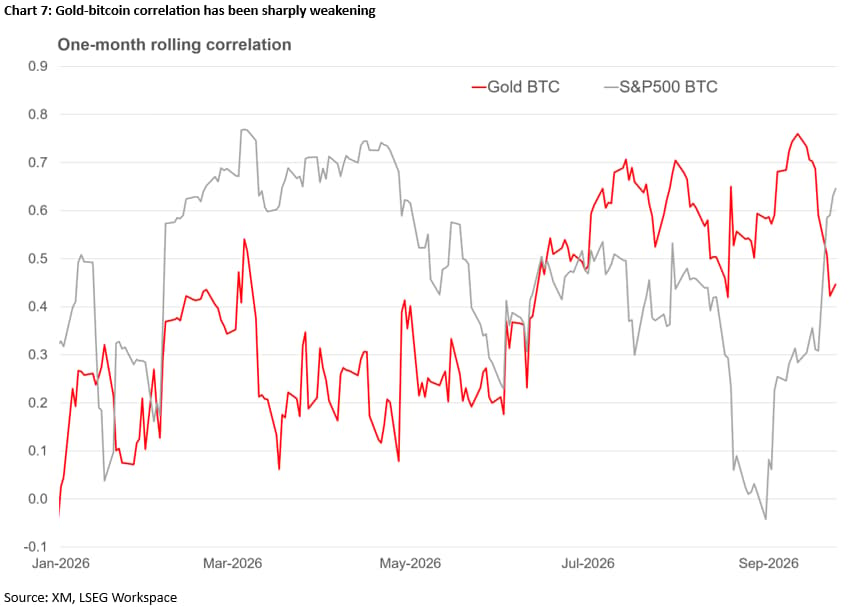
Following a solid performance in August, bitcoin and gold have been diverging in September, with their one-month correlation weakening sharply. Bitcoin climbed to $87k, benefiting from some progress on the US regulatory front, despite the stalled Clarity Act, and headlines about tokenised stocks and 24/7 trading.
At the same time, gold is suffering from higher real yields and the strengthening dollar, surrendering more than half of its price gains since early August. The longer-term outlook may appear positive for the dollar, but a short-term reversal is dependent on an amalgamation of developments. Weaker US data and a possible Middle East truce may reverse the current market momentum, triggering a weaker dollar, which, along with improved risk appetite and lower yields, may benefit gold.