Published on
July 20, 2026
By: Susmita Das

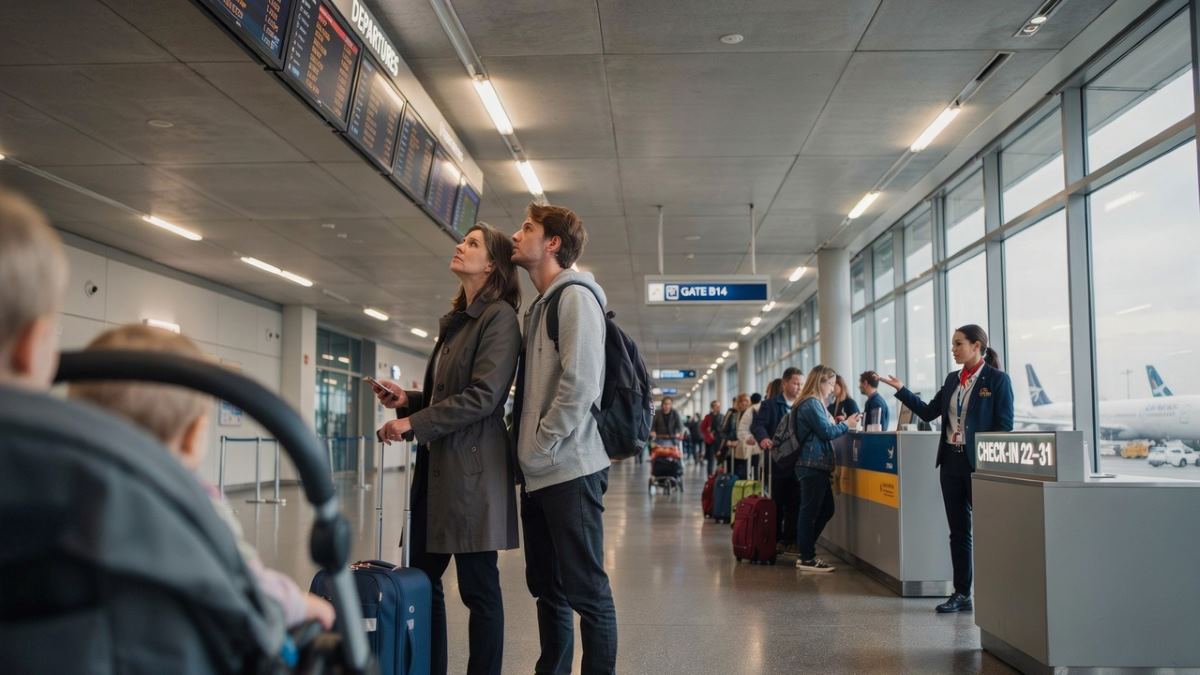
Image generated with Ai
The escalating confrontation between the United States and Iran has pushed Middle East travel into a period of unprecedented uncertainty, prompting India, South Korea, Switzerland and the United Kingdom to strengthen citizen safety measures as airlines, maritime operators and tourism businesses prepare for possible disruption across one of the world’s most important travel regions. The crisis has developed into a wider regional challenge affecting more than diplomatic relations. It is now influencing passenger movement, commercial aviation, shipping routes and international tourism confidence. Governments are increasingly focused on preventing citizens from becoming stranded if airspace restrictions, airport closures or transport interruptions expand.
For global travellers, the concern is not limited only to those visiting Iran. The Middle East functions as a major international travel bridge connecting Asia, Europe, Africa and the Americas. Any instability around Iran, the Gulf region, the Red Sea or surrounding air corridors can create immediate consequences for millions of passengers travelling through the region.
The latest government responses show a common concern: the window for safe and predictable travel can narrow quickly during a fast-changing security crisis. Countries are therefore moving before a complete transportation shutdown occurs. The focus is on helping citizens leave while commercial aviation remains available and before regional connectivity becomes severely restricted.
Travel Warnings Expand as Governments Respond to Rising Regional Risks
Governments across Asia and Europe have increased travel monitoring as military tensions between Washington and Tehran create uncertainty across the Middle East. India, South Korea, Switzerland and the United Kingdom have all taken steps to advise their citizens about changing conditions, reflecting concerns over passenger safety, transport availability and emergency response capability.
Advertisement
Advertisement
The wider regional situation has created several travel challenges:
| Travel Area | Current Concern |
|---|---|
| Commercial aviation | Possible rerouting, delays and reduced connectivity |
| Regional airports | Potential operational restrictions during escalation |
| Maritime routes | Increased security concerns around major shipping corridors |
| Tourism movement | Travellers delaying or reconsidering trips |
| Business travel | Companies reviewing regional mobility plans |
The travel industry closely watches these developments because confidence is one of the most important factors driving international tourism. When security concerns increase, travellers often make decisions quickly. Holidaymakers may postpone trips, airlines may adjust schedules and tour operators may modify itineraries to protect customers.
Advertisement
Advertisement
India Issues Urgent Iran Travel Advisory as Citizens Face Growing Uncertainty
India has emerged as one of the countries most actively responding to the changing situation because of its deep connections with the Middle East through tourism, trade, employment and international mobility. The Indian Embassy in Tehran has advised Indian nationals to postpone travel to Iran and has encouraged those already in the country to consider temporary departure options using available commercial transport.
The advisory reflects concerns that worsening regional instability could affect normal travel arrangements, including flight availability and passenger movement. India’s relationship with the Middle East makes the situation particularly significant. Millions of Indian citizens travel across Gulf countries every year for leisure, work, education, business and family visits. The region also serves as a major aviation gateway connecting India with Europe, North America and other international markets.
Advertisement
Advertisement
Any disruption to Middle Eastern aviation networks can therefore create wider consequences for Indian travellers, even when their final destination is outside the immediate conflict area.
Indian passengers travelling during this period face several practical considerations:
- Checking embassy updates before departure
- Confirming airline schedules regularly
- Preparing flexible travel arrangements
- Keeping essential documents accessible
- Monitoring possible route changes
The maritime impact is also important for India. Indian nationals represent a significant part of the global maritime workforce, and uncertainty around strategic shipping routes creates additional safety concerns for seafarers and commercial operators.
South Korea Strengthens Middle East Monitoring as Seoul Moves to Protect Visitors
South Korea has also responded quickly to the worsening regional environment by increasing diplomatic coordination and strengthening safety measures for citizens in the Middle East. The South Korean Foreign Ministry held emergency discussions involving diplomatic missions connected with the region, including embassies responsible for monitoring conditions in Iran and Israel.
Advertisement
Advertisement
Authorities have urged short-term South Korean visitors in affected areas to consider leaving unless they have essential reasons to remain. The decision reflects concerns that travel options could become increasingly limited if regional airports experience restrictions or airlines suspend operations.
South Korea has major strategic interests connected with the Middle East. The region plays an important role in energy supplies, international commerce and overseas business operations. For South Korean travellers, the government response highlights a growing pattern seen during international crises: authorities increasingly encourage voluntary departure before emergency evacuation becomes necessary. The country is also monitoring maritime security conditions. The Red Sea and Gulf regions remain important commercial corridors, and heightened security risks can affect shipping activity far beyond the immediate conflict area. The impact on maritime movement is significant because modern tourism and global trade depend heavily on safe and predictable ocean routes.
Switzerland Maintains Strict Iran Travel Position as Regional Security Concerns Increase
Switzerland has continued to advise against travel to Iran and has maintained a cautious approach as security conditions remain uncertain. The country’s position has attracted international attention because Switzerland has historically played an important diplomatic role in relations involving Iran and the United States. For travellers, the Swiss response demonstrates how diplomatic assessments directly influence tourism decisions.
When governments increase travel warnings, the consequences can spread across the tourism ecosystem. Airlines review demand, travel insurance conditions may change, companies reconsider business journeys and holidaymakers search for alternative destinations. Iran and the wider Middle East have traditionally attracted visitors interested in history, culture, heritage and business opportunities. However, tourism depends heavily on stability and traveller confidence.
A prolonged security crisis can affect:
- International visitor arrivals
- Hotel reservations
- Guided tours
- Cultural tourism programmes
- Regional aviation demand
The situation also highlights the importance of official travel information. During geopolitical crises, conditions can change rapidly, making outdated travel plans risky.
Advertisement
Advertisement
United Kingdom Raises Security Awareness for Travellers Across the Region
The United Kingdom has also increased attention on Middle East travel risks as tensions continue to affect regional stability. British travellers have strong connections with Middle Eastern destinations, including tourism, business and family travel. The region remains an important part of Britain’s international travel network. The current uncertainty creates challenges for British passengers planning journeys through affected areas.
Travellers may experience:
- Changes to airline schedules
- Longer flight routes
- Additional airport security procedures
- Reduced availability of transport options
The UK travel sector is closely monitoring developments because many British travellers use Middle Eastern airports as major international connection points. Gulf aviation hubs have become central to global travel, meaning disruption in the region can influence passengers who are not travelling directly to Iran.
United States Strengthens Regional Security Alerts as Travellers Face a Changing Middle East Environment
The United States has also increased attention on travel security as tensions with Iran continue to affect the wider Middle East region. American travellers, along with international visitors in countries surrounding the conflict zone, are facing a more uncertain environment as governments assess potential risks linked to regional instability.
The United States has maintained heightened security guidance for parts of the Middle East, advising citizens to remain aware of changing conditions and follow official updates before travelling.
The concern for travellers is not limited only to direct exposure to conflict. Modern international travel depends on a highly connected network of airports, air corridors and transit points. Any disruption affecting one major regional hub can create consequences for passengers travelling between continents.
Advertisement
Advertisement
For American travellers and international visitors, the current situation highlights several challenges:
- Rapid changes in flight schedules
- Possible limitations on movement
- Increased airport security procedures
- Uncertainty around regional transportation availability
The Middle East remains a vital travel corridor for international aviation. Major airlines use the region to connect passengers travelling between North America, Europe, Asia and Africa. A prolonged crisis could therefore create wider effects beyond countries directly involved.
Strait of Hormuz Becomes the Centre of Global Travel and Maritime Concerns
The Strait of Hormuz has become one of the most closely watched locations during the latest escalation because of its importance to global energy and maritime transportation. Located between Iran and Oman, the strategic waterway is a critical route for international shipping. A significant amount of global oil and liquefied natural gas movement passes through this area, making security around the strait essential for international trade.
The current tensions have raised concerns about commercial vessel operations and maritime safety. Any prolonged disruption could affect not only energy markets but also wider transportation networks that support tourism and international mobility. The consequences could include higher operating costs for airlines, increased pressure on shipping companies and greater uncertainty for businesses dependent on regional connectivity.
For the tourism sector, maritime instability creates several indirect challenges. Cruise operators, passenger vessel companies and coastal destinations depend on safe navigation routes. Increased security concerns can force companies to review itineraries, change routes or delay operations until conditions improve. The crisis demonstrates how geopolitical developments can affect tourism far beyond traditional conflict zones. A traveller visiting a nearby destination may not face a direct security threat, but concerns about regional stability can influence booking decisions.
Airlines Prepare for Possible Rerouting as Gulf Aviation Faces Increased Pressure
Commercial airlines operating across the Middle East are closely monitoring developments because aviation safety depends heavily on predictable airspace conditions. The Gulf region has become one of the world’s most important aviation centres, with airports supporting millions of international connections every year.
Advertisement
Advertisement
Airlines must continuously evaluate:
- Airspace restrictions
- Security assessments
- Alternative flight paths
- Fuel requirements
- Passenger protection measures
During periods of conflict, airlines often make operational adjustments before authorities formally close airspace. These decisions are designed to protect passengers and crew while maintaining essential connectivity where possible.
For travellers, the impact can appear in several ways. A passenger flying between Asia and Europe may experience longer routes if aircraft avoid sensitive areas. Connecting journeys may require additional time. Flights may be rescheduled if airlines decide that operating conditions have changed.
Travel experts generally recommend that passengers:
- Check airline notifications frequently
- Arrive earlier at airports during periods of uncertainty
- Keep flexible accommodation plans
- Avoid making tight connections
- Follow government travel guidance
The aviation industry has developed stronger crisis-management systems in recent years, but geopolitical events remain difficult to predict because conditions can change within hours.
Middle East Tourism Faces Confidence Challenge as Travellers Reconsider Plans
The tourism impact of the United States Iran tensions extends beyond immediate transportation concerns. One of the biggest challenges facing destinations is maintaining traveller confidence. Tourism depends heavily on perception. Even when hotels, attractions and airports remain open, uncertainty can influence visitor decisions.
Advertisement
Advertisement
The Middle East has invested heavily in tourism growth, attracting international visitors through:
- Luxury resorts
- Cultural attractions
- Heritage tourism
- Business events
- Cruise development
- Religious travel
However, international travellers often evaluate the wider regional environment before booking. A crisis involving major countries can influence travel demand across neighbouring destinations because tourists may not distinguish between individual locations when security concerns dominate headlines.
Travel businesses may therefore experience:
- Slower bookings
- Increased cancellations
- Changes in international visitor patterns
- Greater demand for flexible travel options
Tourism authorities and businesses are closely monitoring government advisories because official travel guidance strongly influences consumer confidence.
International Travellers Face a Narrow Window for Safe Planning and Flexible Decisions
The current situation demonstrates why travellers need stronger preparation when visiting politically sensitive regions. The biggest challenge during a fast-moving crisis is not always the immediate availability of transport. It is the possibility that options become limited suddenly.
Previous international crises have shown that travellers can face difficulties when:
Advertisement
Advertisement
- Airlines suspend operations
- Airports reduce capacity
- Borders become restricted
- Communication systems experience disruption
For visitors already in the region, preparation becomes especially important.
Travellers should maintain:
- Updated passport and visa information
- Emergency contacts
- Access to financial resources
- Copies of important documents
- Reliable communication methods
Tourists should also avoid relying on social media rumours and instead use official government and airline information.
Travel Industry Monitors Wider Regional Impact Beyond Iran
Although Iran remains central to the current crisis, the travel impact involves a much wider geographic area. The Middle East functions as a connected tourism and transportation ecosystem. A disruption in one location can influence airlines, hotels, cruise companies and passengers across multiple countries.
The countries most closely monitoring developments include those with:
- Large numbers of citizens travelling in the region
- Strong energy relationships
- Major airline connections
- Important maritime interests
India and South Korea are particularly focused because of their citizens, energy needs and economic connections with the region. Switzerland and the United Kingdom are monitoring diplomatic and citizen safety concerns. The United States remains directly involved in the broader geopolitical situation. The combined response shows that the crisis has become an international travel issue rather than a single-country security concern.
Advertisement
Advertisement
What Travellers Should Know Before Visiting the Middle East During Rising Tensions
Travellers planning journeys through the Middle East should remain informed and flexible. Before departure, passengers should:
- Review official travel advisories
- Confirm airline operations
- Understand insurance conditions
- Check transit requirements
- Prepare alternative plans
Travellers already in affected areas should:
- Monitor embassy updates
- Avoid unnecessary movement near sensitive locations
- Stay connected with airlines
- Keep emergency supplies available
- Follow local safety instructions
Passengers using Middle Eastern airports for transit should also allow additional time because security procedures and operational checks may increase during periods of uncertainty.
United States-Iran Crisis sends shockwaves through global travel as India, South Korea, Switzerland and United Kingdom protect citizens amid Middle East security threats, airline disruptions, maritime risks and Strait of Hormuz uncertainty.
Future of Middle East Travel Depends on Security Developments and Regional Stability
The latest United States Iran tensions have created one of the most serious travel challenges facing the Middle East in recent years. The impact is being felt across aviation, maritime transport and tourism as governments move to protect citizens and businesses prepare for possible disruption. The responses from India, South Korea, Switzerland and the United Kingdom show how quickly international governments react when regional security conditions deteriorate. Their actions underline a central concern for modern travel: maintaining safe mobility before transportation networks become restricted.
The coming period will be closely watched by airlines, tourism companies, shipping operators and travellers worldwide. For now, the priority across the international travel industry remains clear: monitor developments, protect passenger safety and maintain reliable access to travel information as the Middle East faces a period of heightened uncertainty.
Advertisement
Advertisement