Published on
July 21, 2026
By: Antara Mitra

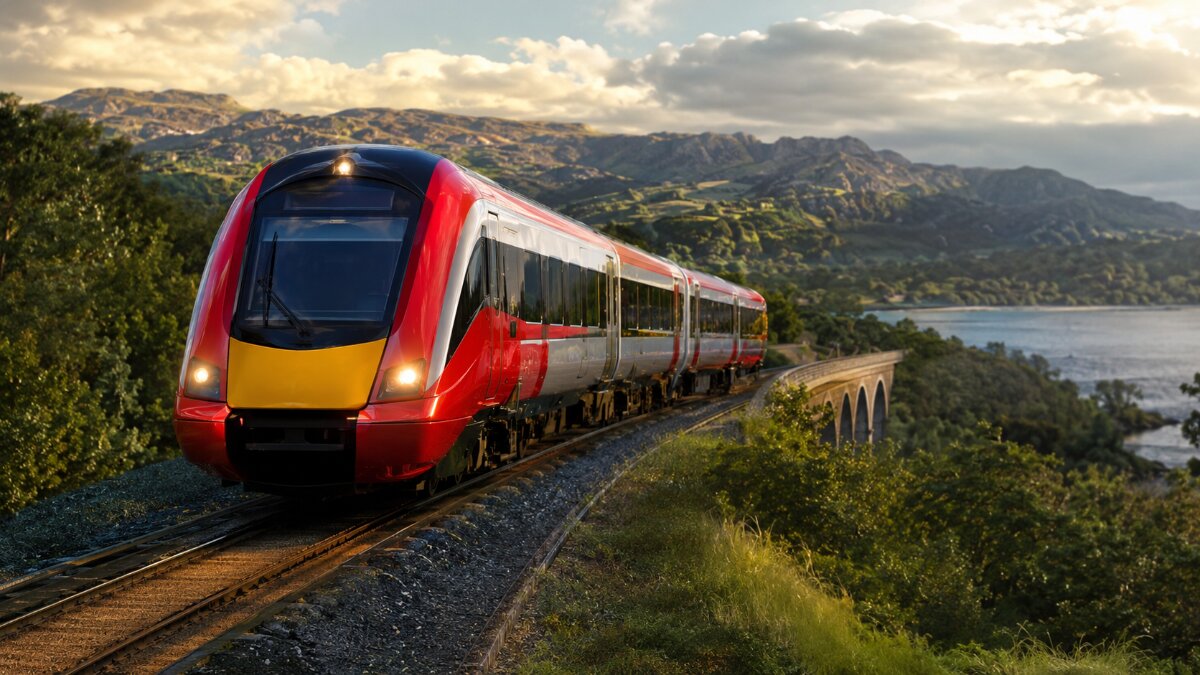
Image generated with Ai
Rail travel across Wales and neighbouring English border counties has entered a stronger but still fragile phase. Punctuality improved from 76% to 79%, while passenger cancellations fell from 5.3% to 3.9% after Network Rail completed every Wales-specific action required under a regulatory performance plan. Crucially, the improvement coincided with Transport for Wales passenger journeys increasing by 9.9% to 34.9 million. The network therefore carried rising demand more reliably, although weakened signalling and structures performance now threatens the durability of those gains.
Wales Rail Performance Improved While Passenger Demand Accelerated
The latest Office of Rail and Road assessment, issued on 14 July 2026, provides the clearest evidence yet that the Wales and Borders route has moved beyond its earlier period of severe performance deterioration.
Network Rail completed all 13 improvement activities assigned specifically to the route. Another 15 actions completed at Wales and Western regional level supported timetable modelling, severe-weather operations, incident analysis and operational capability. These changes followed a regulatory investigation that began in November 2023 and resulted in a formal finding that Network Rail had breached a condition of its network licence.
The intervention required Network Rail to develop an evidenced performance programme by August 2024 and implement it fully. Failure to produce an acceptable plan by the regulatory deadline could have triggered a £3 million payment. ORR confirmed full compliance on 1 June 2026 after enhanced monitoring, site visits, stakeholder engagement and review of the implementation evidence.
Advertisement
Advertisement
Wales and Borders Rail Performance and Demand Comparison
| Indicator | 2023–24 | 2024–25 | 2025–26 | Travel-industry significance |
|---|---|---|---|---|
| Trains arriving within three minutes | 71.4% | 76.0% | 79.0% | A 7.6 percentage-point recovery across two years improves itinerary predictability |
| Passenger cancellations | 5.9% | 5.3% | 3.9% | The cancellation rate has fallen by one-third from its 2023–24 level |
| Freight cancellations | 3.5% | Approximately 2.5% | 2.0% | Lower freight disruption can reduce operational conflicts on mixed-use corridors |
| TfW passenger journeys | Not stated in the latest comparison | 31.7 million | 34.9 million | Demand increased 9.9% while operational performance improved |
| TfW customer satisfaction | Not stated | 84.4% | 87.7% | Passenger perceptions strengthened alongside the measurable operational recovery |
| TfW on-the-day cancellations | Not stated | 5.4% | 3.9% | Operator-level cancellations also declined materially |
The ORR route measures and Transport for Wales indicators have different scopes and methodologies, so they should not be treated as identical datasets. Together, however, they demonstrate the same direction of travel: higher passenger volumes, improving punctuality, fewer cancellations and stronger customer satisfaction.
Regulatory Reform Changed Rail Governance Rather Than Only Repairing Tracks
The most important intervention occurred inside railway management.
Advertisement
Advertisement
Network Rail strengthened operational leadership, expanded train-control capability, established dedicated timetable-planning taskforces and improved the management of stranded trains. It also introduced more structured incident learning, expanded staff training and devolved additional operational authority from the regional level to individual routes.
That devolution matters because Wales and Borders is not a compact urban railway. It covers long-distance main lines, rural branches, coastal corridors, cross-border services and routes affected by severe weather, infrastructure constraints and interaction between several train operators.
The performance programme also introduced remote condition monitoring, trespass and route-crime prevention measures, preparations for the December 2025 timetable and operational planning for changing freight movements around Port Talbot. Further regional resources are scheduled to move closer to route level during summer 2026.
This creates a regulatory case study with significance beyond Wales. The measurable improvement emerged after governance, accountability and operational decision-making were redesigned, rather than from one isolated infrastructure project.
Cardiff, Newport, Swansea and Wrexham Form the Traveller-Facing Test
Network Rail’s Wales and Borders route connects Cardiff, Newport, Swansea, Wrexham and Shrewsbury, alongside coastal communities and rural destinations. The South Wales Main Line connects Swansea, Cardiff and Newport with London through the Severn Tunnel, while northern corridors link Wales with Chester, Crewe, Manchester, Liverpool and Birmingham.
How the Principal Rail Cities Are Affected
| City | Network role | Current development or demand signal | Traveller impact |
|---|---|---|---|
| Cardiff | National capital and principal rail hub | Cardiff Central handled an estimated 12.5 million entries and exits in 2024–25 | Better reliability affects major events, business travel, city breaks and connections throughout South Wales |
| Newport | Strategic interchange east of Cardiff | Cardiff Central–Newport was the busiest rail flow involving a Welsh station, with 1.1 million journeys | Improved performance strengthens London, Bristol, valleys and cross-border connections |
| Swansea | Western anchor of the South Wales Main Line | Additional and retimed services support travel between Cardiff, Swansea and West Wales | Greater reliability benefits coastal tourism, university travel and access to western holiday routes |
| Wrexham | Principal urban rail centre in north-east Wales | New service patterns have increased connectivity towards Chester, Crewe and the Bidston corridor | Better timetables support city breaks, football travel, business trips and access to North Wales |
| Shrewsbury | Major English border interchange | Timetable changes have expanded connections across the Heart of Wales and Cambrian corridors | Reliable transfers are essential for rural and cross-border leisure itineraries |
Cardiff carries the greatest immediate exposure. It was Wales’s busiest station during 2024–25, while the Cardiff–Newport corridor generated the country’s largest recorded station-to-station flow. Network reliability around these hubs therefore has an outsized effect on leisure passengers, MICE delegates, sporting-event crowds and travellers transferring towards London, Bristol, West Wales or the valleys.
Advertisement
Advertisement
Cardiff Central Improvements Could Convert Reliability Into Capacity
The regulatory recovery is arriving alongside plans to relieve passenger congestion at Cardiff Central.
Network Rail and Transport for Wales are progressing a programme covering larger and improved gatelines, a new southern entrance and changes intended to improve passenger circulation. The improvements address capacity constraints at a station that already handles more than 12 million annual entries and exits.
The proposed South Wales Relief Lines Upgrade represents another important capacity intervention. Its development is intended to support additional services, potential new stations and greater network capability between Severn Tunnel Junction and Cardiff.
For travel businesses, the relationship between infrastructure capacity and operating reliability is critical. More station space cannot compensate for unstable timetables, while better punctuality cannot fully support growth if platforms, entrances and interchange areas become overcrowded. The current programme increasingly treats both problems as parts of the same passenger journey.
The South Wales Metro adds further pressure and opportunity. Planned service patterns include four trains per hour between Cardiff and Aberdare, Merthyr Tydfil and Treherbert, up to 12 trains per hour between Pontypridd and Cardiff, and six trains per hour between Caerphilly and Cardiff. Higher frequency can expand visitor access, but it also raises the operational cost of infrastructure or signalling failure.
North Wales and West Wales Service Expansion Raises the Reliability Bar
Transport for Wales introduced another major timetable revision on 17 May 2026, increasing North Wales Coast services by around 50% and adding capacity across northern and western routes.
Advertisement
Advertisement
The changes included a combined through service linking Wrexham, Chester and Crewe, revised connections between Manchester Airport and Holyhead, and expanded direct travel opportunities between Liverpool, Chester and Llandudno. Contactless pay-as-you-go travel also reached 15 stations between Wrexham General and Bidston.
West Wales received additional summer services on holiday corridors, including extra trains between Carmarthen and Tenby and further Sunday operations during August and September. These changes directly connect rail performance with the visitor economy because they place more capacity into markets that experience pronounced seasonal demand.
The revised network is no longer attempting merely to restore its previous timetable. It is adding services, simplifying patterns and introducing new payment systems while carrying more passengers. Maintaining the recent reliability improvement under those conditions will provide the stronger test of whether the regulatory changes have become permanent.
Wales Tourism Growth Requires More Dependable Public Transport
The latest Welsh Government consumer research places Cardiff at the top of travel intentions throughout 2026. Swansea Bay is among the strongest summer destinations, while Llandudno and Colwyn Bay attract heightened winter interest.
Private cars remain the dominant method of reaching Wales, with rail identified as the principal alternative. This means a dependable railway has a strategic tourism role beyond passenger satisfaction. Better performance can influence whether travellers complete bookings, extend stays, attend ticketed events or select rail-based multi-destination itineraries.
Wales recorded 7.61 million domestic overnight trips and £2.24 billion of associated expenditure in 2024. It also received 53.25 million domestic tourism day trips generating £2.41 billion. Reliability improvements on the main urban and cross-border rail corridors can help connect this visitor expenditure with city centres, accommodation providers, attractions and regional transport networks.
Advertisement
Advertisement
Ageing Signalling and Structures Put the Performance Dividend at Risk
The positive passenger figures conceal a significant infrastructure warning.
Overall asset reliability finished 2.4% better than the final year of the previous control period and considerably ahead of the route’s target. However, that composite result combines seven separate asset categories with sharply different outcomes.
Track, electrical power and telecommunications reliability improved. Buildings, points, signalling and structures deteriorated. Signalling showed the largest decline at 4.5%, while structures deteriorated by 2.1%.
The wider Wales and Western region has also reduced its planned renewals programme because of inflation and other cost pressures. Structures renewals were significantly below plan, while forecast asset sustainability is expected to fall further than anticipated at the beginning of the current funding period.
An independent examination of outstanding structural and operational-property compliance issues is due to report in autumn 2026. ORR is also continuing oversight of longer-term measures involving weather resilience, overhead-line renewals and operating-model changes. The Wales-linked weather-resilience programme is not scheduled for completion until the end of 2028.
Why the New Regulatory Angle Matters to Travel Sellers
The combination of improving performance and rising demand offers more useful intelligence to the travel industry than a simple punctuality announcement.
Advertisement
Advertisement
A network can appear more reliable when fewer trains or passengers use it. That explanation does not fit the latest Wales evidence. Transport for Wales carried 3.2 million more journeys during 2025–26 than in the preceding year, introduced enhanced timetables and ended the year with Wales and cross-border punctuality reaching 81.3% in the final quarter. Meanwhile, on-the-day cancellations fell to 3.5% during that quarter.
This strengthens confidence in rail-inclusive city packages, event movements and multi-stop itineraries linking Cardiff, Newport, Swansea, Wrexham and English gateway cities. It may also improve the commercial viability of later departures and Sunday products, particularly where new timetable capacity supports the evening economy or seasonal tourism.
The opportunity nevertheless requires disciplined risk management. A declining structures or signalling portfolio can reverse operational gains quickly, especially during severe weather or intensive timetable operation. Travel organisers should therefore treat the regulatory recovery as a positive trend rather than a guarantee of disruption-free journeys.
Operational Takeaways for Travel Agents and Tour Operators
- Retain connection margins: Avoid reducing interchange time solely because annual punctuality has improved, particularly for rural branches, airport connections and last services of the day.
- Use city-specific planning: Cardiff carries the largest passenger volumes, while Newport functions as a high-value interchange and Wrexham serves expanding northern connections.
- Check May 2026 timetable changes: Calling patterns, departure times and connections with other operators may differ from earlier published itineraries.
- Build disruption alternatives: Maintain coach, bus or later-train contingencies for group movements, sporting events and MICE programmes.
- Monitor infrastructure work: Cardiff Central improvements, South Wales Relief Lines development, level-crossing interventions and Metro construction can create both temporary disruption and long-term capacity benefits.
- Protect seasonal itineraries: West Wales summer services and North Wales tourism routes may face concentrated demand during weekends and school holidays.
- Separate operator and infrastructure risk: Some cancellations arise from train availability or staffing, while others result from track, signalling, weather or structural problems.
- Retain Delay Repay documentation: Ensure travellers keep tickets, reservation records and actual arrival information when delays exceed compensation thresholds.
Forward Outlook
The Wales and Borders recovery represents one of Britain’s more measurable examples of rail regulation producing operational change. The performance plan strengthened governance, improved timetable preparation and reduced cancellations while Transport for Wales carried substantially more passengers.
The next phase will determine whether that recovery becomes a durable tourism and business-travel asset. Cardiff Central capacity work, North Wales service expansion, West Wales seasonal trains and South Wales Metro frequencies create meaningful growth potential. However, constrained renewals, deteriorating signalling and structural compliance issues could erode confidence if they translate into new failures.
For the United Kingdom travel market, the strategic lesson is clear: regulatory intervention can improve rail delivery, but governance reform must be supported by sustained asset investment. Wales now has an opportunity to convert stronger railway performance into increased visitor dispersal, better city connectivity and more competitive car-free tourism. Its success will depend on whether the network can protect the performance gains while carrying still greater demand.
Advertisement
Advertisement