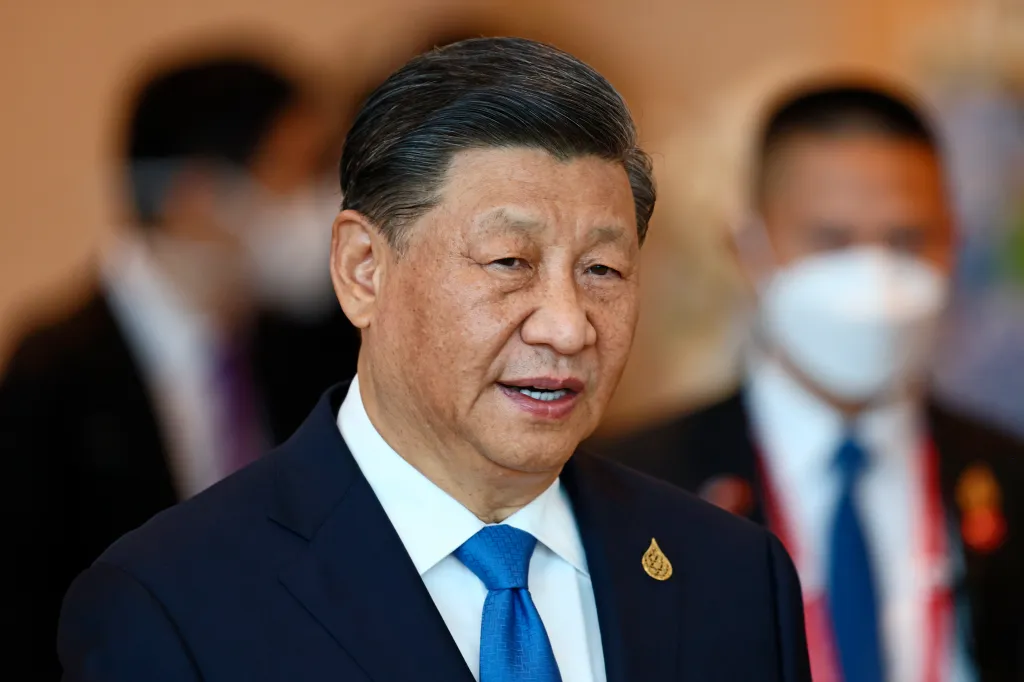
President Xi Jinping of China has emphasized traditional alliance relationships through his successful ceremonial visit to North Korea June 8-9. In this case, “traditional” means commitment to communist solidarity. During the long Cold War, communism rightly was regarded as a dangerous expanding ideological, military and political threat.
Today, once-feared communism has failed on a global scale. China currently struggles to maintain the iron grip of the communist party politically, while encouraging foreign investment and market economics. That is a very tough balancing act, and has encouraged Beijing’s substantial ongoing military expansion.
North Korea remains a close ally, rigidly committed to traditional communist tyranny. From the era of Joseph Stalin, North Korea was closely tied to the Soviet Union. The Ukraine war has provided fresh opportunities for collaboration between Moscow and Pyongyang. Xi’s current trip has been intended in part to reinforce Pyongyang ties to Beijing.
Limited communication between North and South Korea collapsed in 2019. In 2022, North Korea harshly rejected a South Korean aid offer. South Korea’s then-President Yoon Suk-yeol initially made the suggestion during his inauguration in May.
Yet the reality is undeniable that North Korea is in serious economic difficulty. The Covid-19 pandemic brought the long-apparent economic deterioration to a crisis point. Trade and wider interchange with China contracted, while long-term economic sanctions under the United Nations continued slowly to strangle commerce.
One small bright spot in this picture is the successful donation to North Korea in May of agricultural and medical supplies from Jeju province, a resort area in South Korea. The goods were shipped via China. Economic necessity may open further opportunities for such strictly humanitarian assistance.
Belligerence remains the default Pyongyang position. That reality of North Korea is unchanging. But Pyongyang also at times acts inconsistently, sometimes erratically. In 2013, the regime declared a “state of war” with South Korea and abruptly abrogated the 1953 armistice that ended the Korean War. Yet, accommodating moves followed. President Donald Trump conducted meetings with Kim Jong-un, although no fundamental progress was achieved.
We should emphasize coordination with other nations. In 2017, Japan reenergized fitful security discussions, including Australia, India and the United States. Dubbed the Quad, this security dialogue is important.
While patterns are complex, China’s investment in South Korea grows, while North Korea remains a costly dependent of Beijing. President Xi visited Seoul in 2014. He finally visited North Korea in 2019, followed by the current visit
The brutal Korean War of 1950 to 1953 is essential background. President Harry Truman decided to support the United Nations’ defense against North Korea’s invasion of South Korea.
President Dwight Eisenhower achieved an armistice in the costly war. A crucial factor was devastating unrestrained bombing of North Korea. Pyongyang’s hostility today directly reflects this experience.
Democratic change culminated in election in 1998 of President Kim Dae-jung, heroic opponent of dictatorship. In 2000, he received the Nobel Peace Prize. During the earlier dictatorship, Kim survived imprisonment and at least one attempt to kill him. Periodic turmoil since 1998 has reinforced South Korea democracy.
U.S. leaders should emphasize collaboration with allies, underscore commitment, and continue encouraging South Korea leadership. The Biden administration rightly emphasized very strongly working with our principal long-established allies. This included very visible military cooperation.
Powerful comprehensive ties with South Korea from the Korean War, greatly reinforced during the Vietnam War, is a lynchpin.
Asia overall provides remarkable positive testimony to the long-term growth of democracy.
Arthur I. Cyr is author of “After the Cold War – American Foreign Policy, Europe and Asia” (NYU Press and Palgrave/Macmillan). Contact acyr@carthage.edu