A new U.S.-China framework aims to contain tensions rather than eliminate them.
In a nutshell
- Trump has hinted to Xi that arms sales to Taiwan could be used as leverage
- Fresh tariffs loom, but stability is likely to hold firm
- Iran remains a major wildcard for U.S.-China ties
- For comprehensive insights, tune into our AI-powered podcast here
United States President Donald Trump’s May 2026 visit to Beijing was neither a diplomatic triumph nor a clean end to the trade war his first administration launched nearly a decade ago. Instead, it delivered a pragmatic new framework built around the phrase “strategic stability.” What this new stability means will vary between officials in Washington and Beijing, but at a minimum, both sides aspire to avoid open conflict and maintain regular dialogue.
Throughout the rest of 2026, changes in U.S. trade policy will likely have the greatest direct effect on the relationship. Global events may shape it indirectly, though their influence will remain unpredictable. Even so, the new framework of strategic stability appears set to endure for the rest of the year, including through Chinese President Xi Jinping’s visit to the White House in late September.

A familiar script in Beijing
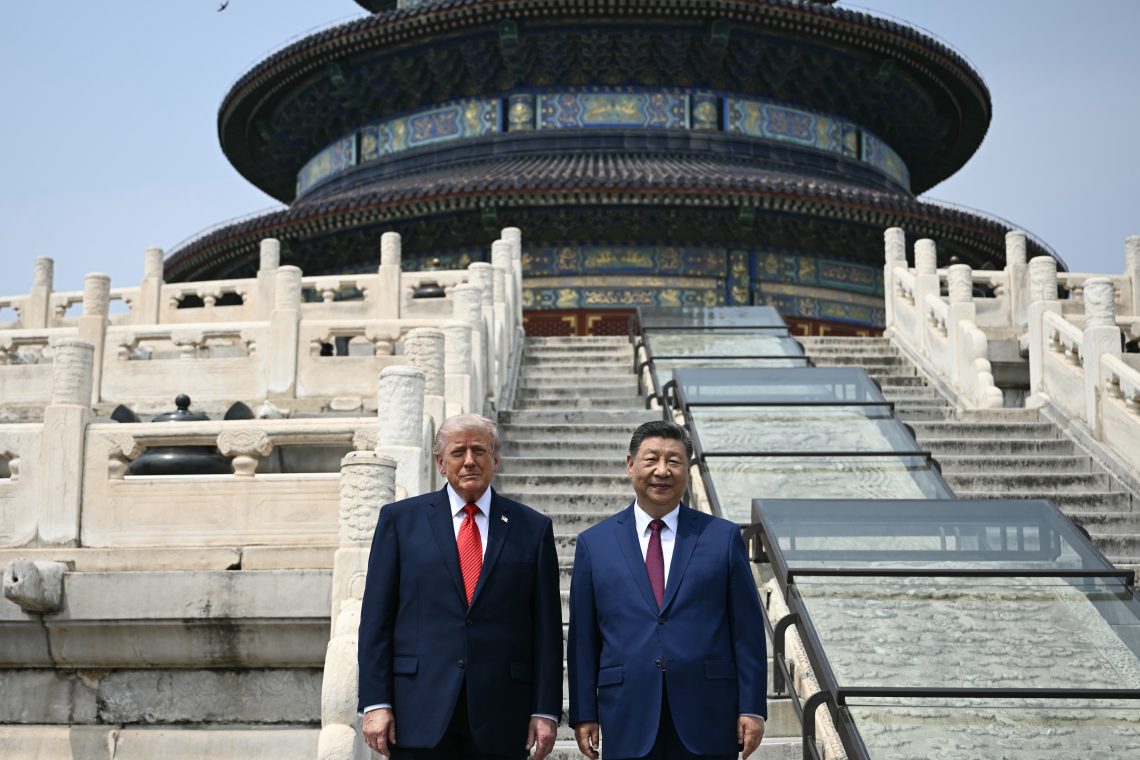
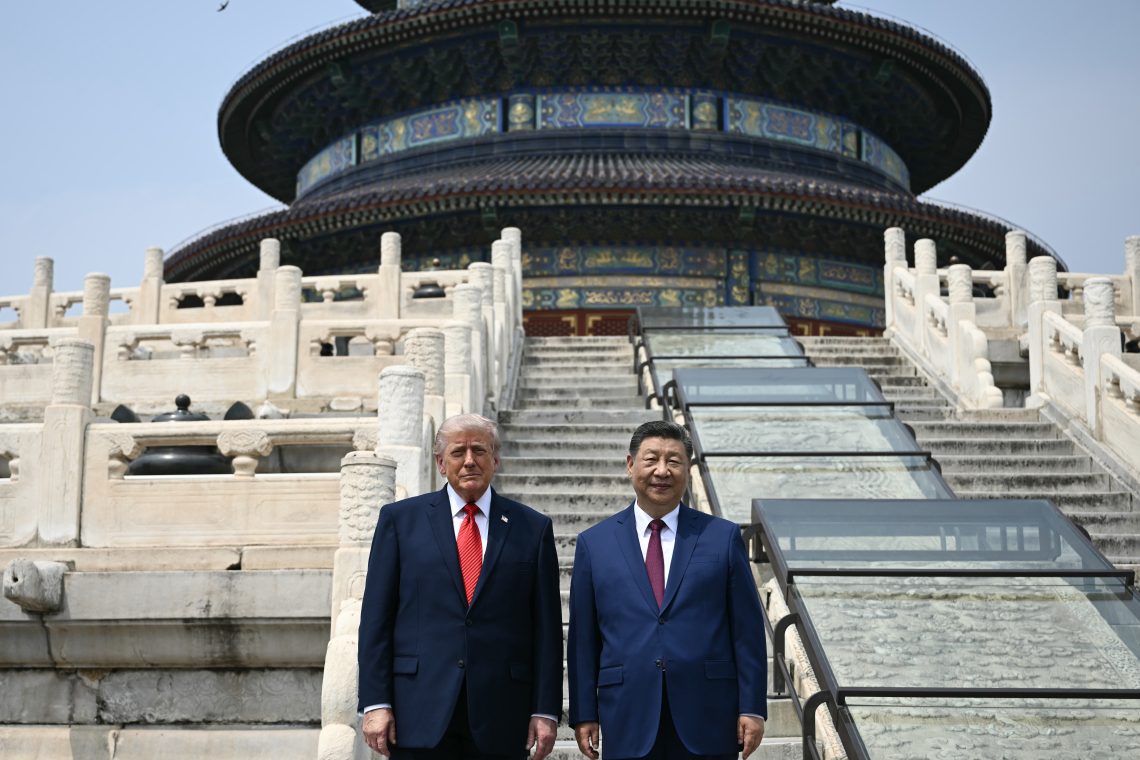
President Trump visited Beijing from May 13 to 15 – his second trip to China as president and the first by an American president since his own visit in November 2017.
That earlier trip was accompanied by a massive business entourage of 29 American executives with deep stakes in China. This time, President Trump brought a more streamlined group of 18. Major announcements again focused on transportation, energy and agriculture. In 2017, deals exceeded $250 billion, including 300 Boeing aircraft, $5 billion in soybean purchases and over $100 billion in energy investments. This year’s highlights included the purchase of 200 Boeing planes and roughly $50 billion in expected agricultural sales.
The U.S. and China have now agreed to create two new high-level bodies: a Board of Trade and a Board of Investment, both to be led by senior members of President Trump’s Cabinet. While details remain limited, the structure echoes past high-level economic dialogues between the two powers.
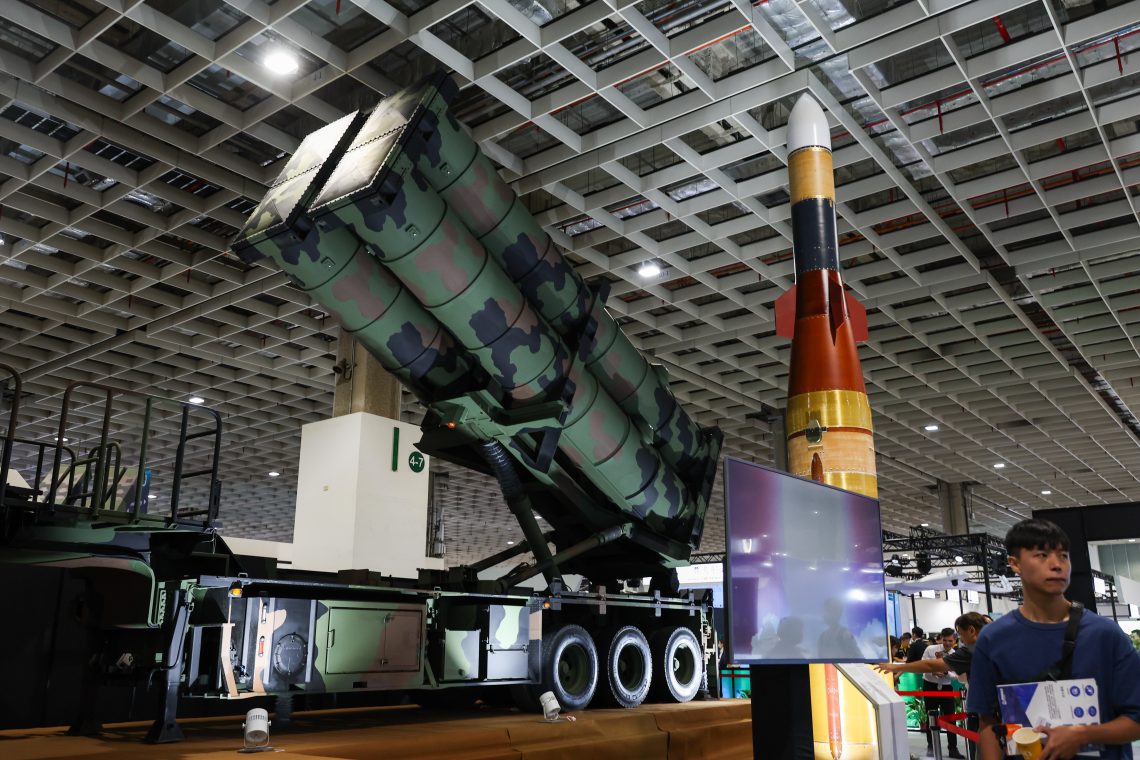
Foreign policy issues were also discussed. Presidents Trump and Xi reaffirmed that Iran must never acquire a nuclear weapon, that the Strait of Hormuz must reopen and that North Korea must denuclearize. President Xi also voiced concerns over Japan’s military reforms. On Taiwan, Mr. Trump stated afterward that U.S. policy on cross-Strait relations had not changed. He also indicated that arms sales to Taiwan could serve as leverage and that he might speak directly with Taiwan’s president – remarks that depart from traditional U.S. policy guardrails.
The Taiwan situation had grown even more delicate just days earlier, when the island approved a supplementary defense budget to increase purchases of American weapons.
New boards, old challenges
The new boards of trade and investment, while still in development, will become the primary platform for U.S.-China economic dialogue. Treasury Secretary Scott Bessent will lead the Board of Investment, while U.S. Trade Representative Jamieson Greer will head the Board of Trade. The investment board is expected to address Chinese investment in the U.S. in non-sensitive sectors. This effort overlaps with the Treasury-led Committee on Foreign Investment in the U.S. (CFIUS), which continues to scrutinize deals for national security risks.
President Trump has blocked more Chinese investment than any of his predecessors by aggressively using CFIUS laws. While Chinese investment in the U.S. has been declining for years, this new board could help define which sectors remain open. Nonetheless, navigating these waters remains a challenge, as opinions on Chinese investment and capital diverge sharply among American states, companies and Washington policymakers.
Secretary Bessent is also expected to follow up with his counterparts on the October 2025 agreement, which requires the suspension of export controls and the issuance of licenses for the export of various rare earth minerals. This issue could quickly become a major test for the new investment board.
The Board of Trade is expected to focus on non-sensitive goods, likely including the transportation and agricultural products China is already committed to buying. However, the definition of “sensitive” goods has expanded under the Trump administration, which has cited national security to impose tariffs on automobiles, metals, wood, semiconductors and more. In practice, non-sensitive goods may simply be those spared from the next wave of tariffs expected later this year.
The new boards closely resemble the former U.S.-China Joint Commission on Commerce and Trade (JCCT), which functioned for nearly 30 years. During President Trump’s first year in office, the JCCT was replaced by the U.S.-China Comprehensive Economic Dialogue (CED). Yet the CED quickly gave way to trade negotiations after Washington initiated its first Section 301 investigation into Beijing’s unfair trade practices and imposed tariffs on many imports from China. (Section 301 is a U.S. trade law that allows for the investigation and response to unfair trade practices by other countries.) These tariffs are still in effect today.
More on the U.S.-China rivalry
Challenges ahead
U.S. trade negotiations with Mexico and Canada, through the USMCA, will likely address more Chinese products and manufacturing in these countries. Two separate Section 301 investigations – one focused on structural excess capacity and the other on forced labor – are set to affect all trading partners, including China. These investigations aim to replace the global tariffs initially imposed by Mr. Trump under the International Economic Emergency Powers Act and later adjusted under Section 122 of the Trade Act of 1974. The investigation into forced labor might specifically target Chinese products and manufacturing, especially those routed through third countries like Vietnam.
Unforeseen challenges often emerge from foreign policy flashpoints, particularly tensions with Iran and issues in the Indo-Pacific. During President Trump’s trip to Beijing, Chinese officials clearly indicated that they are not inclined to assist in resolving regional matters, such as the closure of the Strait of Hormuz or North Korea’s weapons program. But unforeseen events could still affect either the U.S. or China in ways that shake the stability of their relationship.
Scenarios
Most likely: Limited Trump-Xi engagement, bureaucratic stability
U.S.-China relations operate on two levels: the leadership level and the bureaucratic level. President Trump prizes personal rapport with counterparts like President Xi and has shown he is willing to travel to cultivate it. Despite multiple multilateral summits this year, the two leaders are expected to meet only once more – in late September in Washington. The results of this meeting are expected to be minimal, as we are seeing that Washington is gaining less from its interactions with President Xi.
High-level officials from Washington and Beijing will continue to meet on the sidelines of these events – such as the United Nations General Assembly in September, the East Asia Summit and APEC Leaders’ Meeting in November and the G20 Leaders’ Summit in December – to reinforce strategic stability. They will also work through the new trade and investment boards.
Before the end of the summer, the U.S. will impose new tariffs affecting U.S.-China trade, but they are unlikely to disrupt this strategic stability. The boards will push for better market access for American exporters, a theme likely to feature at the September summit.
Additional U.S. weapons sales to Taiwan are also likely later this summer – well before President Xi’s trip to Washington. Beijing has historically opposed U.S. weapons sales to Taiwan, and the U.S. has continued to make new sales anyway. The timing suggests the administration believes it can proceed without seriously undermining the new framework.
Wildcard: Iran crisis tests Washington-Beijing ties
Foreign policy weighs heavily on Washington-Beijing relations because it is the hardest to predict. The immediate risk of a full closure of the Strait of Hormuz has eased, with limited shipping now flowing through the waterway. However, any renewed disruption could further drive up global oil and gas prices – especially with electricity demand surging during the peak summer season.
Before Mr. Trump’s Beijing trip, the administration announced new sanctions on Chinese oil refineries buying Iranian crude. Beijing responded by instructing its companies to ignore them. It is unlikely that these events were merely a show before the leaders’ meeting, and they could once again become a point of conflict in U.S.-China relations. However, this will also depend on the developments between Washington and Tehran.
Both Washington and Beijing appear cautiously optimistic about their bilateral relationship for the remainder of 2026. The new strategic stability framework is designed to absorb shocks. With President Xi’s visit scheduled just before the U.S. midterm elections in November, steady ties with the world’s second-largest economy could do well for a Trump administration that has gotten itself involved in so many international affairs.
Contact us today for tailored geopolitical insights and industry-specific advisory services.

Sign up for our newsletter
Receive insights from our experts every week in your inbox.