When Jimmy Carter formalized relations with communist China in 1979, Ronald Reagan denounced the measure as a betrayal of our ally Chiang kai-shek (the leader of the Kuomintang who had fled China for Taiwan in 1949 and had died in 1975). Of course, Reagan would be elected president the following year and in 1982, despite his anti-communist rhetoric and reputation, he would agree with China to scale back military assistance to Taiwan.
United States relations with communist China had actually been established by Richard Nixon and Zhou Enlai (Mao’s top assistant) in 1972. But Carter formalized the arrangement and relegated the status of Taiwan. As China claimed Taiwan as its own, the United States declared that it “does not support” Taiwan independence. To this day, China still claims Taiwan as its own and the United States maintains ambiguity. China seeks to lessen this ambiguity by urging the United States to proclaim it “opposes” Taiwan independence.

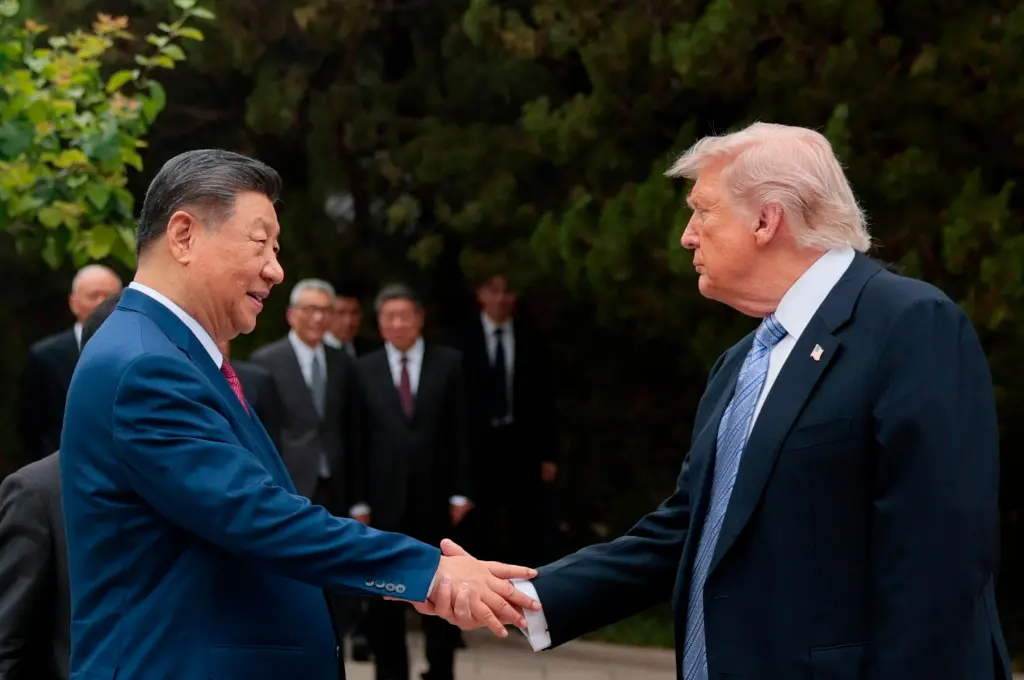
This was the goal of President Xi Jinping of China when hosting President Donald Trump this past month. Trump didn’t yield to Xi’s aims. But whereas Xi had stated before the summit that Taiwan had to be at the top of the agenda, Trump would say nothing at all about Taiwan during the summit. In terms of diplomacy (or lack of), this has to be considered a victory for Xi.
Indeed, though Trump did not stipulate Xi’s request with a proclamation that he “opposes” Taiwan independence, he didn’t reject it either. Moreover, Trump reassured Xi by continuing the official policy that the United States “does not support” Taiwan independence. Trump has also held up Taiwan’s 13 billion dollars in military purchases from the United States. Considering how Trump refers to Xi as his “friend” in public utterance, the future (or near future) of Taiwan independence looks bleak.
But Trump will not be president in another two and a half years. By then, the next president might support Taiwan. Or maybe China will have a new leader. Change affects even the communist world. What’s important (and overlooked) is the irony of the dynamics between China and Taiwan.
The KMT is now the opposition party in Taiwan and supports closer ties to communist China. Taiwan is now led by President Lai Ching -te and his Democratic Progressive Party (DPP). And the DPP is pressing Trump on its military purchases from the United States. How did the KMT, once in the warm embrace of the anti-communist Ronald Reagan, become friendly with the communist behemoth in China? That Reagan kow-towed to China had a lot to do with it.
But it’s actually more complicated. The KMT still refers to Taiwan as China (and refers to itself as the Chinese Nationalist Party). And the KMT dreams not of an independent Taiwan (as advocated by President Lai), but of a China restored to its pre-communist mainland on the continent of Asia. It’s a pipedream. Then again, Chiang kai-shek’s dream of hanging on to China was also a pipedream.
In the meantime, the United States should honor its commitment to Taiwan’s military purchases and renounce the communique entered into by Ronald Reagan in 1982. Who lost China? In the aftermath of the communist revolution in 1949, this question was often asked in the United States, a question made all the more accusatory in the McCarthy era. Should Trump not cease appeasement of communist China, diplomats might pose a new and by no means rhetorical question: Who lost Taiwan?
John O’Neill is an Allen Park freelance writer.