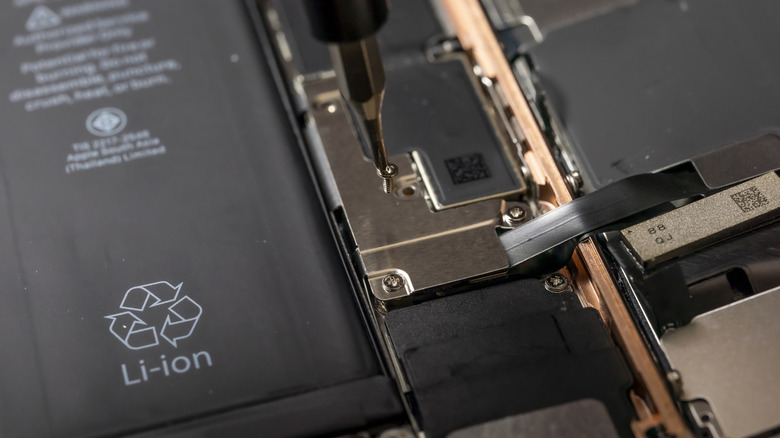
Another year, another iPhone: Apple’s iPhone 18 Pro series features a few new tidbits on a broad, familiar foundation. Those new tidbits might make the difference in convincing shoppers to upgrade, but early numbers indicate demand for the iPhone 18 Pro to be slower than usual. But let’s talk about that boring foundation — specifically, the batteries in those devices that make phones so mobile — and let’s also bring in a rival phone maker that just left the North American market: OnePlus.
The SIM-card variant of the iPhone 18 Pro has a battery with a capacity of 4,056 milliampere-hours, while the SIM-equipped iPhone 18 Pro Max goes with a 5,391 mAh pack. These numbers are a small bump up from the iPhone 17 Pro series, and they’ll likely be slightly higher in markets like the U.S. where Apple sells eSIM-only phones — but they’re nothing mind-blowing, especially as you’re paying $1,199 or more for the device. So, why not pay less? OnePlus has just launched new entries in its budget lineup, and one of them is the OnePlus N6: It has an 8,000 mAh battery and, in India, it sells for about US$250. If you haven’t been introduced to silicon-carbon anodes yet, get ready to find out.
What the iPhone 18 Pro’s battery is missing
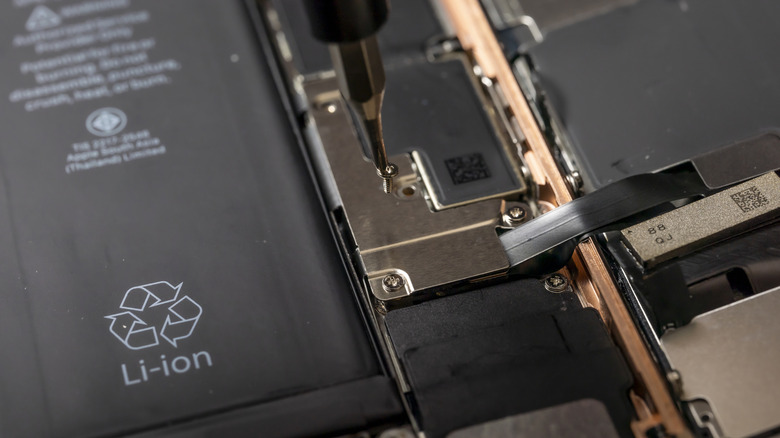
As people continue to adopt electric vehicles and smartphones in their lives, researchers have been making strides on lithium battery technology to extend their life off the charger. Silicon-carbon anodes (the part of the battery that takes in charge) have enabled a whole wave of Chinese Android phones with energy capacities ranging from 6,000 milliampere-hours all the way up to 10,000 mAh — and none of them look like bricks.
So, why silicon-carbon? Well, carbon (in the form of graphite) has been the anode material of choice in lithium-ion batteries as it’s a stable substance, especially in its role as an electrode processing a flow of electrons. However, its energy storage has left engineers wanting, especially when compared to silicon which has 10 times the capacitance of graphite. The problem is that silicon is more volatile and prone to expansion when lithiated — and a lot of us know how risky it is being around a swollen battery ready to pop.
The solution? Take the best of both worlds and go hybrid. Silicon-carbon anodes still pose a greater volatility risk on paper, but we haven’t caught wind of a mass recall involving devices with such batteries. At the same time, consumers are getting more energy in their phones and more time unplugged.
How does the iPhone 18 Pro’s battery life compare against OnePlus?
Apple and Google generally don’t do battery discourse in public, but the general sense as to why they’ve stayed away from silicon-carbon in their phones seems to be tied to a lack of confidence. That said, Samsung recently made its first silicon-carbon integration with the launch of its Galaxy Z Fold 8 series of foldable phones. Given the tattered reputation around batteries it earned during the Galaxy Note 7 recall saga in 2017, we’ll have to see if smooth sailing here is a prelude to proliferation at its rivals.
Back to OnePlus where we should note that the N6 is just one of several phones with a silicon-carbon battery. The OnePlus Nord 6, costing the equivalent of US$500, goes absolutely ham with a 9,000 mAh cell. You might be wondering, however, just how well that translates into real-world usage. For its part, Apple attests in its EU energy labels for the iPhone 18 Pro and Pro Max that they’ll last up to 52 and 62 hours, respectively. Weirdly, OnePlus is advertising three days or more with the 7,500 mAh reservoir on the N6 and only two-and-a-half days on the Nord 6, likely due to a more power-hungry applications processor. That said, in internal testing with a continuous stream of YouTube videos, the N6 is rated to last 24.8 hours while the Nord 6 was marked down at 26.9 hours.