While most people think of coffee as a quick way to wake up, its impact on the human body runs much deeper than a simple caffeine spike.
Researchers in Ireland recently tracked 62 adults through a two-week “coffee quit” period, followed by a structured return to their daily java rituals.

Their study showed that regular coffee consumption – whether you drink it caffeinated or decaf – fundamentally reshapes the microbial landscape of the gut.
Quit coffee drinking for two weeks
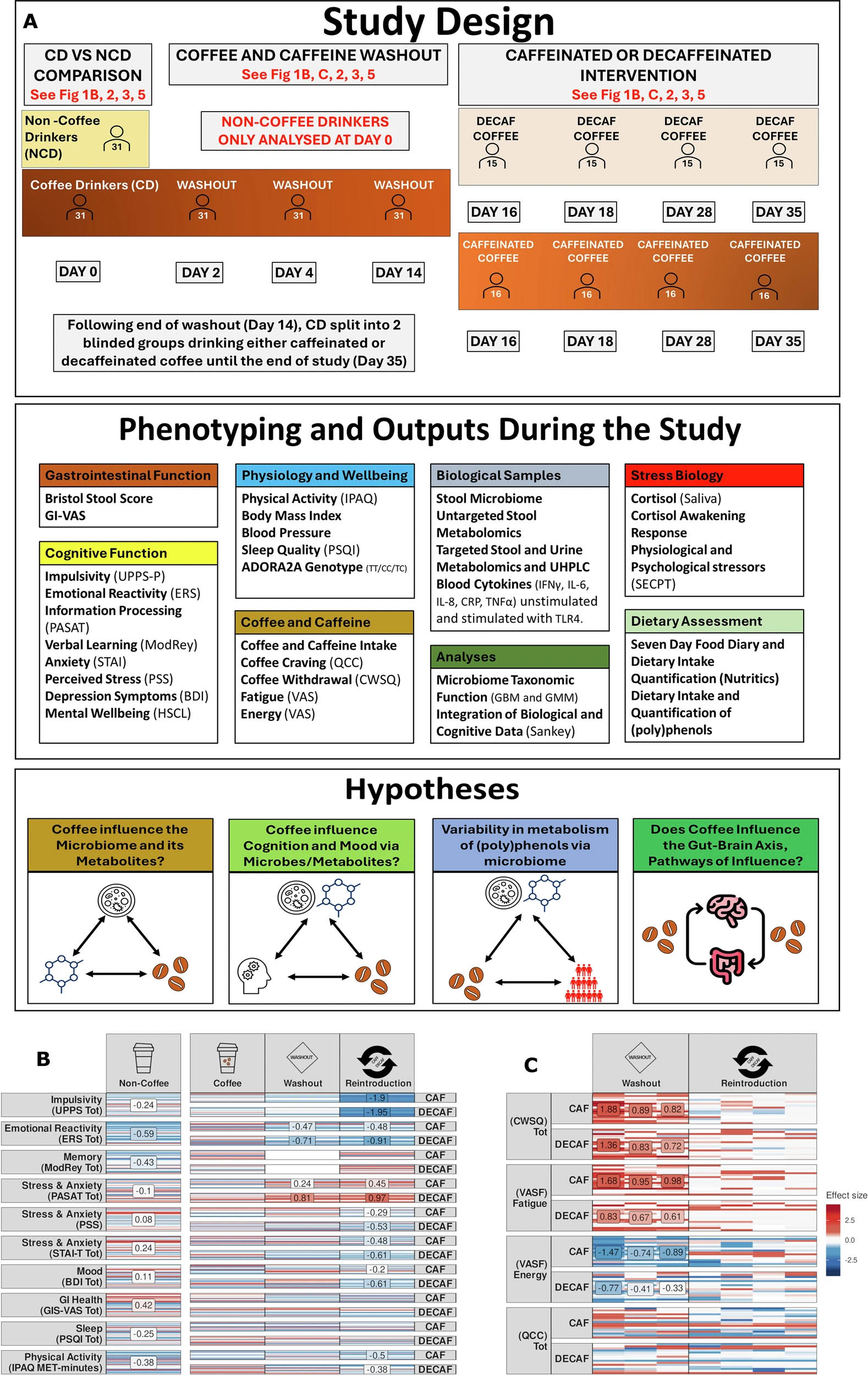
A team led by John F. Cryan, Ph.D., at University College Cork (UCC) recruited 62 healthy adults in two groups: 31 daily coffee drinkers and 31 people who normally avoided it.
They started by comparing the two groups across mood, memory, blood markers, stress hormones, gut bacteria, and the small molecules those bacteria produce.
Then the coffee drinkers gave it up entirely for 14 days. Half went back to caffeinated coffee afterward, the other half to decaffeinated, and the study continued for three more weeks. The point was to separate caffeine’s effects from everything else in the cup.
Two different microbial maps
At the start, the gut microbiome of regular coffee drinkers looked noticeably different from non-drinkers. Some bacterial species thrived in coffee drinkers. Others were more common in people who skipped it.
The overall variety of bacteria barely budged. What changed were the specific players – which microbes were abundant and which were rare.
A recent study tied similar coffee-driven microbial patterns to short-chain fatty acid production in the colon, suggesting coffee leaves chemical traces well beyond the morning cup.
14 days of “coffee quit”
After 14 days off, several biological measurements moved enough to get the scientists’ attention.
The biggest change was probably the fact that blood pressure levels dropped in coffee drinkers during the 2-week abstinence period.
Next, caffeine and its breakdown products, plus a coffee-linked compound called hippuric acid, fell sharply in stool samples, as was expected.
Certain gut bacteria that had thrived on coffee disappeared when the habit stopped. At the same time, a microbial molecule that coffee had suppressed bounced back.
That molecule, studied elsewhere, appears to help seal the gut lining and reduce inflammation.
Mood, memory, and impulses
Coffee drinkers scored higher on impulsivity and emotional reactivity at the baseline measurement, while performing worse on memory tests than non-drinkers. After two weeks off coffee, those scores fell back to the baseline.
Drowsiness and headaches eased after the first few days of coffee abstinence, and energy began creeping back up to normal levels.
The impact of “coffee quit” on memory was true outlier of the experiment. When participants returned to drinking coffee, only the decaffeinated drinkers showed clear gains on a verbal memory task; the caffeinated group’s memory did not improve.
Inflammation reverses course
At the start, coffee drinkers had lower signs of inflammation in their blood and higher levels of an immune protein that calms the inflammatory response.
Two weeks without coffee reversed both. Inflammation markers climbed back up.
When they returned to coffee, the pattern split. Caffeinated coffee brought those markers back down.
Decaffeinated coffee nudged them slightly upward instead – suggesting that caffeine and the other compounds in the bean pull the immune system in different directions.
Caffeine alone explains less
Reintroducing decaffeinated coffee triggered most of the same microbial changes as caffeinated coffee. Certain bacterial species climbed higher within three weeks in both groups. Plant compounds in the stool rose as well.
Caffeine drove some changes – morning cortisol, anxiety scores, certain chemical signatures in urine – but it could not account for the rest. The answer lies elsewhere in the cup.
Coffee contains hundreds of plant compounds beyond caffeine – acids, roasting byproducts, and other polyphenols – that survive digestion long enough to reach the colon, where bacteria break them down further.
An earlier paper showed coffee’s strong connection to a gut bacteria that produces beneficial fatty acids, independent of caffeine. Cryan’s team adds the molecules along the way.
GABA goes missing
Out of all the information gained from this experiment, the scientists agreed that one thing stood out most to them.
GABA, the brain’s primary calming neurotransmitter, remained at lower levels in the stool of coffee drinkers than in non-drinkers. So did indole-3-propionic acid, a microbial product recently linked to better cognition in older adults.
Both molecules come from microbes as much as from the brain. Stool levels are not brain levels. What circulates in the gut may carry a different signal from what eventually reaches neurons.
Limitations of the “coffee quit” study
Sixty-two healthy adults is a meaningful sample, but not large enough to generalize to different health profiles or clinical populations.
Several behavioral measures, including impulsivity and memory, came from self-reported questionnaires rather than direct observation.
Coffee consumption and human health
Until this study, no one had charted the full arc of coffee consumption and its impact across the human gut, immune system, and cognitive well being.
Taken together, these findings prove that coffee consumption does much more than provide a simple jolt of energy.
By demonstrating that both caffeinated and decaf coffee drive significant microbial and metabolic shifts, the scientists showed that the true value of coffee beans lies in their ability to modulate the gut-brain axis.
This study positions coffee as a legitimate, accessible dietary tool for managing stress and enhancing mental clarity.
What we drink shapes how we feel, and coffee stands out as a powerful ally in the pursuit of long-term cognitive health.
The study is published in Nature Communications.
—–
Like what you read? Subscribe to our newsletter for engaging articles, exclusive content, and the latest updates.
Check us out on EarthSnap, a free app brought to you by Eric Ralls and Earth.com.
—–