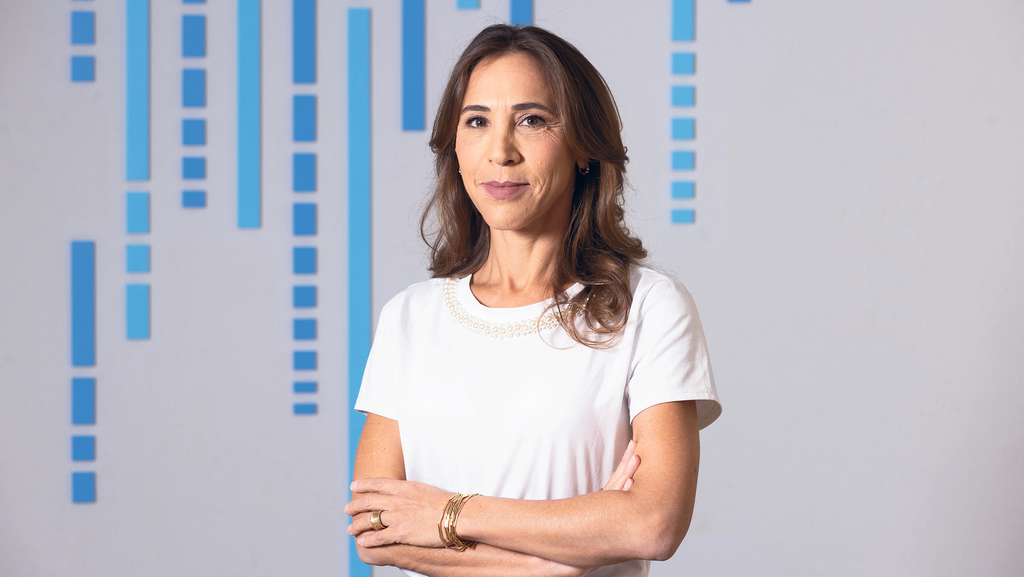
“We keep repeating the same cycle: People see newspaper headlines or hear friends talk about where they invested, they jump in when prices are already high, fail to see sufficient appreciation, experience a downturn, exit at a loss, and say, ‘I’m done playing the market,’” says Inbal Polak, Director of the Investment Department at the Israel Securities Authority.
“We have to change this narrative. The stock market isn’t meant to be a place for ‘playing games’ or a place people go solely to ‘get rich.’ Its primary purpose is to ensure our money doesn’t lose its value over time. If you build the right portfolio, investing becomes simply a tool to achieve concrete life goals.”
Polak has been trying to break that cycle since joining the Authority in 2021. She is now marking five years in the role, following a predecessor who served for 12 years. With a professional background spanning investment management and analysis at banks, credit-rating agencies and startups, she arrived with a clear agenda: to democratize investing.
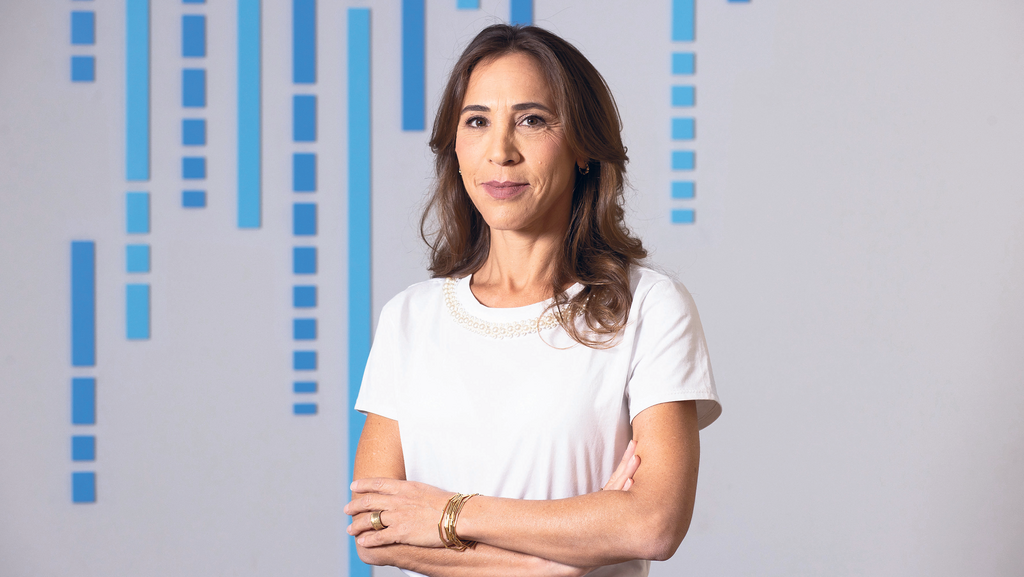
“I never accepted the notion that only wealthy investors could access the best deals, investments in private companies that lead to an exit, or access to hedge funds,” she says.
That philosophy is reflected in one of the Authority’s recent initiatives: a reform that would allow the general public to access new funds investing in tangible assets such as real estate and infrastructure. Until now, such investments have largely been reserved for qualified and institutional investors.
“To date, what have we been selling the average investor? Nothing but daily liquidity: You rise with the market and fall with it,” Polak says. “Without access to assets uncorrelated with the stock exchange, their only way to protect themselves was to exit the market entirely, but market timing is something no one can truly master. That is why we must expand the tools available to them and enable risk diversification.”
Yet the same technology that has made investing accessible with a few taps on a smartphone has created a new set of problems. Financial literacy may be rising, but so is the volume of aggressive marketing, anonymous investment commentary, scams and manipulation on social media.
As the head of the department responsible for this area, Polak has taken a leading role in trying to bring greater oversight to the online financial ecosystem. Proposed legislation would tighten the rules governing investment-related content, including measures concerning anonymity and licensing. The proposals have generated significant criticism online.
“Had it not been for ‘HaSolidit’s’ blog, which I read back when I was a student, I might never have become a financial journalist,” she says. “She is a prime example of an influencer who generates immense value by fostering financial literacy and making knowledge accessible. Yet, at the same time, there are dangerous phenomena online.”
“We’ve been dealing with this for a decade, but the issue recently exploded into the public consciousness because of our proposed legislation,” she says. “You have to understand: The current investment advisory law was enacted in 1995. It was designed for an era when a person would wake up, go to a bank branch, take a number and sit across from an adviser to sign off on a personalized ‘needs assessment’ process.
“That old model prioritized full customization. To allow a professional today to offer general advice, saying publicly, for instance, ‘In my opinion, this stock is overpriced and should be sold,’ without signing a contract, we had to grant a series of exemptions and mandate endless disclaimers. But the market took those complex disclaimers, condensed them into four words, ‘Not an advisor, not giving advice’, and effectively absolved itself of liability.
“The people doing this aren’t licensed or regulated entities, yet social media has supercharged the phenomenon.
“I want to emphasize: This isn’t inherently a bad thing. This represents an important democratization of knowledge that fosters financial literacy, and this content has generated significant market interest. However, a problematic aspect is intensifying: Algorithms present users with information wrapped in a professional veneer, appearing academic and well-founded, when in reality, it is anything but.
“We encounter the victims, investigations, complaints and people who have lost their entire savings. Not long ago, I was even impersonated. A Facebook page was created using my photo, where ‘I’ supposedly promised a 30% return. Staff members here at the Authority even ‘liked’ it without realizing what it was.
“Beyond impersonation, thousands of people are harmed by artificial hype and stock manipulation schemes. A stock soars, and then everything collapses in an instant. Such cases are constantly occurring around us, and we must protect the public from them.
“Our bill expands the scope of permissible activity, allowing for the provision of non-personalized advice.”
Given your demand for licensing and the ban on anonymity, aren’t you concerned that this will kill off online discourse?
“First and foremost, I want them to take responsibility, which means obtaining a license and acting in the public interest. What interests us is the disclosure of hidden agendas that create a potential for conflicts of interest.
“We ask ourselves: Why do some of them not identify themselves? If their intentions are good, what are they afraid of?
“Secondly, we’ve examined dozens of cases, and there are clearly vested interests involved. Not everyone receives direct payment for a blog post, but there is some form of indirect compensation. They aren’t doing this out of the goodness of their hearts. Sitting down every day to write about securities is a profession.
“Engaging in investment advice requires a license to ensure that the interests of the intermediary and the client are aligned. Ultimately, the entire capital market is built on trust.”
So, do you expect leading content creators like “HaSolidit” or Tamir Mandowski to obtain an investment advisory license?
“If they are engaging in investment advice, then yes. Investment advice involves providing guidance regarding a specific action or financial instrument. It isn’t a broad statement like, ‘When interest rates rise, it’s wise to switch from long-term to short-term bonds.’”
However, the Authority has recently stepped back from one part of the proposed legislation, separating the “influencer” provisions from the main bill to allow for further discussion. The broader objective remains to prevent anonymous investment activity and require licensing in cases that amount to investment advice.
“Our goal with this reform is not to stifle the conversation. If someone is sharing knowledge in a fair and proper manner, let them continue; we don’t want a vacuum.
“The central aim of our initiative is actually to open up the market and enable licensed professionals to operate on social media, provided there is appropriate disclosure and full identification.
“The public no longer goes to bank branches to sit down with an adviser, the number of bank advisers is plummeting, and the public is online. We simply must bring licensed professionals into that space and update regulations written 30 years ago for the modern era.”
Social media influencers are merely a symptom of a broader phenomenon. On one hand, Polak wants to encourage more people to participate in the capital market. On the other, she worries that the same accessibility can turn investing into something resembling gambling.
You’re happy that a 16-year-old is interested in stocks, right? But you don’t want him entering the market with the notion that…
“That he’s going to become a millionaire or retire at 40.”
How do we handle the tension between encouraging investment and protecting the consumer?
“Digital marketing today has become personalized and high-pressure, compounded by the gamification introduced by trading platforms.
“When I ask people what their investment goal is, they answer: ‘To make a profit’ or ‘To get rich.’ The statement ‘I want to be rich’ simply isn’t good enough for someone who has to navigate the financial world on their own.
“A goal needs to be concrete: traveling abroad, upgrading a car, buying a home. An investor without a goal might know when to get in, but won’t know when to get out. You need to consider your exit point from the market in advance.
“The conversation must focus on defining goals: What are my objectives, and how do I leverage investments to bridge the capital gap needed to reach them?
“Moreover, we have been in a prolonged period where stock markets only go up, and people simply fail to grasp the downside. When you sit at conferences and hear young people and influencers talking about ‘passive income’ and how they’ll live off the market by age 35 just because they read a blog, it’s a nice idea, but things happen; reality sets in.
“We remember the dot-com bubble and the 2008 crisis. Just as a portfolio can rise, it can also be cut in half. Set realistic goals and understand how the market truly works.
“The conversation around money taking place among young people today didn’t exist in the past, but we must ensure they understand that this isn’t gaming. They haven’t just finished playing Fortnite and moved on to trading stocks, it’s not the same thing, and they need to take responsibility.”
The next technological shift could make the regulator’s job even more complicated.
Israeli financial institutions such as One Zero, IBI and Fair are already allowing customers to connect account data and investment portfolios to AI models for analysis and access to information through natural-language interactions.
How will artificial intelligence impact the world of financial advice?
“First and foremost, artificial intelligence enables better personalization and customization. A human adviser sitting with you is supposed to learn about you and gather information; an AI agent can do the same thing.
“I want license holders to use this technology. We are currently working on regulations to govern how license holders may utilize it.”
Why shouldn’t the client simply interact directly with an AI platform?
“There is a perception that we’ve all become programmers, but the truth is that writing the right prompt requires time and patience. Just because it’s easy to talk to the model doesn’t guarantee a good result if you aren’t a professional.
“Even before the advent of language-based AI, there were mathematical big-data models and algorithms. Could just anyone sit down and program an algorithm for themselves? Obviously not.
“While language models make things easier because we can simply converse with them, that certainly doesn’t guarantee a quality outcome unless you are an investment professional.”
What is your primary concern?
“Information security, people upload their financial lives to the web without knowing where the data is stored.
“Technology is a wonderful phenomenon that breaks down barriers, but the moment something beneficial emerges, it is also put to malicious use, and that exploitation happens instantly.
“Furthermore, in a world of avatars, a figure that looks and speaks like a real person can inspire far deeper trust in a user than a mere algorithm, creating an opening for exploitation.
“We will soon issue guidelines regulating the use of AI by license holders.”
The Authority’s effort to democratize investing has another front: the products through which Israelis hold their money, the fees they pay and the incentives built into the system.
The key project Polak has been advancing over the past two years is the “investment account” reform.
The concept is relatively simple. Instead of tying tax benefits to specific products, such as investment provident funds and savings policies, the benefit would be attached directly to the individual.
Investors would then be able to move their money between different investment tracks and products without forfeiting the tax benefit or triggering tax penalties. Mutual funds would also qualify for the tax treatment, up to a specified level of activity.
Under the proposal, stock-exchange members would be able to offer an “investment account” that handles the operational aspects while allowing clients to invest in investment provident funds, mutual funds and savings policies under the same tax framework.
“The concept is an ‘investment account for everyone,’ much like the ‘computer for every child’ initiative,” Polak says.
“This account decouples the tax benefit from the specific product and attaches it to the individual, specifically, to their ID number.
“All investment products would be consolidated within this single account, meaning that switching between them would neither trigger a taxable event nor incur costs for the client.
“Once the ‘penalty’ for switching products is removed, true competition begins; providers will be compelled to offer lower management fees and superior performance simply to entice investors to stay with them.”
There is, however, a significant limitation. Under the proposed framework, the lifetime contribution cap would be NIS 200,000 per person, compared with an annual contribution limit of approximately NIS 83,000 currently available through an investment provident fund.
Isn’t that a significant step backward?
“Our team worked throughout two years of war. There was absolute consensus that we would not, under any circumstances, cause a budget breach. Consequently, the figure we arrived at is a lifetime contribution cap of NIS 200,000 per person, with the amount linked to the CPI.
“However, it is important to understand that this involves an investment fund, you can generate returns and accumulate as much as a million shekels from that tax-exempt investment.
“As the budgetary situation changes, it will be possible to re-examine this cap.”
The Capital Market Authority believes you are merely creating complexity and imposing an additional layer of operational management fees on the customer.
“Even today, a provident fund charges you for operating costs, it’s just that the providers bundle all the expenses into a single figure.
“Suppose you pay a 0.6% management fee for a provident fund; do you know how much of that goes toward operations and how much toward investment management? You don’t.
“An investment account creates bargaining power: One broker might charge you 0.1% for operations while another charges 0.08%, allowing you to choose where to open the account.
“And if you trade stocks directly rather than using a managed product, you won’t pay management fees at all. Investing costs money, this isn’t a new expense; it’s simply hidden within a single, all-inclusive price today.”
In practice, a massive amount of money is already flowing into mutual funds. Why would this change on the ground be dramatic?
“Let me put it this way: Why should young people who want to trade stocks independently have to open an investment provident fund just to get a tax break? Why prevent them from managing their own investments?
“Why not extend the benefit to those who choose independent trading or mutual funds? I fail to understand why this privilege is reserved solely for investment provident funds.
“It makes no sense to have products on the market with the same objective but different benefits that create ‘barriers.’
“Once there is real competition and other investment products enjoy the same terms, investment provident funds will have to improve as well. The new investment account will allow for direct comparison and competition for capital on a level playing field.”
That would be one thing if the new investment account were the universal entry point to the market. But you agreed to a compromise allowing continued investment in provident funds and savings policies outside the new account. Doesn’t that make the market even more complicated?
“First of all, the terms will be the same even outside the account. But our goal is for your initial investment, the first 200,000 shekels, to go into this platform, into the account.”
But an agent, who would need an additional license to market the investment account, could tell customers, ‘Forget it; it’s too complicated. You’d have to handle the transfer yourselves.’ They might simply decide not to make the move.
“And there are people for whom this is genuinely the right fit, investing in a single managed product. But the idea is to have a centralized hub.
“If we create a unified platform for all products, the system must be fully competitive. It is unacceptable for an intermediary to exert external influence on where a client should place their money. That creates a conflict of interest.”
That brings Polak to one of the more entrenched problems in the Israeli investment market: the role of marketers and agents who receive commissions from product providers.
In Israel, much of the intermediation structure relies on marketers and agents who receive commissions from product providers. In the report, you dismissed this issue by stating that it ‘would require separate consideration.’
“Globally, there are two approaches to intermediation.
“Some countries subscribe to the ‘disclosure is the cure’ philosophy, where the intermediary reveals which providers are paying them.
“Then there are countries like the UK and the Netherlands that do not allow providers to pay commissions to intermediaries at all. The intermediary remains completely objective and is compensated directly by the client.
“Just as you would visit a professional, like a doctor or a lawyer, and pay them a fee, it makes perfect sense to pay for financial intermediation.”
It will be difficult to educate the Israeli public to pay for intermediation services.
“I am not in the education business; rather, I am a regulator creating an infrastructure that allows Israeli investors to know that if they want an expert, they can pay for one and receive objective advice.”
To ensure at least a minimum level of objectivity until that happens, you recommend a ‘uniform fee’ structure for investment accounts. How would that work?
“Product providers, investment houses and insurance companies, would be required to pay the intermediary a uniform rate for intermediation services.
“If the fee is fixed and does not vary from one provider to another, the intermediary would not earn more money by recommending one product over another. This minimizes the compromise to objectivity.”
Polak’s vision is ultimately not limited to wealthy investors or people who already follow the markets. She wants investing to become embedded in ordinary financial life from a much younger age.
How will this infrastructure ultimately impact the daily financial lives of the segment of the public that doesn’t check management fees?
“I envision it this way: A 16-year-old opens a payment account. Let’s say he earns NIS 1,300 a month from babysitting and plans to spend NIS 500.
“That NIS 800 surplus will simply be swept up automatically, and a trading account will be opened for him automatically.
“Due to the fierce competition for these accounts, he’ll be offered zero management fees. With just a few clicks, he’ll be able to choose an investment track for his surplus funds and move them freely without incurring tax penalties.”
The idea depends heavily on the reform surviving the political and commercial pressures surrounding it. Polak is particularly concerned about the role of insurance agents and other intermediaries in shaping the legislation.
“If the measure passes in a form that doesn’t align with our original intent, then as far as I’m concerned, it’s tantamount to it not happening at all,” she says.
The investment account looks toward the future, but Polak is also focused on a more immediate problem: the large sums of money sitting in Israelis’ bank accounts earning little or no interest, despite the availability of highly liquid alternatives such as money-market funds.
“The banking system is in no rush to spread the word because it faces a conflict of interest,” she says. “Banks prefer money to sit in checking accounts or standard deposits, as this enables them to extend credit. Banks have no interest in seeing customer funds managed in competing products.
“Yet, we must not give up. We have to keep educating the public on how to manage money that isn’t ‘invested’ for the long term, and always compare standard deposits with money-market funds.
“People currently receive notifications from their banks regarding account balances, and banks have an obligation to make information about money-market funds easily accessible.
“Initially, the banks didn’t provide proper access; you had to dig through the app just to find where the mutual funds and money-market funds were hidden. We are constantly pushing them to ensure this information is clear and easily accessible.
“If we find that enforcement of the directive is insufficient, we could mandate that every bank representative, and every push notification, present the investor with all the available options.”
