If you’ve started mentally tallying up your software subscriptions and wincing a little, you’re probably overdue for a cleanup. The good news is that the open-source ecosystem has quietly become really good—good enough that some apps outright beat their paid alternatives. Last year, I switched to these six free, open-source apps, and they saved me nearly a grand without forcing me to compromise.
HandBrake
The most surprising $120 I saved on hard disks
HandBrake is a free video transcoding tool that most people use to convert videos from one format to another or turn Blu-ray rips into something more manageable. Many people use it to replace paid video conversion software, which is already a solid way to save money. Personally, though, I use HandBrake to cut down on storage costs.
I travel frequently and shoot a lot of video footage. On average, each trip generates around 1TB of data, and last year alone I went on four trips. By the end of the year, I was sitting on nearly 4TB of raw footage.
Fortunately, HandBrake let me convert all that footage from H.264—the default codec used by most phones and cameras—to H.265 (HEVC), which is far more storage-efficient. After transcoding, the total size dropped by roughly 75%—meaning my 4TB of video shrank to around 1TB, which could fit comfortably within my existing storage setup.
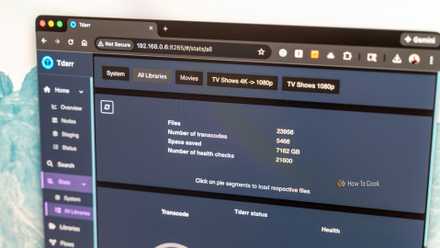
Stop buying hard drives for Plex: How I reclaimed 7TB for free
Your Plex library is bloated—the automated tool that saved me 7TB
Without HandBrake, I would’ve needed to buy another hard drive just to store my videos. Considering that a decent 4TB HDD costs at least $120, it’s safe to say HandBrake saved me that money.
Handy and OpenWhispr
A clean way to ditch a $144 subscription
I’ve always hated typing, and to make matters worse, I now get severe wrist pain if I type for more than an hour. Because of that, I’ve relied on voice typing and transcription tools for years to help me get my thoughts down.
Years ago, I used Dragon NaturallySpeaking. Later, I switched to Otter, and more recently I have been using Wispr Flow. It was excellent, but it also cost me $15 a month. Fortunately, around the same time, more FOSS transcription tools started appearing.
The first one I tried was Handy. It’s clean, simple, and delivers excellent transcription quality while processing everything locally on your machine. Under the hood, it uses Nvidia’s Parakeet model, which is lightweight enough to run on your CPU, making it a great option for people without a dedicated GPU.
Eventually, though, I moved to OpenWhispr, which I think is one of the most powerful transcription tools currently available. At its core, it’s a push-to-talk dictation app—you press a hotkey, speak, release it, and the transcribed text appears wherever your cursor is, inside virtually any app on your system.
The real advantage, however, comes if you have a GPU. In that case, you can configure local LLMs to process your transcriptions by removing filler words, correcting grammar, adjusting formatting, and even changing tone.
OpenWhispr is one of those FOSS apps that also offers a freemium cloud service. The free tier includes everything I discussed here, plus five hours of meeting transcription. If you need higher limits, paid plans start at $8 per month, which is fairly generous. Personally, though, I stick with the local setup, and it’s been perfect for my workflow.
How I Use AI to Transcribe and Organize My Voice Notes
Never lose your random spontaneous thoughts again.
Upscayl
Helped me downgrade my subscription and save $360
I’m a moderately heavy Midjourney user. I generate images for marketing assets, which means I often need 4K output—regular 1080p images don’t hold up well when you need to crop, edit, or zoom in.
The problem is that generating 4K images in Midjourney burns through GPU hours much faster. On the $30 Standard plan, which includes 15 GPU hours per month, I kept running out before the month ended. That eventually forced me onto the $60 Pro plan, bringing my annual Midjourney cost up to $720.
Fortunately—or unfortunately, depending on how you look at it—I only stayed on the higher tier for two months before discovering Upscayl. It’s a free, open-source AI image upscaler that can enlarge images by 4x using local AI models.
Having a GPU speeds up the process significantly, but it also works on a CPU. It even supports batch processing, so you can point it at an entire folder, hit start, and let it run overnight. By morning, you’ll have a batch of upscaled images ready to go.
Now I generate everything at normal resolution using the $30 Midjourney plan, then run the outputs through Upscayl afterward. I’m still getting usable 4K-quality images, but my annual spending has effectively dropped from $720 to $360.
Super Productivity and Syncthing
Three subscriptions gone—$280 saved
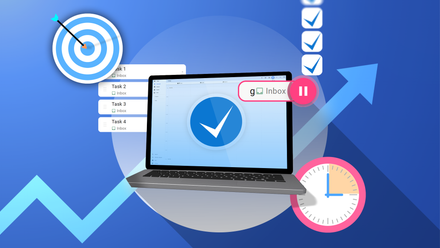
Super Productivity is probably the most powerful and underrated FOSS app I’ve ever used. It essentially gives you an entire productivity suite in a single app. From task management to time tracking and planning, it covers almost everything you’d normally need multiple subscriptions for.
At its core, it’s a to-do list with surprisingly advanced task management features. You can create detailed tasks with subtasks, notes, attachments, and estimated completion times. It also tracks how long tasks actually take, which helps you better understand your productivity patterns over time.
By default, Super Productivity displays tasks in a simple list view, but you can switch to a Kanban board for planning or an Eisenhower Matrix for prioritization. There’s also a planner view and calendar integration to help you schedule your workload more effectively.
Beyond task management, the app includes a distraction-free focus mode and break reminders to help prevent burnout. My favorite feature, though, is the plugin system—specifically the voice reminder plugin. Once configured, it uses text-to-speech to read out a custom reminder whenever you’ve been idle for too long. I have a habit of drifting toward distractions mid-task, and this feature has genuinely helped pull me back into focus.
This free open-source app breaks procrastination loops
Most apps help you plan work—this one helps you finally start it.
The one major limitation is that Super Productivity stores everything locally by default. That means your tasks stay tied to the device they were created on unless you set up syncing manually.
That’s where Syncthing comes in. It’s another FOSS app that syncs files directly between your devices using peer-to-peer connections. By syncing Super Productivity’s data folder, I can keep my tasks updated across my PC and phone automatically without relying on a cloud subscription or third-party servers.
Together, Super Productivity and Syncthing replaced three separate paid tools for me: Todoist for task management, Toggl Track for time logging, and Trello for Kanban boards. Altogether, those subscriptions were costing me roughly $228 per year.
This free, open-source tool solves my biggest problem with local-first apps
Syncthing fixes the biggest problem with local-first apps. Notes, passwords, and documents stay private without being trapped on one machine.
Here’s what the savings add up to
|
FOSS App |
What It Replaced |
Monthly Savings |
Annual Savings |
|---|---|---|---|
|
Handbrake |
External HDD or cloud storage upgrade |
— |
$120 |
|
OpenWhispr |
Whispr Flow subscription |
$12/mo |
$144 |
|
Upscayl |
Midjourney Pro plan (vs. Standard) |
$30/mo |
$360 |
|
Super Productivity |
Toggl Track (time tracking) |
$9/mo |
$108 |
|
Super Productivity |
Todoist (task management) |
$5/mo |
$60 |
|
Super Productivity |
Trello (Kanban boards) |
$5/mo |
$60 |
|
Total |
$852 |
The honest truth is that I didn’t set out to save $852. I just got tired of paying for subscriptions and started looking for alternatives. What surprised me was how good those alternatives turned out to be—all without compromising on quality or convenience.