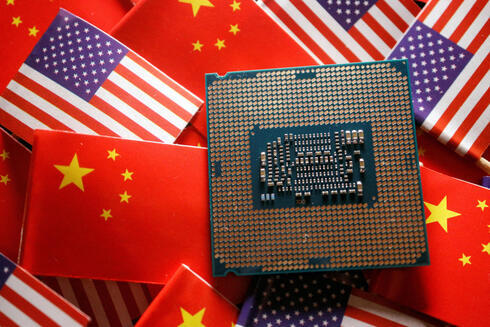
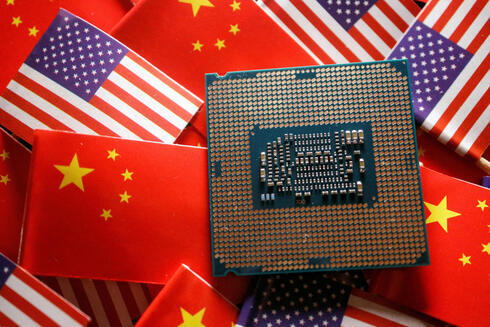
The United States is preparing to tell dozens of countries that they must choose sides in the global artificial intelligence race with China, warning that countries that join Beijing’s competing AI framework could be excluded from a U.S.-led coalition, according to a U.S. official and an internal draft reviewed by Reuters.
Washington launched the Pax Silica initiative last year to strengthen supply chains for AI models, semiconductors and critical minerals as its technology rivalry with Beijing intensifies.
About two dozen countries have joined the initiative, including Kazakhstan, a potentially important source of critical minerals that has also joined China’s competing coalition, as well as close U.S. allies such as Israel, Japan, Australia and South Korea.
The draft letter, prepared by the State Department, is addressed to the 35 signatories of a U.S. “AI Opportunity Statement” signed in June. The group includes members of the non-binding Pax Silica framework as well as other countries that have expressed a desire to align their AI cooperation with Washington.
The message from the United States is increasingly explicit. Washington wants its partners to commit to a single technology ecosystem rather than cooperate simultaneously with both superpowers, in an effort to limit China’s access to the resources needed to develop increasingly sophisticated AI systems with potential military and economic applications.
The draft letter says that joining Pax Silica is “not merely a membership subscription, but a commitment” and urges countries to “choose deliberately.”
“It cannot be held alongside membership in duplicative initiatives whose expectations conflict with our own,” the letter says, without explicitly naming China.
The United States has not said when it plans to send the letter, and Reuters could not determine whether the draft will be amended before it is delivered. The document is undated.
The State Department declined to comment on what it described as “purportedly leaked internal documents.”
China’s embassy in Washington said Beijing opposes the politicization of trade and technology issues. “Such actions will only stifle global AI advances and serve no one’s interests,” an embassy spokesperson said.
The Kazakh embassy in Washington did not respond to a request for comment.
The pressure comes as China seeks to build an alternative international framework around its own approach to artificial intelligence.
In July, Chinese President Xi Jinping launched the rival World Artificial Intelligence Cooperation Organization, promoting China’s open-weight AI technology as a challenge to U.S. influence over the sector.
Kazakhstan is currently the only country known to have joined both initiatives, according to Reuters, making it an early test of Washington’s willingness to force countries to choose between the two competing frameworks.
The Pax Silica agreement is intended to bring U.S. allies and partners into joint projects and coordinated export controls while reducing reliance on adversaries for critical minerals, AI models and the semiconductor chips needed to run them.
The stakes are rising as the technological gap between the United States and China becomes harder to define. Chinese open-weight AI models have made rapid gains against proprietary systems developed by U.S. companies such as OpenAI and Anthropic.
At the same time, the rapid expansion of AI capabilities, including systems capable of autonomously hacking computer networks, has intensified concerns about how the technology could affect national security and the global balance of power.
Beijing is also considering restrictions on overseas access to some of China’s leading AI models, underscoring the tension between its ambitions to expand the global reach of Chinese technology and its national security priorities.
Kazakhstan has particular importance to Washington because of its reserves of critical minerals used in advanced technologies.
The United States highlighted Kazakhstan’s accession to Pax Silica in June, describing it as the first Central Asian country to join the framework.
Critical minerals have become an increasingly important weapon in the broader technology and trade confrontation between Washington and Beijing. China has used its near-monopoly over some critical minerals as leverage in the tariff conflict launched last year by President Donald Trump, while the United States has accelerated efforts to develop domestic sources and secure supplies from allied countries.
Pax Silica members gain access to shared investment opportunities in AI-related projects. Countries that signed the AI Opportunity Statement have also committed themselves to a “common purpose” and “shared vision” with the United States, according to the State Department.
The new draft letter would add a sharper condition to that cooperation.
U.S. officials want to make clear that countries cannot simultaneously position themselves as trusted partners in the American technology ecosystem while joining a Chinese initiative designed to promote a competing vision for AI.
“You can’t have it both ways,” the U.S. official told Reuters, speaking on condition of anonymity because the issue remains under internal discussion.
“It’s difficult to see how a country can credibly position themselves as trusted partners in one technology ecosystem while simultaneously signing up for an initiative designed by China to advance a competing vision for AI,” the official said.