Fresh off the heels of the World Cup, international soccer has once again kicked off with the first matchday of the Union of European Football Association’s (UEFA) Champions League. The competition, hosted by the UEFA, pits the most successful teams from around Europe against each other.
Come June, the next European champion will be crowned in Madrid’s Riyadh Air Estadio Metropolitano. Before then, however, the 36 teams must progress through a series of league games, not dissimilar to the group stage of the World Cup. For a full run down of the league format, see Kash Radocha’s article from two years ago (“UEFA Champions League Soccer Returns in All-New Format,” *The Oberlin Review*, Sept. 20, 2024). As soccer’s second great spectacle kicks off, here’s what you need to know about this year’s competition.
Arsenal, last year’s beaten finalists, began their campaign with a characteristic 1–0 win against Italian side Napoli. The Premier League champions hope to follow up on their most successful European campaign in two decades with another deep run this year. Arsenal’s road to the 2026 final saw them employ a compact, defense-first approach, only faltering on penalty kicks against defending champions Paris Saint-Germain. Their defensive prowess makes them favorites to reach the latter stages of this year’s competition.
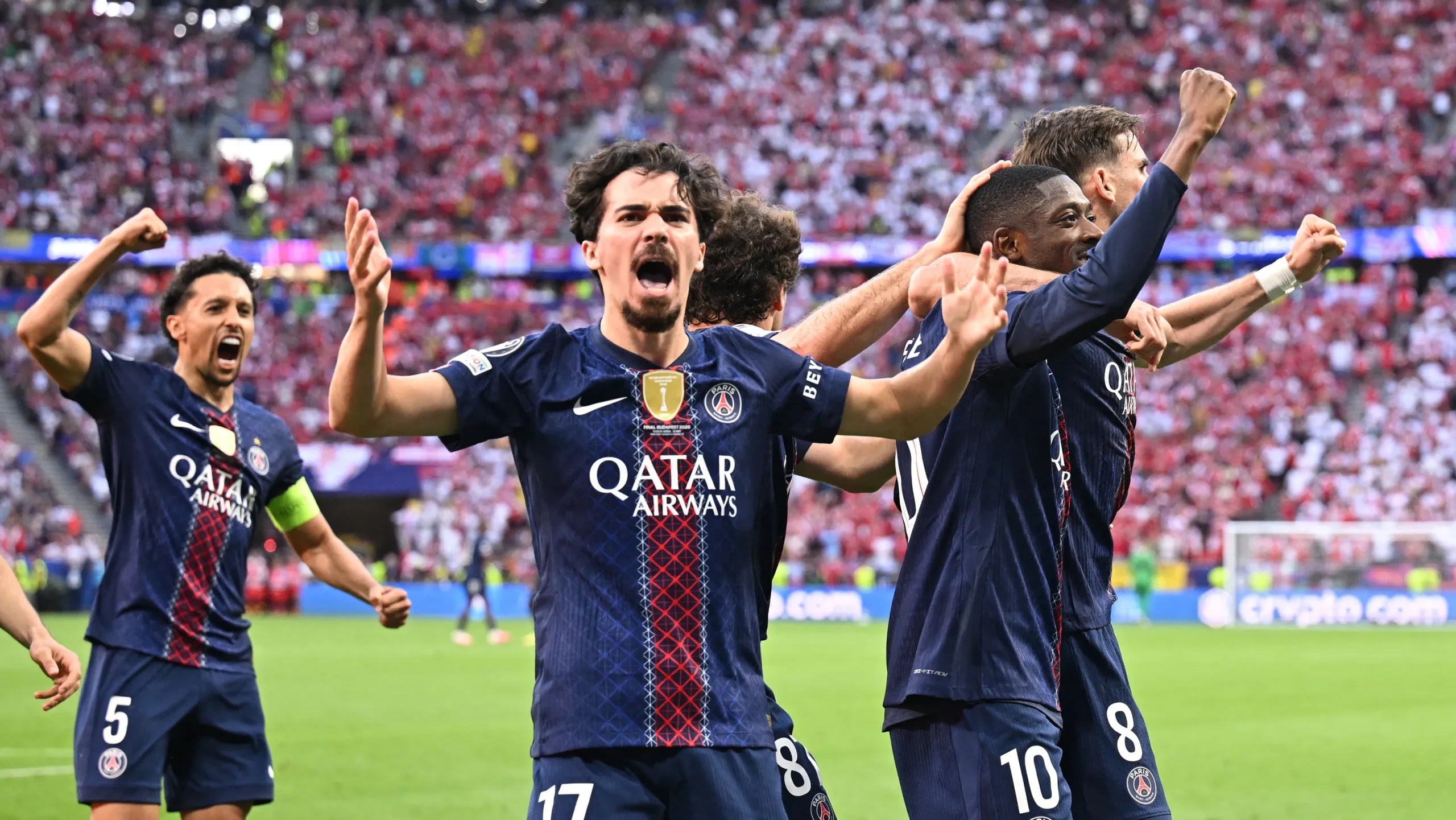
Paris Saint-Germain’s greatest opponents may well be the height of their own expectations. After years of dashed hopes, the French giants followed up their first ever Champions League title with an immediate second. Now, they look to win the competition for a coveted third time in a row, a feat only accomplished once in Champions League history by Real Madrid in 2018. In stark opposition to Arsenal, PSG rely on fast breaks, fluid attacks, and relentless pressing.
With a remorseless 6–1 opening win against Slovak side Slovan Bratislava, PSG look poised to challenge for the title once more. However, their recent form in France’s Ligue 1 — one win, two draws, and one loss — shows a team capable of being upset. This, combined with their unprecedented success and frequent underperformance in the league phase, points to two possible outcomes for the Parisiens: they either go home prematurely, or win the whole thing outright.
Portuguese dynamo José Mourinho began his second spell managing Real Madrid in the Champions League with a 2–1 win over Inter Milan (with whom he won his last Champions League title in 2010). While the club last won the title only two years ago, their previous two campaigns have seen quarterfinal exits to Bayern Munich and Arsenal. Last season, Real Madrid also suffered an infamous league phase loss to Portuguese side Benfica — managed, at the time, by Mourinho. Los Blancos, who bear the weight of a record 15 Champions League titles, look to reestablish themselves as the team to be feared come the knockout stages of the competition.
Several other outfits vie for the four coveted semifinals spots. Six-time winners Bayern Munich have been persistently knocking since they last lifted the trophy in the 2019/20 season. Under manager Vincent Kompany, the Germans reached the semis in the most recent season. Extending their domestic dominance to Europe, Bayern were 5–0 winners over Norwegian side FK Bodø/Glimt.
Bayern’s 2020 victory came under understated German manager Hansi Flick — who, this year, aims to guide Barcelona to a potential sixth Champions League title. With a penchant for attacking soccer and an impressive trophy haul from just two years in the Catalan capital, it seems only a matter of time before Flick’s team claims the prize. New midfield addition Rodri, a cool head in the otherwise high-flying side, guided Barcelona to a 5–1 victory over Dutch outfit Feyenoord. The Ballon d’Or and World Cup-winning midfielder may be just the addition they need to finally get over the line in the Champions League.
Rodri’s arrival at Barcelona leaves his former club, one-time Champions League winners Manchester City, scrambling to cover the hole in their midfield. Their new head coach, Enzo Maresca, ignominiously resigned from Chelsea during his only season managing in the Champions League. After a bright start to Man City’s Premier League campaign, the Italian will feel he has much to prove at the highest level this season. Two second-half goals from Erling Haaland saw Man City breeze past FC Porto 2–0.
Watching Europe’s heavyweights duke it out is half the joy of the Champions League; the other is the underdog stories. Through a series of playoffs and qualifiers, the competition is structured so that teams from lesser-watched countries have a chance to compete. Notable debutants include Austria’s LASK, Norway’s Viking Stavanger, and Azerbaijan’s Sabah FK. Despite their heavy opening loss to Bayern Munich, FK Bodø/Glimt, who made it to a historic round-of-16 finish last season, threaten to upset at least one of the major players this time around.
Como 1907, who recently attained promotion to Italy’s top flight, made their European debut with a 4–1 win over German side RB Leipzig. Under former Barcelona and Chelsea midfielder Cesc Fabregas, and with a team made up of highly-coveted players, Como look set to follow up a fourth place Serie A finish with an impressive run in the Champions League. Of all the unlikely contestants, Como are the ones to watch.
For certain, nothing is guaranteed by the league phase. PSG, for instance, failed to directly qualify through the league phase twice in a row and went on to win the trophy both times. Bodø/Glimt barely scraped by last season before beating Inter Milan 5–2 on aggregate. After matchday one, the only guarantee is this: whether you’re a stalwart partisan or a newcomer to the sport, this season’s Champions League promises to surprise and entertain.