For years, the electric vehicle (EV) market operated under what researchers at Research Affiliates famously termed the “Big Market Delusion”. Investors and early adopters priced these vehicles as if they were immortal tech gadgets rather than depreciating transportation assets. We saw a period where used Teslas were selling for more than new ones due to supply chain bottlenecks and a collective belief that “gas-free” equated to “value-stable.”
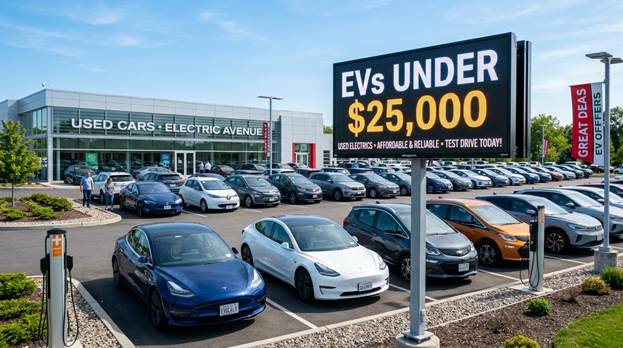
That delusion has now popped with historic force. In the last year, used EV prices have hit record lows, falling significantly faster than their internal combustion engine (ICE) counterparts. According to recent market data, searches for “Used Tesla under $25k” have surged as valuations normalize toward traditional automotive depreciation curves. The reality is that an EV is still a car, and as the “early adopter tax” fades, the market is finally treating them like the mass-market commodities they were always intended to become.
The Convergence of Forces Driving Prices Down
Several factors have created this “perfect storm” for used EV pricing. First, we must look at the aggressive price wars initiated by new vehicle manufacturers. When Tesla slashed prices on new Models 3 and Y multiple times over the last 18 months, they effectively nuked the equity of every existing owner overnight. You cannot have a healthy used market when the new version of the same product is suddenly $15,000 cheaper (Zaggia, 2022).
Second, the technology is evolving at a “smartphone pace.” A five-year-old EV often lacks the charging speed, thermal management, and software integration of a new model. In the tech world, we call this functional obsolescence. As battery costs are predicted to be 40% lower in 2025 than in 2022, newer EVs are rapidly approaching price parity with ICE vehicles, further devaluing older models (Hammond, n.d.).
Finally, the influx of lease returns and rental fleet liquidations—most notably from companies like Hertz—has flooded the market with high-volume inventory. When supply dwarfs the current infrastructure-wary demand, prices only have one direction to go: down.
Will High Gas Prices Save EV Resale Values?
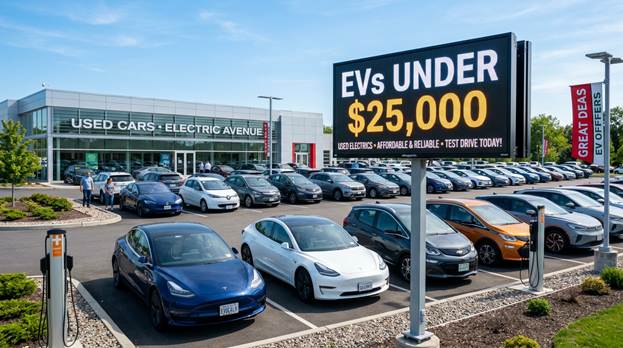
A common counter-argument is that spiking gasoline prices will eventually drive buyers back to used EVs, forcing prices back up. Research indicates that a 1% increase in gasoline prices can increase EV sales by approximately 0.85% to 4.67% (Fei, 2025; Zhang, 2026). While this suggests a historical correlation, the “gas price hedge” is weakening in the used market.
As utility rates rise in many regions, the “fuel” savings of an EV compared to a highly efficient hybrid are narrowing. More importantly, the primary barrier to EV adoption today isn’t just the cost of operation; it’s “charging anxiety” and “repair cost uncertainty.” Even if gas hits $6 a gallon, a buyer may still hesitate to buy a used EV if they aren’t confident in the health of a ten-thousand-dollar battery pack out of warranty. Therefore, while high gas prices may create a floor for EV depreciation, don’t expect them to spark a valuation rally. We are entering a “new normal” where EVs depreciate just as much, if not more, than gas cars.
What Buyers Must Consider Before Jumping In
Buying a used EV is fundamentally different from buying a used ICE vehicle. You aren’t checking for oil leaks; you are auditing a chemical storage system. Modern research emphasizes that battery performance is tied to complex aging mechanisms, such as SEI layer growth and lithium plating (Jayasinghe et al., 2025). Here is what you need to evaluate:
- Battery Health and Degradation: This is the “engine” of the car. Use tools like Recurrent or specialized OBD2 scanners to check the State of Health (SoH). A car with 10% degradation is fine; one with 30% is a liability.
- Charging Compatibility: Ensure the vehicle supports DC fast charging. Some older “compliance cars” were sold without it, making them useless for anything beyond local errands.
- Remaining Warranty: Most manufacturers offer an 8-year/100,000-mile battery warranty. Buying a car in year seven means you are potentially one year away from a catastrophic out-of-pocket expense.
- Infrastructure Access: If you cannot charge at home, the “low price” of a used EV will quickly be offset by the high cost and inconvenience of public charging.
Top 5 Used EV Recommendations for 2026
If you are ready to capitalize on this market correction, these five models represent the best intersection of value, reliability, and technology.
- 2022 Tesla Model 3 (Standard Range Plus): With recent price drops, the 2022 model is the “sweet spot.” It features the LFP (Lithium Iron Phosphate) battery, which can be charged to 100% daily without the degradation issues of older nickel-based chemistries.
- 2023 Chevrolet Bolt EUV: While GM discontinued this platform briefly, it remains the gold standard for budget-conscious buyers. It offers a solid 247-mile range and a surprisingly premium interior for a price that is now frequently dipping below $20,000.
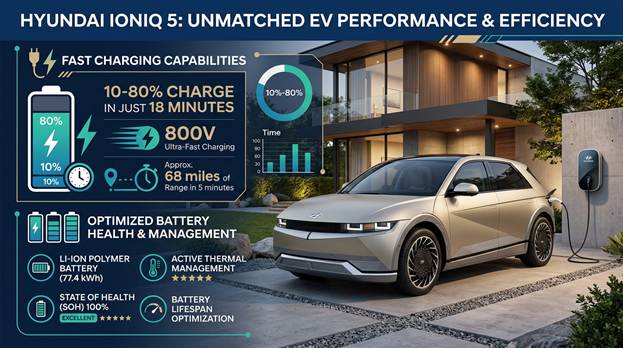
- 2022 Hyundai IONIQ 5 (Long Range RWD): This is for the buyer who wants future-proof tech. Its 800V architecture allows for incredibly fast charging (10% to 80% in 18 minutes), which is rare at its current used price point.
- 2021 Ford Mustang Mach-E (Premium): Ford’s build quality and software updates have made the Mach-E a resilient choice. It offers a “car-like” driving experience that appeals to those transitioning from gas vehicles.
- 2022 Polestar 2 (Dual Motor): For those who value safety and Scandinavian design, the Polestar 2 is a standout. Built on a Volvo-derived platform, its resale value has stabilized at a level that provides immense value for the second-hand buyer.
The Infrastructure Reality Check
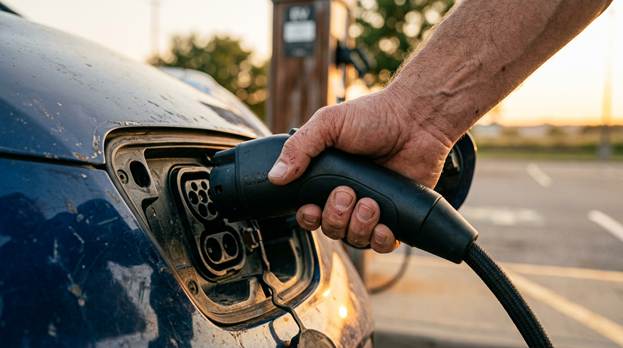
We cannot discuss used EV prices without addressing the elephant in the room: the charging network. Part of the reason for the price collapse is that the public remains skeptical of non-Tesla charging reliability. While the industry is moving toward the NACS (Tesla) plug standard, many used EVs on the market today still use the CCS1 connector.
If you buy a non-Tesla used EV, you must factor in the cost of adapters or the potential frustration of broken third-party chargers. In my experience analyzing technology shifts, the “hardware” is only half the story; the “ecosystem” is what determines long-term utility. Standardized quantitative measurement protocols are becoming essential for verifying the long-term value of these assets (Moser, 2026).
Wrapping Up
The “market delusion” that kept EV prices artificially high was never sustainable. What we are seeing now is not the death of the electric vehicle, but its maturation. For the savvy buyer, the current price floor represents an unprecedented opportunity to acquire high-technology transportation at a fraction of its original cost.
However, this transition requires a shift in mindset. You are no longer buying a “statement”; you are buying a tool. By focusing on battery health, charging speed, and software longevity—rather than just the brand name—you can navigate this historic market dip and come out ahead. The EV revolution is still happening; it’s just finally becoming affordable for the rest of us.
Disclosure: Images rendered by Artlist.io
Rob Enderle is a technology analyst at Torque News who covers automotive technology and battery developments. You can learn more about Rob on Wikipedia and follow his articles on TechNewsWord, TGDaily, and TechSpective.
Follow us today…