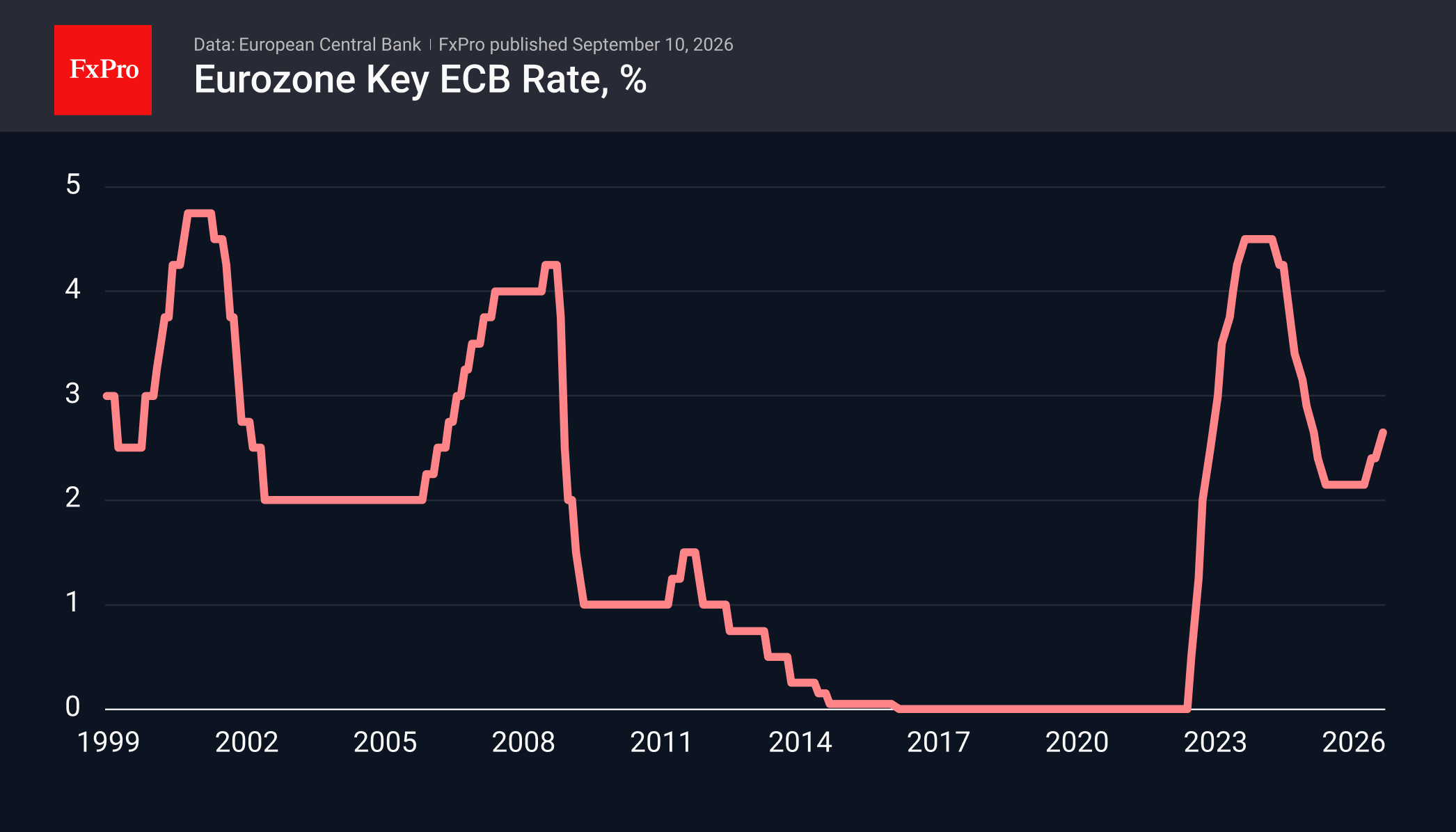
As expected, the ECB raised its key interest rate by 25 basis points, and the tone of the accompanying statement was fairly optimistic. Although the Bank referred to mounting inflationary pressures and uncertainty stemming from the conflict in the Middle East, it raised its GDP growth forecasts for next year. Inflation forecasts exceed the ECB’s target for the foreseeable future, which also sounds like a compelling argument for further policy tightening.
The single currency, which had lost 0.3% against the dollar at the start of active trading in Europe, found support near 1.1610 and recouped half of its losses in the first few minutes following the interest rate announcement. The statement’s emphatically neutral tone, coupled with a readiness to act in either direction, is nevertheless difficult to interpret as a bullish signal for the single currency, as central banks prefer to signal their intentions over a certain time horizon. If that is the case, the current signal is one of a pause.
Since the start of the month, EURUSD has been making unsuccessful attempts to break through the 200-day moving average. Still, a significant proportion of foreign exchange market investors view the rise in bond yields in debt-burdened European countries as a reason to exit the euro rather than buy higher-yielding assets. We also regard the recent rise in oil and gas prices as a major reason to sell the euro in anticipation of a deterioration in the economy and the trade balance. On more than one occasion in the years following the global financial crisis, the ECB has shown that economic growth influences interest rate decisions, even though inflation is the only official target.
The FxPro Analyst Team