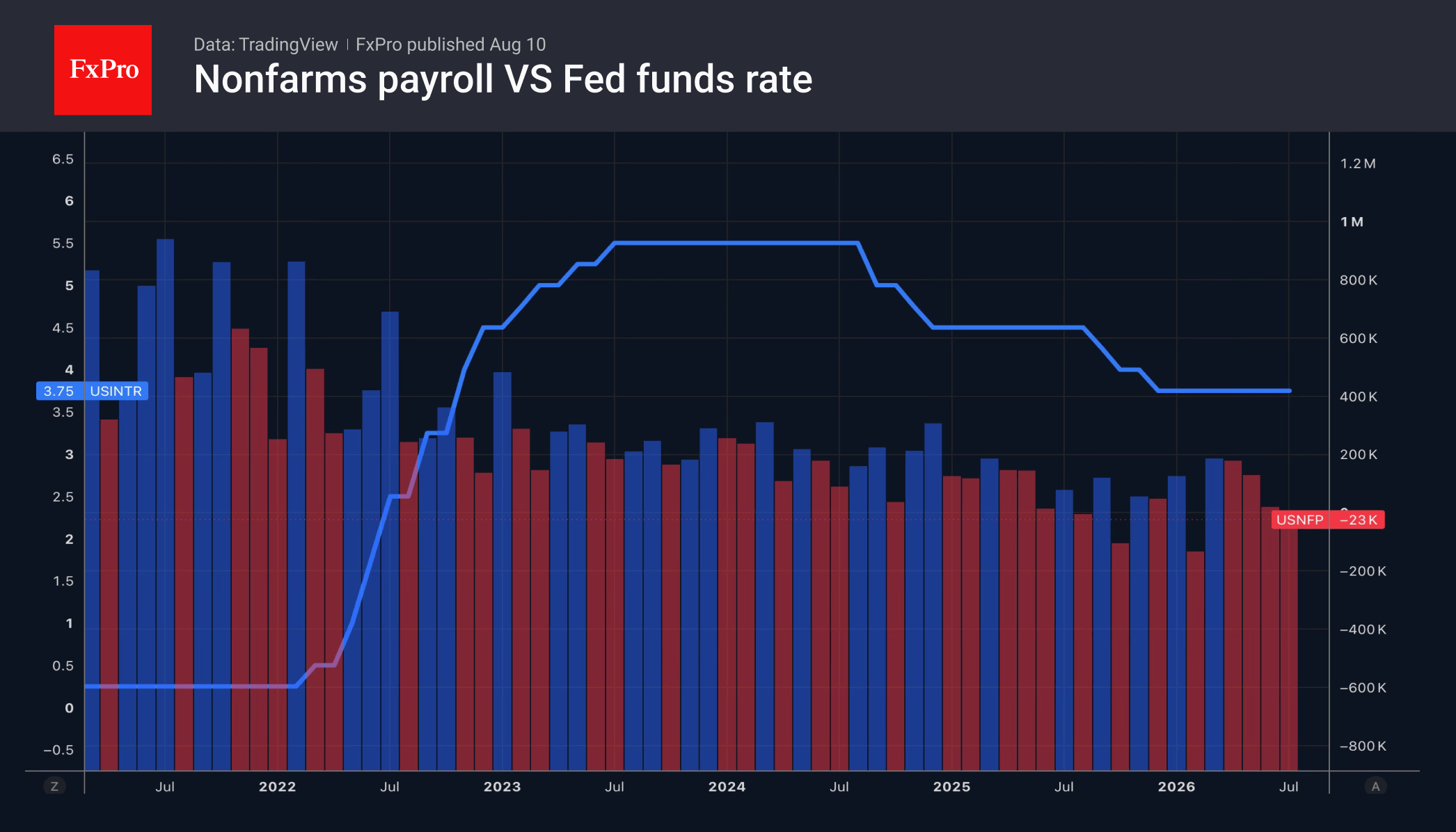
- The USD index plummeted amid a decline in US employment.
- Gold is benefiting from the Fed’s reluctance to raise interest rates.
The US dollar touched a seven-week low after an unexpected labour market report. Employment in July unexpectedly fell by 23K. The figures for May were revised down from 129K to 63K, and those for June from 57K to 20K. As a result, the US economy has added an average of 44K jobs per month over the last six months. The last time we saw similarly weak figures, the Fed cut rates.
The futures market has reduced the probability of a monetary policy tightening in September to 46% from 67% a week ago. The probability of two hikes in 2026 has fallen from 46% to 32%. This has led to a weakening of the US dollar against majors.
This is all the more so because the White House has resumed pressuring the Fed. The US administration is taking further steps to remove Lisa Cook from her post as FOMC Governor. Coupled with reports of conversations between Donald Trump and Kevin Warsh, this casts a shadow over the central bank’s independence and is one of the reasons for the sell-off in the US dollar.
The Middle East is proving to be a lifeline for the greenback. Iran has announced its readiness to strike a deal with Oman to reopen the Strait of Hormuz, provided some conditions are met. These include lifting sanctions, withdrawing US troops from the region, and reparations. It is doubtful that Washington would agree to this, which heightens the risks of conflict escalation and bolsters the US dollar as a safe-haven asset.
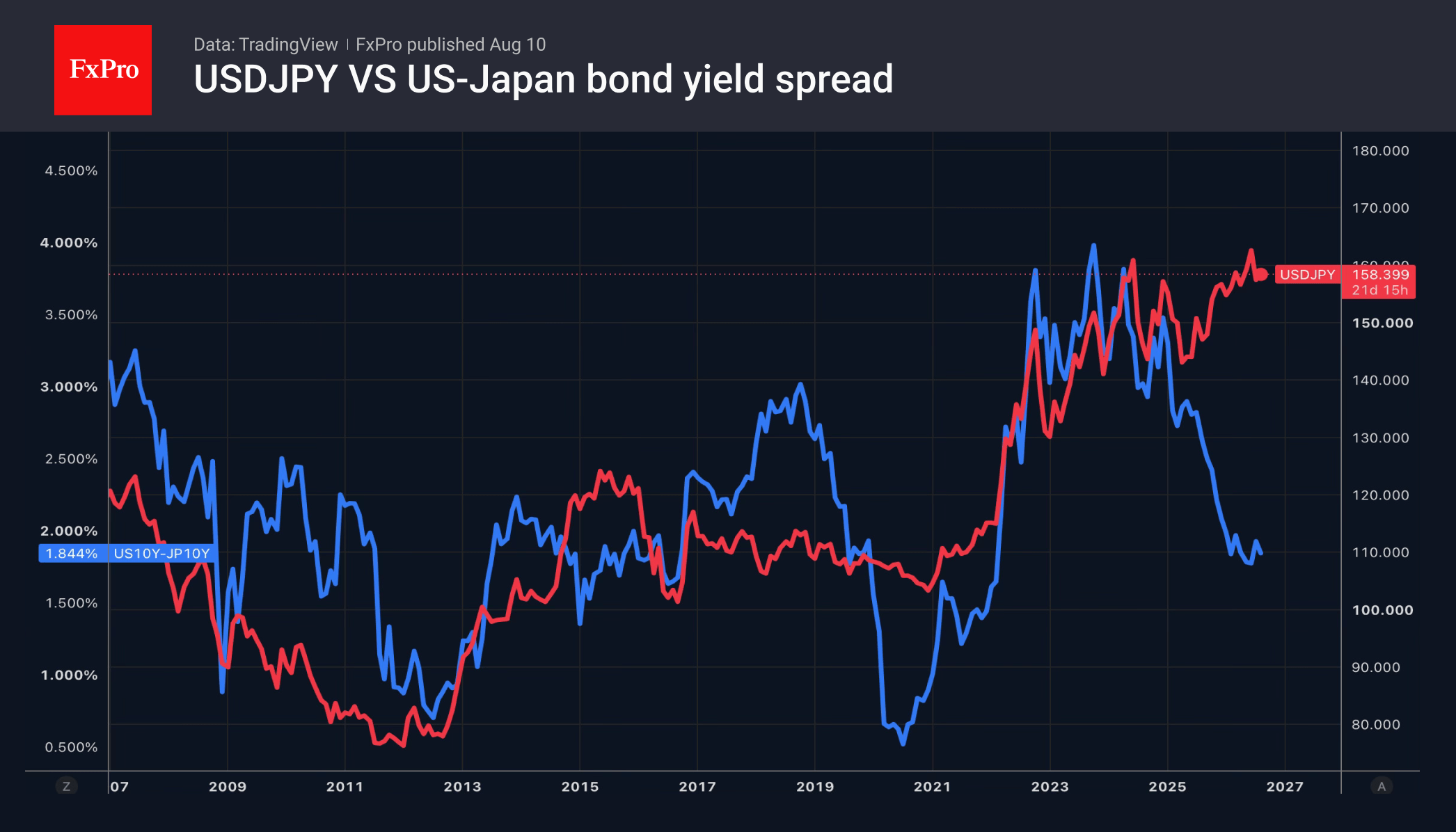
Bears on the USDJPY pair attempted to capitalise on its weakness following the employment figures. The pair slipped below the ¥157 level, and speculators immediately took advantage. The wide interest-rate differential between the Fed and the Bank of Japan creates ideal conditions for carry trades and for selling the yen as a funding currency. The dollar quickly rebounded above ¥158 and is set to continue its rally.
The disappointing employment data came as a catalyst for the gold rally. The precious metal managed to storm the $4,300 mark and consolidate above it. The reduced likelihood of monetary tightening, the associated weakening of the dollar, and a fall in US Treasury yields are providing a strong tailwind for gold. This is all the more so given that when US inflation is high, and the Fed has no intention of tightening monetary policy, gold tends to rise.
The FxPro Analyst Team
