The U.S. stock market has been untouchable lately. Since April, S&P 500 (^GSPC 0.57%) and Nasdaq Composite (^IXIC 1.15%) have added 15% and 22%, respectively, despite below-average economic growth in the first quarter and the recent acceleration in inflation.
President Trump is at least partially responsible for both headwinds. His tariffs probably contributed to slower consumer spending in the first quarter, which dragged on economic growth. And his decision to attack Iran has pushed inflation to a multiyear high.
Will the stock market crash under Trump? History says investors have reason to worry.
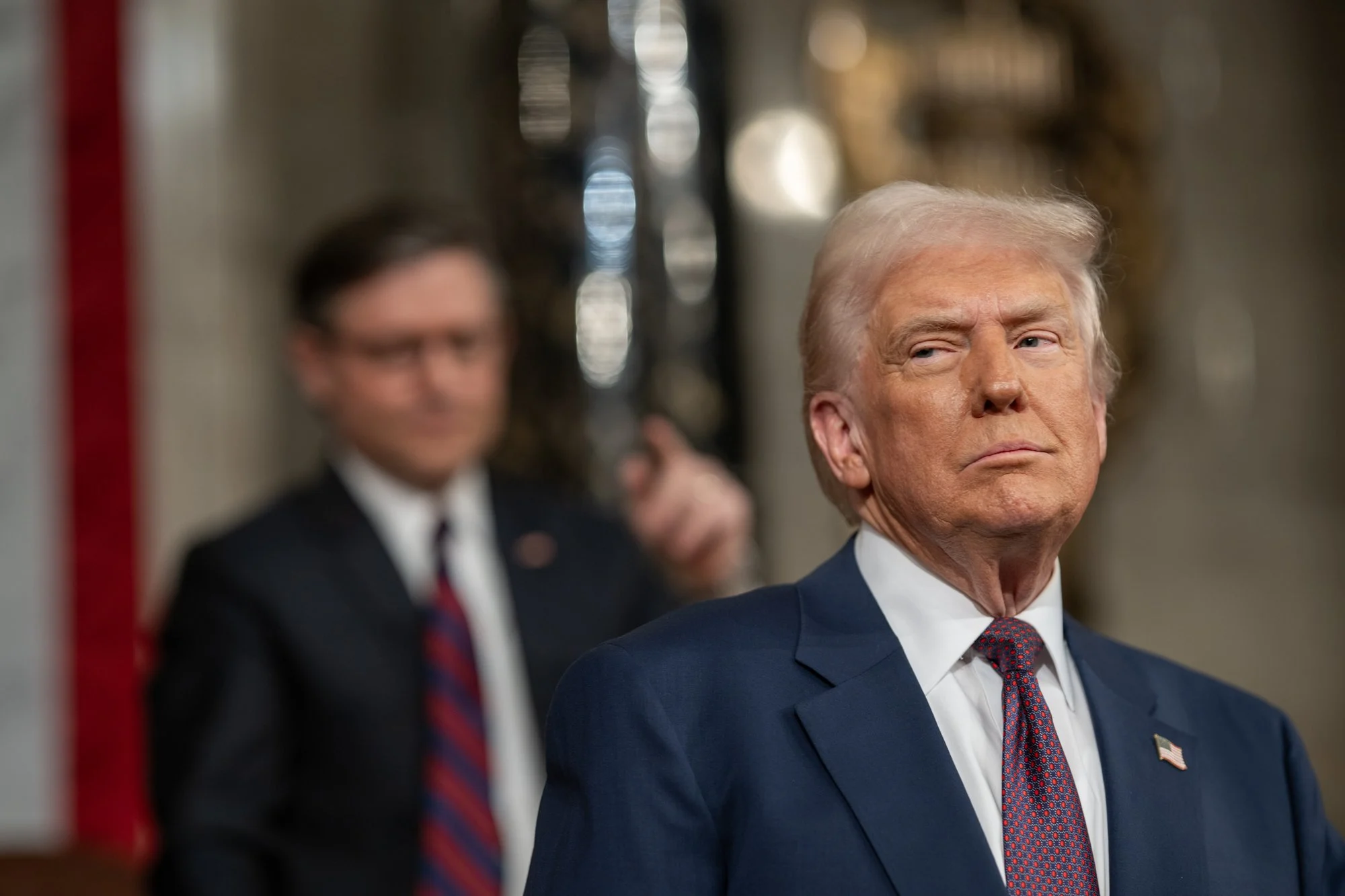
Image source: Official White House Photo by Daniel Torok.
Interest rate increases could drag the stock market into a correction
Trump authorized military action in Iran in late February, expecting a quick victory. But the initial strikes turned into a monthslong conflict that closed the Strait of Hormuz, the most critical oil chokepoint in the world. Supply disruptions drove oil prices to a multiyear high, which led to a resurgence in inflation.
This week, Trump reportedly struck a deal with Iran that would end the conflict and reopen the Strait of Hormuz, but oil prices could remain elevated for months because it will take time for supply chains to normalize. Restarting plants will take weeks, and fixing damaged infrastructure will take even longer.
Meanwhile, consumer inflation, as measured by the Consumer Price Index, rose to 4.2% in May, the highest reading since early 2023. And that number could go higher. Wholesale inflation, as measured by the Producer Price Index, rose to 6.5% in May, the highest level since late 2022. Changes in wholesale inflation often foreshadow changes in consumer inflation.
Ultimately, the market thinks rising inflation will force the Federal Reserve to raise its benchmark interest rate. In fact, Yardeni Research expects a rate increase in July, though the consensus says the Fed won’t raise rates until December. Regardless, the pivot to rate increases has historically been damaging for stocks.
Since 1999, the Fed has started four rate-increase cycles; the S&P 500 and Nasdaq Composite have usually fallen over the next three months, with average peak-to-trough declines of 10% and 15%, respectively. In short, history says both indexes could slip into a market correction when the Fed starts raising rates.
The recent Treasury yield spike may foreshadow a bear market
The bond market reflects investor expectations about inflation, economic growth, and the Federal Reserve’s monetary policy. Bond yields increase when investors anticipate higher inflation, stronger economic growth, and rate increases. And yields fall when investors expect lower inflation, weaker economic growth, and rate cuts.
Treasury bond yields are particularly important because they represent the risk-free rates against which all other investments are measured. Stocks generally look less attractive as Treasury yields increase because investors are less willing to own risky equities when they can get reasonable returns on risk-free bonds.
The 30-year Treasury yield rocketed to 5.18% in May, the highest level since July 2007, as investors became increasingly confident that high inflation would lead to interest rate increases. When 30-year Treasury bonds last paid that much, the S&P 500 and Nasdaq Composite suffered peak-to-trough declines of 20% during the next year. In short, history says elevated yields could push the indexes into bear market territory by May 2027.
The Trump administration recently proposed new tariffs
In June, the U.S. Trade Representative (USTR) proposed new tariffs that range from 10% to 12.5% on 60 countries, including the European Union, Canada, China, and Mexico. The tariffs would be imposed under Section 301 of the 1974 Trade Act, which grants the USTR the authority to investigate and respond to unfair trade practices.
The USTR will hold hearings to discuss the proposed tariffs on July 7, after which they may be revised before implementation. It’s impossible to predict how investors will react to yet another round of import taxes, but most economists agree that broad-based tariffs hurt economic growth. So the stock market could drop sharply if the proposed tariffs become effective.
Here’s the big picture: A stock market crash, meaning a steep and sudden decline in the major indexes, is plausible given that interest rate increases, elevated bond yields, and new tariffs are economic headwinds. In particular, the stock market could fall sharply if rate increases coincide with new tariffs.