Space Exploration Technologies (SPCX -0.68%) executed a flawless IPO. At least that’s the way things began. The company’s underwriters rapidly sold all available stock, triggering “greenshoe” options that ultimately netted SpaceX $85.7 billion in proceeds. Shares quickly skyrocketed well above $200 despite an initial IPO price of $135. And SpaceX took advantage of the enthusiasm by executing a scaled-up $25 billion bond offering.
Since shares reached an all-time high of $225.64 on June 15, with a peak valuation of around $3 trillion, SpaceX stock has fallen off a cliff. Shares are currently 34% lower than that peak, leaving many investors underwater.
Still, SpaceX is now armed with capital, especially considering its $60 billion acquisition of AI tooling start-up Cursor was paid for in stock, not cash. Regardless of where the stock price goes from here, expect SpaceX to go on a spending spree.
How might SpaceX deploy its new cash hoard? We can glean clues from Elon Musk‘s “secret master plan” that he executed with Tesla (TSLA +0.45%) many years ago.

Space Exploration Technologies
Today’s Change
(-0.68%) $-0.91
Current Price
$132.20
Key Data Points
Market Cap
Day’s Range
$130.17 – $136.84
52wk Range
$104.83 – $225.64
Volume
102.4M
Avg Vol
124.1M
SpaceX investors should read Elon Musk’s secret master plan for Tesla
On Aug. 2, 2006, Musk published a simple post on Tesla’s website with no graphics. The title of the post was “The Secret Tesla Motors Master Plan (just between you and me).” In this document, Musk outlined his plan to turn Tesla into a global giant. Over the next two decades, things went surprisingly according to plan, even if Tesla’s growth journey took longer than Musk initially anticipated.
What exactly did Musk’s secret growth playbook consist of?
“As you know, the initial product of Tesla Motors is a high-performance electric sports car called the Tesla Roadster. However, some readers may not be aware of the fact that our long-term plan is to build a wide range of models, including affordably priced family cars,” Musk began.
At the end of the post, Musk summarized the key elements of his growth vision. First, Tesla would build a sports car. Next, it would use the funds, reputation, and infrastructure gained from that effort to build an affordable car. With even greater funds and scale, Tesla would then build an even more affordable car. While doing all of this, Tesla would also pursue zero-emission electric power generation options. “Don’t tell anyone,” Musk cheekily signed off.
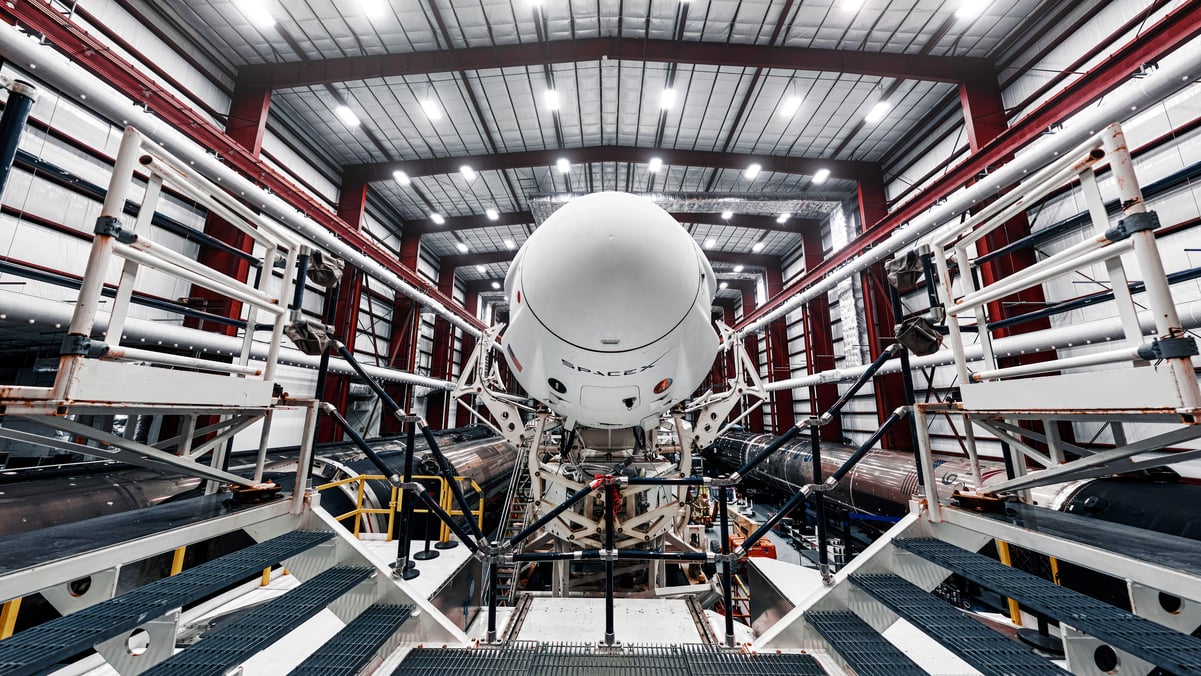
Image source: Getty Images.
Tesla’s master plan — which ultimately resulted in a $1 trillion global auto giant — paints Musk as a surprisingly practical CEO despite his often rosy and outlandish predictions. Translating this vision to SpaceX isn’t difficult.
In SpaceX’s IPO prospectus, a host of wild growth opportunities are outlined, everything from establishing a permanent human colony on the moon to exploring the solar system. I believe Musk is serious about these endeavors. But given his history with Tesla, I expect SpaceX’s growth journey to be much more predictable.
SpaceX’s Starlink internet division is already profitable. Expect SpaceX to aggressively scale this business to generate a sustainable capital base for more ambitious opportunities. The company’s rocket division is also likely profitable if you remove the heavy investment into next-gen rockets. And while SpaceX’s AI division is currently unprofitable, this, too, stems mostly from the pace at which SpaceX is attempting to expand its data center infrastructure. Long-term, analysts are very bullish on this segment’s revenue and profit potential.
In short, don’t expect much near-term traction on SpaceX’s most aggressive growth opportunities. This category includes everything from lunar-based robotics manufacturing to building a self-sustaining city on Mars with at least millions of inhabitants. For years to come, I suspect SpaceX will focus on the opportunities right in front of it, much like Musk handled Tesla’s growth journey. Tesla eventually reached, or even surpassed, Musk’s initial vision. But it took decades to do so. I expect the same for SpaceX.