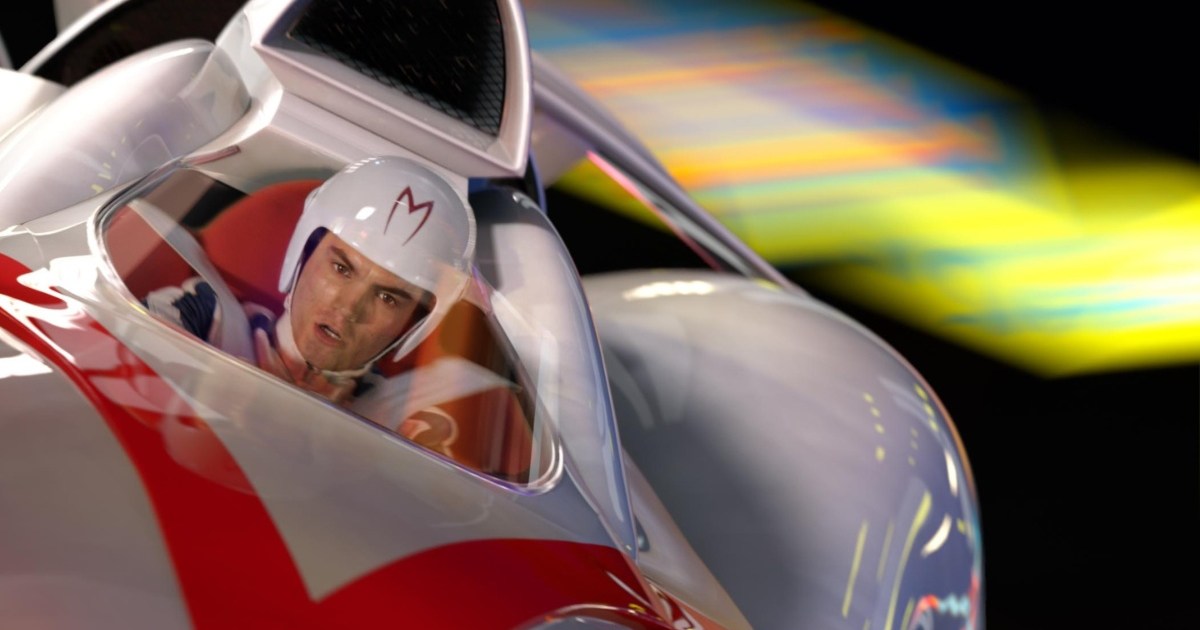
The real reason Speed Racer bombed at the box office isn’t what you’d expect. The movie’s lead star addressed why the film failed at the box office and what changed for audiences nearly two decades later.
Emile Hirsch weighs in on why Speed Racer flopped at box office
Emile Hirsch believes shifting audience tastes doomed Speed Racer at the 2008 box office.
The actor shared his thoughts in a new interview with ScreenRant ahead of the film’s 4K remaster release. Hirsch pointed to the era’s preference for grounded superhero films as the key factor behind the $93 million bomb.
“I feel like audiences have just changed in the last 18 years, and a lot of the stylistic visual aesthetic things that alienated people then now draws them in a different way that they maybe never even have seen before,” Hirsch said. He also noted the film’s deep sincerity set it apart from the blockbuster tone audiences expected at the time.
The Wachowskis’ live-action adaptation faced fierce competition during its release window. Christopher Nolan’s The Dark Knight and Robert Downey Jr.’s Iron Man both arrived that same summer. Indiana Jones and the Kingdom of the Crystal Skull and The Chronicles of Narnia: Prince Caspian also crowded the marketplace against it.
Hirsch recalled a recent anniversary screening at the New Beverly theater, where the film received an emotional response. “You could hear everybody crying in the theater,” he said about the Grand Prix finale sequence. He described the moment as proof that Speed Racer now connects with audiences on a deeper level.
The actor added that the screening confirmed the film’s lasting power. “For a film to have that kind of cathartic effect on an audience, especially a PG movie called Speed Racer, there’s something really special there that it’s not about the effects, it’s the heart and the art behind it,” Hirsch said.
Other stylized films from that period experienced similar struggles. Edgar Wright’s Scott Pilgrim vs. the World shared a comparable aesthetic yet only grossed under $48 million against a reported $80 million budget.
Speed Racer was far from alone in failing to match the era’s appetite for realism.