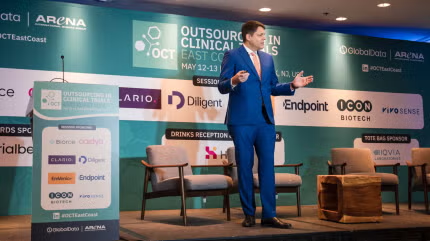

As we approach the end of H1, experts have shared their views on the main trends impacting clinical trials in 2026.
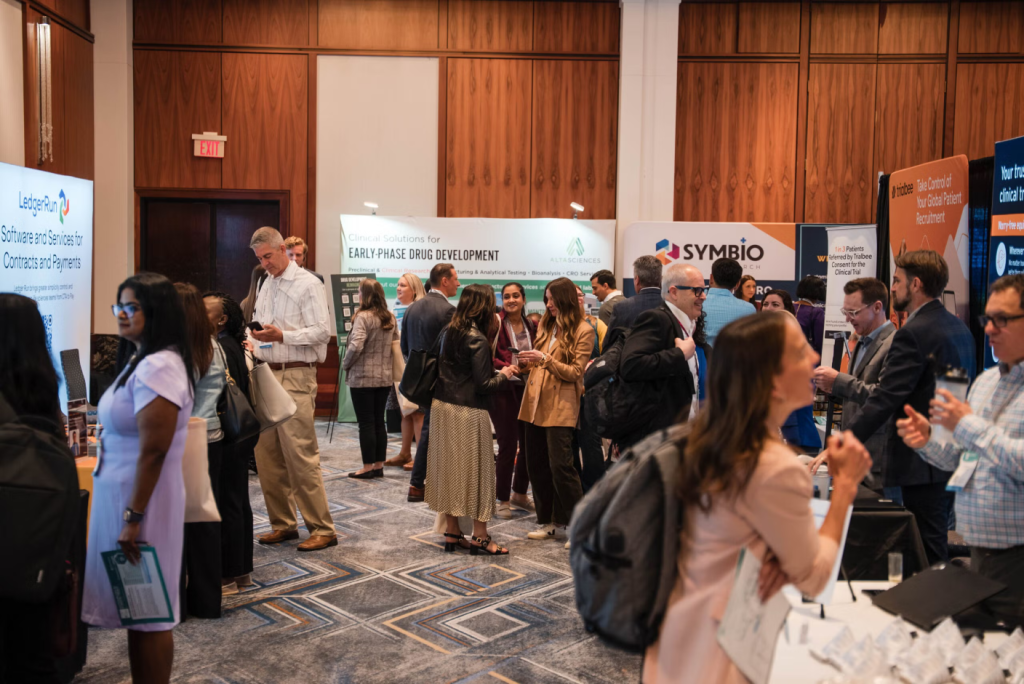
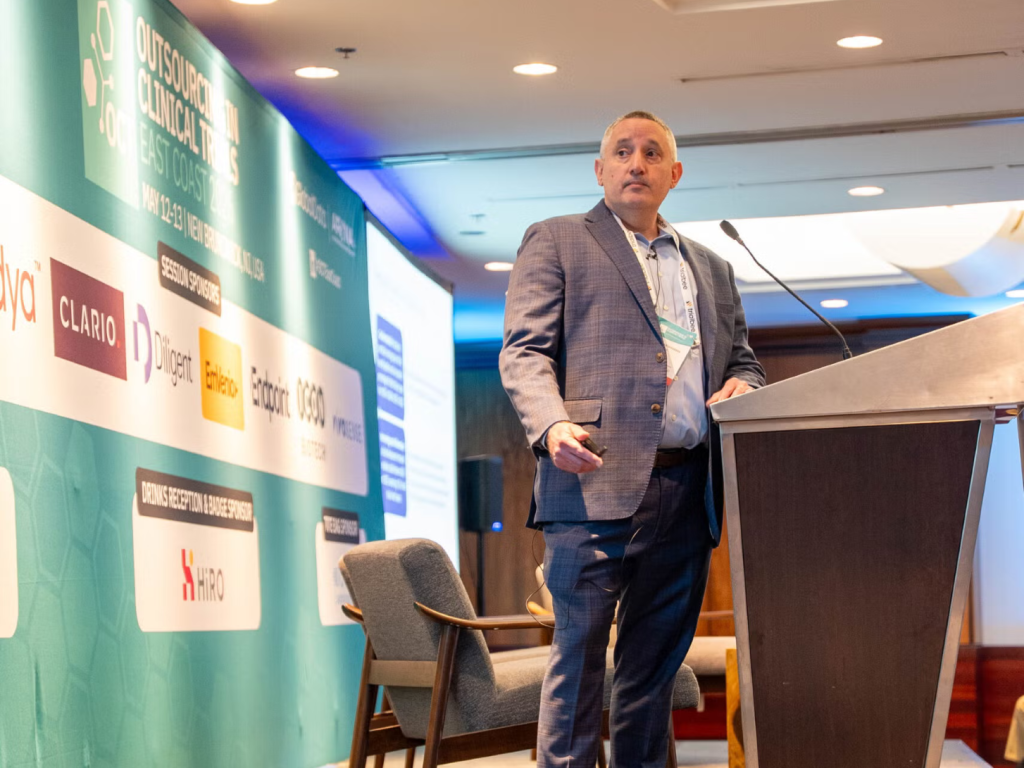
At Arena International’s Outsourcing in Clinical Trials (OCT) East Coast conference, held on 12 and 13 May in New Brunswick, Jersey, experts reflected on H1 2026 and discussed the trends they expect to continue shaping the remainder of the year.

Discover B2B Marketing That Performs
Combine business intelligence and editorial excellence to reach engaged professionals across 36 leading media platforms.
China’s domination balloons
One major trend set to continue in 2026 and for years to come, is the rise of China, said Peter Barschdorff, vice president and head of Deallus, a GlobalData company.
Research shows that in the US, the percentage of trials initiated has dropped from 49% in 2015 to 33% in 2025. Meanwhile, China has seen a significant rise, from 4% in 2015 to 30% in 2025.
This push is translating into results for China, with data showing it takes seven months on average for Phase I trials compared to 17 or more in the US. In addition, Phase I trial costs in China are 32% to 52% lower than in the US.
“The speed is just unbelievable. Not only is China cheaper, but also faster, and can lead to the approval of the asset much earlier. Of course, there are some risks – not everything is as well-oiled a machine as US headquartered companies, but the numbers are quite complex and convincing,” Barschdorff said.
Due to this movement, Barschdorff believes that companies should aim to refine their strategies to consider China.
“If you haven’t reflected on your strategies lately, now might be a good time to,” said Barschdorff. “Chances are you’ll have to do something different to stay relevant, because the market is changing fundamentally. It is also worth charting a small China task force to keep a tab on everything that’s going on over there. Those competitors that may be popping up soon or may already be here, keep them on your radar and understand what they do.”
Despite China’s growing influence, the FDA still sets the global standard, though the Chinese Government has made a significant push to strengthen its life sciences contributions.
The government in China has made the regulatory environment much easier. Timelines in China are now similar to those in the US, both on the front end and the back end,” says Johnathan Kornstein, vice president of rare disease and paediatrics at Caidya.
Kornstein also believes the strong funding landscape in China is also contributing to its growth.
Funding landscape remains challenging
Back in the US, the funding landscape remains a challenge, especially for early-stage biotech. This has been exaggerated by the pull in US public funding, including grants from the National Institute of Health (NIH), which was seen in early 2025.
“We have all seen a substantial decline in funding related to geological issues. The funding and the political shifts within the US have made it more difficult for both the US and Europe,” Kornstein explained. “Funding has been pulled from the NIH, and that’s where a lot of the early‑stage biotechs got their funding. Some of the VCs within the US and Europe have the money, but they’re not deploying it.”
While there has been a huge number of acquisitions in 2026, venture capitalists (VCs) are currently more risk-averse and are preferring late-stage, de-risked assets, with cardiometabolic and oncology being the current “hot” areas for investment.
“The funding environment is very risk‑averse; they want to invest in things that have high commercial viability, such as cardio metabolic assets and oncology assets, [that] have been de‑risked, meaning that the products have moved through proof of concept,” he shared.
Technology and AI remain steadfast theme
Unsurprisingly, technology and artificial intelligence (AI) continue to be a major trend in 2026 for clinical research.
As AI has had some years to move into the workflow, it is now starting to move from experimental to embedded tools in the clinical trial lifecycle, Kornstein says. It is being utilised in protocol development, patient recruitment, pattern recognition, risk-based quality monitoring (RBQM) and centralised data workflows, and clinical operation optimisation.
While AI is dominating more areas of the development cycle, it is not yet at a stage where it can work alone, and human oversight remains essential.
AI is also showing more significance in drug discovery, with companies like Recursion and Iambic, as well as partners like NVIDIA, displaying dominance in the field. This use of AI remains in a very early stage, however, says Kornstein, who adds that this use of AI will only remain “hot” if actual clinical success follows the current funding wave.
Trial designs evolving
Another area which is continuing to evolve in 2026 is the utilisation of adaptive trial designs, which have been shown to improve recruitment, retention and higher-quality data. This comes as sponsors are trying to make research more patient-centric, especially in rare disease and paediatric studies.

“The importance of this is thinking about the patient journey before you start, understanding the patient’s disease before you start setting up your study, so you’re designing your study around the patient rather than just the data that you want to collect. It’s a different way of thinking, but I think people are considering this more than before,” said Kornstein.
As well as an increase in alternative trial designs, there is more utilisation of decentralised trials, hybrid trials and the use of real-world evidence (RWE), including using wearables to capture patient data in a less invasive way.
Overall, while it is a difficult time for early-stage US biotech, there are many developments that are improving the clinical trial sector on a global scale. As more companies establish a presence in China or achieve proof-of-concept, the research landscape continues to look strong. However, getting a foothold in the market remains a first hurdle – and one that is likely to remain challenging.
A detailed agenda for 17th Annual Outsourcing in Clinical Trials East Coast 2026 conference can be accessed here. The conference is hosted by Arena International Events Group, a B2B events company owned by GlobalData, the parent company of Clinical Trials Arena and Pharmaceutical Technology.
Interested in attending or sponsoring OCT East Coast? Complete the form below and the Arena team will be in touch.