(TNND) — Russian President Vladimir Putin expressed solidarity with Iran on Tuesday, as the U.S. launched fresh strikes against Islamic Revolutionary Guard Corps targets in Iran.
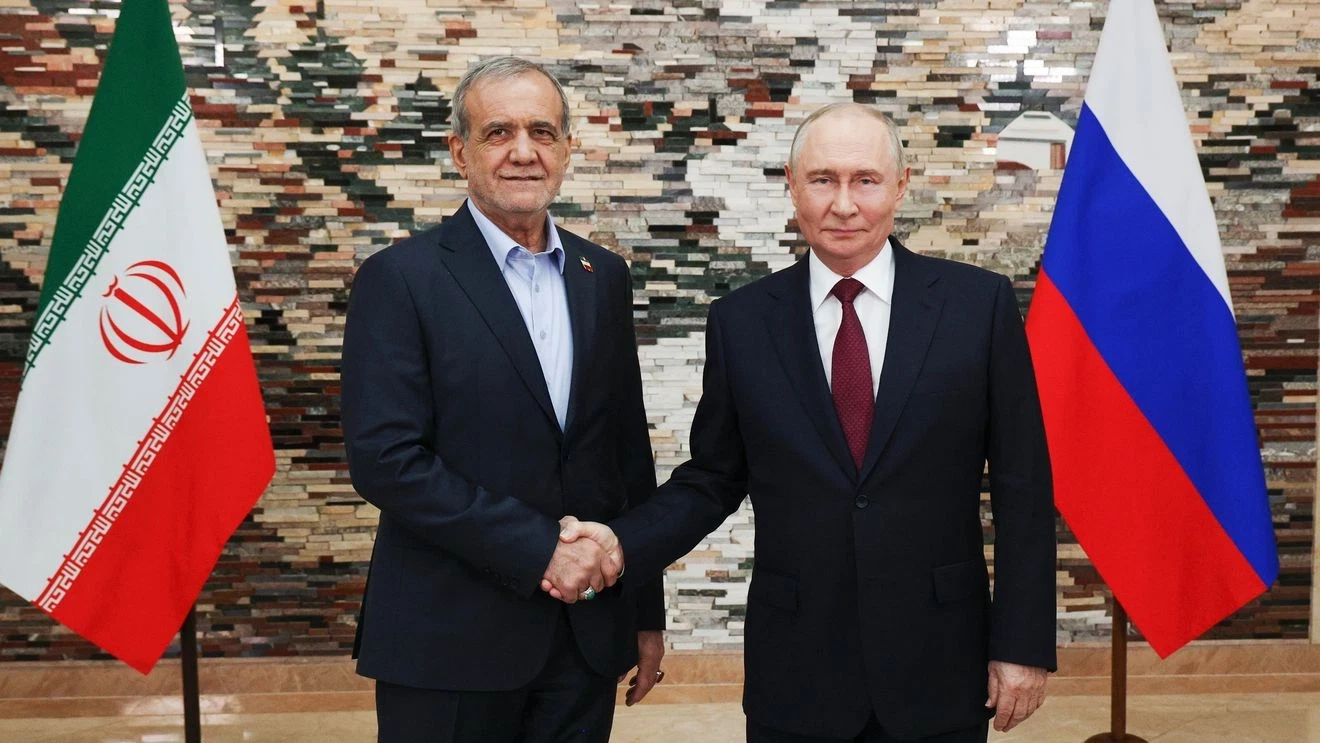
Iranian President Masoud Pezeshkian, likewise, thanked Putin for his support, as the two leaders met on the sidelines of the Shanghai Cooperation Organization summit in Kyrgyzstan.
Mark N. Katz, a Russian foreign policy expert and a nonresident senior fellow with the Atlantic Council’s Middle East programs, downplayed any significance to Putin’s expression of support for Iran.
“It would have been surprising if he didn’t,” said Katz.
In fact, Putin has expressed solidarity with Moscow’s strategic partner before, including in March after Mojtaba Khamenei was elected as Iran’s new supreme leader following his father’s death in an Israeli strike during the joint U.S.-Israeli operation in February.
But Katz said an expression of support is the “very minimum” Putin could offer, and an expression of solidarity alone doesn’t do much for Iran.
Russia, involved in its own war with Ukraine, isn’t sending any troops or major weapon systems to Iran, Katz said. At most, Russia has reportedly been supplying targeting data to the Iranians.
“I think Putin is quite happy,” Katz said. “In other words, he doesn’t want to help Iran so much that this hurts Russia’s relations with Saudi Arabia, the United Arab Emirates, the other Gulf Arab states, or even Israel. But he doesn’t really need to. … He’s just happy that the U.S. is focusing its resources and attention on Iran, not on Russia.”
And Katz said Putin doesn’t want to provide substantive aid to Iran at risk of the Trump administration retaliating by sending more aid to Ukraine.
Katz said Putin’s expression of solidarity isn’t likely to affect U.S. relations with Russia. Nor is it likely to move the needle on either of the wars in Ukraine or Iran.
“Certainly not the Ukraine war, because it doesn’t have any impact there,” Katz said. “And with regard to the Iran war, I think that Russia is happy for it to just go on. In other words, I think the main thing that Russia was concerned about at the beginning was the possibility that the Iranian regime might fall. That, Putin would not be happy about. But that doesn’t seem now likely to happen. The regime seems pretty well entrenched. And if the U.S. and Iran want to slug it out and the U.S. expend its resources, that’s fine with Putin.”
As for the Ukraine war, Russia currently controls about a fifth of the country it invaded over four years ago, including Crimea and parts of the Donbas that Russia seized before its full-scale invasion in February 2022.
Katz said some analysts believe Putin may feel under pressure, while others fear he could expand the war by attacking a smaller NATO country, potentially a Baltic state.
The Russia-Ukraine war seems to be reaching “a more desperate stage,” Katz said.
The Ukrainians are finding more success at attacking Russian targets deep inside the country, and the Russians have responded with furious attacks, Katz said.