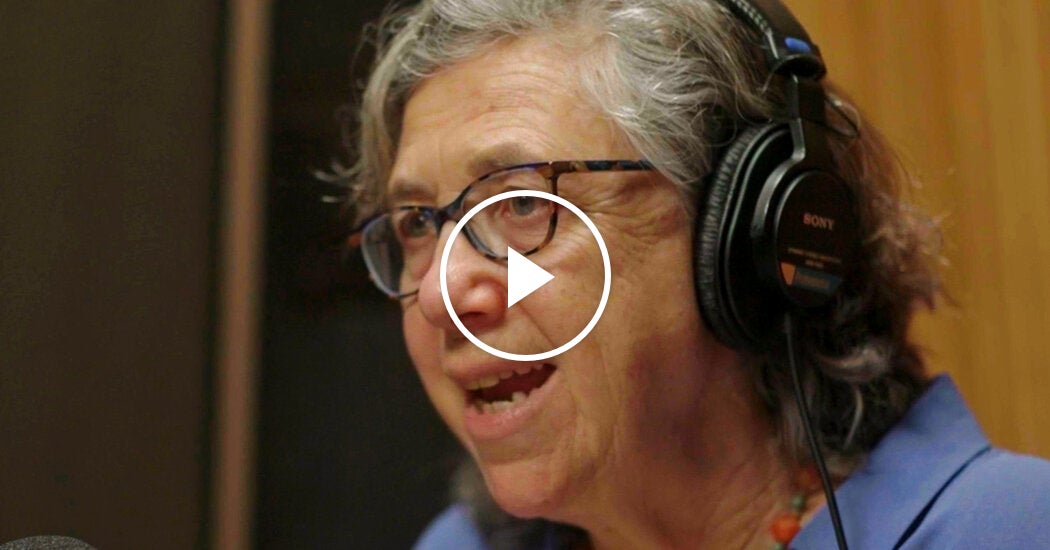
April 15 was, as you may know, tax day here in the US. If you’re a normal American, you make money through wages. Probably not your favorite day of the year. If you make a median income or above, you’re handing a lot of that money back to the government. But that is a price we pay for living in a society. Well, not for everyone. You may remember this. In 2021, ProPublica published an investigation built on a bunch of leaked tax documents revealing what the richest Americans really pay or don’t. Warren Buffett had a true tax rate of 0.1 percent Jeff Bezos 0.98 percent Michael Bloomberg 1.3 percent. Now we don’t get to see their tax documents year on year. But what they’re doing, we kind of know what it is and how it works. So what is it and how does it work and what can we do about it? Ray Madoff is a professor at Boston College Law School who specializes in tax law and estate planning and is the author of “The Second Estate: How the Tax Code Made an American Aristocracy” She knows how broken the tax system is, partially because she has helped the rich navigate it. And she has some ideas for how to fix it. As always, my email ezrakleinshow@nytimes.com Ray Madoff, welcome to the show. Thanks so much, Ezra. Wonderful to be here. So tax day just passed. A lot of us were doing our taxes here in the final couple of days. Not naming any names, but let’s start here. If you’re a normal person, what kind of taxes do you pay? You pay a lot of taxes Here’s the thing. Americans, anyone who has a job, or anyone who works for a living, either for themselves or for others, pays significant taxes. They pay income taxes at rates up to 37 percent. In addition, they pay payroll taxes that are as high as is 15.3 percent and together it’s a pretty significant liability. So what this means is that high paying, high earning Americans pay lots and lots of taxes, but all earning Americans pay something in taxes. How does this fit with the statistic people might have heard, which is that our tax code is very, very progressive, almost ridiculously so. In this telling that 40 of people pay no income taxes, and then the top 1 percent pay 40 of the income taxes? When you hear that sounds a very soak the rich kind of code. Absolutely and the problem with that statistic is it’s misleading on both ends. So let’s start first with the 40% of non-payers. This was you might have heard this in terms of Mitt Romney talking about the 47 percent which is what it was when he was running for office, and he was caught on a hot mic saying 47 percent of Americans are non-payers and therefore, they’ll never vote for me because they’re just takers, not makers. “There are 47 percent of the people who will vote for the president no matter what. All right. There are 47 percent who are with him, who are dependent upon government, who believe that they are victims, who believe that government has a responsibility to care for them, who believe that they’re entitled to health care, to food, to housing, to you name it. But it’s an entitlement. These are people who pay no income tax. 47 percent of Americans pay no income tax.” The thing that he didn’t account for is the tremendous burden imposed by payroll taxes. And even though 40 of Americans don’t pay any income taxes, they still pay significant payroll taxes. Indeed today, I just read a statistic that 80 percent of Americans pay more in payroll taxes than they pay in income taxes, and these can be quite burdensome because unlike income taxes, they start at dollar one. So it was wrong and misleading in terms of the non-payers. But where it’s particularly misleading is when it comes to this top 1 percent. We see this all the time. Whenever there are movements to impose more taxes on the wealthy, the stories start popping up in the Wall Street Journal, the Washington Post, the Economist. Those are just in the past couple of months. They all say, what are you talking about? The top 1 percent are already paying 40% of the income taxes. And what this isn’t capturing is that they are talking about that statistic is referring to the top 1 percent of income earners, those with the most income. High income lawyers, doctors, finance people. They indeed are paying a significant chunk of the income taxes. However, when it comes to the wealthiest Americans, the Zuckerberg, Bezos, Musk, Ellison, all the people we hear about so often, they are just as likely to be in the 40% of non-payers as they are in the top 1 percent of payers. And that’s because under our current tax system, they are able to avoid taxes altogether by avoiding taxable income. So walk me through this. You’re Elon Musk or Jeff Bezos. Congratulations. Thank you. What kind of taxes do you pay? What don’t you pay? How do you end up not paying income taxes when you’re Jeff Bezos or Elon Musk? What are you talking about? So first of all, let’s focus on Jeff Bezos because he’s much more of a classic case, for Jeff Bezos. He started his own business. He owns a dominant amount of the stock. And over the course of the years, he has taken a salary that is no higher than $82,000. And it’s been over 20 years now. And that’s his salary is always capped at $82,000. And you might say, well, why would it be. He started the company. He’s the man. Why isn’t he taking a huge salary to reflect all of that he put into the company? And the reason is because salaries are for suckers. When people take a salary, they are subject to high income taxes and payroll taxes. And Jeff Bezos and a lot of our other multi-centibillionaires have no interest in paying those taxes. So instead, they take their benefits through the growing value of their stock. And their stock has grown enormously. And that massive growth of stock happens entirely tax free with no time frame. Under our current system in which that stock will ever be subject to tax. And that is because we only impose a tax if the stock is sold. And Bezos never has to sell the stock because he can simply borrow against the stock and use that money to support his lifestyle and to pay any interest that’s due on the loan. So I want to slow this down because there’s a lot in that answer. Let me start with salaries for suckers. One thing that you’ll hear is that no, they’re not avoiding a salary. What they’re doing is making sure their interests are aligned with the companies. You get a salary no matter what happens in the company. But Bezos only makes money if the stock goes up. So this is public spirited. Elon Musk sometimes making like $1 a year that these are public spirited CEOs who have yoked themselves to actual success. And we should applaud them for it, that paying themselves in stock is just better for everybody, incentives wise, than salary. Why don’t you buy that Yeah, because it’s not true. I mean, what is true is that they are profiting through their stock. Arguably, it aligns with the interest, but they could be taking a salary too. It would be deductible to the company. There’s nothing that really supports that. That’s the actual reason for doing so. So yes, it’s a nice cover story, but I don’t think anybody presents it with a straight face. So I think it can sound like we’re just picking rich people at random. Jeff Bezos, Elon Musk. But there’s this 2021 investigation published by ProPublica that came from actual leaked tax documents that gave us a real window into them. We actually know what they paid Yeah can you tell me about that investigation. What we actually saw and learned from that. So there was a fellow by the name of Charles Littlejohn that was his actual name named by Dickens yes, the Robin Hood, the Robin Hood character. And he was a contractor at the IRS. And he saw all of these tax returns and he leaked them to ProPublica. He’s actually in jail now. He was hit with a very significant prison term. When they found him, because there were a lot of very rich, powerful people who were quite angry about it. And it is illegal. It was absolutely illegal. It was illegal. But the actual penalty was much smaller than what he actually got. And the reason this information was so important is because while tax scholars long knew that there were ways for wealthy people to avoid taxes by avoiding taxable income. Taking low salaries and not selling their stock. It was always met with well, yeah, but that’s just theoretical. That’s not real. But here when these tax returns were leaked, it was no longer theoretical. It was tax returns of many of our richest Americans paying zero in taxes. And so now it’s no longer possible for people to say it’s just theoretical because we know that it’s not. I mean, that investigation found that year that Warren Buffett had what they called the true tax rate of 0.1 percent, Jeff Bezos, 0.98 percent, Michael Bloomberg 1.3 percent I mean, I pay much higher taxes than that. Yeah and so I think that I mean, of course, what they’re capturing there is their unrealized gains on their stock. Then the next part of the story you’re telling it, what is the difference between selling stock to fund your lifestyle, Jeff Bezos and Elon Musk. They presumably have private planes and multiple homes and fancy vacations. And what is the difference between funding that by selling stock and funding it, by what you just described, which is borrowing against stock? If they were to sell the stock, then they would have to do two things. One is they would have to pay capital gains taxes, which would be when you take into account all the taxes associated with it, over 23 percent. So that’s still lower than on a high income. Absolutely, selling the stock is definitely a better play than having to take a salary. So because again, salaries are for suckers because salaries are for suckers. And it turns out selling stock is for suckers too, but just slightly less of a sucker. So you get to pay lower tax rates than you would on if you were to take a salary. Your payroll taxes are you don’t have payroll taxes. You just have this net investment tax, which is less, and you have a 20 percent capital gains rate. So that’s better than salaries, but not as good as borrowing against the stock. So you go to a private lender probably you could go to a bank and their biggest risk is that they’re going to lend it to somebody who is going to default on the loan. But if you’re lending it to Jeff Bezos and he’s giving you Amazon stock and other assets to hold as collateral against the loan, the risk of that loan going unpaid is nil. So they are basically making essentially a risk free loan for which they offer very favorable rates, and still they profit from it because the business is to lend money. But the thing is, when we turn to Bezos’ side, the tremendous advantage is that loan is entirely tax free. So when he gets that money and buys his yacht, he has not had a taxable event. He continues to own his Amazon stock. He continues to be able to live the lavish lifestyle. And all he has to do is pay a little bit in interest every year. I want to stop you again on this. They don’t need to pay back the loans because this really doesn’t feel intuitive. Yeah how is it possible to fund a lavish lifestyle on these loans and no one ever has to pay them back, right. At some point, in theory, the loan comes due. Well, no. Only you’re assuming that Bezos lives in the world of Americans who have 20 year loans on their homes, and the bank is lending the money, counting on getting the money back. These are people lending money in the business of lending money. And they’re happy to keep lending money, because if you’re in the business of lending money and you get the money back, then you have to find somebody else to lend it to. So why not just keep lending it to Bezos? So you’re just taking out in this way of funding a lifestyle, one loan after another, sometimes paying one loan back with another, and you’re just doing this again and again. So I think what’s hard to internalize is how much wealth it really is. When somebody has $100 billion, $200 billion, almost $800 billion. But when it comes to somebody like Bezos and our other centi billionaires, their lifestyle is not they are not bumping up against the value of their entire assets. A few billion really supports quite a lovely lifestyle, and they don’t have to get anywhere near where there’s some risk that they can’t provide sufficient collateral. It would be as if in order to support your lifestyle, needed to have $100 relative to the amount of wealth that you have. Do you think it would be hard for you to maintain a loan on that $100 based on the amount of assets that you have, and borrow enough to pay the ongoing interest? So something I don’t think it would be hard, but something I think you’re getting at here is that consumption doesn’t scale. So even when we’re talking about how do they fund their lavish lifestyles. Look, I don’t know what Elon Musk’s carrying cost is year on year. I don’t know how many homes he’s got or whatever. But say it’s between $25 million and $100 million Yeah, it’s penny change. It’s a fraction of the interest. Yes, that’s exactly it. The other thing is that if they sell the stock, they run the risk of giving up control over their companies, and they also run the risk of not being able to enjoy the future growth of their stock. These are companies all heading into the stratosphere, and they don’t want to give up any ownership. They want to keep going with this ride. And their stocks have proven to be a very good choice, because the growth in value has far outpaced anything they have to pay in interest, so they get to retain control of their companies. They get to ride up the value of these tremendously profitable companies, and they get to do it all entirely tax free, while all the rest of us are left holding the bag. All right, so the story you’re telling here is a situation where if you have enough money. And that money is not seen by the US government as income, you can borrow against that wealth. And that creates a tax free form of money that you can use. And you just keep rolling it over and rolling it over and rolling it over. I have a couple of questions about this, but before we get into those, I want to compare this maybe to somebody in the 99th percentile. Let’s say you’re a Beverly Hills surgeon making $2 million bucks a year. Yeah. And then let’s say you’re a tech founder who has $180 million in company stock and only takes $1 a year in compensation. Yeah both of those people are rich. Yeah what is the difference in the way they are taxed? So the difference is that and that’s a perfect example. The Beverly Hills surgeon is going to pay a lot of taxes, probably in excess of 50 percent on all of their earnings. So when they have however much they’ve accumulated over their lives, they’ve already paid significant taxes on that acquisition of revenue. However, our tech person who has a mere $180 million, right, not a billionaire, a piker, still has achieved this $180 million entirely tax free. There is no tax unless he or she sells the stock. And because they don’t have to sell the stock because they don’t want to sell the stock, they often don’t sell the stock. And here in the United States, they never have to pay taxes on that gain. And so then what happens when they pass that stock down. None of us live forever, even though some of us are definitely trying, particularly at the levels of wealth we’re talking about here, but assuming they don’t figure that out Yeah, the wealthy pass away when the very rich today pass away. And this stock or these other forms of assets we might be thinking about get passed down. What happens from the perspective of the tax system? Theoretically, what’s supposed to happen is that the estate tax is supposed to kick in, and its purpose was to address these transfers by gift and at death, by imposing a tax at a pretty significant rate in excess of an exemption amount. Today, that rate is 40 percent in excess of $15 million. So theoretically, both of our taxpayers are going to be subject to some pretty significant tax liability if they have to pay a 40 percent tax on the transfer of property, that’s over $15 million. That’s how we imagine the system working. The problem is that the estate tax has become so riddled with loopholes that it is really more of a tax in name only than it is a actual burden. And I will give you what I think of as the ultimate evidence of this, which is that the killing, the death tax was the number one issue for the Republicans, which is what they call, which is what they called the estate tax. Getting rid of the estate tax or killing the death tax was a big issue for the Republicans for at least the past 30 years. However, in 2025, when they had the chance to do it right. So we had President Trump. We had an entirely Republican tax bill, and he could include anything he wanted. All of a sudden estate tax repeal wasn’t there. And why is that. I think it’s because the estate tax has become so riddled with loopholes that it serves the wealthy more to keep the estate tax on the books, giving the appearance that the wealthy are paying taxes than to actually repeal the estate tax and which would shine a light on all of the ways the income tax system benefits inherited wealth. Your specialty is estates. Yes. Tell me about some of the loopholes if I came to you. And if I had chosen a more lucrative profession and done well in it. And I come and say, hey, I got $50 million Yeah and I want to pass that on to my kids. And I don’t want the government getting a dime of it. They didn’t earn it, and they don’t deserve it. What would you in maybe a more cynical and mercenary version of you. Yes like the richer, more mercenary version of me here getting together. What would you tell me to do? Yeah, well, first of all, it would matter here whether you were the surgeon or the tech entrepreneur with the stock. The surgeon has a much harder time because the surgeon has cash. They were paid in cash. They have cash and it’s a lot. They bought stocks or hold an index funds, whatever it might be. Yes, but most of their wealth was achieved in cash rather than in untaxed appreciation. And so here is where people who own stuff, typically stock, really are able to take advantage of the system in a way that others can’t quite as well. If you have a business that’s worth, let’s say, $100 million and you pass it at death at $100 million, it’s valued at $100 million. However, if you cut it up into three minority pieces, 35 percent, 35 percent, and 30 percent each of those pieces is entitled to a discount of up to 30 or 40 percent Now, all of a sudden, your $100 million has been shrunk to $50 million, $60 million. And then it appears on the other side at your kids blowing back up to $100 million. That’s one way we call those minority discounts. But even better are devices where somebody creates a dynasty trust. These are really the sounds good. I want a dynasty trust. And dynasty trusts are fascinating because the purpose of the estate tax was to avoid dynastic wealth. And it’s a sign of how flagrant the estate planning can be that they actually just call these dynasty trusts Yeah, we know they’re supposed to not have dynasties, but we got dynasties for you. And what they do is they create a vehicle for your children, grandchildren, great grandchildren, great great grandchildren forever in perpetuity to benefit from this trust and the growing value of this trust, and they get funded through a lot of complex arrangements, oftentimes through sales. You will sell your stock early on to this company in exchange for a low interest note and for estate tax purposes. You’ve gotten it out of your estate, but for income tax purposes, you’re treated just as if you’re dealing with yourself. So you pay no taxes on that transfer. And these dynasty trusts through devices like that are being stuffed with billions and billions and billions of dollars. And this is happening all around the country. Around the country, estate planners are helping their clients fund these dynasty trusts. There’s also charitable vehicles that are used where basically you give a charity an interest up front, and then at the end, it goes to a private person, but you price it such that all of the gain is somehow written out of the written out of the picture until it magically appears at the end of the story. It’s the same thing with GRATs, rolling GRATs A lot of these are stories of.. Oh yeah, rolling GRATs. Rolling GRATs, of course Yeah, rolling, like Rolling Rock Beer, rolling. GRATs. So a GRAT is something that is a grantor retained annuity trust. And you don’t want to know what it is, but it is a device by which people are able to transfer enormous amounts of wealth tax free. And these are just some of the many devices that are used and that estate planners have and have had for too long. Now, why do they have all these devices. Were the devices created to be used this way. Were they created for another purpose and people just figured it out. Like, is this tax code designed to do this, or has it been chopped up through of brilliant tax machinations. So let me step back for a second. In order for a tax system to work, there has to be a dance between taxpayers and Congress or the IRS, whoever is the regulating authority. Basically, Congress sets out some rules. The IRS sets out some regulations. Taxpayers and their estate planners or other advisors find ways around the rules. Congress or the IRS is supposed to come back in here and close the loopholes. Respond to that. Taxpayers go out. They try to find other loopholes. And together there’s this dance that it does a pretty good job of making sure that the tax system is doing a pretty good job of collecting the revenue that we need in the country to run the country. For much of the 20th century, this worked pretty well with the estate tax. The estate tax was seen as a very innocuous tax well accepted in the country. It serves as a backstop to the income tax system, which had all these ways for wealth to grow tax free. And the estate tax was there as a sweep up tax to make sure that it was going to be subject to tax. The problem was in 1990, they stopped. And that was the last time we have had any reform done to the estate tax. But of course, the estate planners haven’t stopped. They have. Did it stop. Because my understanding is we’ve had cuts to it since then. George W Bush, you could call it reform or not reform, but it has been chopped up and sliced up and made weaker. All that. So quite a bit since then. Well, what has happened is that there have been two changes. The exemption amount has increased and the rates have decreased. And so there was a big discourse around this. I remember this a bit. It’s like, oh, these people are passing down family farms and their family farms are getting taxed away. And so they cut it up then. So how does it change. So that double tax that hurts family farms and businesses. The death tax. That campaign was funded by 18 of the country’s wealthiest families in the early 1990s. So the Mars, the Kochs, the Waltons, they all got together and they were like, O.K, we got the income tax handled, right. We can borrow, we can avoid salaries. But this estate tax, Congress keeps fixing it. They keep doing the generation skipping transfer tax. They do the special valuation rules. We got to stop them. And they funded this campaign to turn the public against the estate tax. And they did so by telling the public that the estate tax was an immoral death tax, making it seem like it came for everyone rather than the estate tax, which definitely had a rich people heir to it. So they said, no, no, this is a death tax. It comes for all and it particularly harms family farms and businesses. Now, what they didn’t say was that there are actually a lot of provisions in the tax code specifically designed to protect family farms and businesses. And indeed, Congress had a very hard time finding actual examples of people who actually lost their farms. Their favorite person who they used was this fellow by the name of Chester Thigpen, who had a farm. What a name. And he was the grandchild of slaves. And he testified in Congress that he was afraid he was going to lose his farm due to the death taxes that were going to be imposed when he died. And he was so effective that Republicans wanted to call it the Chester Thigpen Estate Tax Repeal Act, because he was such a compelling figure. Well, a few years later, Chester Thigpen then dies, and turns out he wasn’t subject to the estate tax at all because in fact, his farm fell well within the exemption and there were other areas to protect it. So they easily Congress could have easily addressed the family farms and business a problem if one sees that as a problem by basically expanding the protections that were already there, but instead they were using it as a cover for all of the people the Mars, the Waltons, all of those people that had massive amounts of inherited wealth and they wanted to be able to pass it tax free. O.K, so I found these numbers in your book kind of shocking. In 2000, before the Bush tax cuts, Americans filed 122,000 estate tax returns. In 2010, it was 47,000. In 2013, after Obama’s tax plan went into effect, it was 32,300. Then after Trump, there were 6,158 in 2021, of which only 2,584 were actually taxable. So either between 2000 and 2021, rich people stopped dying or there stopped being rich people, or we really gutted this thing within an inch of its life Yeah, I’m going with number 3. So in 2024, the richest 1 percent of Americans controlled massive amounts of the country’s wealth $50 trillion. And yet, the estate tax that was designed to apply to all transfers at death and by gift, and there’s a lot of gifting that goes on because as I mentioned, those techniques all involve gifting. So lots and lots of gifting is going on by these people. The 40 percent estate tax only raised $30 billion in 2024 out of $50 trillion of wealth owned by the richest one percent of Americans, it is practically nothing. It is an amount that Elon Musk has both earned and lost in just a single day, and probably hardly even noticed. So clearly the estate tax is not doing what we think it’s doing. This will sound stupid, but I think it’s worth talking about. Why are there different rates for different kinds of income? Why do we treat income earned at our job. Income earned by selling stock and income earned when you know somebody dies and leaves everything to us, or income given to us as a gift. Why do we treat them all differently? What are we trying, in theory, to achieve? It’s interesting. Andrew Mellon, who was known as a tremendous anti-tax crusader, felt that famed robber Baron. Yes felt that this and also Secretary of the Treasury and for a number of administrations felt that the rules should be that income is taxed at the lowest rates and investments are taxed at the highest rates, because people earning income, they are in the most precarious situation, and they are likely to need the lower rates, as opposed to people who are just sitting back and relying on their investments. Let me read the quote here. I took this down. It’s in your book. This is from Andrew Mellon’s 1924 book “Taxation: the People’s Business.” He writes the fairness of taxing more lightly income from wages, salaries or from investments is beyond question. In the first case, the income is uncertain and limited in duration. Sickness or death destroys it and old age diminishes it. Here he’s talking about wages. In the other, the source of income continues. The income may be disposed of during a man’s life and it descends to his heirs. Heirs that Andrew Mellon was saying that it was beyond question that you should tax wage income more lightly than investment income. I mean, it speaks to a very different time. So what is the thinking that leads us into the current world, where no matter how you think about the code, it is the reverse. Income if I sell stock that gets taxed more lightly than the income from that, than the income I make from the New York Times. And what’s interesting is when you actually dive into it, there are 50 reasons about of arguments that are given about why investment gains should be taxed at a lower rate. Things like, well, sometimes you there might be a lot of inflation if a lot of time has passed. So maybe it’s not actual gains. And some say it’s good to encourage investments. And others say and I find just the ultimate in distorted reasoning. They say, look, right now, people are encouraged not to sell their stock because they can avoid tax by not selling. We have to lower the rates in order to lure them into selling. And so that is another justification. Even though they should just tax the gains and then people would sell. It’s also the word he uses here I think is interesting. Fairness I’ve been around this debate a long time. I’ve covered a lot of tax debates. I’ve covered debates on the capital gains tax rate again to a lot of arguments about efficiency. And the exactly right macroeconomic level to turn the dial to. And yet, as a human being, just experiencing the way income works, I work so hard for the income I make for my work. I mean, you’re a delivery driver. A doctor doing primary care work or a pediatrician. You’re working so hard. And the idea that is taxed so much more higher than somebody making money by just letting money sit-in an index fund. Or just occasionally click on a button to move it between different investments. There is a fairness question here. It actually it’s cruel. I always think it’s actually quite cruel. It is so easy to let your money make money for you. The fact that we reward it over work is crazy to me. I totally agree. And who else agreed. Ronald Reagan in the ‘86 Tax Act. They actually succeeded in equalizing for a very brief period, capital gains rates and ordinary income rates. They got rid of the preference for capital gains, which we should definitely do today. Now, one of the arguments that someone’s going to make is yes, but everybody is better off when rich people take their money and they invest in the economy. That’s what makes the whole country grow. But the thing is, much of this money this is not seed capital to start local businesses. This is money trading on a secondary stock market. It is not going to a business. It’s going to other owners of stocks driving up the shares. So I don’t buy that argument that this is growing the economy when people are putting their money in stocks. Well, let me ask about a related dimension of this, which is the rise of stock buybacks Yeah and what both how that has changed the way stocks work and how that has changed the way taxable income presents or does not present itself. We’ve been telling a story about wealthy people not paying taxes on their stock because their stock goes up in value. They don’t have to pay tax on that gain. However, prior to 1982. Because companies could only share their profits through dividends. What it meant to own a lot of stock was to get a lot of dividends. And for much of the 20th century, dividends were taxed at the highest rates, just like salaries. And so what that meant was that somebody who was sitting on a lot of stocks got a lot of dividends and paid a lot of taxes. However, in 1982, after this rule change, companies switched from issuing dividends. It used to be more than 70 percent of profits were distributed through dividends. Now, it has never been as high as 20 percent since this change went into being. The effect of it is that companies began to do lots and lots of buybacks of their stock. And this had a tremendous and its impact on multiple levels. One is if you look at the Dow Jones, there’s a chart in my book that shows that in 1982, the Dow Jones was at about 3,000. It was also that in the 70s, the 60s, the 50, the 40s, the 30s and the 20s, it was around 3,000, its inflation adjusted amount. Now it’s like in the 45,000, something like that today, right. So it switched from being a sine curve to being a hockey stick. And part of the story is stock buybacks because stock buybacks boost the value of stock. But another important part of the story is that it meant that for somebody who owned stock, they no longer had to get taxable income because they could enjoy their profits through the increased value of the stock. Some shareholders would sell their stock because that’s the nature of the stock buyback. However, a lot of these shareholders are tax exempt organizations, so they’re not worrying about paying taxes on their proceeds. So in terms of revenue to the federal government owning stock, profitable companies used to provide a lot of revenue to the federal government in the form of taxation of dividends. And now, with the rise of stock buybacks, that is much less likely to be the case. So then I want to go back to the question of what happens to these great fortunes when they get passed down. How is that treated for you from a taxation perspective. When does that get taxed. So if you receive it at death, then there is an extra benefit for people who receive appreciated property at death. And that is that not only are those gains not taxed to the person who held the stock, but when somebody receives the stock from inheritance, all the gains are wiped away. We call this step up in basis this or the a nice, inscrutable name. Yes or the angel of death loophole. That’s better. And And the angel of death loophole says that we’re going to wash away the gains, and the recipient is going to be treated as if they had purchased the property. O.K I want to slow this down for a minute because I think step up basis here is really, really quite important. Let’s say somebody made a great investment. They bought NVIDIA when it was cheap, and now some years later, they have $30 million worth of it in one world. They sell that stock because they want to buy a mansion or whatever it might be in another world. They never sell the stock. They pass away and give it all to their kids Yeah What is a difference in tax treatment for that stock. It is the same tranche of stock. Yes what happens in the two scenarios. So in the first scenario they would pay income taxes on this. On the capital gains the capital gains is imposed at a 20 percent rate, plus an additional 3.5 percent extra tax on it. So almost a quarter of it of those gains and it’s almost all gains would be subject to income tax. And so the gains of the difference between what you bought it at and what you sold it at. Absolutely however, if instead you hold on to that stock and you don’t sell it and you pass it on at death to your kids, there is an extra bonus. And that is that not only did you not pay taxes on that gain, but when they get the property, they are treated as if they had purchased it for its fair market value. And so now they’re treated as if they had bought it for $30 million. And so they can turn around and sell it for $30 million and pay no gains at all. And that is this thing that we call step up in basis or the angel of death loophole. So the gains are just wiped away. Wiped away. Not for you to worry about. That’s pretty sweet. Yes, it’s very nice. So what do you expect will happen with a Jeff Bezos then. Can he pass down $150 billion or whatever it is without too much tax implication, or is he…. Well it’s going to matter about…. It seems like a lot of money. Chances are what these people are going to use are charitable vehicles as an important part of their tax free transfers. And the problem is that these charitable vehicles afford these donors and their families enormous tax benefits, while continuing to give them enormous power in the world. And some of these vehicles that some of these tax avoidance vehicles, if they set them up during life, are not just for charity but are to influence politics. And that’s because you can put money into a 501(c)(4) That’s a particular type of organization that is allowed to engage in political activity. And under our current rules, when you give your appreciated stock, let’s say somebody decides to give $50 billion to their C4, they get to have continued control over the assets and a tax free path to avoid both gift taxes and capital gains taxes. So let’s talk about what you might do about some of this. I think something people are hearing a lot about right now is a wealth tax. One reason they’re hearing about it is that there is a wealth tax on the ballot in California this year, a one time 5 percent wealth tax. These operate a little bit differently for states and for the federal government. So let’s begin with the one in the news, which is the California one. How would it work. What do you think of it. What are the considerations for a state thinking about doing this. The wealth tax is an obvious answer to this problem. It says, all right, we have a lot of ways that people are avoiding taxable income and they have massive amounts of wealth. Let’s tax their wealth and we’ll impose a flat tax 5 percent The problem for states is it’s a few problems, but one of them is that people can easily leave states. Now California is trying to get around this problem of people leaving the state by making it this retroactive one time tax. It already applies retroactively to people who previously were living in the state. I think as of January one, a retroactive one time tax, I think is it’s not going to be a permanent solution to the problem, obviously. And nor do I think it’s going to prevent people from leaving the state, because once there’s a done once, there’s every reason to expect it will be done again. So I do think there is a problem for states in their ability to raise revenue because other states are trying to compete on these low taxes. So you have in that case is something like Ron DeSantis in Florida trying to attract. I met a rich person not long ago who showed me an app they have that counts the number of days they spend in Florida because they really want to live in New York Yeah, yeah, but they live in Florida. I mean, they actually do live in Florida. They just put in their five days a year to not pay New York taxes, which I found crazy because I figured the whole point of being rich was to not have to worry about things like this. I think this is why people really do it, I guess. Yes, I think I find it insane to be rich and to have to live somewhere that you don’t want to live. But of course, this is why you’re a podcaster and I’m a law professor, right. If we really cared about money, maybe we’d really care about taxes. And because to me, it seems insane. But people do that all the time. So do you think the wealth tax proposal would be good for California, or is it something that would just create a benefit for Texas because it’ll pull in these rich people. Well, it’s hard to say that it’s going to make a huge difference when it’s just a one time tax. So it would have to actually be a more permanent tax. And I think it has a number of problems. One of them is the problem of people leaving. But I think another really significant problem is how you’re going to gather the information of how much wealth the person has. It’s very easy to think about somebody who owns publicly traded stock, and we know how much stock they own and we know how much they have. But there are lots and lots of wealthy people that own their wealth in other forms that are very difficult to value. And now you’re talking about a State Department of Revenue having to build up the resources to have everybody tell them everything they own and keep up with valuation of it. It’s going to be quite. How much is your art collection worth. Exactly how much are your crypto NFTs worth. Absolutely and if also when you start to look at things like partnership interests, these are highly complex structures, and it’s impossible for somebody to be able to monitor that for all of the different taxpayers. So it’s a very, very difficult, practical task to get around. Again, California has some solution where you can defer paying taxes and all of these things, but it’s just very difficult to do. It’s not as easy as it sounds. And I think that it’s also a problem in terms of winning the support of the American public, because we pay taxes on the value of our homes. But generally, when we think of the value of all of our assets, we know that there’s an estate tax at death. But that’s very different than requiring people to disclose every single thing they own during their lives. Every year that I think is going to feel invasive to the public, not just to the people who are subject to the rules, but to the other people who are thinking about the fairness of these rules. But that question also applies to a federal wealth tax, which maybe brings us to that. So I think to the extent these proposals are associated with anybody, it’s probably Elizabeth Warren who has had a number of them over the years. But there are proposals for different forms of national wealth tax something that could be two percentage points of your wealth every year, year on year. And how do you think about those. So in the federal level you get to avoid the problem I think of people moving. Sometimes people say, oh, no, people are going to leave the United States. It’s very hard to leave the tax clutches of the United States. And also, this is not an age in which people, a lot of people want to regularly give up their US citizenship, and become a citizen in some other country. Dubai or whatever. Exactly so I don’t think people claim that. I think looks bad at the moment. Yes, exactly. Dubai move which people in the UK, the rich in the UK sometimes do, and I think has been called into question by the recent war. Yes, exactly. And so I think that’s something that people threaten will happen. I don’t think that would happen here. But the bigger problem here is the constitutional issue. So our federal Constitution basically has these special rules about direct taxes and indirect taxes and wealth taxes raise constitutional issues. It’s hard because we have a limitation in our Constitution on direct taxes. And the problem is that given our current Supreme Court, we have every reason to think that this Supreme Court might find a wealth tax unconstitutional, which it could very easily not survive. So all of that political effort will have been spent for nothing, and it just seems not a smart way to go, particularly in today’s world, where the wealthy are able to avoid taxes so easily through this highway of alternatives of tax avoidance because of our failure to tax their investment gains and their inheritances. So I think there’s a lot more easier paths to follow. It’s not going to be as immediately effective as a wealth tax, but it’s more likely to be permanently effective. So then what would you do. So what I think should happen is first of all, we have to look at investment gains. And the problem with our investment gains is that they are never taxed to the person who owns it unless they sell the property. However, in Canada they have a much broader rule. And that rule is that whenever the person transfers the property not just by sale, but also by gift or at death. The gains at that time will be tallied and the person will have to pay tax on that gain. And that way gains are taxed to the person who earned them, rather than kicking it down the road to some time in the future that may never come. I personally would if I could write the rules, I would say that we should eliminate the distinction between capital gains and ordinary income and give them an inflation adjustment to reflect that inflation holding and other than that impose ordinary income rates on that gain. In addition, we need to address inheritances. So people are receiving massive amounts of wealth entirely tax free. If you were to walk down the street and find $100, you would be expected to report that to the federal government. However, if someone were to give you $100 million dollars. You literally don’t have to tell anyone. There’s not even a line on your tax return to let anyone because that is seen as entirely your business, and we should not have that be the case. We should get rid of the estate tax, which isn’t doing anything. You could just hand somebody $100 billion and you don’t have to report it to anybody. The person who hands it is supposed to report a gift tax return. But if it’s been put into a trust, the trust has grown. It’s distributed from the trust. The person receiving the property may have some flow through gains through complicated tax rules. But the receipt of property by gift inheritance or life insurance. And by the way, life insurance is the favorite vehicle of the super wealthy to pass their wealth. When they convert it into a life insurance policy, it all of a sudden becomes non-taxable everywhere that is received. Those are subject to exclusions, meaning you don’t have to even report them. One thing that the way you just described that I think makes clear is that there’s the level on there’s a level of tax design, and then there’s the level of the will to enforce tax design, which is to say that if you imagine the kind of reform you’re talking about could make it, but then you would have to actually want it to work such that you began shutting all this other stuff down and keeping it shut down. These life insurance loopholes you’re talking about. But how do you think about these two levels. There’s a level of tax design, and then the level of the tax code is complex. People don’t know what’s happening in it. But the people who do know what’s happening in it have a very, very, very strong incentive to support politicians who will allow them to keep using these loopholes or to punish politicians who try to close them. So let me start by confessing I am an optimist by nature, so you may need to take everything I say with a grain of salt. However, I think that this system of non-payment by wealthy Americans came about because of our particular history and particular vulnerabilities of the estate tax. So we had a system where the income tax was incomplete. The estate tax was supposed to be a backup. The assault on the estate tax in the early 1990s was so effective that even Democrats were afraid to do anything to close the loopholes, because so many Americans saw it as an unfair double death tax. I think if we had a cleaner system that we could easily have, we get rid of the estate tax. We have an income tax system. It gets a lot harder to pull the wool over the eyes of the public. So I don’t think it’s the case that rich people can always control, always get what they want. I think that we are living in a moment now where this is. There’s more pressure than ever for this to happen. This California wealth tax. This is happening because the public has become broadly aware that we’ve got a lot of Super rich people that control massive amounts of the country’s wealth, more than they’ve held, I think, since the 1920s. Significant amounts, I think it’s currently 31.7 percent 32 percent of the country’s wealth is held by the richest 1 percent of Americans. And at the same time, none of them seem to be wrapping themselves in glory these days. If we go back 20 years, we had all sorts of amazing things being done by our rich people, and there was a book that came out in the early 2000 that was called “Philanthrocapitalism” and the subtitle was how the rich can save the world. And this was not seen as insane. Can you imagine a book today, how the rich can save the world. I’m in the professional opinion business. I can imagine anything Yeah, but the idea that someone would think that this would land with the public, which it did in that era. The super rich, they are. They can do so many things. We should hand over all of society’s problems to them. I mean, I think a lot of people would find that laughable today. I think something that comment is getting at is sometimes people want to tax the rich because they want to punish them. They just like they don’t like the rich. They definitely don’t like the rich right now. I’m very sympathetic to the argument you’re making. And on the other hand, that then winds a lot of things up in moral judgment when my view is that Sergey Brin should have to pay taxes on that wealth, no matter if he’s in the don’t be evil era or in the totally evil era. I completely agree. I think it is a big mistake to focus on. Rich people are bad and therefore we should be imposing taxes. Because the reason I think it’s bad is because when we move the conversation to whether rich people are good or bad, we are not focusing on the fact that the richest Americans have been written out of our tax system. It’s as if we had a system that said, people who live in Pennsylvania don’t have to pay tax. We shouldn’t have a discussion that says, well, some of the people in Pennsylvania are good. Maybe, maybe it’s O.K. They don’t pay tax. It’s wrong as a matter of principle. It’s wrong because we need their money. It’s wrong as a matter of fairness. It is wrong for so many reasons. And I think the big problem goes back to your earlier question, which is that the public is misled into thinking the wealthy are paying more taxes than they are. And that is why with this 1 percent paying 40 percent Most of the public doesn’t know that the wealthiest Americans are able to avoid taxes by paying taxable income, and if they knew, they wouldn’t want that system. I find what you’re telling me here to both track what people I know who have worked on crafting wealth taxes tell me. But I find very frustrating. Which is that it seems like it should be possible. And the more you get into it, the harder it becomes, both constitutionally, which is one dimension of it, but the valuing and the continuous valuing and the worrying about people moving things into harder to value assets becomes a problem. And I don’t I’ve wanted there to be a wealth tax as long as I’ve been aware of taxation. And the thing that I feel we’re losing if we can’t do something like it, which I just think is worth naming, is it wealth creates power. It creates a tremendous amount of power. And we’re operating in this era when it is not that the rich were necessarily the Super rich. So shy about using their wealth to wield power. I mean, you mentioned the anti estate tax campaign that was heavily funded by 18 of the richest families. But the level of direct engagement that you’re seeing now from people like Elon Musk, they are really making the long running fear that if you have enormous wealth, concentrations of wealth, you will have unmanageable concentrations of political power manifest. And you can design a tax code that taxes this money eventually. But it doesn’t solve the political power question in a way that I think a lot of people want to use the tax code to do so. And I’m curious how you think about that Yeah, I think it’s a real problem. And it’s a real and it’s a real concern. I mean, people controlling massive amounts of wealth have tremendous power in our society. And I understand that in some fantasy world, a powerful enough wealth tax will be enacted to make a sufficient enough dent in the wealth of the wealthiest people, where it is brought down to a level where they no longer have this power. However, from where I sit, that just looks like a fantasy world. That’s not going to happen. It’s not going to be significant enough. The public isn’t going to buy it generally. And I think one of the reasons the public isn’t going to buy generally is because of something we talked about earlier, which is that to the extent it is a special tax focused on the richest people, we have to punish the richest people. I don’t think everybody in the country agrees with that. A lot of people in the country think that people who have acquired their wealth have done so because they’ve done great things, they’ve started great companies, and sometimes they have. Sometimes they have done great things. And so it paints too broad a brush. The problem with it is that we have to live in the world that we actually live in, and in the world we actually live in. I don’t see that as being a solution that’s going to deliver that result. I think there’s also another dimension to why you should want to make sure the richest people are paying taxes, and that is that people do what other people do Yeah, I was thinking about this while reading your book and preparing for this. I pay taxes, I don’t mind paying taxes. I think that is part of living in a society. Living in America has been good to me. It does piss me off that people above me are not paying taxes. And when I hear sometimes I’m talking about their weird strategies and I’m not talking about said to billionaires here, just people who spend more time on tax avoidance, you think, oh oh, am I being a sucker Yeah and the fact that at these very high levels, the very richest are making the rich people right underneath them feel like suckers. People don’t want to be suckers. They don’t want to feel that other people are getting a deal. They’re not getting. Now, on one hand, you might think it would be good if this made more rich people advocate for a better tax system, which it doesn’t seem to have done to shut down the ability of people above them to do this. But I do think that it’s very corrosive to social solidarity. I completely to have this sense that the people, there are people out there getting a way better deal than you are. I couldn’t agree more. And that’s why I think a lot of that has to do with the fact that people feel like this point that you made before. Well, the regular people are always going to lose out. The rich are always going to have their way. It’s always going to be to their advantage. But that is not always the case. And that’s why I think it’s important to think back in history to different times. So one of the times I think is particularly interesting is the Tax Reform Act of 1986. That is the last time that we actually have had any really meaningful reform in the tax system. It was under President Reagan, which was kind of surprising, but it adopted principles of a lot of from that had been around under both parties. And what it did when we talk about high income earners and the inability of high income earners to avoid taxes, that is because of changes that occurred in 1986. Prior to 1986, we had a flourishing tax shelter business and high paid. Your high paid surgeon would have not paid taxes on their income because they would have been able to do their invest in tax shelters and offset all of their income. People always talk about the very high mid century, World War II, post-world War II income tax rates, but I think this is important because some of these were not actually as real by 1986. If you look on a chart. So you had these high rates, but you had massive avoidance by high income earners. And the 1986 act did something very interesting. And I think something that we should be doing today, which is it broadened the base by getting rid of those tax shelters. And so effectively got rid of those tax shelters that we don’t have them today. Our high income people, people with lots of salaries, they are paying lots of taxes. There’s really very little reason or ways for them to avoid taxes. And they were a politically powerful group. So it can happen if you have people that really care about making it happen, it’s not like it’s impossible to make happen. And I think that is the only way to go. Our only way forward as a country is if we figure out how to have a fair tax system. And I think that imperative, that moral imperative is also a financial imperative because right now, our national debt is so great. Interest payments on the national debt are the third highest expense after Social Security and Medicare. It is. We are spending $1 trillion just to carry the debt this year, more than we’re spending in the military. And that is not sustainable. So we’re going to have to find a way to bring everybody into the tax system. And then always our final question, what are three books you would recommend to the audience. The first book is “The Age of Extraction” by Tim Wu. This is a fantastic book that talks about how many of our companies that used to do a lot of good for the world are now, rather than producing wealth, they are doing wealth extraction, and that’s not good for any of us. And it’s relevant for these issues of taxing individuals and taxing companies. The other is the book, “The Rise and Fall of the Neoliberal Order” by Gary Gerstle. And I like this. All past guests of the show Tim Wu, Gary Gerstle Yeah, I love yeah, these are great books. O.K, that is a fantastic book. And I will say that the title is a bit daunting, but the book itself is so readable, and it makes this incredibly important point that the country used to have one vision of the role of government versus markets. And now we through the rise of neoliberalism, it now it switched to this thing of it’s all about let the market run free. But the point is that it is a fantastic illustration of the swings that can occur and pendulum swing both ways, as we have seen loud and clear in recent years. And I think it’s a really good reminder that when people despair of all of the problems of the day, there is an opportunity for pendulums to swing back and for better systems to take hold. And the last book is a book of fiction, the book “Crossroads” by Jonathan Franzen, fiction at any time, and particularly in these times, is just a fantastic place to live, to explore other things than the world that we’re living in. And I’d say Jonathan Franzen, better than almost anyone I know presents people’s internal psychological dramas. You feel like you’re watching a documentary. His writing is so real. And I’m only. My only disappointment is that I am waiting desperately for his next book to come out. This is “Crossroads” is supposed to be the first book in the trilogy. And I’m sure I’m not alone in constantly checking for that second book to come up. Ray Madoff, thank you very much. Thank you so much for having me. We have fixed the tax cut. We have fixed the tax code.
Opinion | Why Jeff Bezos’ Tax Rate Is Lower Than Yours
Visited 4 times, 1 visit(s) today