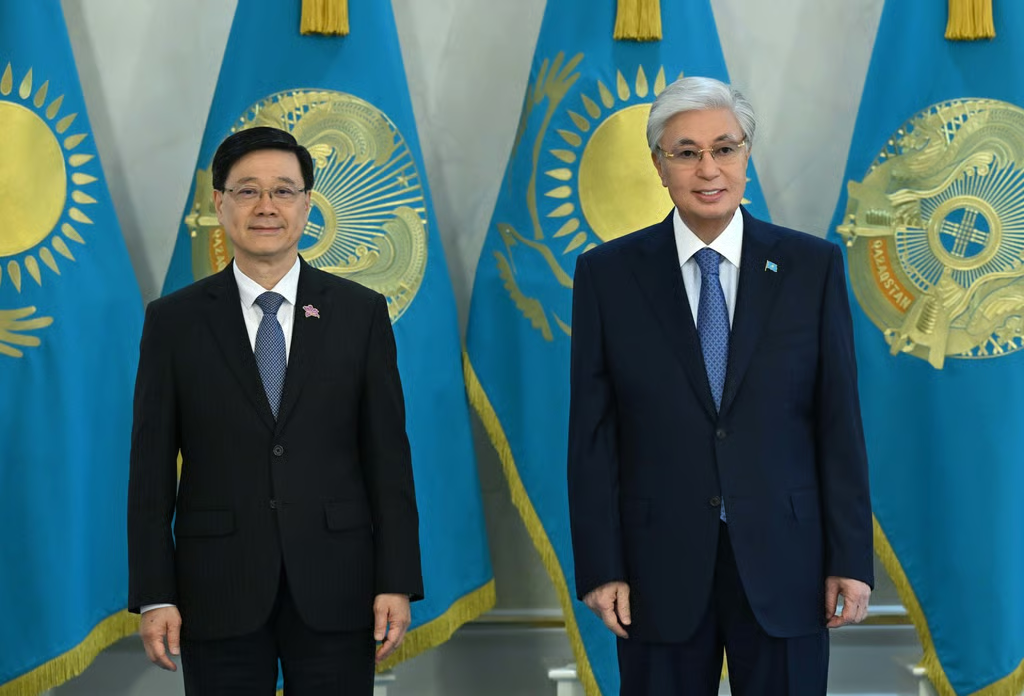
Hong Kong has taken a monumental step forward in expanding its global economic footprint. Last week, Chief Executive John Lee Ka-chiu, leading a high-level business delegation, wrapped up a successful five-day mission to Kazakhstan and Uzbekistan.
This historic visit – marking the first time the chief executive has led a mission to Central Asia – yielded 96 cooperation agreements and memorandums of understanding valued at more than US$1.65 billion. The exceptional results signal a major pivot for Hong Kong.
By unlocking opportunities in Central Asia, a rapidly developing region of vast resources and growing populations, Hong Kong is moving into a new blue ocean of economic growth while firmly cementing its role as the ultimate superconnector and super value-adder for the Belt and Road Initiative.
The sheer volume and value of the deals signed across the two stops underscore the potential economic synergy between Hong Kong and Central Asia. Rather than generic frameworks, the 96 pacts involve commercial and governmental tie-ups across vital sectors such as financial services, including green finance, innovation and technology, aviation and logistics.
Reflecting on the mission’s breakthrough momentum, Lee outlined a strategy built on exploring emerging markets, strengthening government-to-government ties and establishing a robust hub-to-hub architecture. Under this vision, Kazakhstan and Uzbekistan act as gateways to Central Asia and Europe, while Hong Kong serves as their premier financial and technological launching pad into East and Southeast Asia.
The true magic of this trip lies in how neatly Hong Kong’s institutional advantages mesh with the development goals of Central Asian economies. During his meetings with Kazakh President Kassym-Jomart Tokayev and Uzbek President Shavkat Mirziyoyev, Lee highlighted how Hong Kong’s unique status under the “one country, two systems” framework can accelerate their domestic economic reforms.
Visited 5 times, 1 visit(s) today