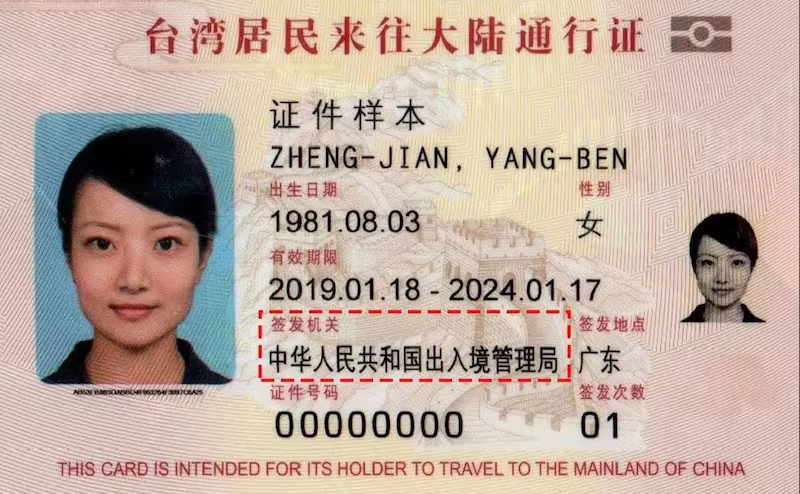
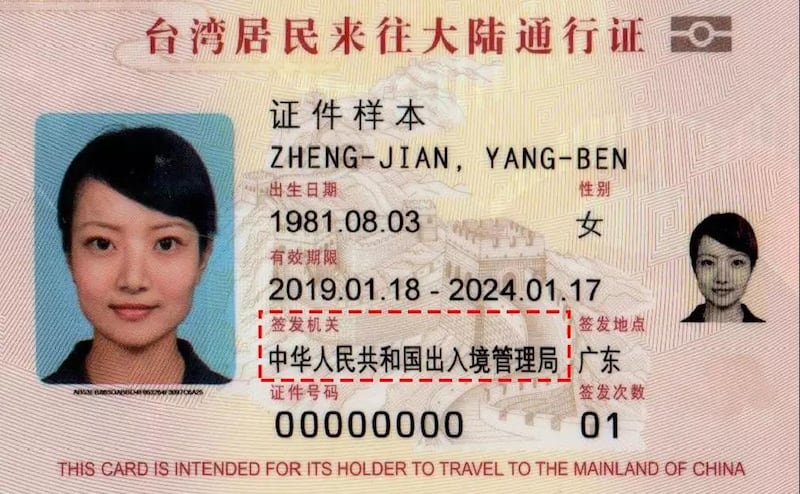
Taiwan has warned its high-tech professionals that if they visit mainland China, they could be stopped for questioning – or even barred from leaving the country – under new regulations that analysts told Radio Free Asia were put in place likely because Beijing is afraid of losing AI talent.
The new regulations that took effect on Sept. 15 allow Chinese authorities to prevent its citizens from leaving the country if violations of export-control or technology-transfer rules could endanger “industrial or technological security.”
The law applies to visiting citizens of Taiwan because Beijing considers the democratically governed island to be its territory, and therefore its people to be Chinese citizens.
The regulations are an indication that Beijing is worried about losing its technological edge, William Yang, a Northeast Asia analyst at the Belgium-based International Crisis Group, told RFA.
“I think such a move reflects China’s general insecurity about potential illegal technology transfer,” said Yang.
The regulations do not impose a blanket travel ban on technology workers. But analysts said their broad wording could bring the movement of people more explicitly into the same security framework – anchored by the 2020 Export Control Law – that Beijing uses to control transfer of chips, equipment, data and intellectual property.
Yang said the measures should be understood within the wider context of intensifying competition between China and the United States over AI.
The regulations come as Washington has taken steps to restrict China’s access to advanced semiconductors and related technology, while Beijing has expanded its own export controls and sought greater control over strategically important technology, talent and data.
Beijing increasingly sees a need to restrict human and knowledge flows in sectors that could determine “whether it is them or Washington that will eventually come out on top” in the global AI competition, Yang said.
Technology, talent and data
China has long used exit bans in criminal and civil cases, national-security investigations and commercial disputes. Government officials and employees of state-linked companies with access to sensitive information have also faced restrictions on private foreign travel.
The new regulations, announced in July, formally connect those powers with China’s export-control and technology-transfer regimes. They also allow authorities to request documents, data and electronic information during immigration checks.

Officials may withhold the reasons and legal basis for an exit restriction, as well as information about possible remedies, if disclosure could affect national security or an investigation under these rules.
The regulations formalize and expand the powers that Chinese authorities already exercise, Sasha B. Chhabra, a Taiwan-based security analyst and publisher of the Formosa Review newsletter, told RFA.
“The new laws don’t fill any ‘enforcement gap,’ but serve two purposes: first, it gives the appearance of ‘rule of law’ as an attempted legal cover for committing human rights violations, claiming that such detentions and restrictions are simply following the law,” he said. “Secondly, it serves as a warning to Chinese abroad and will have a chilling effect on speech and activities of overseas Chinese.”
China says the regulations are intended to protect national sovereignty and security while safeguarding the lawful rights of people entering and leaving the country.
Beijing has dismissed Taipei’s concerns over the new regulations, saying they provide stronger legal protections and do not impede normal cross-strait exchanges.
The Manus case
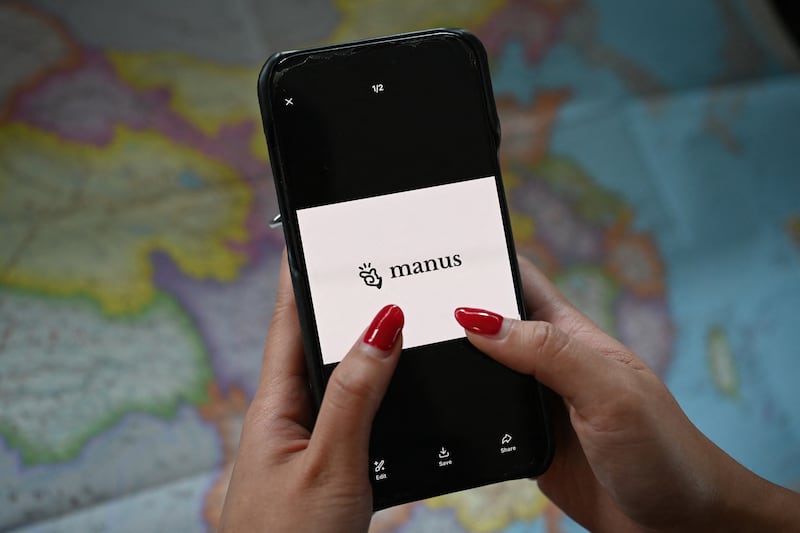
Earlier this year, Beijing blocked U.S. tech giant Meta from acquiring Manus, an AI company founded by Chinese entrepreneurs but headquartered in Singapore. The methods used to stop the US$2 billion transaction provide an early example of how controls over people can reinforce restrictions on technology and investment.
Chinese authorities in March summoned Manus co-founders Xiao Hong and Ji Yichao to Beijing and barred them from leaving the country while regulators reviewed the acquisition.
In April the government nixed the deal and ordered it unwound under its foreign-investment national-security review mechanism.
“The recent focus on technological expertise indicates Beijing’s concerns about losing the AI race to the U.S. over competition for talent and access to frontier technologies,” Chhabra said.
He added the Manus case was particularly significant because it involved China asserting authority over an international transaction concerning a company headquartered outside the country.
State-backed Chinese media said the key issue was not simply where Manus was registered, but the extent of its connections to China through technology, talent and data, as well as whether the transaction could threaten China’s industrial security and development interests.
The case also demonstrated the difficulty of separating technical expertise from other forms of intellectual property. Code and data can potentially be returned or deleted, but knowledge absorbed by researchers and engineers cannot easily be recovered after it has been transferred.
Risks for Taiwanese professionals
Taiwan’s Mainland Affairs Council has identified semiconductor and high-tech professionals among five groups it believes face heightened risks under the regulations.
The other groups are Taiwanese businesspeople based in China, executives of Taiwanese companies, lower-level government officials and members of certain religious groups.
The council said Chinese authorities could examine phones, computers and social-media accounts and prevent travelers from leaving based on a unilateral determination that their conduct might endanger “national interests.”
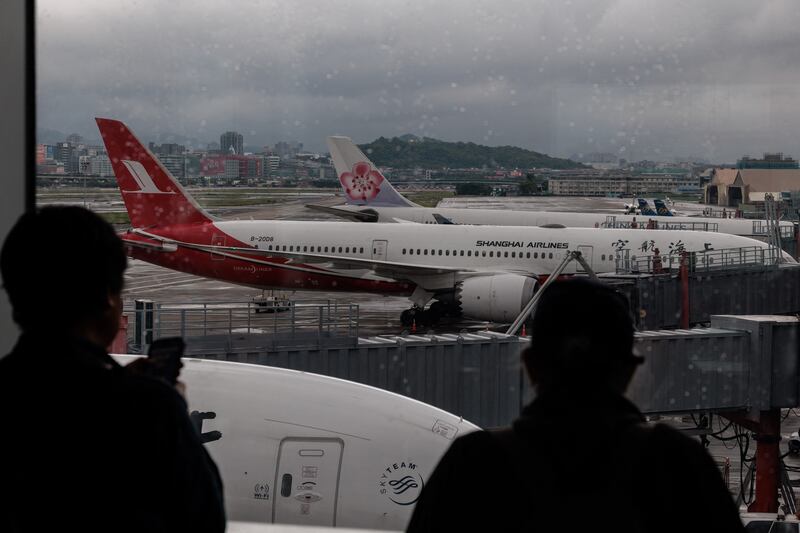
Taiwanese officials have urged people traveling to China to register their itineraries with the government in advance. In response, Beijing has accused Taipei of exaggerating the risks to discourage cross-strait exchanges.
How broadly the regulations affect technology professionals will depend on how frequently authorities use them and how they interpret threats to technological security. Analysts said, however, that their introduction showed Beijing increasingly regards technical expertise carried by scientists, engineers and entrepreneurs as a strategic resource worth protecting.
Chhabra said researchers and technology executives should take information-security precautions before and during visits to China, while Taiwan citizen travelers face additional political risks.
“Millions of foreign visitors, including Taiwanese, visit China every year without incident, but it cannot be said that visiting China is without risk.”
Edited by Eugene Whong.